Smart Garage Door Maintenance Tips for Dallas, TX Homes
Published: Mar 6, 2026
That blistering Dallas summer heat doesn't just make you want to stay inside—it's also waging a quiet war on your garage door. The intense UV rays, the wild temperature swings, and the North Texas humidity can cause lubricants to degrade, parts to expand, and electronic components to falter. Before you know it, that strange grinding noise or jerky movement becomes a full-blown emergency.
But what if you could understand what your garage door is trying to tell you?
This guide is for you. We're going to pull back the curtain on garage door health, translating the confusing noises and symptoms into clear, actionable knowledge. Think of this as your friendly, over-the-coffee chat about how to keep the largest moving part of your home running smoothly, saving you stress and money in the long run.
Garage Door Anatomy 101: A Quick Introduction
- The Springs (Torsion or Extension): These are the muscles of the operation. They do the heavy lifting so the opener doesn't have to.
- The Opener: This is the motorized brain, controlling the opening and closing.
- The Tracks: These metal rails guide the door's movement up and down.
- The Rollers: The wheels that run along the tracks, ensuring smooth motion.
- The Cables: These connect the springs to the bottom of the door, helping to lift it evenly.
- The Photo Eyes: Safety sensors near the bottom of the tracks that prevent the door from closing on an obstruction.
The Dallas-Specific Garage Door Maintenance Calendar
- Inspect Weather Stripping: Cracked or warped seals around the door let hot air into your garage. Check for brittleness and replace if necessary to keep your A/C from working overtime.
- Check Lubrication: High heat can cause grease to become gummy or dry out. Check rollers, hinges, and springs to ensure they're properly lubricated.
- Lubricate Moving Parts: Apply a silicone-based or white lithium grease to all metal-on-metal parts. (More on this later!)
- Test the Auto-Reverse Feature: Place a 2x4 flat on the ground in the door's path. When the door touches it, it should immediately reverse. If it doesn't, the safety mechanism needs professional adjustment.
- Perform a Balance Test: Disconnect the opener (pull the red cord) and lift the door manually. It should stay open about halfway up. If it slams down or flies up, the springs are unbalanced and need professional attention.
Troubleshooting: What's Your Garage Door Trying to Tell You?
Symptom: A Loud Grinding or Squeaking Noise
Symptom: The Door is Shaking or Jerky on its Way Up or Down
Symptom: The Door Won't Close All the Way (It Reverses)
Symptom: The Motor Runs, But the Door Doesn't Move
The DIY vs. Pro Repair Guide: A Dallas Homeowner's Safety Checklist
Garage Door Spring Repair vs. Other Common Repairs
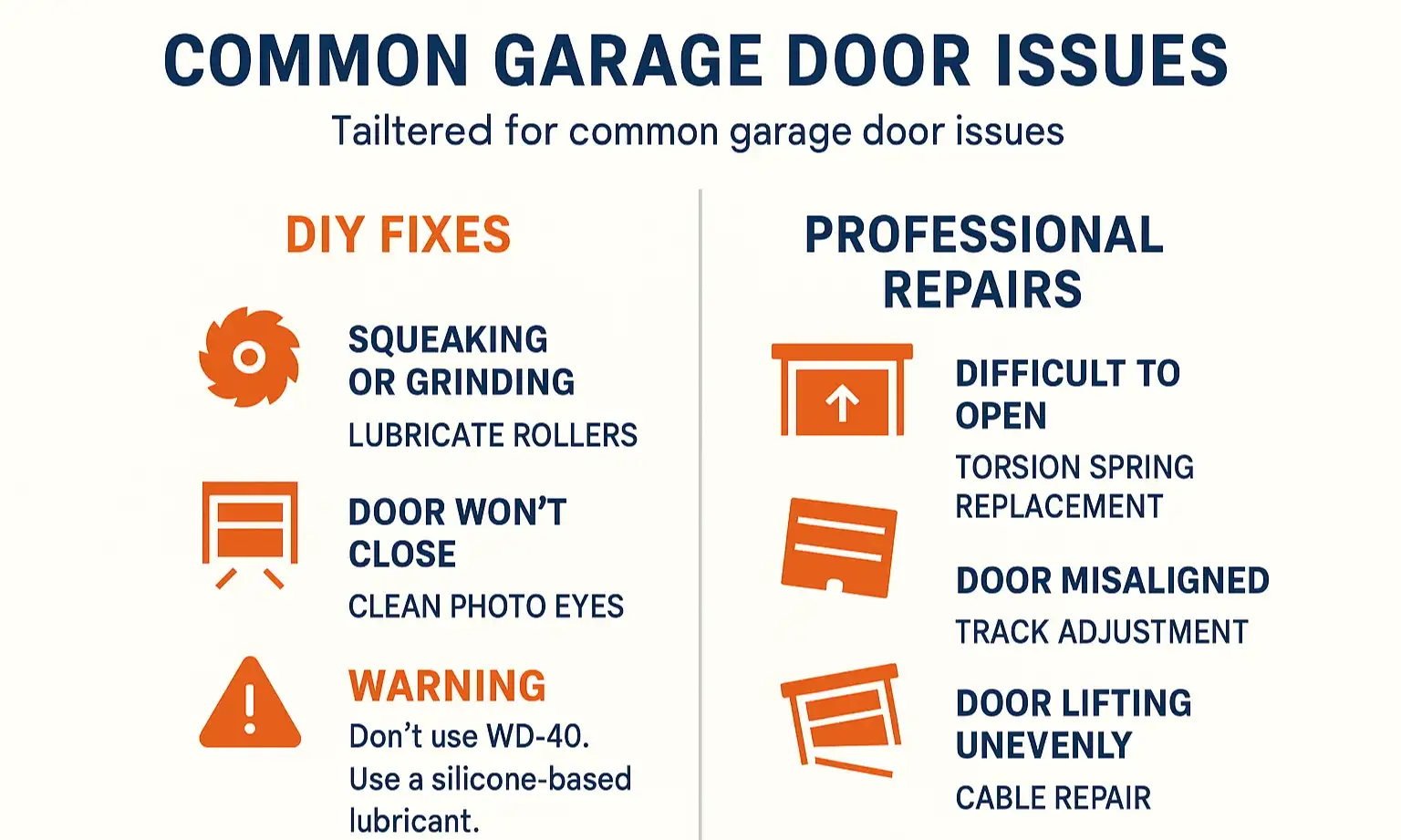
Clear DIY Fixes (You've Got This!)
- Cleaning Photo-Eye Sensors: A simple wipe-down can solve many closing issues.
- Lubricating Rollers and Hinges: A 10-minute job that prevents noise and wear.
- Tightening Nuts and Bolts: Regular vibrations can loosen hardware. A quick check with a wrench can prevent problems.
Always Call a Pro (Safety First!)
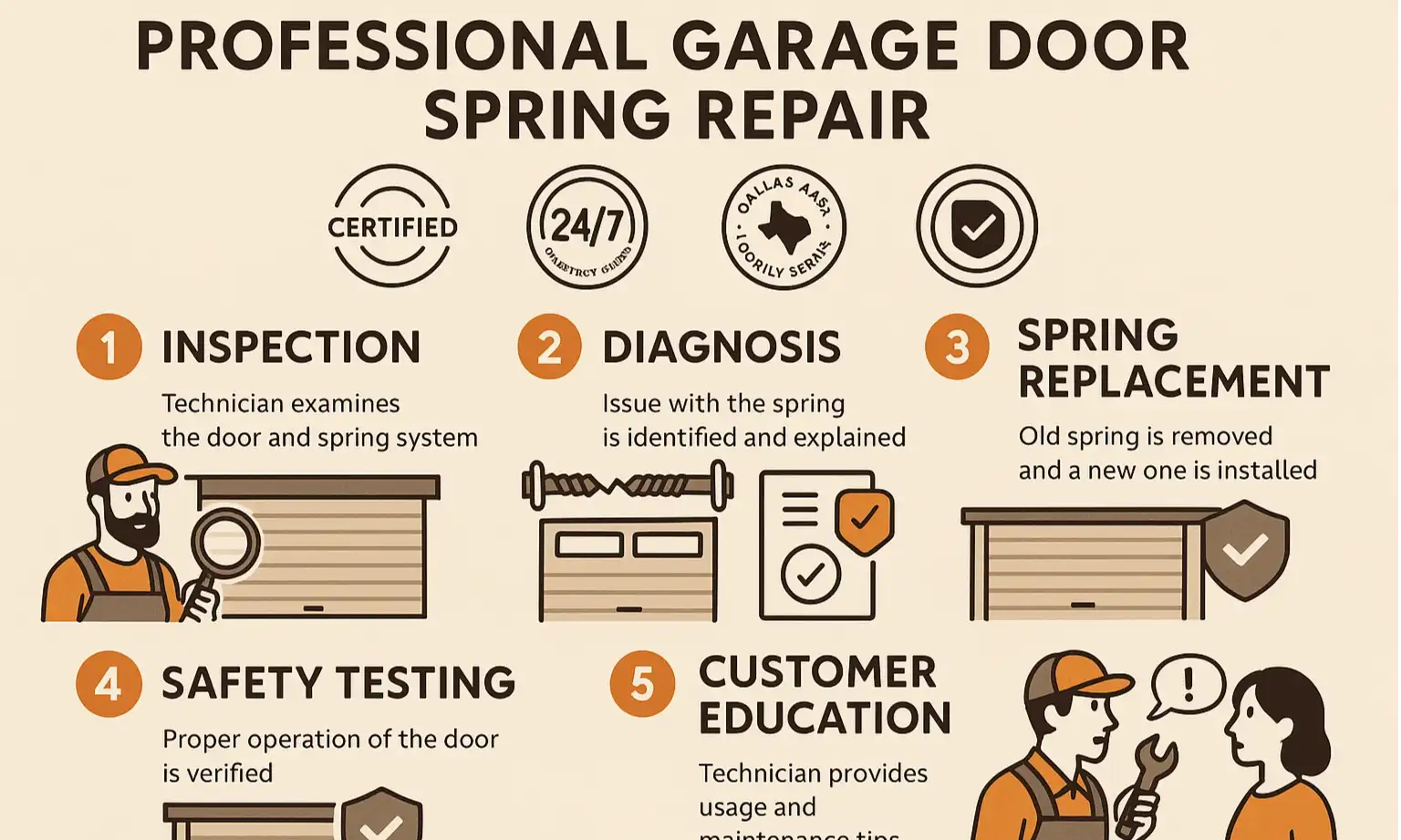
- Broken Spring Repair: Garage door springs are under extreme tension and can cause severe injury or death if handled improperly. A loud "bang" from the garage is a tell-tale sign of a broken spring. If you suspect you need broken garage spring repair, do not touch it.
- Frayed or Broken Cables: Like springs, cables are under high tension. Attempting a DIY garage door cable replacement is incredibly dangerous.
- Door Off Its Tracks: This indicates a serious underlying problem. Trying to force the door back can cause further damage.
- Damaged Panels: Replacing a single panel requires specialized tools to ensure proper alignment and sealing.
Why Professional Garage Door Service Matters in Dallas
The Great WD-40 Myth: A Common Mistake
Need more information?
Get a free quote
Frequently Asked Questions
How often should I have my garage door professionally serviced?
Can I replace just one garage door panel?
What's the difference between torsion and extension springs?
- Torsion springs are mounted on a bar above the garage door opening. They are safer and more durable.
- Extension springs run alongside the horizontal tracks on either side of the door. They are more common on older doors.
Is a smart garage door opener worth it?
Your Next Steps to a Healthier Garage Door
You may also like