Our company logo

State

The Dallas Homeowner's Ultimate Guide to Garage Door Repair & Maintenance


Published: Feb 13, 2026

It’s a familiar Dallas morning. You’re running late, grab your coffee, hit the button on the garage door opener… and nothing happens. Or worse, you hear a startlingly loud bang from the garage that echoes through the house. That’s not just an inconvenience—it’s your home’s largest moving object demanding your attention.

Many homeowners in the DFW area face this, but the online advice is often a confusing mix of generic DIY videos and vague local blogs. One tells you it’s an easy fix, while the other just says "call us." Neither helps you make a truly informed decision.

This guide changes that. We're going to walk through your garage door system, diagnose common problems, and tackle the single most important question: which repairs are safe for a handy homeowner, and which ones absolutely require a professional to avoid serious injury?

First, Understand Your System: The Anatomy of a Dallas Garage Door
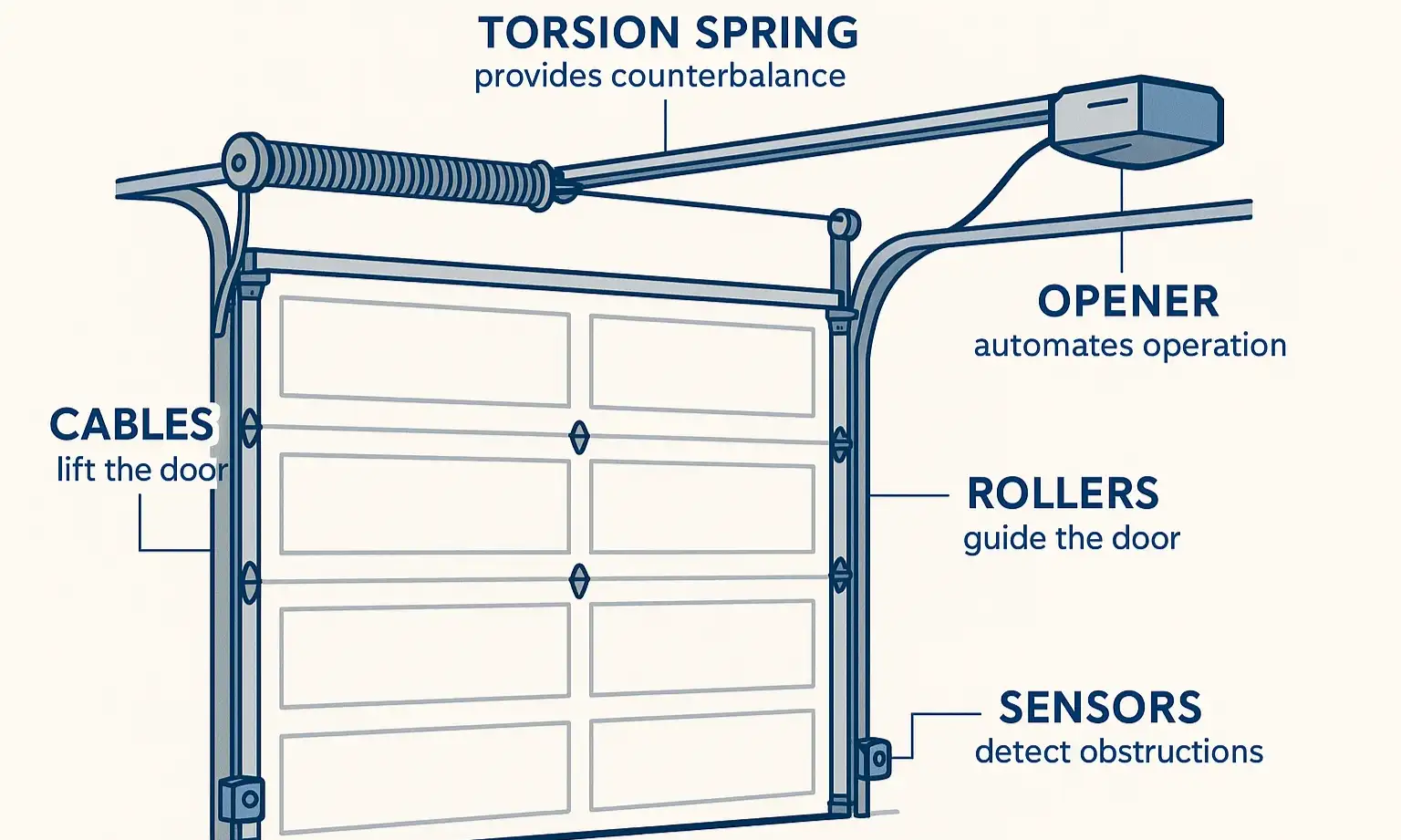

Before you can diagnose a problem, it helps to know what you’re looking at. Your garage door isn’t a single piece of equipment; it’s a complex system where every part has a critical job. Understanding how they work together is the first step toward a safe and effective solution.
A detailed diagram showing the anatomy of a garage door system, including springs, cables, rollers, tracks, opener, and safety sensors.
Here are the key players:

  • Springs (Torsion or Extension): These are the muscles of the system. They are under extreme tension to lift the door’s massive weight. Torsion springs are mounted above the door, while extension springs run along the sides.
  • Cables: These connect the springs to the bottom of the door, transferring the lifting force.
  • Rollers & Tracks: The rollers guide the door along the metal tracks as it opens and closes.
  • Opener: The motorized unit that automates the lifting, connected to the door by an arm.
  • Safety Sensors: Two small "eyes" near the floor on either side of the door. They project an infrared beam, and if it's broken, the door will automatically reverse to prevent accidents.
A detailed diagram showing the anatomy of a garage door system, including springs, cables, rollers, tracks, opener, and safety sensors.

What's Wrong With My Garage Door? The Dallas Symptom Checker


Now that you know the parts, let's connect them to the strange sounds and behaviors you're experiencing. Use this quick guide to diagnose the likely issue and, most importantly, its DIY danger level.

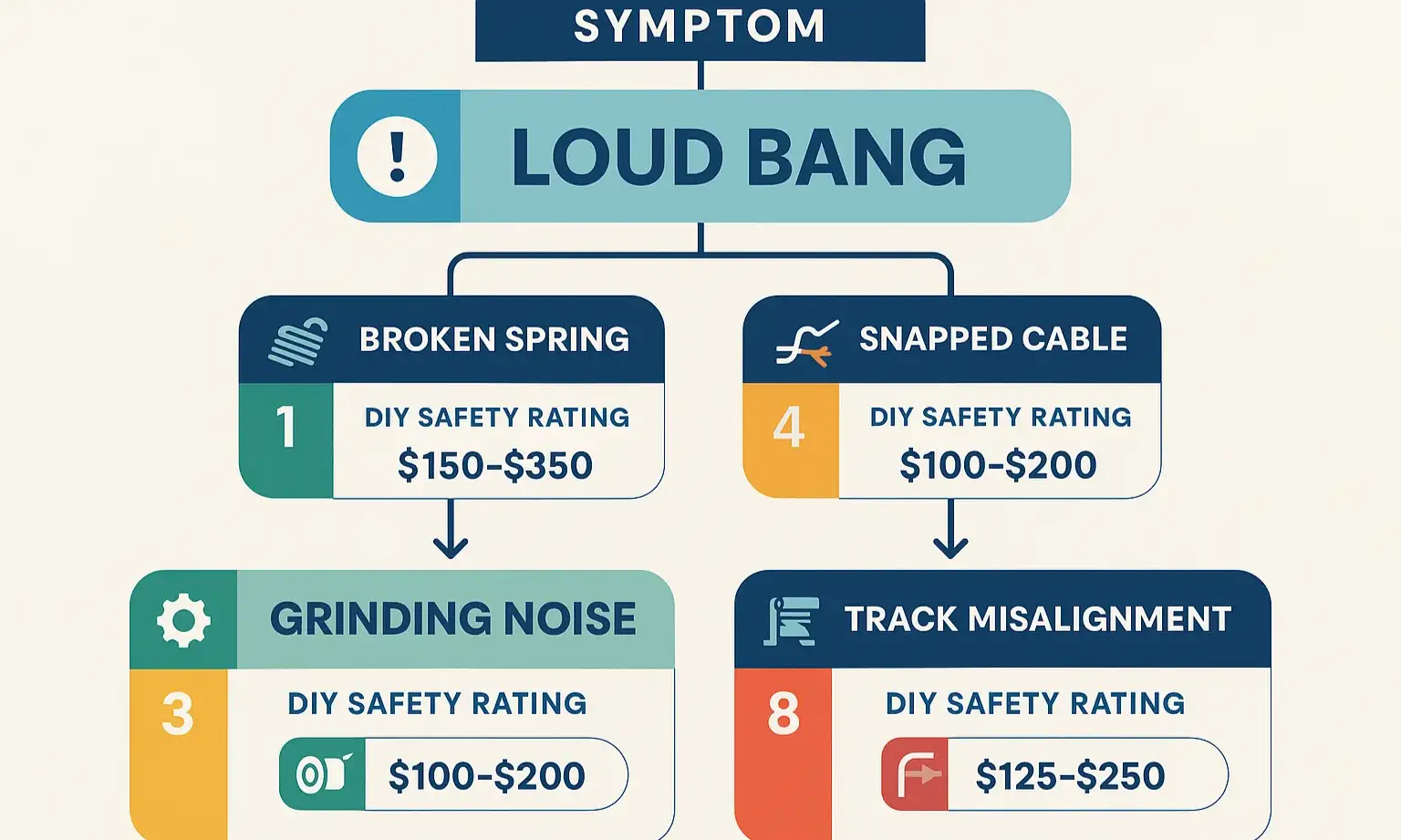
Symptom: A Loud "BANG!"

Likely Cause: You almost certainly have a broken spring. It's the sound of immense tension being released instantly. You may see a visible gap in the spring above your door.
DIY Danger Level: 10/10 - EXTREME DANGER.
Next Step: Do NOT try to open the door, manually or with the opener. The opener is not designed to lift the full weight without spring assistance and can be severely damaged. This is a job that requires professional broken garage spring repair.
Infographic shows common garage door symptoms with safety levels and cost estimates.

Symptom: Door is Crooked, Stuck, or Off-Track

Likely Cause: One of the two lift cables has likely snapped or slipped off its drum. This causes the door to hang unevenly and can jam it in the tracks.
DIY Danger Level: 9/10 - High Danger.
Next Step: Stop using the door immediately. A crooked door under tension is unstable and unpredictable. Attempting to force it can cause more damage. For a safe and effective fix, you'll need professional garage door cable replacement.

Symptom: Door Reverses and Won't Close (Especially on a Sunny Day)

Likely Cause: This is the classic sign of misaligned safety sensors. The Dallas sun can sometimes shine directly into one of the sensor "eyes," tricking it into thinking something is blocking the path.
DIY Danger Level: 1/10 - Very Low.
Next Step: Check to see if the small LED lights on both sensors are solid (not blinking). If one is blinking, gently adjust its position until it's solid green, indicating a clear connection. Also, wipe the lenses clean.

Symptom: Opener Motor Hums, But the Door Doesn't Move

Likely Cause: Two main possibilities. First, check the emergency release cord (the red handle hanging from the opener rail). If it's been pulled, the door is disconnected from the opener. The other common cause is a stripped gear inside the opener unit itself.
DIY Danger Level: 1/10 (for release cord), 5/10 (for gear replacement).
Next Step: Try re-engaging the release cord first. If that doesn't work, you may need a garage door opener repair to replace the internal gears.

Infographic shows common garage door symptoms with safety levels and cost estimates.

The Big Question: Should You DIY or Call a Pro in Dallas?


Knowing what's wrong is only half the battle. The most critical decision you'll make is whether to tackle the job yourself. While some tasks are simple maintenance, others carry a risk of severe injury or even death. The springs and cables are under enough tension to lift hundreds of pounds—and that energy can be released uncontrollably if handled improperly.

The DIY Safety Scorecard: A Visual Guide

Use this scorecard to assess the risk before you pick up a single tool.
  • Aligning Safety Sensors: Safety Score 1/10 (Safe)
  • Lubricating Rollers and Hinges: Safety Score 1/10 (Safe)
  • Replacing the Bottom Weather Seal: Safety Score 2/10 (Low Risk)
  • Replacing an Opener Logic Board: Safety Score 4/10 (Moderate Risk - Electrical)
  • Replacing Rollers (excluding bottom bracket): Safety Score 5/10 (Moderate Risk)
  • Replacing a Cable: Safety Score 9/10 (High Danger)
  • Adjusting or Replacing Torsion Springs: Safety Score 10/10 (DO NOT ATTEMPT)

Texas Climate Corner: How Dallas Heat Wages War on Your Garage Door

Dallas weather isn't just tough on us; it's tough on our homes. The intense summer heat and humidity can:

  • Cause Sensor Misalignment: Direct sunlight can interfere with the infrared beam.
  • Weaken Springs: Constant thermal expansion and contraction can reduce the lifespan of metal springs, causing them to fail sooner than in milder climates.
  • Fry Electronics: The circuit boards in your garage door opener can be sensitive to the extreme heat inside a garage, leading to premature failure.

Need more information?

Taking Action: Your Next Steps for a Safe and Reliable Garage Door


You're now equipped with the knowledge to make a smart, safe decision. Here’s how to move forward.

Safe DIY Maintenance You Can Do

Regular upkeep can prevent many common problems.
  1. Look and Listen: Once a month, watch the door operate. Does it move smoothly? Is it making new noises?
  2. Lubricate Moving Parts: Every few months, use a silicone-based garage door lubricant on the hinges, rollers, and springs.
  3. Test the Safety Reversal: Place a 2x4 board flat on the ground in the door's path. When the door touches it, it should immediately reverse.
  4. Test the Photo Eyes: With the door open, press the close button and wave an object (like a broom handle) in front of one of the sensors. The door should immediately reverse.
A friendly, professional garage door technician in uniform standing by a service van, smiling and ready to help a customer.

How to Choose a Reputable Garage Door Technician in Dallas

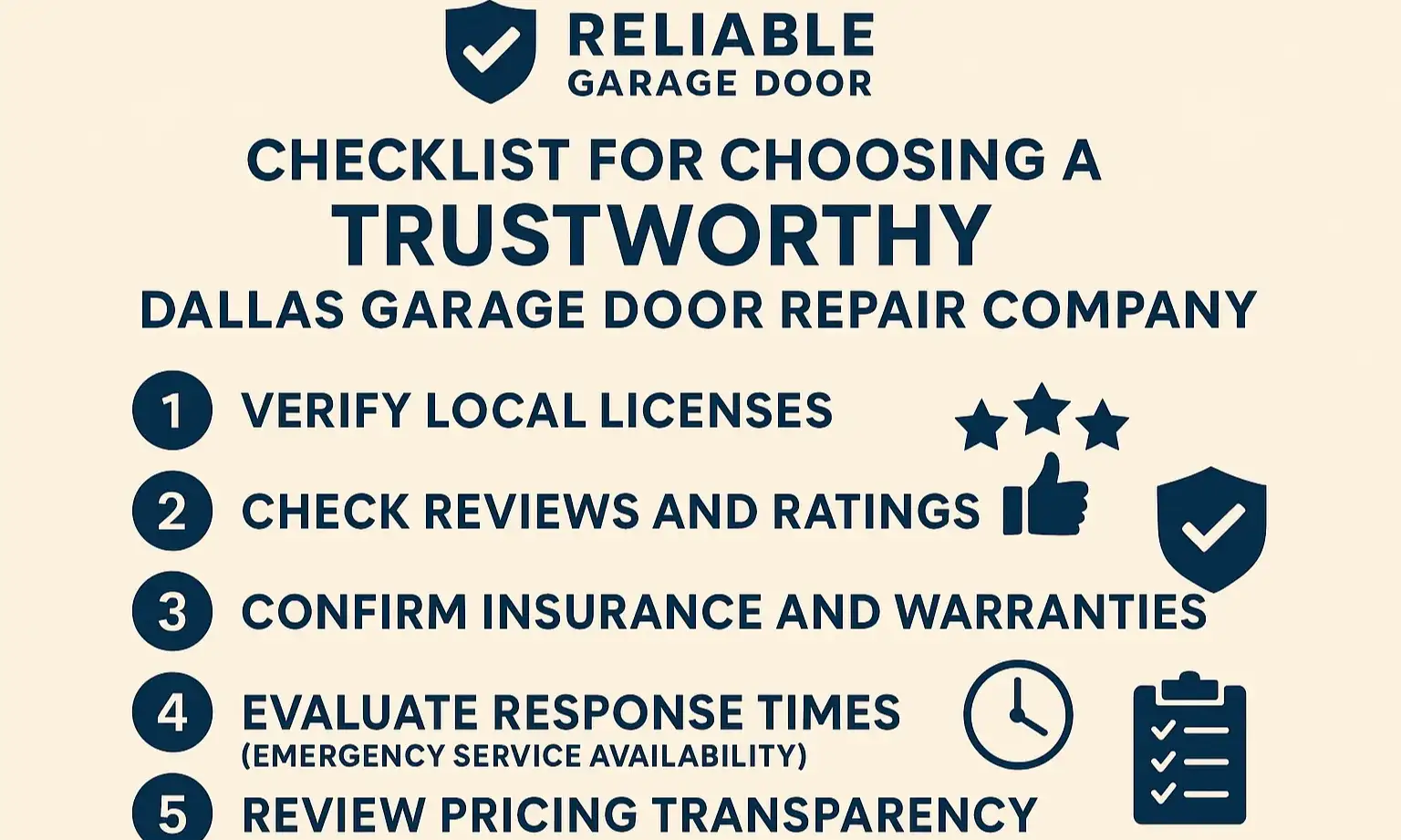
For any job with a high safety score, your best move is to call a professional. Here’s how to find a good one:

  1. Verify They Are Local and Insured: Ensure the company has a physical presence in the DFW area and carries liability insurance to protect your property.
  2. Read Recent Reviews: Look for consistent positive feedback on platforms like Google and Angi. Pay attention to comments about professionalism, timeliness, and fair pricing.
  3. Get an Itemized Quote: A reputable company will provide a clear breakdown of costs for parts and labor before any work begins.
  4. Ask About Warranties: Inquire about the warranty they offer on both their workmanship and the parts they install.
  5. Look for Experience: A team with years of experience providing garage door repair in Dallas, TX has likely seen—and solved—your exact problem countless times.
A friendly, professional garage door technician in uniform standing by a service van, smiling and ready to help a customer.

Dallas Garage Door FAQs


Is it cheaper to repair or replace a garage door opener?

A good rule of thumb is the 10-year mark. If your opener is over a decade old and needs a significant repair (like a new motor), it's often more cost-effective to invest in a new unit. Modern openers are quieter, more secure, and you can find the best smart garage door opener to integrate with your home.

Can I replace a garage door spring myself?

No. We cannot state this strongly enough. Torsion springs are under extreme tension and require specialized tools and knowledge to replace safely. A mistake can lead to catastrophic failure, causing severe injury or property damage. It is always a job for a trained professional.

My door passed the 2x4 reversal test but won't reverse for the photo eyes. What's wrong?

This points directly to an issue with your safety sensors. The mechanical reversal system and the photo-eye system are separate. Clean the sensor lenses and check for a solid green light on both units.
Your garage door is a workhorse, and now you have the knowledge to be a confident, safe homeowner. For the simple maintenance, you’re ready to go. For everything else, a trusted professional is your best partner in keeping your home safe and functional.

You may also like


blog photo

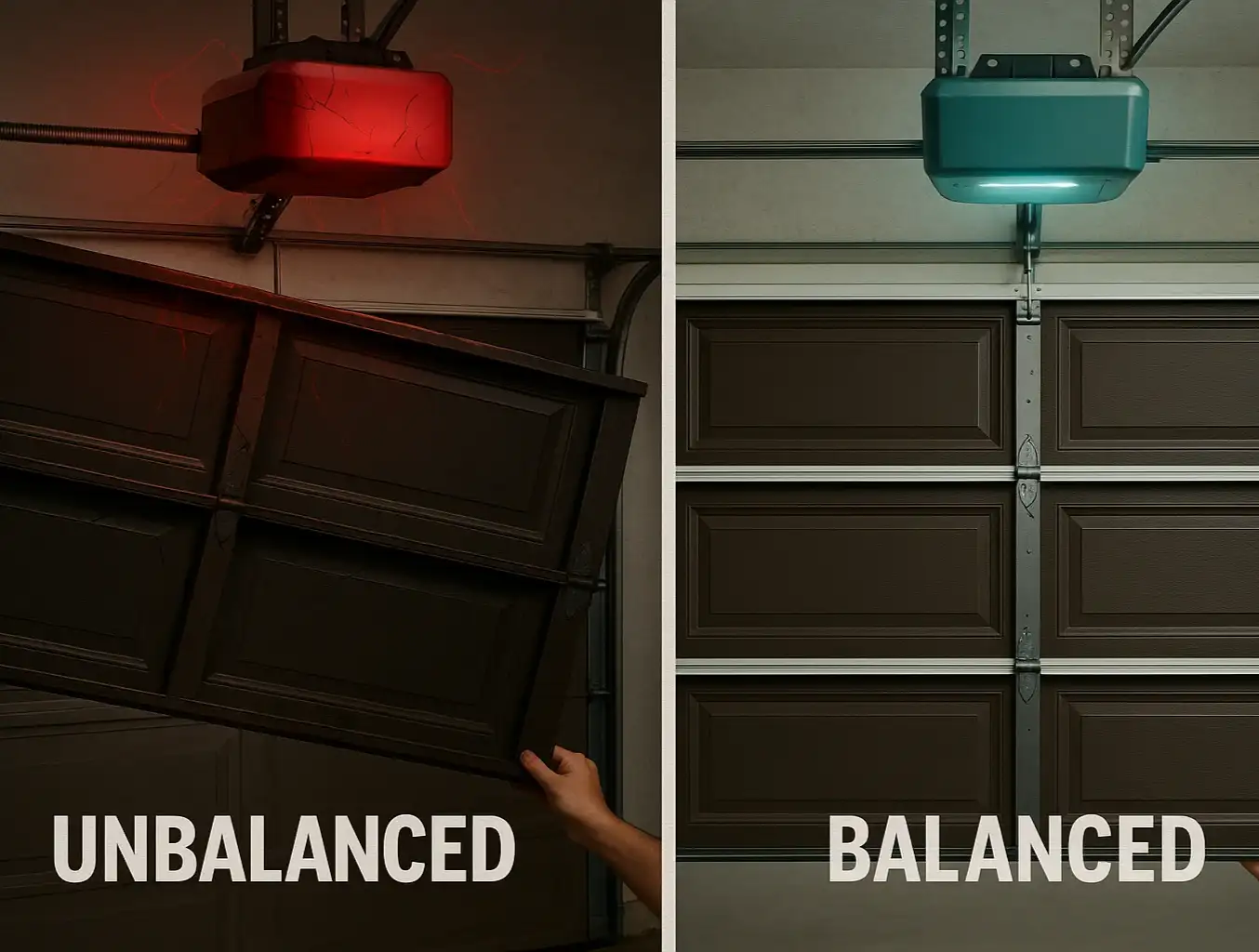
How an Unbalanced Garage Door Destroys Its Own Parts

Have you noticed your garage door getting louder lately? Does it groan and shudder on its way up, or slam down with a jarring thud? Many homeowners dismiss these as signs of old age, but they're often symptoms of a much bigger, more destructive problem: an imbalanced door. This isn't just about noise. An unbalanced garage door is in a constant state of self-destruction, placing immense stress on nearly every component. It's a silent killer that dramatically shortens the lifespan of your opener, springs, and cables, leading to expensive and unexpected repairs. But here's the good news: you can diagnose this problem in about 30 seconds. Let's walk through how to check your door's balance and understand why this simple test is the most important thing you can do for the health of your entire garage door system.

blog photo

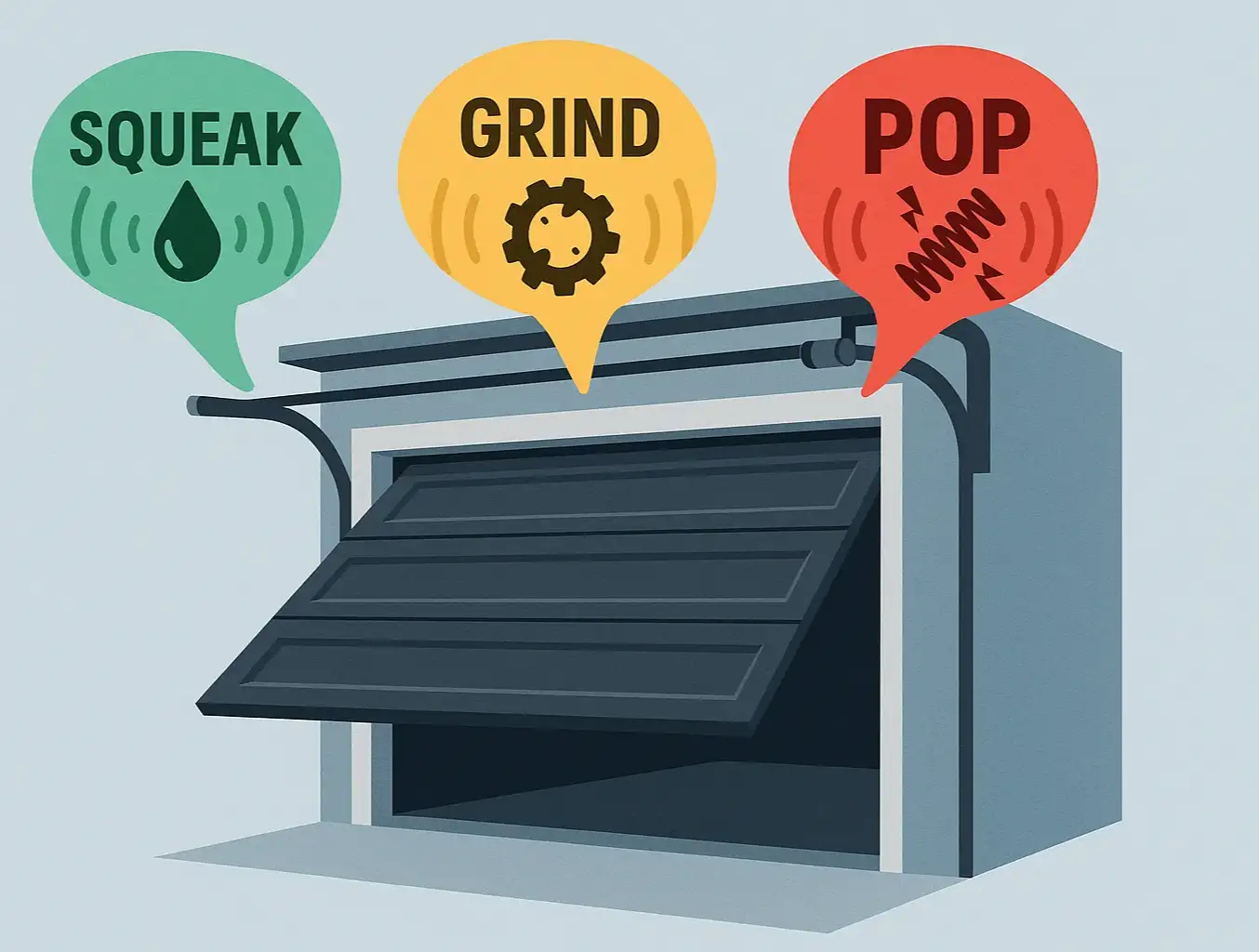
How to Decode Your Garage Door’s Squeaks, Grinds, and Pops

Your garage door is trying to tell you something. That sudden squeal, that gravelly grind, that alarming pop—they aren't just random annoyances. They're a language. Each sound is a specific message about the health of your door, a clue that can help you catch small problems before they become expensive, dangerous failures. Most people either ignore these sounds until it's too late or assume every noise means a costly replacement is imminent. But what if you could listen like an expert? What if you could differentiate between a simple request for lubrication and a critical warning of system failure? This guide teaches you how to speak your garage door's language. By learning to identify the character, timing, and location of its sounds, you can move from guessing to diagnosing, saving you time, money, and stress.

blog photo

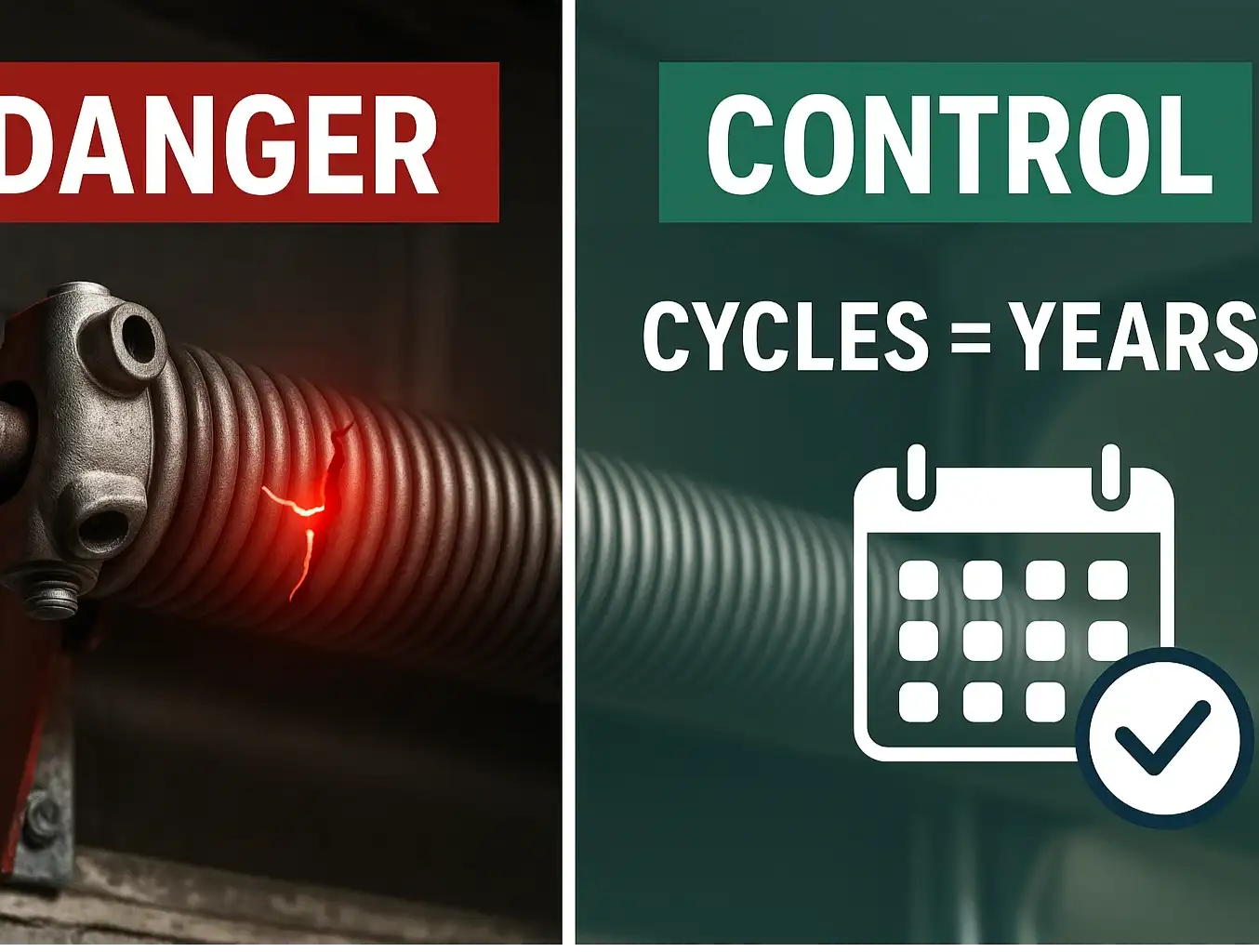
How to Predict When Your Door Springs Will Break

BANG! It’s a sound you’ll never forget—a sudden, deafening report from the garage that sounds like a gunshot. Your first thought might be an intruder, but the reality is often more mundane, yet just as startling: a garage door spring has just snapped. This isn’t just an inconvenience that traps your car; it’s a failure of a component under extreme tension, releasing its stored energy in a split second. Many homeowners assume this event is random, an unavoidable part of homeownership. But what if you could predict exactly when it would happen? What if you could turn that sudden, expensive emergency into a planned, manageable maintenance task? You can. And all it takes is a little bit of simple math. This guide will teach you how to read the "ticking clock" on your garage door springs, moving you from reactive panic to proactive peace of mind.