Troubleshooting Garage Door Problems in Dallas Homes
Published: Mar 6, 2026
It’s a sound every homeowner dreads. A sudden, deafening BANG! from the garage that makes you jump. Or maybe it’s a slow, agonizing groan as your garage door struggles to open, eventually giving up halfway. Your garage door, the largest moving part of your home, has suddenly gone from a convenience to a major headache.
If you're here, you're likely facing one of these frustrating scenarios. You’ve got questions: What just broke? Is it dangerous? Can I fix this myself? How much is this going to cost?
Take a deep breath. You've come to the right place. This guide isn't here to sell you something; it's here to empower you with knowledge. We're going to walk through how your garage door works, what typically goes wrong, and how you, as a Dallas homeowner, can make the smartest, safest decision for your home.
First, A Critical Safety Moment
- Do Not Operate the Door: Don't use the opener or try to lift it manually. A broken spring or cable means the door's full weight isn't supported.
- Keep Everyone Away: Make sure kids and pets are kept clear of the garage door.
- Unplug the Opener: This prevents anyone from accidentally trying to use it.
- Visually Inspect (from a distance): Look for obvious signs of trouble like a snapped spring (you'll see a gap in the coil), a frayed or broken cable, or rollers that have come out of the track.
DIY vs. Professional Garage Door Repair
- Specialized Tools: Torsion spring repairs require specific winding bars. Using a screwdriver or rebar is incredibly dangerous.
- Your Time: Researching, finding the right parts, and performing the repair can take hours, if not a full day.
- The Risk of Injury: This is the biggest factor. A mistake with a spring or cable can have devastating consequences. Emergency room bills are far more expensive than a professional service call.
- The Risk of Further Damage: An incorrect repair can damage other parts of your system, like the opener or the door panels, leading to a much costlier fix down the line.
The Anatomy of Your Garage Door: Trust-Building Interactive Diagram
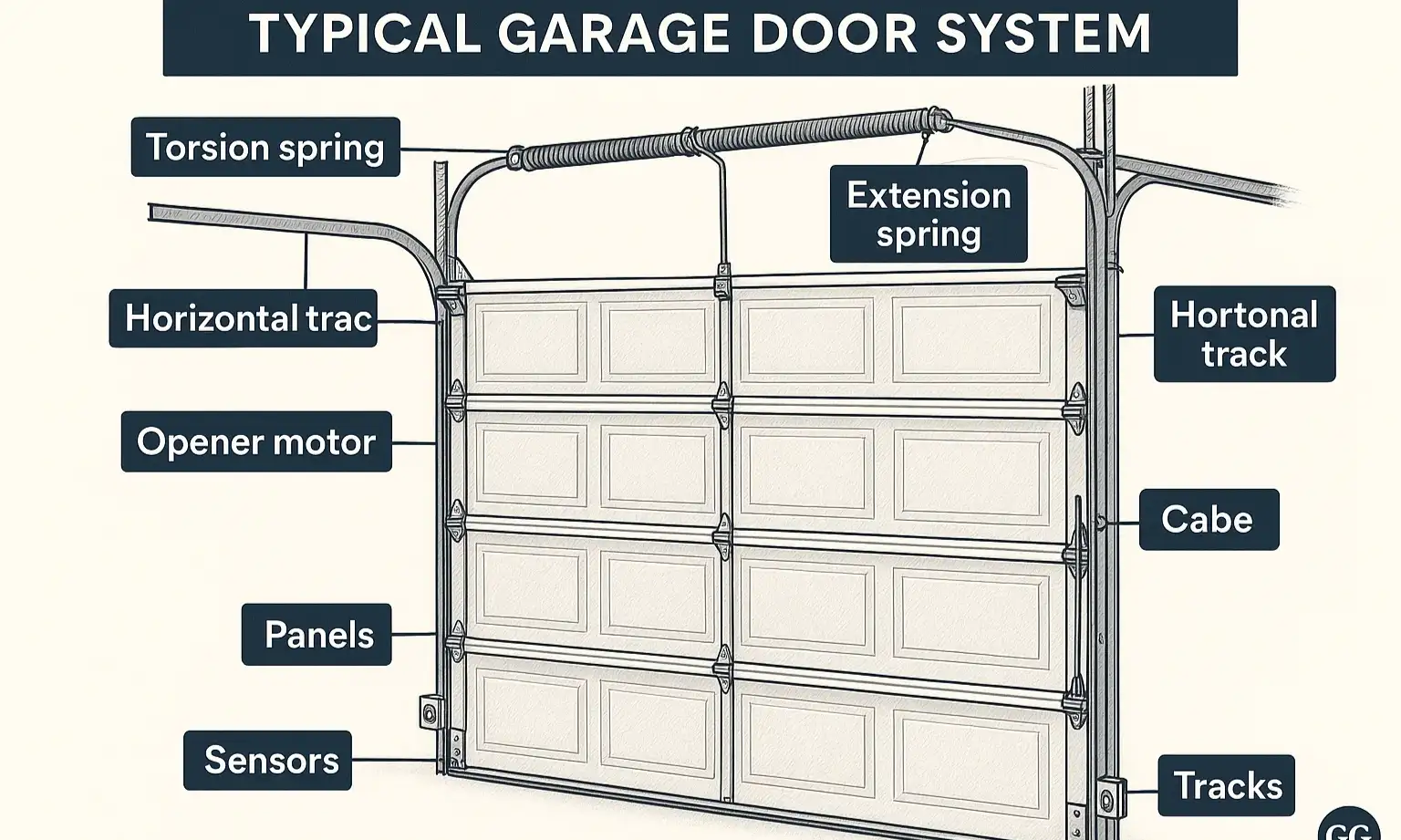
- Springs (Torsion or Extension): These are the muscles of the system. They do the actual heavy lifting so the opener doesn't have to. A broken spring is the most common major repair.
- Cables: These connect the springs to the bottom of the door, transferring the lifting force.
- Rollers & Tracks: These are the wheels and rails that guide the door up and down smoothly.
- Panels: The sections that make up the door itself.
- Garage Door Opener: The motor that automates the process, but it doesn't do the heavy lifting—the springs do!
Common Garage Door Problems and Their Visual Signs
1. Broken Garage Door Spring
- The Sound: The infamous loud "BANG!"
- The Look: You'll see a 2-inch gap in one of the springs coiled above your door. The door will be extremely heavy and won't open, even with the emergency release.
- The Cause: Springs are rated for a certain number of cycles (one open/close). They eventually wear out and break.
- The Solution: This is a job for a professional. A broken garage spring repair requires special tools and knowledge to be done safely.
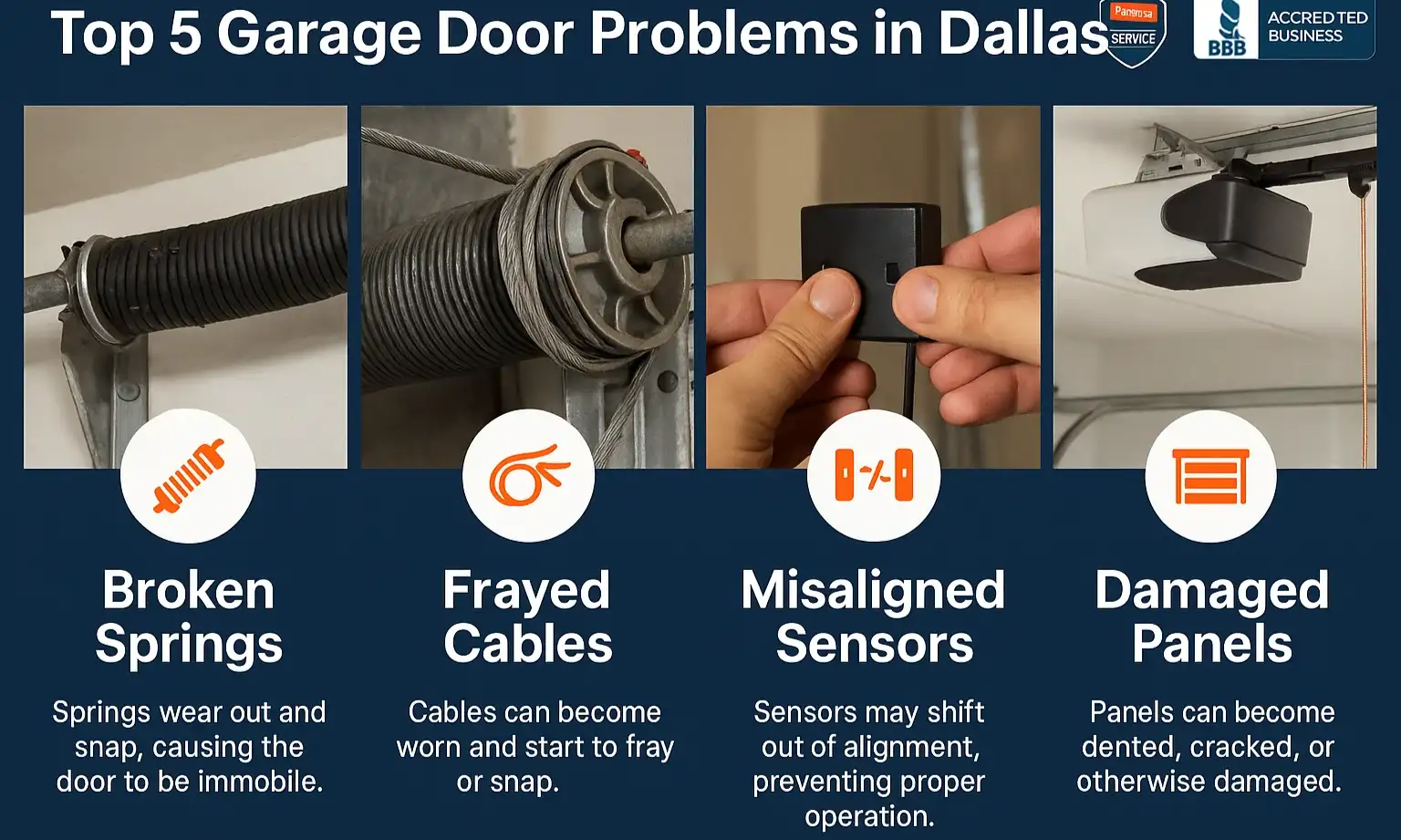
2. Frayed or Snapped Cables
- The Sound: You might hear a snapping sound, followed by the door hanging crooked or slamming shut.
- The Look: The door is visibly uneven, with one side higher than the other. You may see a cable loose and dangling.
- The Cause: Cables can fray over time due to friction or rust, especially in the humid Texas climate. They can also snap if a spring breaks unexpectedly.
- The Solution: Similar to springs, a safe garage door cable replacement is a task for a trained technician due to the high tension involved.
3. Malfunctioning Garage Door Opener
- The Sound: Grinding, beeping, or humming without the door moving.
- The Look: The motor runs but the door doesn't move, the door reverses immediately after hitting the floor, or it won't respond to the remote at all.
- The Cause: This can range from misaligned safety sensors and worn-out gears to electrical issues.
- The Solution: First, check that the safety sensors at the base of the door track are aligned (both lights should be solid). If that doesn't work, you may need a professional to diagnose your garage door opener.
4. Damaged Door Panels
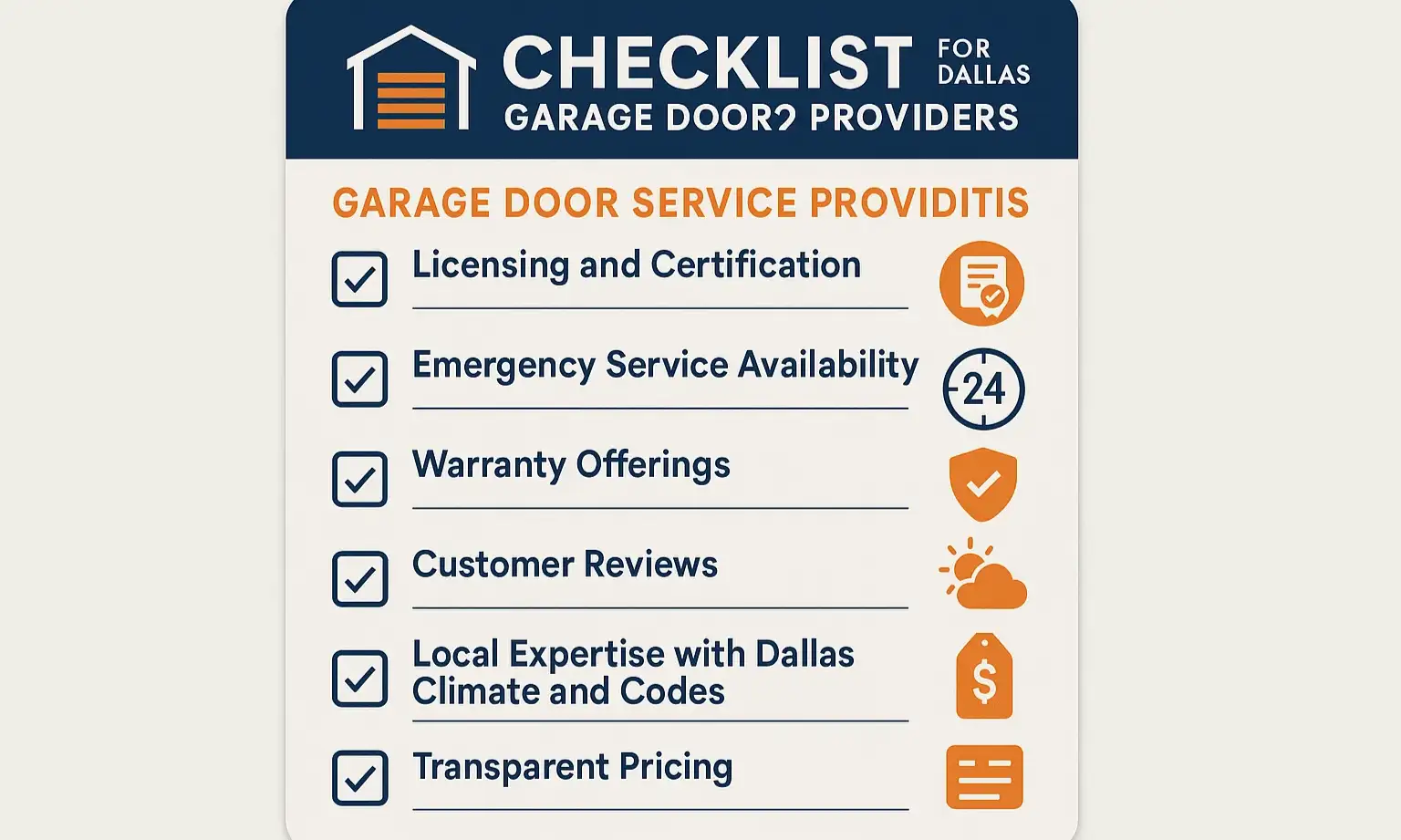
Making the Right Choice: Garage Door Service Provider Evaluation Checklist
Need more information?
Get a free quote
Frequently Asked Questions for Dallas Homeowners
What's the difference between torsion and extension springs?
How long should my garage door springs last?
If one spring breaks, should I replace both?
Are smart garage door openers worth it?
Your Path Forward
You may also like