A Danbury Homeowner's Guide to the System Behind the Noise
Published: Feb 26, 2026
Ever been jolted by a sudden, deafening BANG from the garage? It’s a sound that makes your heart jump. Your first thought might be that the garage door opener finally gave up. But here’s the secret every homeowner should know—the single most important "aha moment" in understanding your garage door:
The opener doesn't lift the door. The springs do.
That little motor on your ceiling is just giving a motorized nudge to a perfectly balanced system. The real muscle—the component holding hundreds of pounds of tension—is a set of powerful springs. When you understand this, every squeak, shudder, and jam starts to make sense. You’re no longer just dealing with a broken machine; you're diagnosing an interconnected system.
This guide will walk you through that system. We’ll turn confusing jargon into clear concepts, help you identify what’s wrong, and show you what’s safe to handle yourself versus when it's time to call a trusted garage door technician in Danbury.
Foundation: The Anatomy of Your Garage Door System
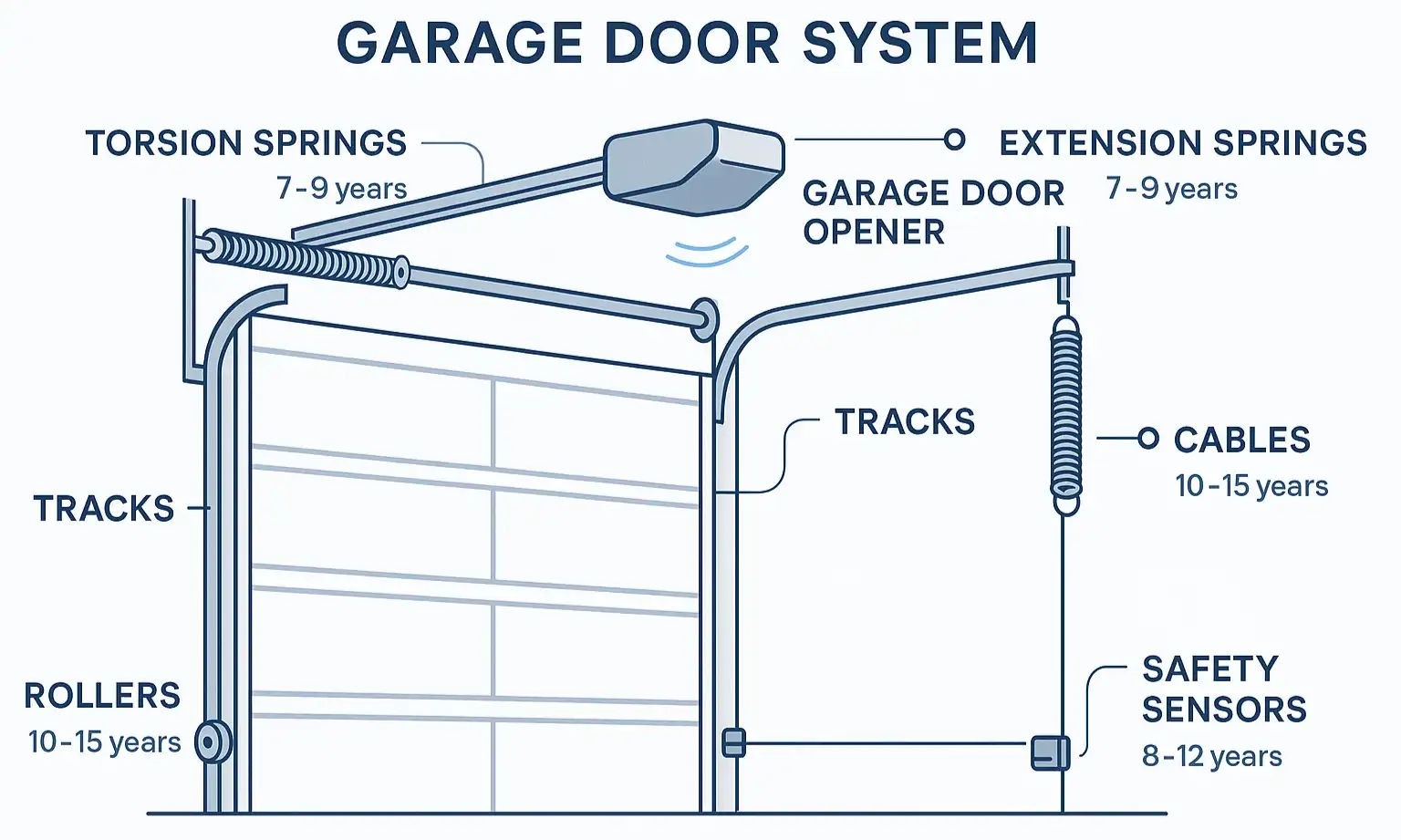
- Torsion & Extension Springs: These are the powerhouse of the system. Torsion springs are mounted above the door, while extension springs run along the sides. They are wound incredibly tight to counterbalance the door's weight, making it feel light enough for you (or the opener) to move. Understanding how garage door springs work is crucial for appreciating their power and danger.
- Garage Door Opener: The "brain and brawn" of automation. It uses a motor to guide the door along the tracks. While it doesn’t do the heavy lifting, it controls the movement, speed, and safety features. Exploring the advantages of an automatic garage door can show how much convenience they add.
- Tracks, Rollers, & Hinges: This is the skeleton. The tracks guide the rollers, which are attached to the door panels via hinges, ensuring the door moves smoothly up and down.
- Cables: These steel cables connect the springs to the bottom of the door, transferring the lifting force. If one snaps, the door will often become crooked and immobile.
- Safety Sensors: The two small "eyes" near the bottom of your door tracks. They project an infrared beam, and if anything breaks it, the door automatically reverses to prevent injury or damage.
Building: A Symptom-Based Guide to What's Wrong with Your Door
Noise Issues: Squeaking, Grinding, and Popping
- Symptom: A high-pitched squealing or grinding sound during movement.
- Likely Cause: This is almost always a lubrication issue. The metal rollers moving inside the metal tracks need lubrication to operate quietly. Over time, this lubricant wears off, causing friction and noise.
- DIY Safe Check: Look at the rollers and hinges. Are they dry or rusty? You can apply a garage-door-specific lubricant (avoid WD-40, which can attract dirt).
- Call a Pro If: The noise is a loud grinding coming from the opener unit itself. This could signal a stripped gear inside the motor, a job for a professional. If you're tired of the noise, you might consider upgrading to a modern, quiet garage door opener.
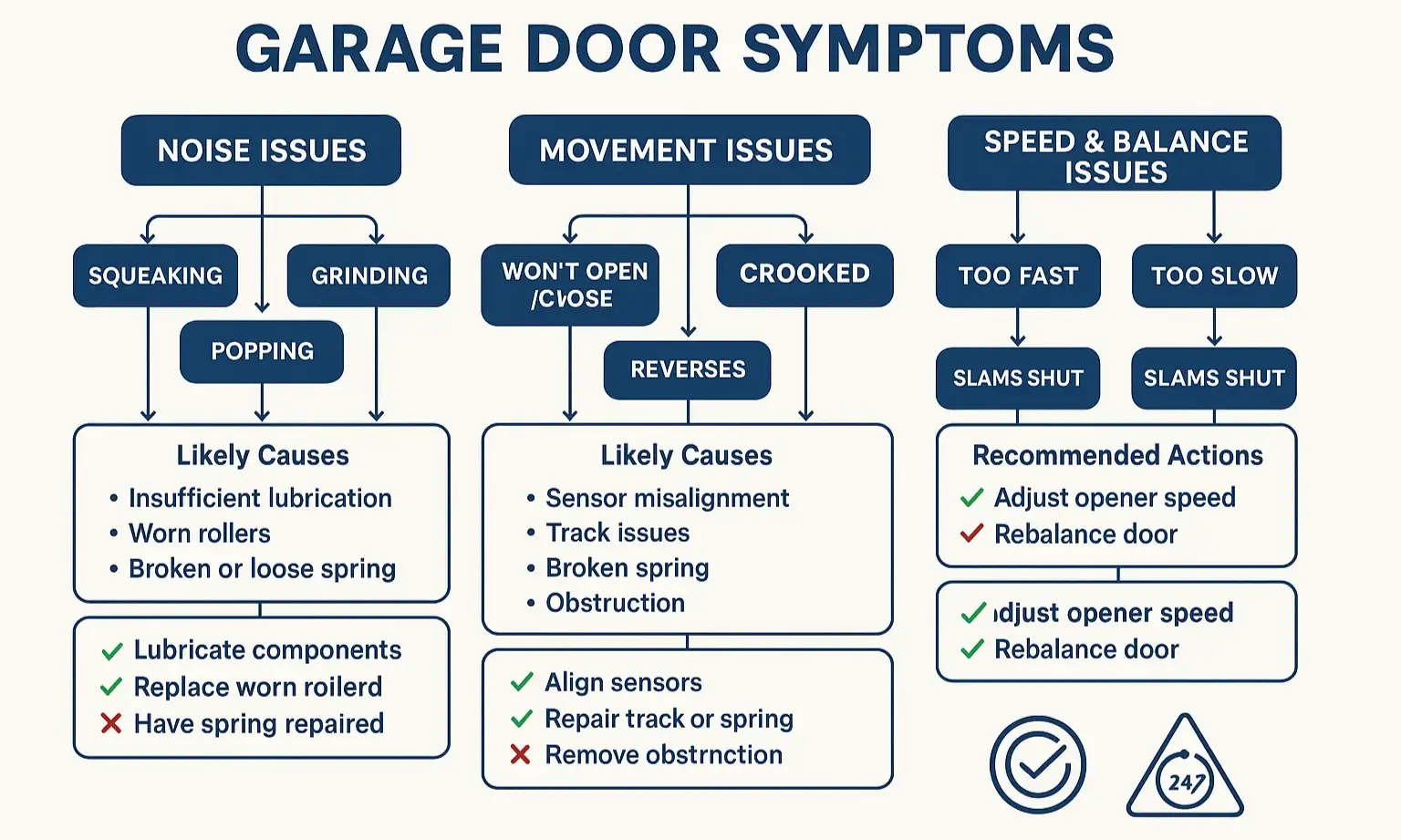
Movement Issues: Won't Open, Reverses Suddenly, or Moves Crookedly
Mastery: The 15-Minute Tune-Up That Prevents 90% of Problems
- Look and Listen (2 mins): Open and close the door. Watch all the parts in motion and listen for any unusual sounds.
- Lubricate Moving Parts (5 mins): Apply a high-quality garage door lubricant to the hinges, rollers (not nylon ones), and springs. This reduces friction and wear.
- Tighten Hardware (5 mins): The door's vibration can loosen nuts and bolts over time. Use a socket wrench to gently snug up any loose hardware.
- Test the Balance (3 mins): With the door closed, pull the red emergency release cord on the opener. Now, lift the door by hand. It should feel relatively light and stay put when you let go halfway up. If it slams down or shoots up, the springs are unbalanced and need professional adjustment.
Need more information?
Get a free quote
Action: When to Call a Garage Door Technician in Danbury, CT
- Broken Springs: They are under extreme tension and can cause severe injury if they release uncontrollably.
- Broken or Frayed Cables: Like springs, these are high-tension parts that require special tools and knowledge to replace safely.
- A Severely Crooked or Off-Track Door: This indicates a major system failure. Trying to force it can cause more damage.
- Damaged Door Panels: While a minor dent might be cosmetic, a cracked or bent panel can compromise the door's structural integrity. A professional can advise on whether a garage door panel repair is feasible.
Frequently Asked Questions About Garage Door Issues

Is it worth repairing an old garage door opener?
What's the difference between torsion and extension springs?
How long should my garage door parts last?
Can I replace just one panel of my garage door?
You may also like