Detecting Micro-Cracks and Fatigue in Garage Door Hinges and Panels
Published: Jan 19, 2026
That faint creak your garage door makes? Most of us ignore it. The tiny, web-like line near a hinge? We dismiss it as a scratch. We often assume garage door problems are loud, sudden, and obvious—a snapped spring, a door off its tracks.
But what if the most significant threat to your door’s health is something you can barely see?
Metal fatigue and micro-cracks are the silent culprits behind many catastrophic garage door failures. They develop slowly, caused by thousands of cycles of lifting and lowering, extreme weather, and minor imbalances. Finding a small crack early can be the difference between a simple adjustment and a full, costly door replacement.
This guide will teach you how to become an expert inspector in under 10 minutes, using just a flashlight and your eyes.
Foundation: Understanding a Garage Door's Weak Points
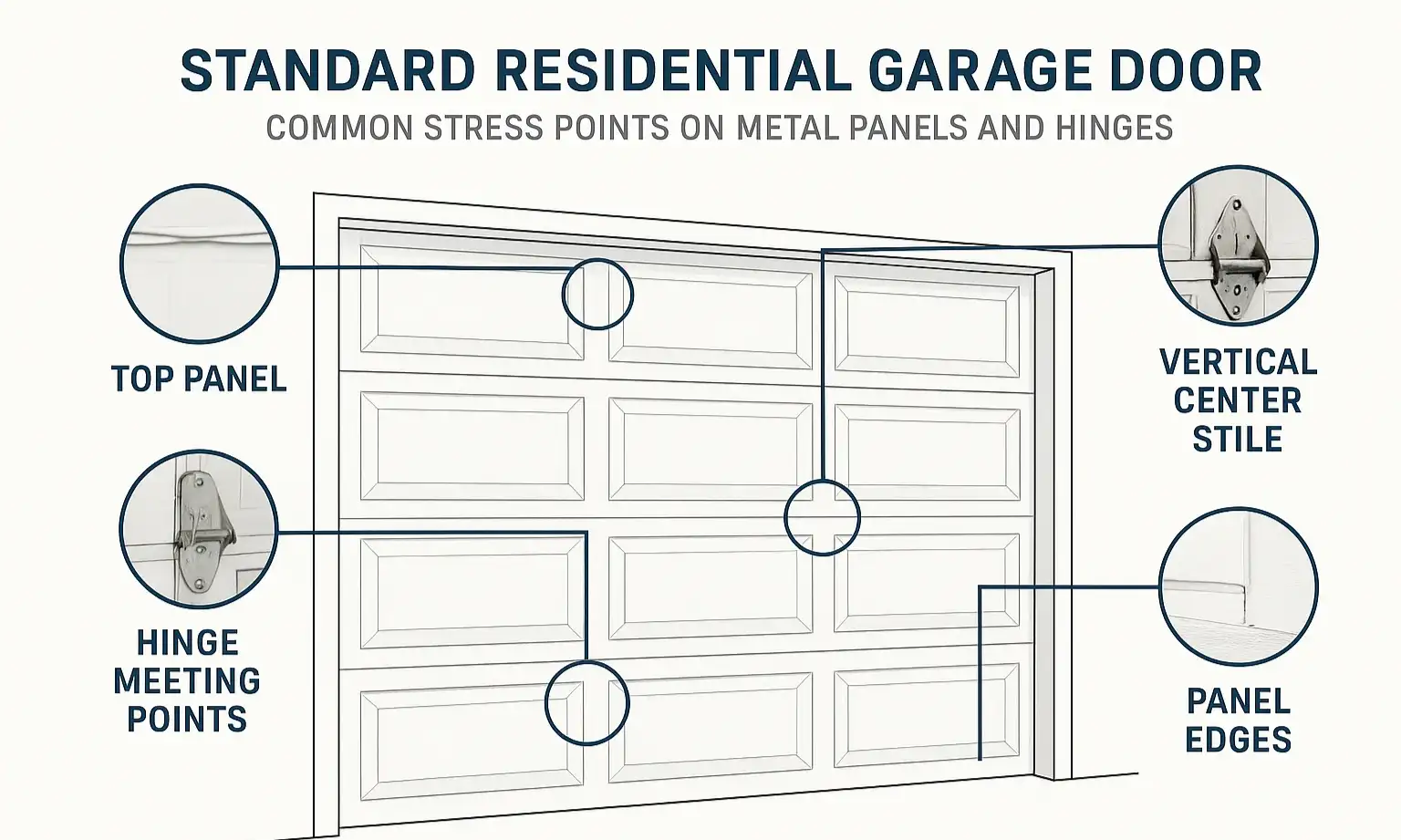
- Top Panel Connection: The opener arm attaches here, pulling the full weight of the door from this single point.
- Center Stiles: These vertical supports within each panel bear a significant structural load.
- Hinge and Roller Areas: The metal around hinges and rollers endures constant friction and vibration.
- Bottom Panel: This panel bears the initial lifting force and is most exposed to ground moisture and impacts.
- Lock Area: The structure around the lock can weaken over time from use and pressure.
Building: The 10-Minute Proactive Inspection Checklist
- Close the garage door completely.
- Disconnect the automatic opener to prevent accidental operation.
- Ensure you have good lighting. A bright flashlight is your best tool.
Step 1: The Panel Scan (From a Distance)
Step 2: The Close-Up Panel Inspection
Step 3: The Hinge and Roller Check
Mastery: The Visual Glossary of Garage Door Fatigue
Hairline Cracks vs. Scratches
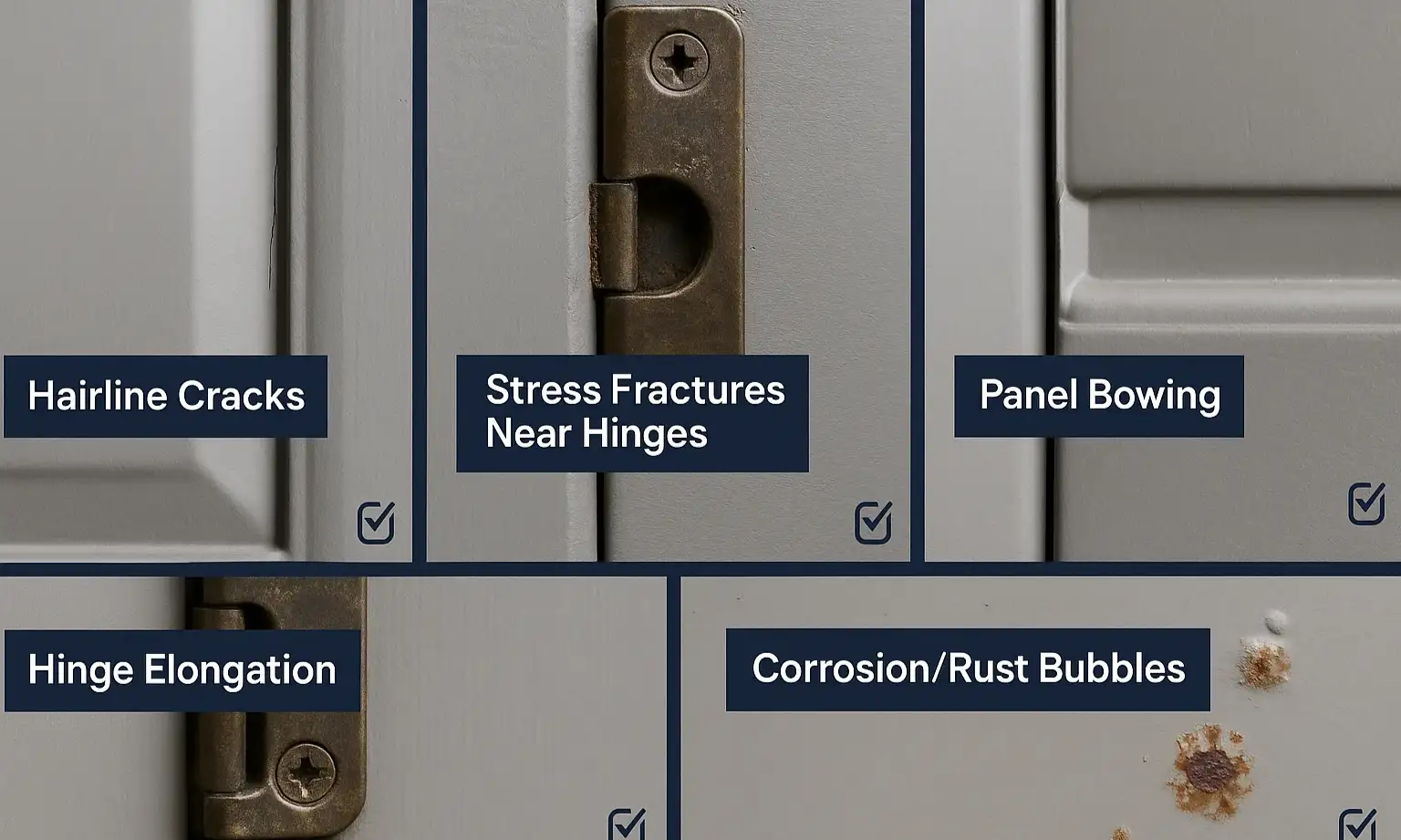
Stress Fractures Near Hinges
Hinge Fatigue (Elongated Holes)
Corrosion and Rust Bubbles
Action: What to Do With Your Findings
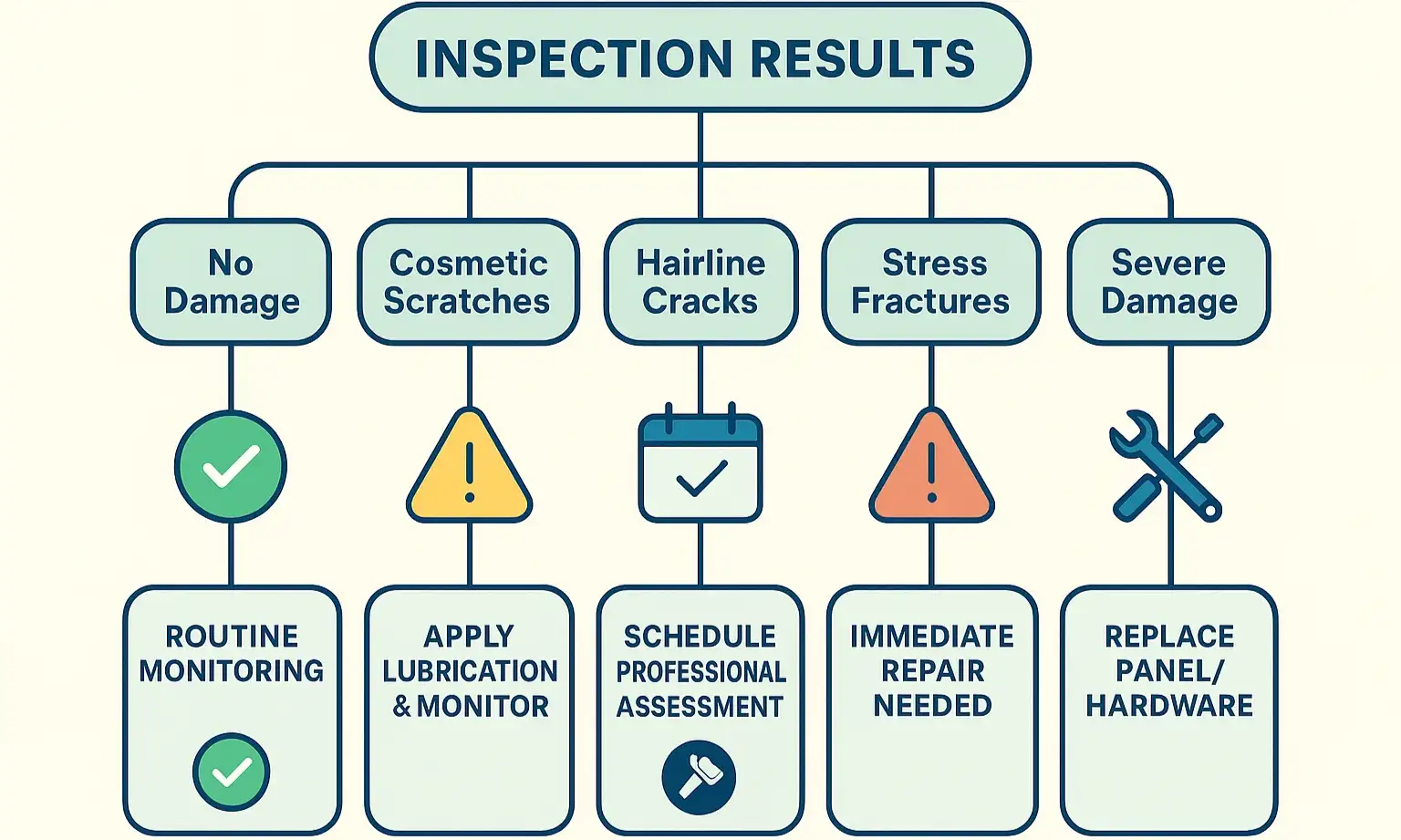
- If you find a cosmetic scratch: Clean the area and apply touch-up paint to prevent rust. Monitor it during your next inspection.
- If you find a small hairline crack in the center of a panel: This is an early warning. While some DIY kits exist, a professionally installed reinforcement strut is often the best solution to prevent it from worsening. Ignoring it will eventually lead to needing a full garage door panel repair.
- If you find any crack near a hinge, roller, or on the top panel: This is a high-stress area and requires immediate attention. Do not attempt a DIY fix. An expert needs to assess the structural integrity, as this type of damage can lead to a sudden and dangerous failure. In some cases, you may need to learn how to replace a garage door panel.
- If you find worn hinges or elongated screw holes: Replace the worn hardware as soon as possible. This is an inexpensive fix that prevents much costlier panel damage down the road.
Frequently Asked Questions
What causes micro-cracks and metal fatigue in the first place?
How can I tell a cosmetic scratch from a structural micro-crack?
Are small cracks on a garage door really a safety issue?
What does a fatigued hinge look like compared to a new one?
You may also like