Our company logo

State

How 15 Minutes of DIY Can Save You a Service Call


Published: Mar 26, 2026

That sound. The cringe-inducing screech of metal on metal, the shuddering groan as your garage door struggles to open. It’s a sound that most homeowners know and try to ignore, hoping it will just go away. But that noise is more than an annoyance—it's your garage door telling you it's under stress.

What if a simple, 15-minute routine, performed just twice a year, could silence that noise, protect your investment, and actually extend the time between professional service appointments?

Many homeowners find themselves in a tough spot. You want to be proactive, but you’re worried about breaking something or, worse, attempting a dangerous repair. The good news is that there's a safe and effective middle ground. By understanding the basics of DIY lubrication and inspection, you don't replace the need for an expert, but you optimize it. You become the first line of defense for your home's largest moving part, saving money and preventing small issues from becoming costly emergencies.

The "Why" Behind the Work: The 3 Goals of Garage Door Maintenance


Before we grab a can of lubricant, it’s crucial to understand what we're trying to accomplish. Proper garage door maintenance isn't just about silencing squeaks; it's about achieving three core goals:

  1. Safety: Your garage door is incredibly heavy. It relies on a balanced system of springs, cables, and safety features to operate reliably. Regular checks ensure that safety mechanisms, like the auto-reverse function, are working correctly to protect your family and property.
  2. Silence: A quiet garage door is a well-maintained garage door. Those groans, creaks, and pops are symptoms of friction and strain on parts like rollers, hinges, and springs. Lubrication reduces this friction, allowing the door to move smoothly.
  3. Longevity: Reducing friction also means reducing wear and tear. A smoothly operating door puts less strain on the single most expensive component: the garage door opener. A little maintenance now can help you avoid a premature and costly motor replacement down the road.

Your Complete DIY Maintenance Checklist


Think of this as your semi-annual tune-up. It's a simple process of looking, listening, cleaning, and lubricating that anyone can perform safely.

1. Look & Listen: The 5-Minute Visual Inspection

With the garage door closed, take a moment to look over the entire system. Pay close attention to:
Rollers: Check if they are cracked, chipped, or worn. They should sit securely in the track.
Cables: Look for any broken strands or fraying near the bottom brackets. Do not touch frayed or broken cables, as they are under extreme tension.
Hinges & Hardware: Ensure all bolts and screws are snug. The vibrations of daily use can sometimes loosen them over time.
Next, open and close the door, listening carefully. Is the movement smooth or is it jerky? Are there any new, loud noises? These are key diagnostic clues.

2. Clean & Clear: The Basics of Good Housekeeping
Your garage door tracks are a common point of confusion. They need to be clean, but not greasy.
Wipe the Tracks: Use a damp cloth to wipe out any dirt, debris, or cobwebs from the vertical and horizontal tracks. Over time, this buildup can obstruct the rollers.
Clean the Photo-Eye Sensors: These are the two small sensors near the bottom of the door track, one on each side. Gently wipe the lenses with a soft, dry cloth to ensure nothing is blocking their beam.
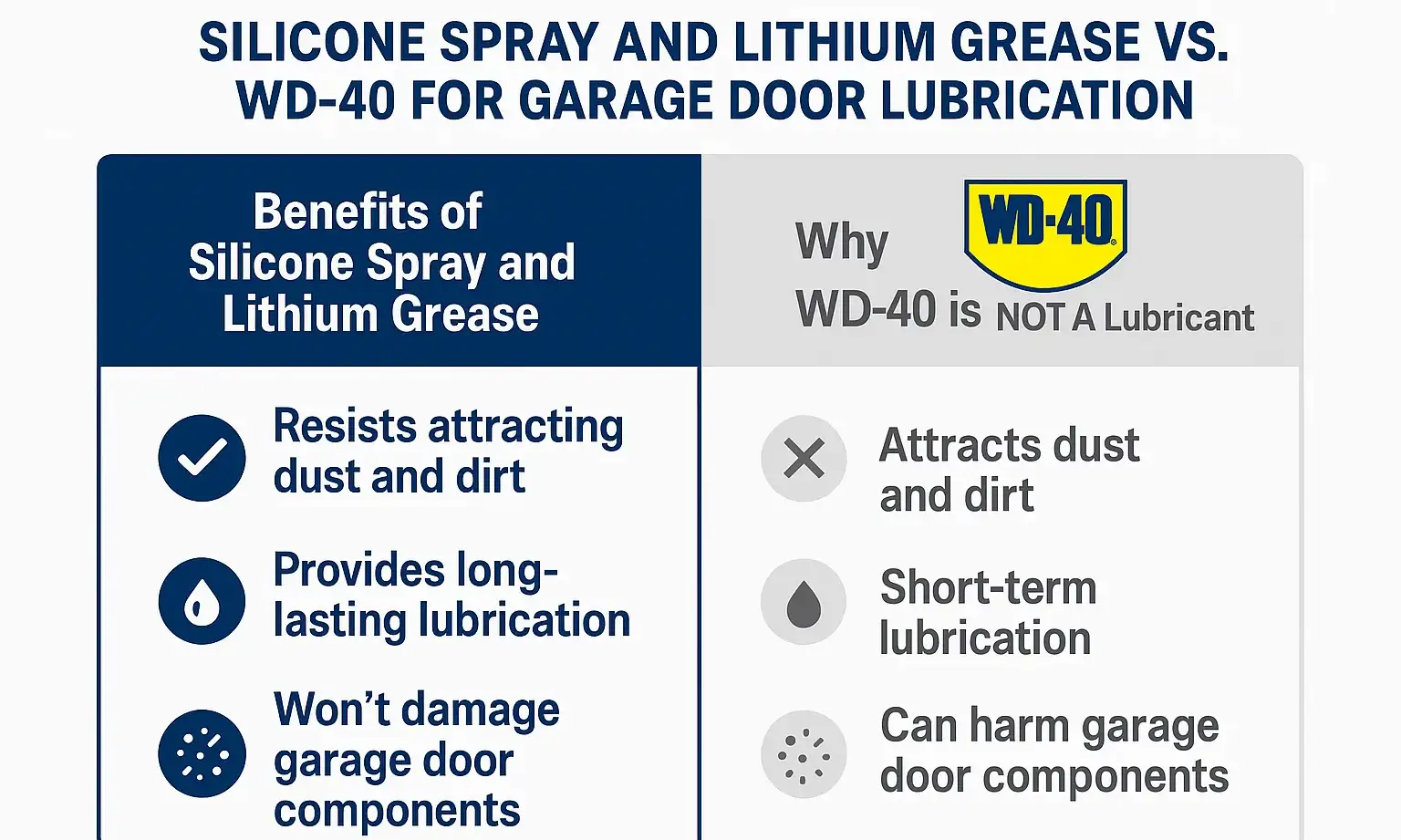
A visual guide showing a can of white lithium grease and silicone spray with green checkmarks, contrasted with a can of WD-40 marked with a red 'X'.

3. Lubricate (But Only the Right Parts)

This is the single most effective DIY task for improving your door’s performance, but it's also where most mistakes happen. Getting it right is easy when you know two things: what to use and where to apply it.
The Only 2 Lubricants You Need (and the 1 to Avoid at All Costs)
The most common question from homeowners is, "Can I just use WD-40?" The answer is an emphatic no. WD-40 is a solvent and degreaser, not a true lubricant. It can actually strip away existing grease and attract dust and dirt, making the problem worse over time.
Instead, you need one of two things:
1. White Lithium Grease: Comes in a spray can and is excellent for metal-on-metal contact points.
2. Silicone-Based Lubricant: A fantastic all-purpose choice that doesn’t attract dust. It’s perfect for most moving parts.
Anatomy of a Garage Door: A Visual Guide to Lubrication Points
Knowing how to lubricate garage door parts correctly is key. The goal is to hit the moving parts, not the surfaces they move on. A light coat is all you need.
Apply Lubricant To:

  • Hinges: Spray at the pivot points of all the hinges.
  • Rollers: Aim for the ball bearings inside the rollers. Avoid spraying the wheel (the nylon or steel part that touches the track).
  • Torsion Springs: Apply a light, even coat across the springs. This prevents rust and reduces the grinding noise they can make as the coils rub against each other.
  • Bearing Plates: Lightly spray the bearings located at each end of the torsion spring bar.
Crucial Tip: DO NOT LUBRICATE THE GARAGE DOOR TRACKS. This is the second biggest mistake homeowners make. Greasing the tracks doesn't help the rollers move; it just creates a sticky mess that collects dirt and grime, hindering the door's movement.
A visual guide showing a can of white lithium grease and silicone spray with green checkmarks, contrasted with a can of WD-40 marked with a red 'X'.

The Big Picture: How Your Effort Pays Off
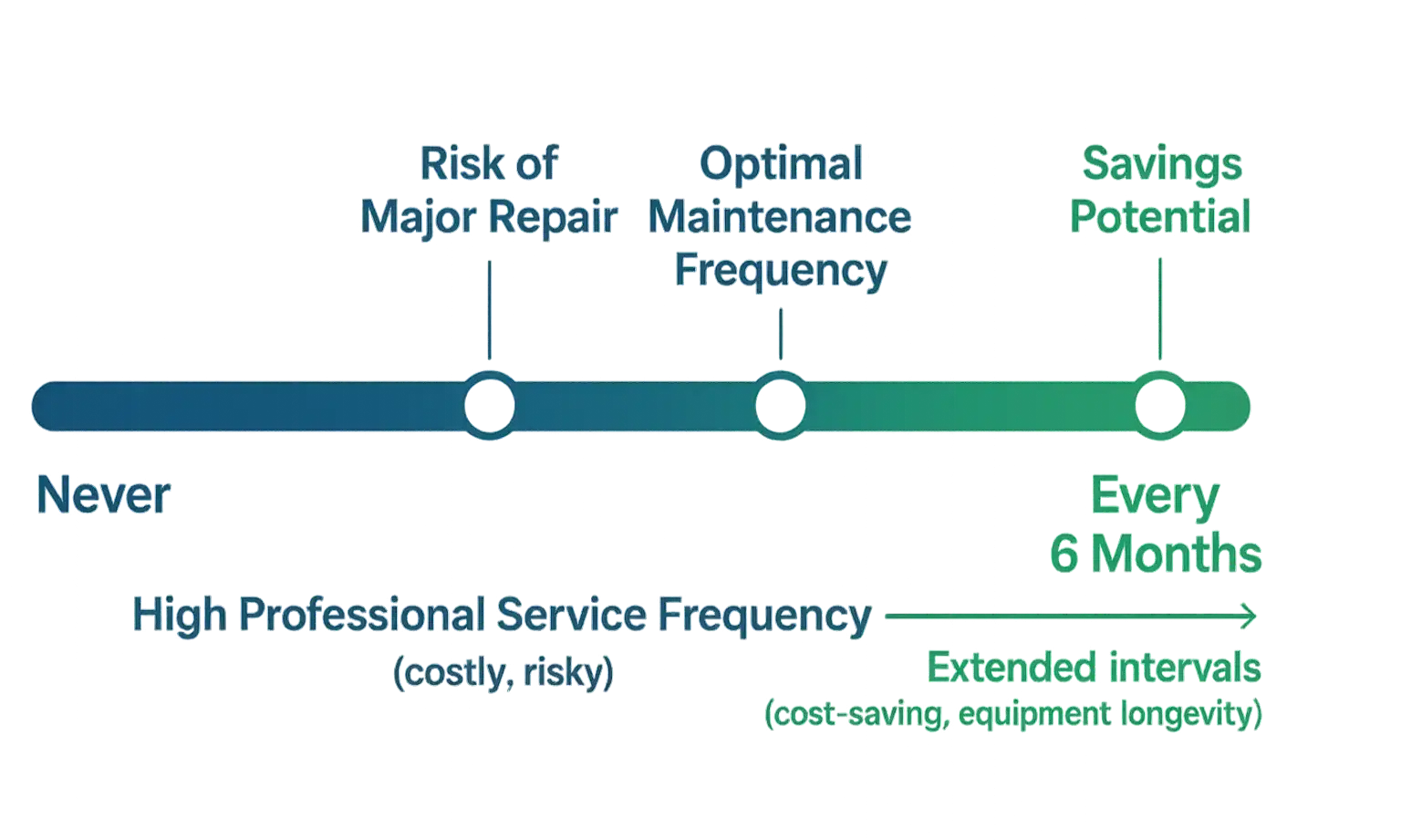

Consistent DIY maintenance doesn't eliminate the need for professional service, but it fundamentally changes your relationship with it. A professional technician can perform tasks you can't, like adjusting spring tension, checking door balance, and diagnosing complex opener issues.
Conceptual slider showing how regular DIY maintenance reduces frequent professional service needs.
Your DIY efforts reduce the daily strain that causes parts to fail prematurely. This means that when a professional does come, their visit is more likely to be for a scheduled tune-up rather than a costly emergency repair.

The Service Frequency Slider

Think of it like this: your maintenance habits directly influence how often you'll need that professional check-in.
By keeping your system clean and lubricated, you're handling the preventative care that allows a professional to focus on the fine-tuning that ensures years of safe, reliable operation.

Conceptual slider showing how regular DIY maintenance reduces frequent professional service needs.

Knowing Your Limits: The "Stop & Call a Pro" Checklist
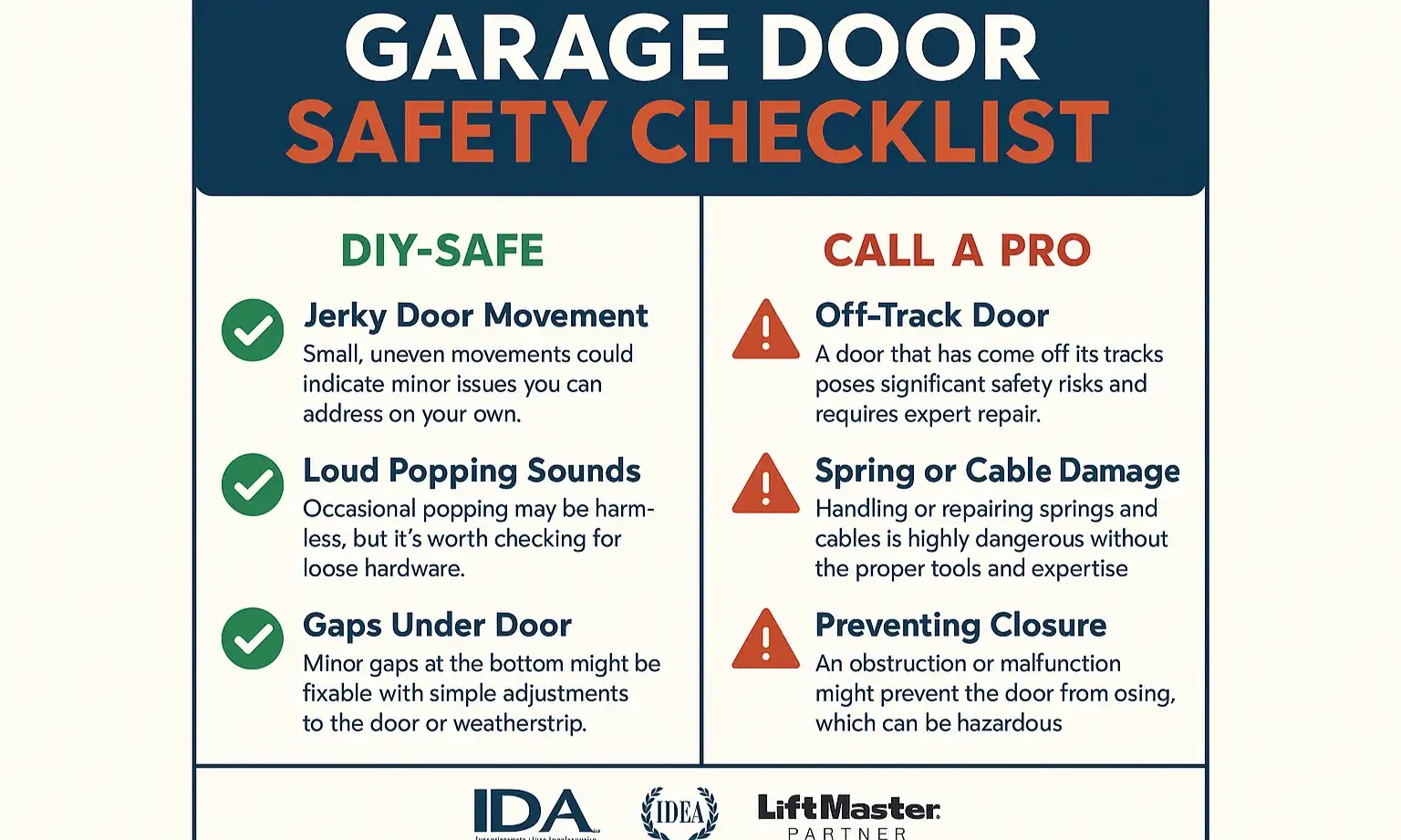

Checklist of key garage door warning signs: loud bang, frayed cables, crooked door, or heavy movement.
Empowerment also means knowing where to draw the line for safety. Some parts of a garage door system, especially the springs and cables, are under extreme tension and can cause serious injury if handled improperly.
If you observe any of the following symptoms, stop what you're doing and call a professional. These are not DIY fixes.
When you see these signs, the question becomes less "should I DIY or call a pro for garage door repair?" and more about ensuring your family's safety by letting an expert handle the high-tension components.

Checklist of key garage door warning signs: loud bang, frayed cables, crooked door, or heavy movement.

Need more information?

Frequently Asked Questions About Garage Door Maintenance


How often should I perform this DIY check?

A good rule of thumb is every six months. A simple way to remember is to do it when you change your clocks for daylight saving time in the spring and fall.

Seriously, can I use WD-40 just this once?

We strongly advise against it. It's simply the wrong tool for the job. Using it can clear away any remaining lubricant and attract grime, creating more friction and noise in the long run. Stick to silicone spray or white lithium grease.

What's the difference between a DIY check and a professional tune-up?

Your DIY check is preventative maintenance—cleaning, looking, and lubricating to reduce wear. A professional tune-up is diagnostic and corrective. A technician will check the door's balance, adjust spring tension, inspect the opener's force settings, and diagnose any underlying mechanical or electrical issues.

My door is still loud after I lubricated it. What's wrong?

If you've properly lubricated all the points and the door is still noisy or jerky, it likely points to a deeper issue. It could be worn-out rollers, an unbalanced door, or a problem with the opener. This is a perfect time to refer to the "Stop & Call a Pro" checklist.

How often should you lubricate your garage door?

For most residential garage doors, lubricating all moving metal parts every 3 to 6 months is ideal to ensure smooth and quiet operation. If you live in a coastal area with salty air or a particularly dusty region, you might lean towards every 3 months.

Your Path to a Healthier Garage Door


Taking an active role in your garage door's upkeep is one of the smartest investments a homeowner can make. With just a can of the right lubricant and 15 minutes of your time, you can quiet down your home, extend the life of your opener, and make professional service calls more predictable and less frequent.
This guide provides the foundation for keeping your door in great shape. For a deeper dive into all the components that contribute to your system's well-being, explore our ultimate homeowner's guide to garage door health. By being an informed and proactive owner, you ensure your garage door remains a reliable and safe entry to your home for years to come.

You may also like


blog photo

The Smarter Way to Predict and Prevent Garage Door Repairs

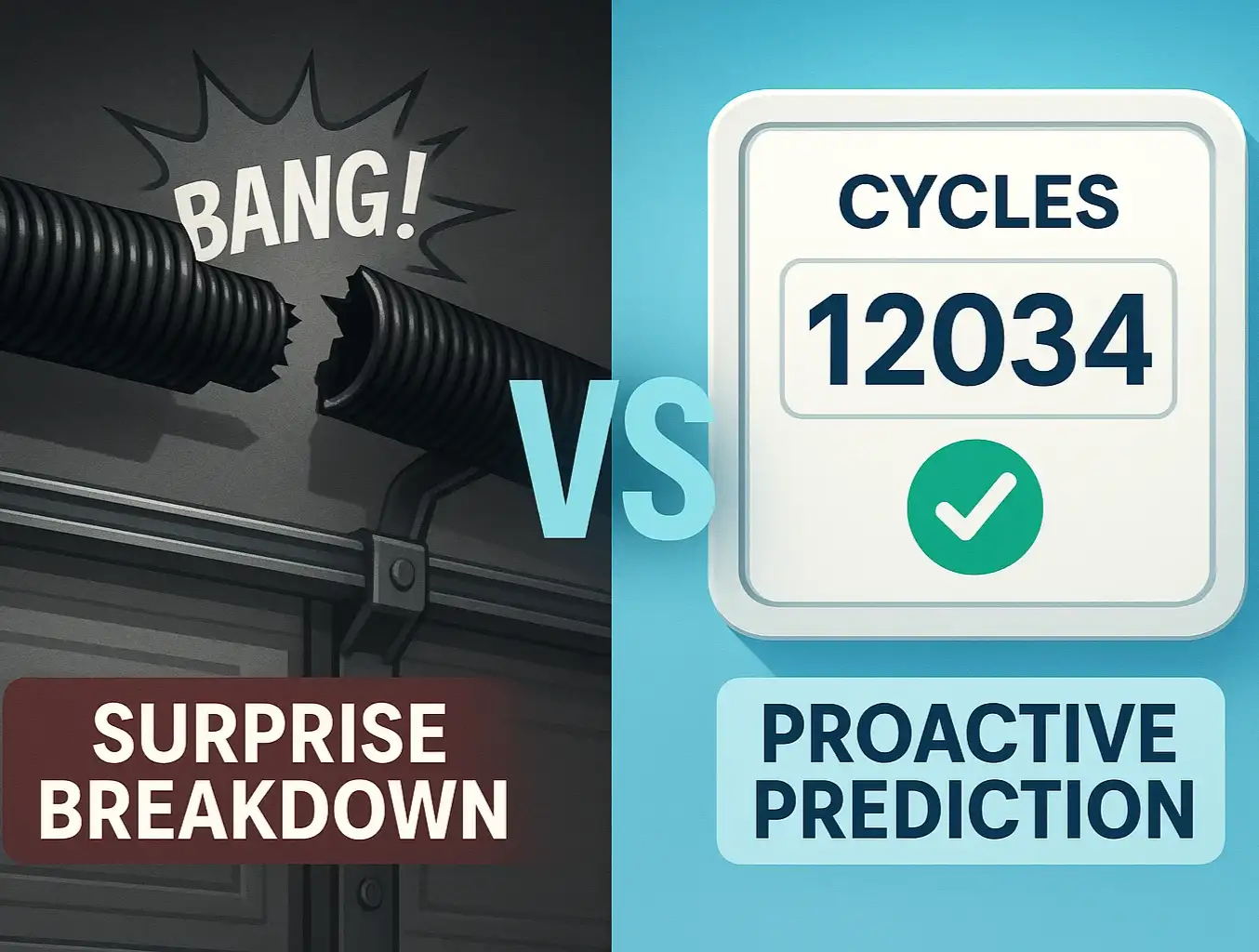
It’s one of the most jarring sounds a homeowner can experience: a sudden, explosive BANG from the garage that sounds like a gunshot. You rush to see what happened, only to find your garage door won't open and a snapped, angry-looking metal coil is hanging where it shouldn’t be. That sound is the final cry of a garage door spring pushed beyond its limit. For most people, it’s a complete surprise—an unexpected and urgent expense. But what if it wasn't a surprise? What if you could see it coming years in advance? Most garage door advice relies on a simple, one-size-fits-all calendar: "get your door serviced once a year." But that’s like telling every car owner to get an oil change every 5,000 miles, regardless of whether they drive cross-country or just to the local grocery store. It doesn't account for the single most important factor: how much you actually use it. This guide will introduce you to a smarter way to think about garage door care. We'll shift the focus from time to usage, transforming you from a reactive owner waiting for a breakdown to a proactive one who can predict issues before they happen.

blog photo

How Often Should My Garage Door Be Serviced

Your garage door is an essential part of your home. Therefore, its proper and regular maintenance ensures security and peace of mind. Meanwhile, neglecting it may potentially lead to serious malfunctions and costly replacements down the road. Do you know the recommended frequency of garage door inspections? Are you aware of the definition of professional servicing? The truth is the only reliable way to identify hazards like malfunctioning sensors or worn-out parts, which can prevent accidents and injuries is to have a professional examine it. In this article, we will delve into the undeniable necessity of quality garage door services. Up & Down Garage Doors will uncover the secrets of why, when, and how expert maintenance can extend the life of your garage door and keep your living space safe and secure. Keep reading for more information.