Troubleshooting Common DIY Garage Door Opener Installation Problems
Published: Mar 18, 2026
There's a unique moment of anticipation when you finish a big DIY project. You've followed the instructions, tightened the last bolt on your new garage door opener, and now it's time for the big reveal. You press the button on the wall control, expecting a smooth, quiet hum and the graceful ascent of your garage door.
Instead, you get… silence. Or a confusing buzz. Or the door moves six inches and abruptly reverses.
If you’re standing in your garage right now feeling a mix of confusion and frustration, take a deep breath. You’re not alone, and the good news is that most first-run installation problems are common, fixable, and rarely mean you’ve broken your new opener.
Unlike issues that crop up after years of wear and tear, problems with a fresh installation almost always trace back to a few key areas: alignment, wiring, or settings. This guide is built specifically for this moment—to help you diagnose the symptom, find the root cause, and get your new opener working perfectly.
The "Pre-Flight Check": Your First Power-On Checklist
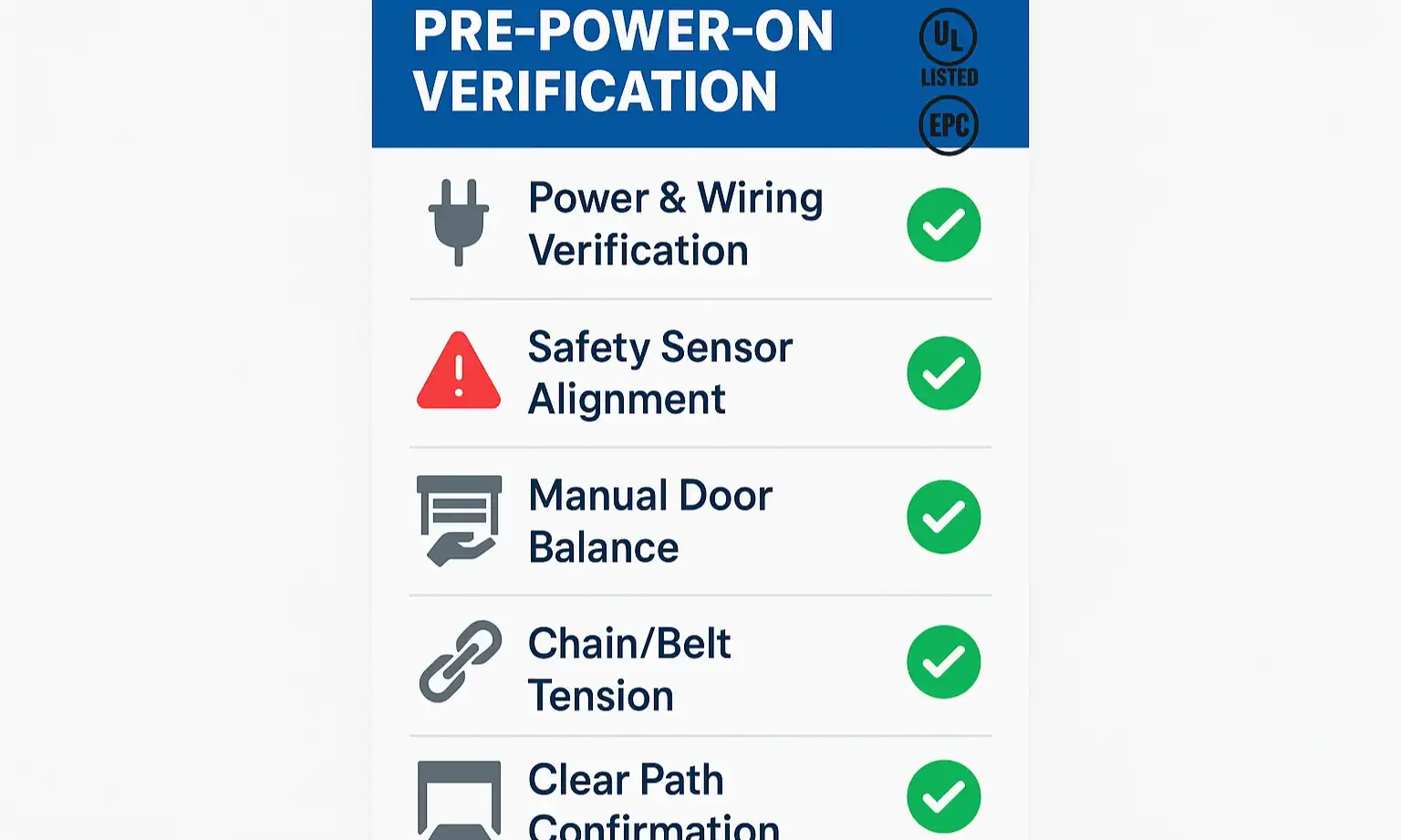
- Manual Door Balance Test: Pull the red emergency release cord to disconnect the opener from the door. Now, lift the door by hand. Does it move smoothly? Can you lift it with one hand? Does it stay put when you leave it halfway open, or does it slam shut or fly open? A properly balanced door should feel almost weightless and stay in position. If your garage door is sticking when opening or feels heavy, you have a spring or track issue that the opener cannot (and should not) overcome.
- Power & Wiring Check: Confirm the opener is plugged into a working outlet. Double-check the wiring to the wall control and safety sensors. The most common mistake is reversing the wires (e.g., connecting the white wire to the red terminal). Ensure all connections are secure. If you suspect a problem with the wiring itself, you may need a guide on garage door wiring repair.
- Safety Sensor Alignment: Look at the two small sensor "eyes" at the bottom of your garage door tracks. Each should have a small LED light. Are both lights solid (usually one green, one amber)? If one is flickering or off, they aren't aligned. They must be able to "see" each other with an unbroken beam.
- Chain/Belt Tension Check: Is the chain or belt sagging significantly? It should be taut but not banjo-string tight. A rule of thumb is that it should sit about a quarter-inch above the base of the rail at its midpoint.
- Clear Path Confirmation: Make sure there are no tools, ladders, or debris in the door's path. It seems obvious, but it’s a common cause for the door reversing on its first test run.
Interactive Symptom Solver: What's Your Opener Doing (or Not Doing)?
Problem 1: The Motor is Completely Silent
Problem 2: The Motor Hums, But the Door Doesn't Move
- What to Check First: The emergency release. The trolley (the mechanism that moves along the rail) may still be disconnected from the chain or belt. You need to know how to reconnect a garage door opener to the door. Typically, you'll run the opener until the trolley connects with the carriage assembly on the chain/belt, often with an audible click.
- Next Steps: Make sure the garage door isn't manually locked. Some doors have a slide lock on the inside that will prevent the opener from moving it.
Problem 3: The Door Moves a Few Inches and Reverses
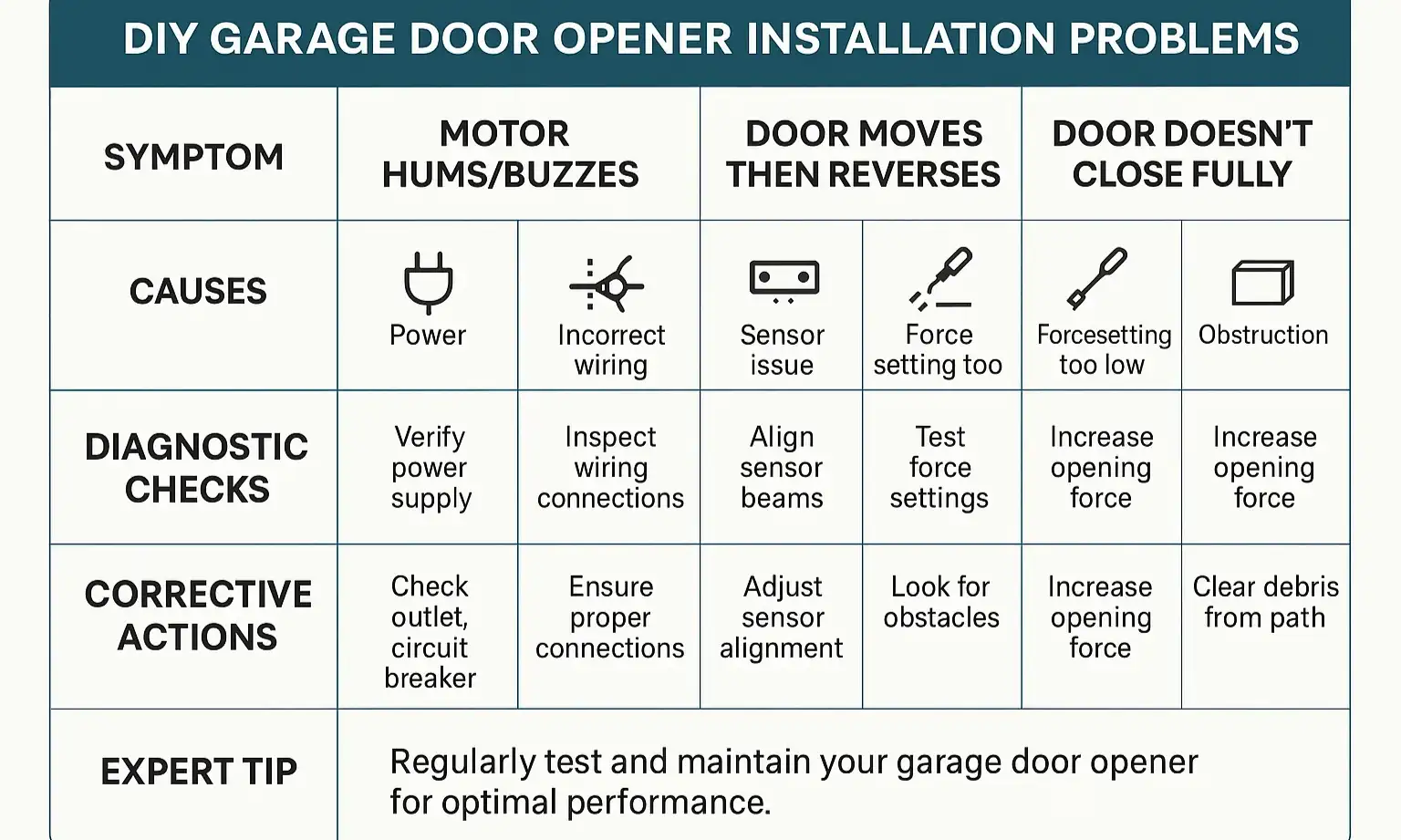
- What to Check First: The safety sensors. This is the #1 cause. Even if the lights look solid, a slight vibration during installation could have knocked them out of perfect alignment. Nudge them until both LEDs are glowing steadily. For a detailed walkthrough, learn how to align garage door sensors.
- Next Steps: Check the tracks for any binding. Is the door rubbing hard against the track or wood frame at any point? Re-check your manual door balance. If the door is too heavy, the opener's safety mechanism may interpret the resistance as an obstruction, which is one of the main reasons a garage door won`t close.
Problem 4: The Door Doesn't Close (or Open) All The Way
- What to Check: The limit adjustment screws or buttons on your motor unit. Most openers have two—one for the "up" limit and one for the "down" limit. Your manual will show you which is which and which direction to turn them to increase or decrease the travel distance.
- Next Steps: Make small, incremental adjustments. Move the screw a quarter-turn, then run the door again. Repeat this process until the door closes fully with the bottom weather seal lightly compressed against the floor, and opens to your desired height without straining. Proper adjusting of your garage door opener is key to its longevity.
Fine-Tuning for a Perfect Operation
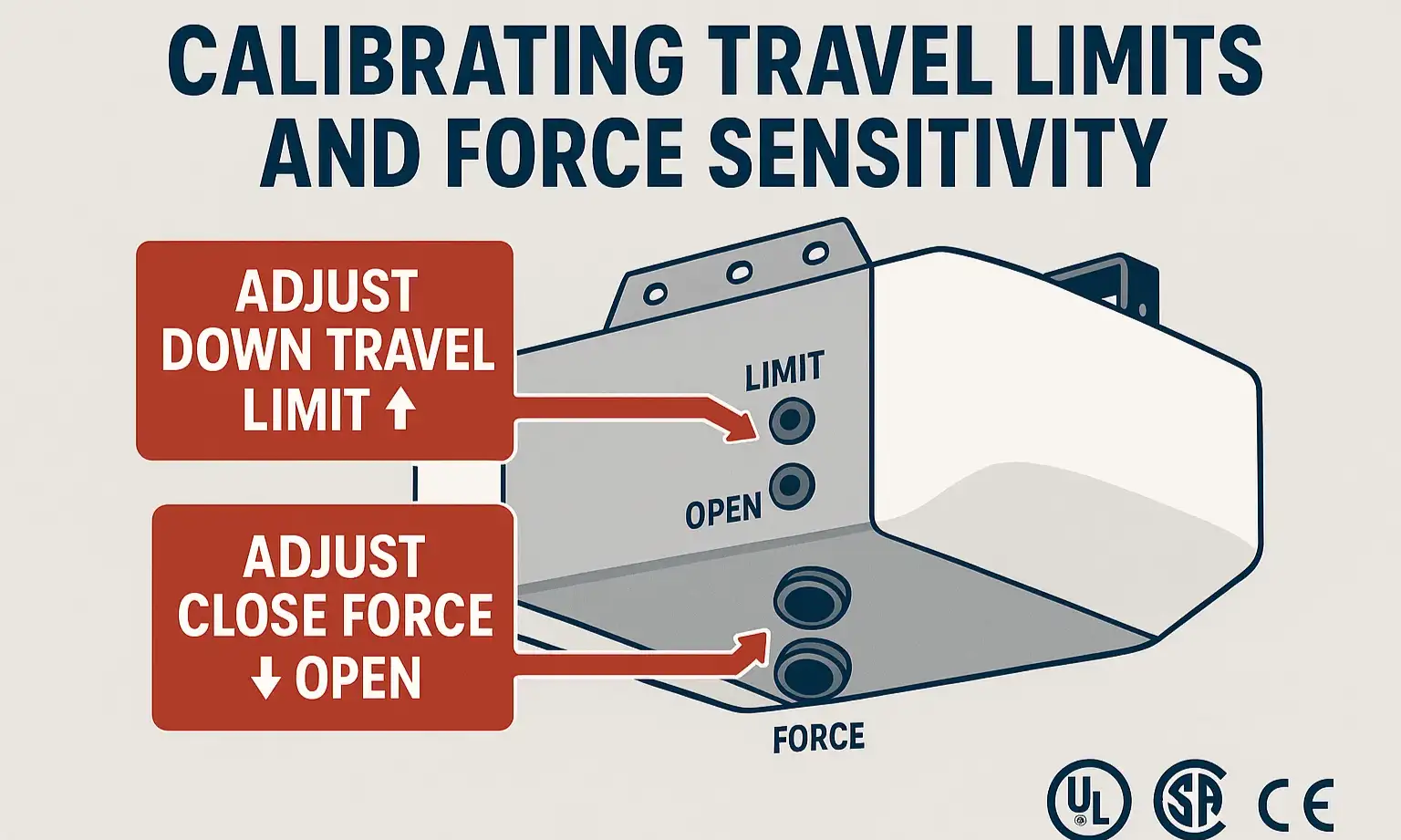
- Locate the Force Adjustment Controls: Like the travel limits, these are usually screws or buttons on the motor unit, one for "up" force and one for "down."
- Perform the Reversal Test: With the door closed, place a 2x4 board flat on the ground in the door's path.
- Test the Down Force: Press the button to close the door. It should make contact with the 2x4 and immediately reverse. If it doesn't, the down force is set too high. Decrease it slightly and test again.
- Test the Up Force: As the door is opening, grab the bottom of it firmly (and safely!). The motor should stop. If it continues to strain, the up force is too high.
Need more information?
Get a free quote
Know When to Call a Pro: 3 Problems That Aren't DIY-Friendly
- Torsion Spring Issues: If your manual balance test revealed a very heavy or slamming door, the problem is your garage door springs. These are under extreme tension and can be incredibly dangerous to adjust or replace without the right tools and training.
- Suspected Logic Board Failure: If you've checked all power sources and wiring, but the motor unit is still completely dead or behaving erratically, you may have a faulty main logic board.
- Persistent Binding or Grinding Noises: If the door itself is grinding, popping, or struggling to move in the tracks even by hand, there is a serious alignment issue with the door or tracks that an opener can't fix.
Frequently Asked Questions (FAQ)
Why is the main light on my opener blinking a specific number of times?
What do different noises mean on the first run?
My remote isn't working, but the wall button does. What's wrong?
You may also like