Our company logo

State

How an Unbalanced Garage Door Destroys Its Own Parts


Published: Jan 29, 2026

Have you noticed your garage door getting louder lately? Does it groan and shudder on its way up, or slam down with a jarring thud? Many homeowners dismiss these as signs of old age, but they're often symptoms of a much bigger, more destructive problem: an imbalanced door.

This isn't just about noise. An unbalanced garage door is in a constant state of self-destruction, placing immense stress on nearly every component. It's a silent killer that dramatically shortens the lifespan of your opener, springs, and cables, leading to expensive and unexpected repairs.

But here's the good news: you can diagnose this problem in about 30 seconds. Let's walk through how to check your door's balance and understand why this simple test is the most important thing you can do for the health of your entire garage door system.

The 30-Second Test That Could Save You Hundreds


Before we dive into the "why," let's get to the "what." This simple manual test reveals the true state of your door's balance.
Safety First: Make sure your garage door is closed and that children and pets are away from the area.
1. Disconnect the Opener: Locate the red emergency release cord hanging from your garage door opener. Pull it down and back (towards the motor) until it clicks. This disengages the opener, allowing you to move the door by hand.
2. Manually Lift the Door: Using the handle, lift the door until it's about halfway open. A properly balanced door should feel relatively light—around 10-15 pounds—and easy to lift with one hand.
Let Go and Observe: Carefully let go of the door. Here's what you're looking for:

  • Perfect Balance: The door stays put, suspended in mid-air. It might drift down an inch or two, but it holds its position.
  • Too Heavy (Needs Rebalancing): The door immediately starts to fall, or it slams shut. This is the most common issue.
  • Too Light (Needs Rebalancing): The door flies open to the top. This is less common but still indicates a problem.
If your door drifted, slammed shut, or flew open, it’s unbalanced. And now, let's explore the critical "aha moment" that explains why this is so damaging.

The "Aha" Moment: Your Opener is Not a Crane
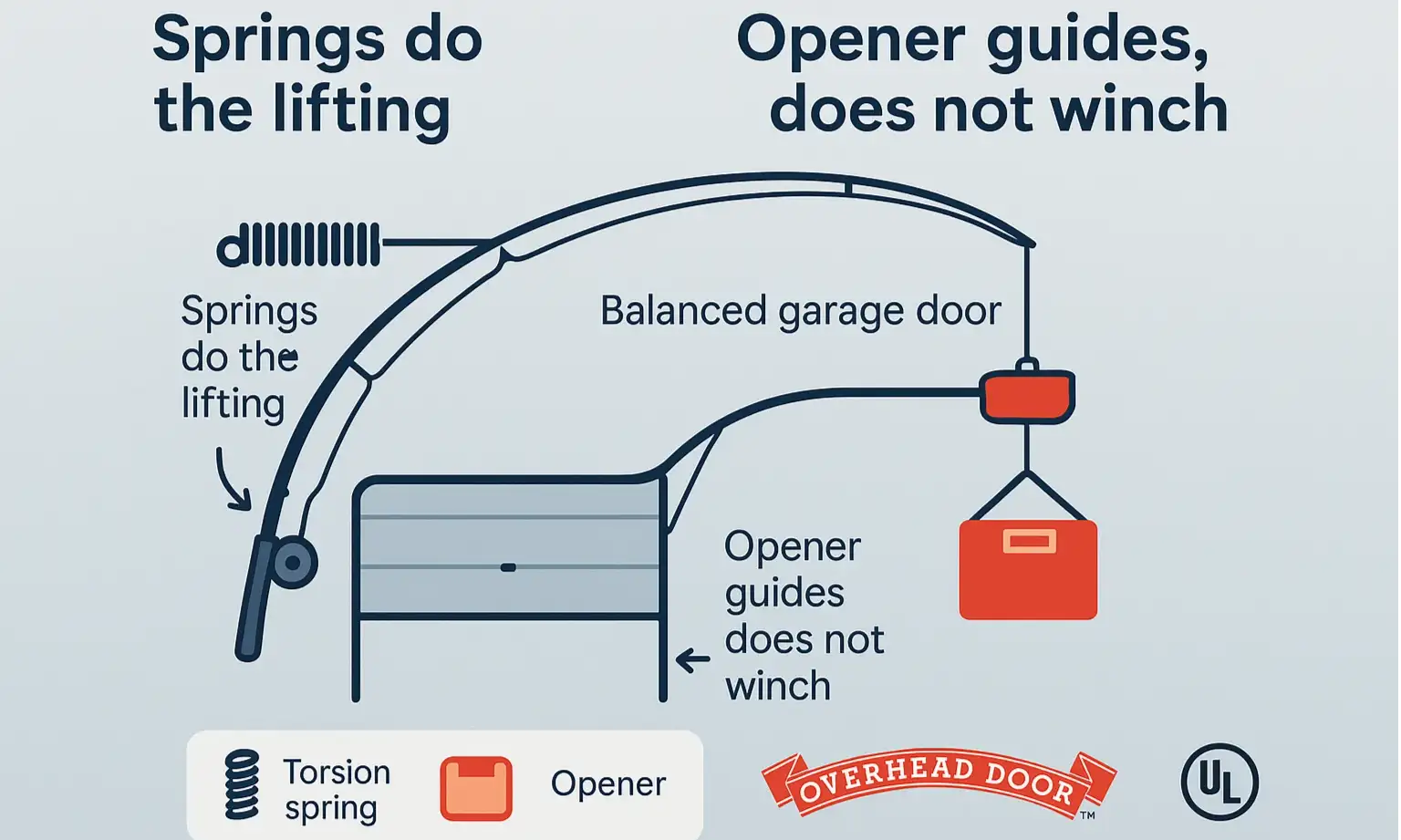

Here’s the single most important concept to understand about your garage door: The springs, not the opener, are designed to do the heavy lifting.
Authority-building diagram clarifies the mechanical truth that springs bear lifting load while the opener guides, reframing common misconceptions.
Think of it this way: a massive, 150-400 pound garage door is made "weight neutral" by a precisely tensioned spring system. The springs act as a counterbalance, holding the door's immense weight so that it can be moved with minimal effort.
The garage door opener’s job is simply to guide the door along the tracks. It’s designed to manage a balanced load of about 10-15 pounds.
When your door is unbalanced and heavy, you are forcing the opener to become a crane. It’s like trying to lift a bowling ball with a fishing rod. The rod might do it a few times, but you can hear it straining, and you know it's only a matter of time before it snaps. That grinding sound you hear from your opener? That's the sound of it being asked to do a job it was never built for.

Authority-building diagram clarifies the mechanical truth that springs bear lifting load while the opener guides, reframing common misconceptions.

The Breakdown: Anatomy of Stress on Your Garage System


An unbalanced door creates a cascade of destructive forces throughout the entire system. While you might only notice a loud noise, a complex battle is being fought—and lost—by the individual parts of a garage door.

The Opener Motor: From Gentle Guide to Overworked Winch

This is the first and most expensive victim. The opener's plastic drive gears and logic board are engineered for a balanced load. When forced to lift an extra 50, 100, or even 150 pounds, a few things happen:
  • Stripped Gears: The small plastic or nylon gears inside the motor housing are ground down, resulting in a grinding noise and eventual failure to lift the door.
  • Burnt-Out Motor: The motor overheats as it strains cycle after cycle, eventually burning out completely.
  • Fried Logic Board: The excess power draw can fry the sensitive electronics on the main circuit board.
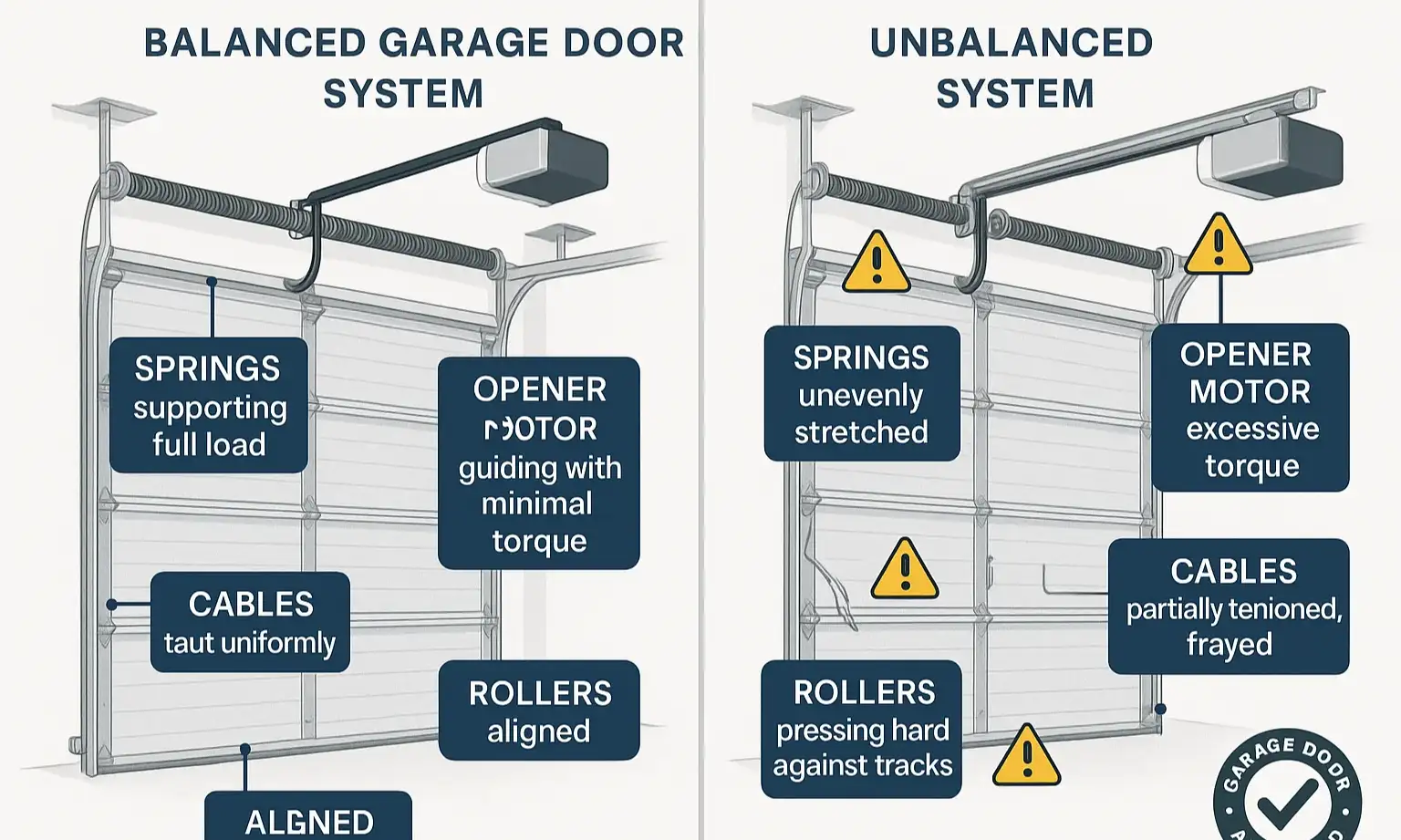
Visual comparison of balanced and unbalanced garage door forces clarifies how improper balance accelerates component wear and failure.
Instead of a simple rebalancing service, you're now looking at a full opener replacement, a far more costly repair. If you're already hearing strange noises, it's worth understanding what different garage door sounds explained could mean for your opener.

The Springs: A System Under Uneven Strain

Garage door springs are rated for a specific number of cycles (typically 10,000). Every time an unbalanced door is forced open, it puts uneven and excessive stress on the spring system. This can cause one spring to weaken and fail long before its expected lifespan is over, often with a loud, startling bang. Proper garage door spring safety is paramount, and keeping the door balanced is a key part of that.

The Cables: The Fraying Lifelines

The lift cables are responsible for transferring the force from the springs to the door. On an unbalanced door that hangs crooked, one cable bears significantly more weight than the other. This leads to premature fraying, stretching, and eventually, a snapped cable. A snapped cable is a dangerous situation that can cause the door to fall suddenly. Learning how to adjust garage door cables is a job for professionals due to the high tension involved.

The Panels and Tracks: The Slow-Motion Bend

An unbalanced door often closes unevenly, with one side touching down before the other. This repeated, lopsided impact can warp or bend the door panels themselves. It also puts sideways pressure on the rollers and tracks, potentially causing the door to go off-track—a complicated and hazardous problem. If you already see your door closing unevenly, it's a sign that you need to know how to fix a crooked garage door.

Visual comparison of balanced and unbalanced garage door forces clarifies how improper balance accelerates component wear and failure.

The Solution: What to Do Next & Why You Shouldn't Do It Yourself
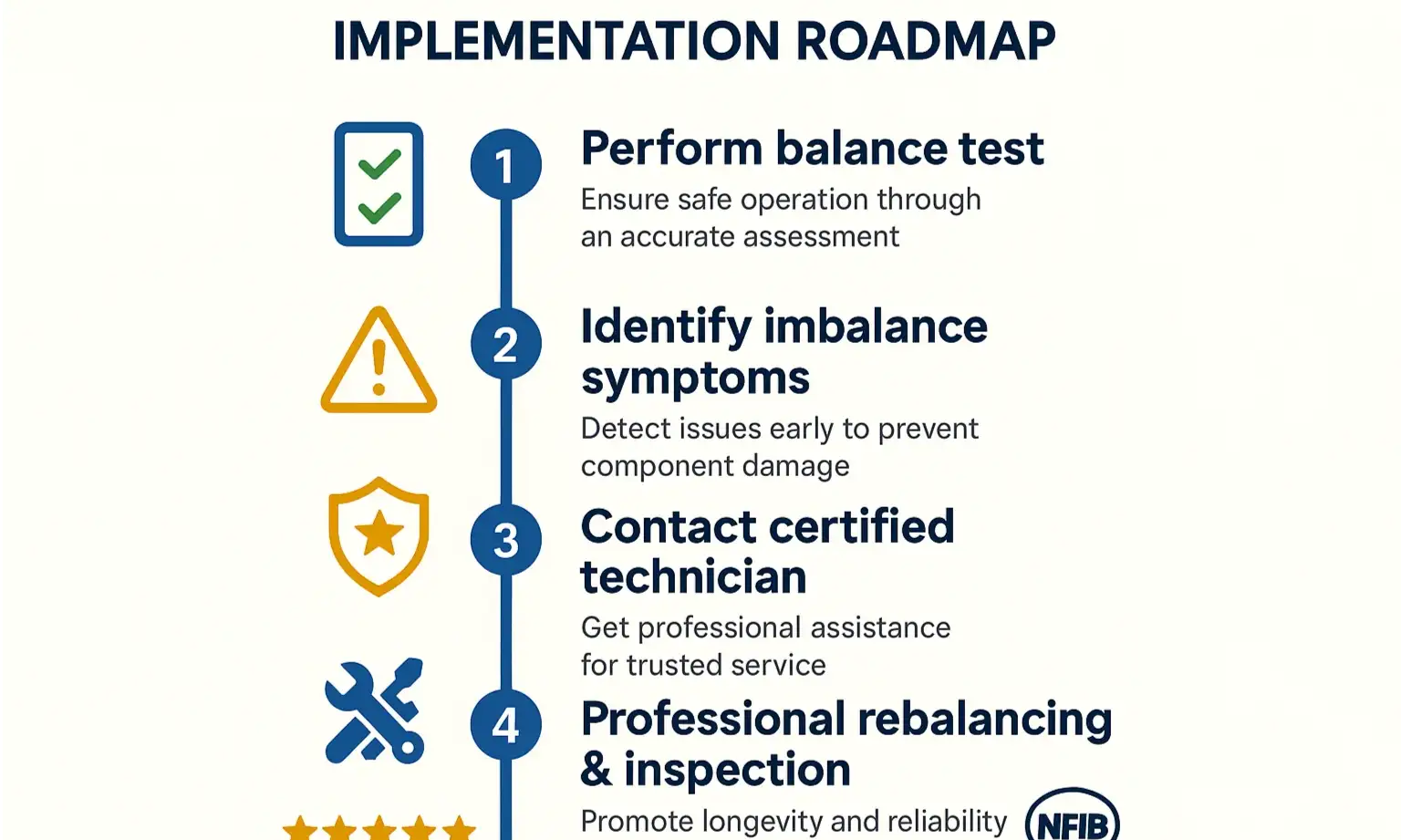

Step-by-step roadmap guides homeowners from diagnosis to trusted professional service, easing decision anxiety and ensuring component longevity.
So your door failed the balance test. The next step is clear: get it professionally rebalanced.
It might be tempting to look up a DIY guide, but adjusting garage door springs is one of the most dangerous home repair tasks you can attempt. The torsion springs are under extreme tension, holding enough energy to cause serious injury or even death if they are released improperly.
The path to restoring your door's health and longevity is straightforward:

  1. Diagnose the Issue: You've already done this with the 30-second balance test.
  2. Stop Forcing It: Use the door as little as possible until it's fixed. Every cycle is causing more damage.
  3. Call a Professional: A qualified technician has the specialized tools and training to safely and accurately adjust the spring tension, restoring the door's balance and preventing further damage.
A rebalancing service call is a minor, preventative expense. Ignoring it almost guarantees a major, costly repair down the line.
Step-by-step roadmap guides homeowners from diagnosis to trusted professional service, easing decision anxiety and ensuring component longevity.

Need more information?

Frequently Asked Questions About Garage Door Balance


What causes a garage door to become unbalanced in the first place?

Springs naturally lose tension over time with thousands of open-and-close cycles. Extreme temperature fluctuations can also affect the springs. In some cases, a previous repair where only one of two springs was replaced can also cause an imbalance.

How often should I perform the balance test?

It's a great idea to perform the test every 3-4 months as part of your regular garage door maintenance routine. It takes less than a minute and is the best early-warning system you have.

My door is heavy, but the opener still lifts it. Is it really a big deal?

Yes. As we covered, the opener is lifting a weight it was never designed for. It may work for a while, but it's operating under extreme duress. Its internal components are wearing down rapidly, and failure is a matter of when, not if.

Besides the test, what are other signs of an unbalanced door?


  • The door is difficult to lift manually.
  • You hear the opener motor straining or making grinding noises.
  • The door moves unevenly or seems to shimmy as it operates.
  • The door slams shut when closing.

Can I just tighten the springs myself?

No. We can't stress this enough. Adjusting garage door torsion springs is extremely dangerous without the right tools and knowledge. The stored energy in a wound spring is powerful enough to cause severe injury. Always leave spring adjustments to a trained professional.

The Path to a Healthier, Longer-Lasting Garage Door


Understanding the concept of balance transforms how you see your garage door. It's not just one big moving part; it's a finely tuned system where the springs and opener have distinct, critical roles. By ensuring your door is properly balanced, you protect every single component from premature failure, saving yourself from the cost and hassle of emergency repairs.
Take 30 seconds this weekend to perform the balance test. It’s the simplest step you can take to ensure your door operates smoothly, quietly, and safely for years to come. By avoiding common garage door maintenance mistakes, you can extend the life of your entire system.
If your test reveals an imbalance, don't wait for the problem to get worse. Our team of certified technicians at Up & Down Garage Doors is available 24/7 to safely restore your door's balance and prevent costly damage.

You may also like


blog photo

Maximizing Garage Door Hinge Lifespan

Is your garage door trying to tell you something? Those squeaks, groans, and stutters aren't just annoying noises—they're often cries for help from one of the hardest-working parts of the system: the hinges. Think of your garage door hinges as the joints in your body. They are the critical connection points that allow the heavy door panels to bend and glide smoothly along the track. When they're healthy, you barely notice them. But when they start to fail, the entire system can become noisy, unsafe, and prone to costly damage. This guide is your go-to resource for decoding your door's language. We'll walk you through everything from basic hinge anatomy to a simple "symptom checker" that will help you decide when to maintain and when it's time to replace.

blog photo

Maintenance Considerations for Vertical Lift Garage Door Systems

You invested in a vertical lift garage door for a reason. Maybe it was to make room for a car lift, create lofted storage, or simply for that clean, modern aesthetic that maximizes every inch of your garage. Whatever the reason, you’ve upgraded from a standard system to something more specialized. Here’s the thing about specialized equipment: it requires specialized care. The very mechanics that give you all that glorious vertical space also create unique stress points and maintenance needs. Ignoring them is like owning a performance car and never changing the oil. Eventually, that smooth, quiet operation will be replaced by squeaks, jerks, and costly problems. This guide is your owner's manual for protecting that investment. We’ll walk through everything from the basic anatomy of your system to a simple maintenance schedule that will keep it running flawlessly for years to come.

blog photo

Fixing Rust on Garage Door Tracks and Rollers

Ever been jolted by a sudden grinding, squeaking, or shuddering noise as your garage door opens or closes? It’s a sound that makes you cringe, and for good reason. That noise isn't just an annoyance; it's a warning sign. Your garage door is trying to tell you something important about its health, and often, the culprit is a small, creeping problem you might not have noticed: rust. Many homeowners see a bit of rust on their garage door tracks or rollers and dismiss it as a cosmetic issue. But that reddish-brown coating is a performance killer. It creates friction, forcing your entire system to work harder and leading to bigger, more expensive problems down the line. The good news? You can often tackle this problem yourself. Understanding what's happening and why it matters is the first step toward a smoother, quieter, and longer-lasting garage door system. If you're looking for a more general guide to a noisy garage door fix, we have you covered, but here we’ll focus specifically on the damage caused by rust.