The Smarter Way to Predict and Prevent Garage Door Repairs
Published: Mar 25, 2026
It’s one of the most jarring sounds a homeowner can experience: a sudden, explosive BANG from the garage that sounds like a gunshot. You rush to see what happened, only to find your garage door won't open and a snapped, angry-looking metal coil is hanging where it shouldn’t be.
That sound is the final cry of a garage door spring pushed beyond its limit. For most people, it’s a complete surprise—an unexpected and urgent expense. But what if it wasn't a surprise? What if you could see it coming years in advance?
Most garage door advice relies on a simple, one-size-fits-all calendar: "get your door serviced once a year." But that’s like telling every car owner to get an oil change every 5,000 miles, regardless of whether they drive cross-country or just to the local grocery store. It doesn't account for the single most important factor: how much you actually use it.
This guide will introduce you to a smarter way to think about garage door care. We'll shift the focus from time to usage, transforming you from a reactive owner waiting for a breakdown to a proactive one who can predict issues before they happen.
Foundation: Your Garage Door's Mileage - Introducing the Cycle
Building: The Component Lifespan Cheat Sheet
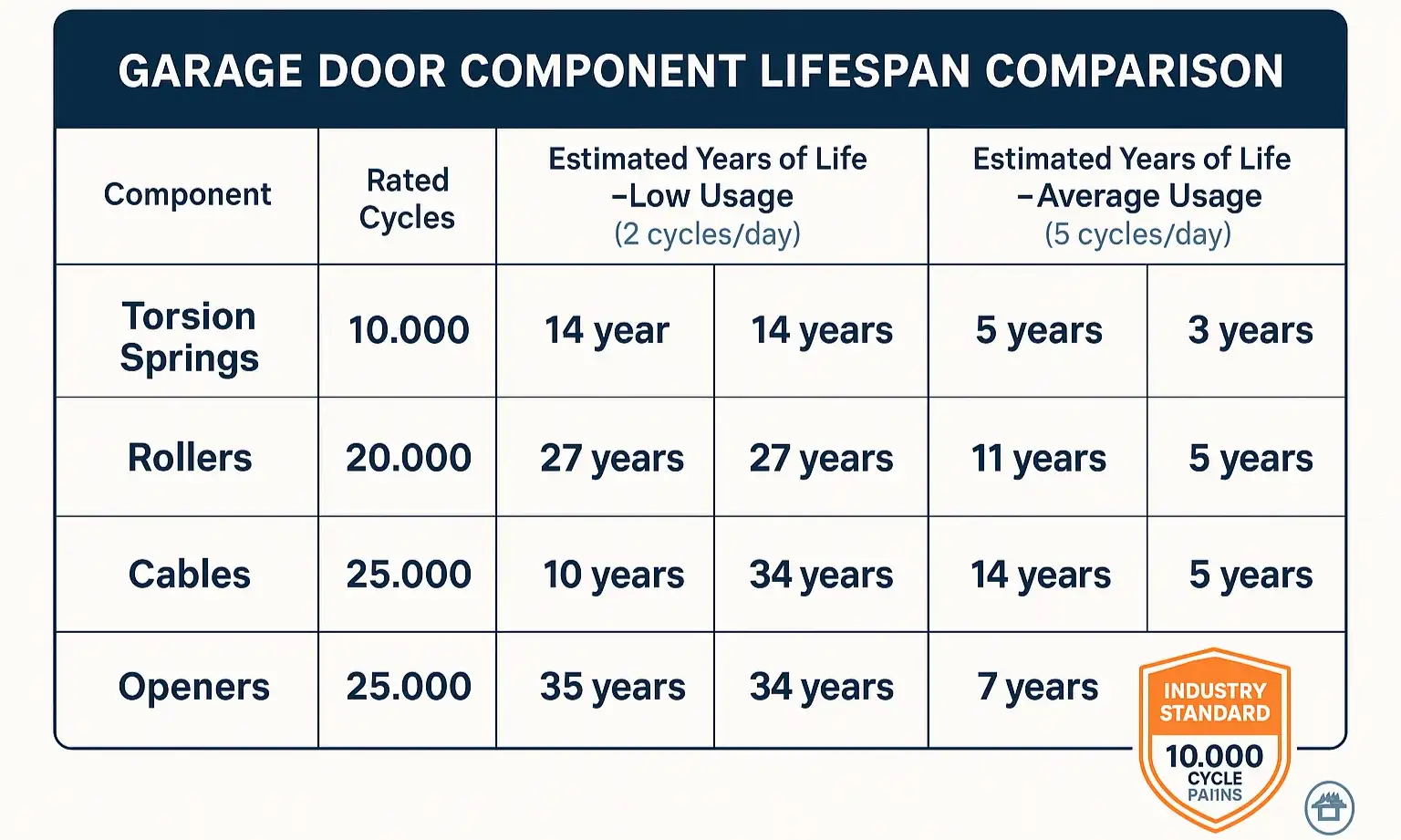
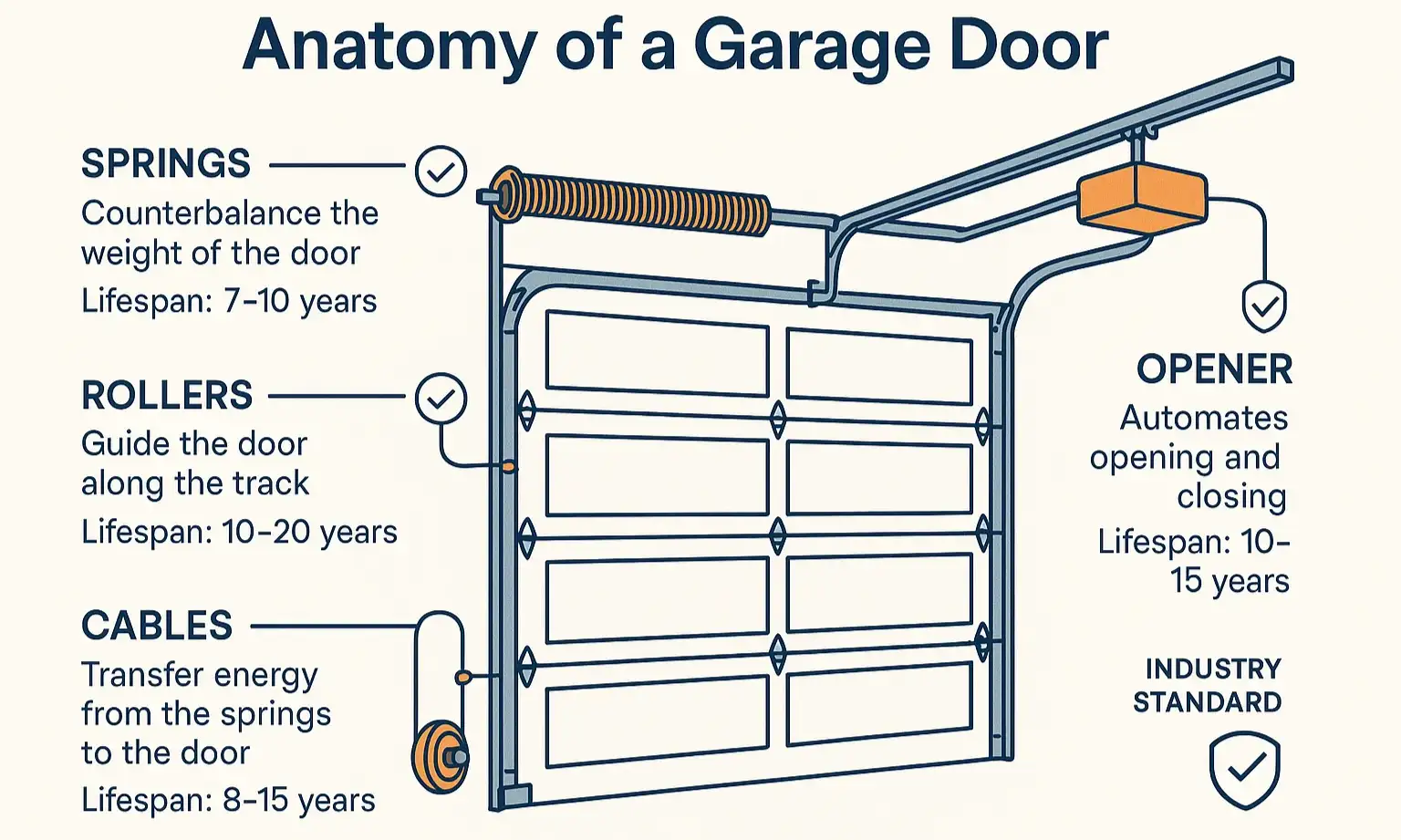
Garage Door Component Lifespans
- Torsion Springs (10,000 Standard Cycles): Expect 7-9 years for low use, 5-7 years for average use, and only 2-4 years for high use.
- Nylon Rollers (12,000 - 15,000 Cycles): Expect 10-14 years for low use, 7-10 years for average use, and 4-6 years for high use.
- Lift Cables (8,000 - 15,000 Cycles): Expect 7-14 years for low use, 5-10 years for average use, and 2-6 years for high use.
- Garage Door Opener (10,000 - 15,000 Cycles): Expect 10-14 years for low use, 7-10 years for average use, and 4-6 years for high use.
Mastery: The Personalized Maintenance Calculator
Step 1: Estimate Your Daily Cycles
- You leave for work (1 cycle)
- Your partner leaves for work (1 cycle)
- Kids leave for school (1 cycle)
- Deliveries or coming home for lunch? (Add cycles)
- Everyone returns home (1-3 cycles)
- Leaving for evening activities? (1+ cycles)
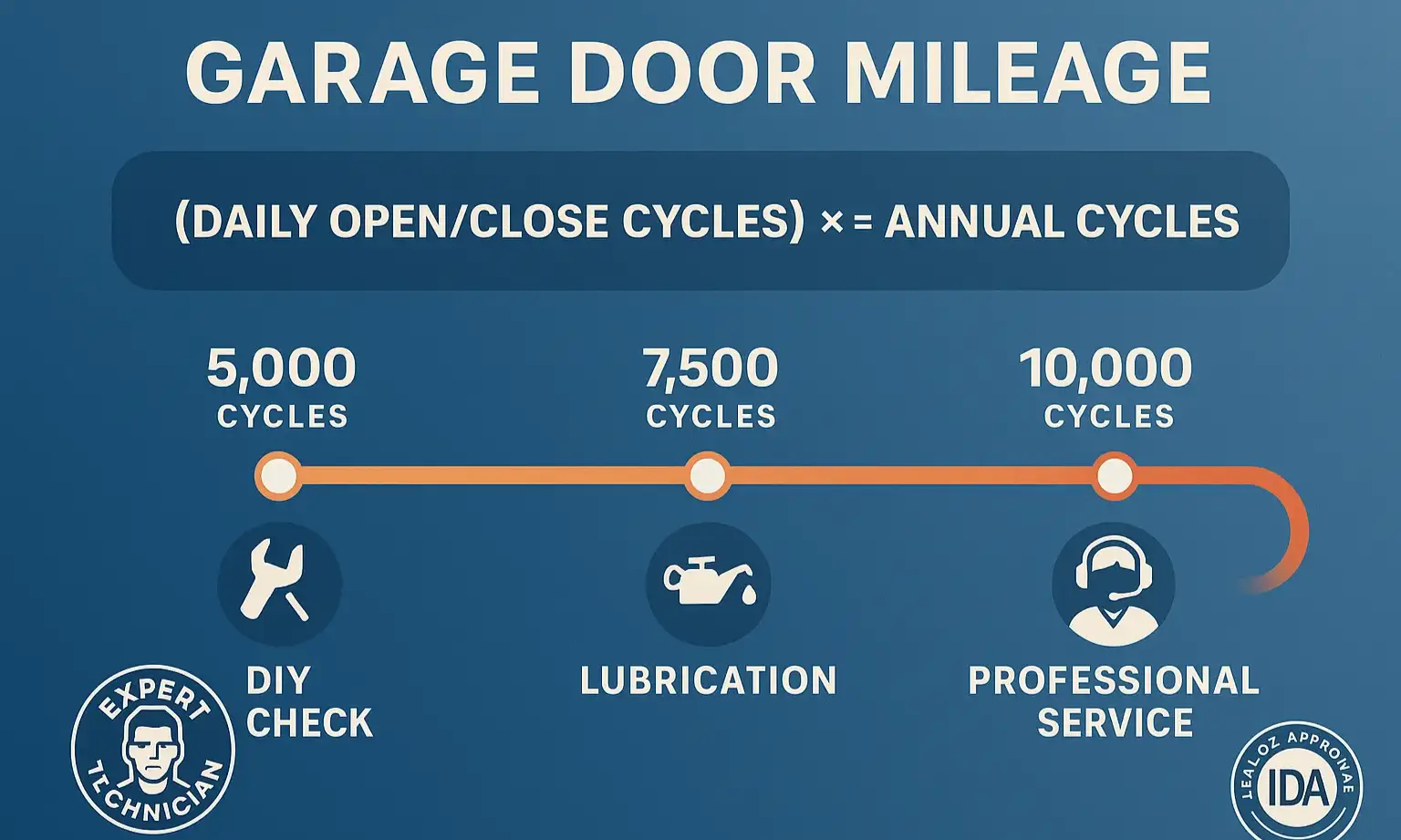
Step 2: Calculate Your Annual Cycles
Step 3: Predict Your Component Lifespans
Action: Your Custom Service Schedule (DIY & Pro)
Quarterly DIY Check (Every ~730 Cycles)
- Listen: Open and close the door. Do you hear any new grinding, scraping, or squeaking sounds?
- Look: Visually inspect the springs, cables, and rollers. Do you see any fraying on the cables or rust on the springs?
- Test Sensors: Wave an object (like a broom handle) under the door as it's closing. It should immediately reverse.
- Check Balance (with caution): With the door closed, pull the emergency release cord. You should be able to lift the door manually with moderate effort. If it feels incredibly heavy or flies up, the spring balance is off.
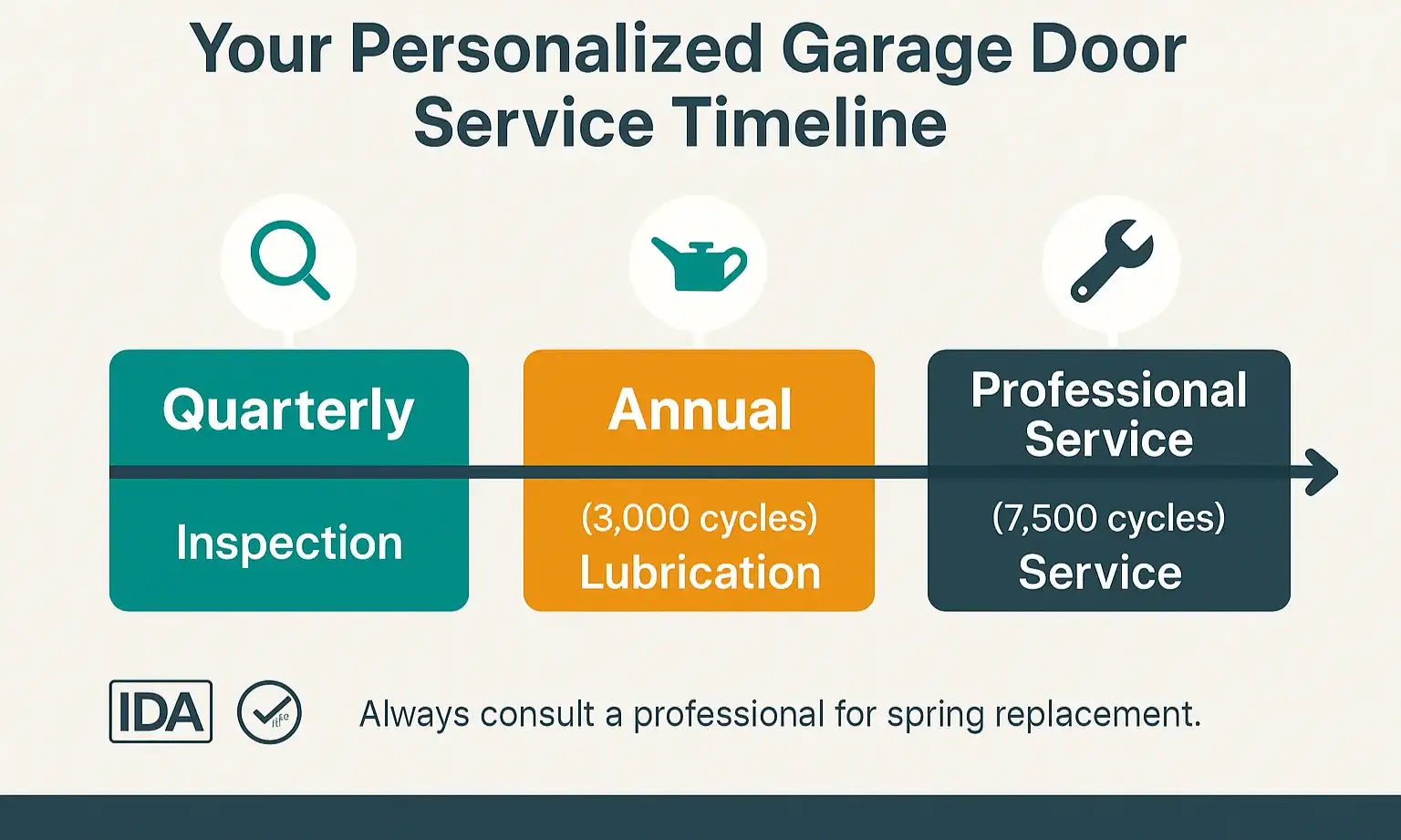
Annual / ~3,000-Cycle Check
- Lubricate Moving Parts: Apply a garage-door-specific lubricant (not WD-40!) to the rollers, hinges, and springs.
- Tighten Hardware: Vibrations can loosen nuts and bolts over time. Check and gently tighten any loose hardware.
- Perform DIY Checks: Repeat all the checks from your quarterly inspection. A focused garage door spring maintenance routine can significantly improve safety and longevity.
Pro-Level / ~7,500-Cycle Service (Approaching End-of-Life)
- Professional Inspection: A technician will measure spring tension, inspect cables for wear at the connection points, and check the opener's force settings.
- Proactive Replacement: This is the ideal window to replace your springs and cables before they fail. It turns an emergency situation into a planned, controlled service call, saving you stress and preventing potential damage to your door or opener when a spring breaks under load.
A Critical Safety Warning
Need more information?
Get a free quote
Frequently Asked Questions (FAQ)
What are the main signs my garage door needs service?
How long do garage door openers last?
Are nylon or steel rollers better?
My garage door cable looks frayed. Is that a big deal?
How long do garage door springs last, really?
Your Next Step: From Knowledge to Action
You may also like