Our company logo

State

What to Do When Your Garage Door Falls Unexpectedly


Published: Jan 16, 2026

It’s a sound you’ll never forget: a sudden, jarring crash from the garage that makes your heart leap into your throat. You rush to look and see the worst—your garage door, a solid, dependable part of your home just moments ago, is now hanging crooked, off its tracks, or collapsed on the floor.

In that moment, a flood of questions hits you. Is my home secure? Is anyone in danger? What do I do right now?

First, take a deep breath. This is a startling and stressful situation, but you are not alone, and there is a clear, safe way to handle it. This guide is your urgent action plan, designed to walk you through the immediate safety steps to secure the area and get the help you need without putting yourself or your family at risk.

The First 60 Seconds: Your Immediate Safety Checklist


Before you try to figure out what went wrong, your only priority is safety. A fallen garage door is an unstable, heavy object with parts that may still be under extreme tension.

  1. STOP! Do Not Touch Anything. Your first instinct might be to try and move the door or touch the dangling cables. Resist this urge. The door's weight is no longer supported correctly, and its components, especially the springs, can store tremendous energy.
  2. Clear the Area Immediately. Get everyone—family, children, and pets—out of the garage. The door could shift or fall further without warning.
  3. Create a Safe Zone. Cordon off the area. If the door is stuck open, block access to the garage from the inside of your home and the driveway. Use chairs, cones, or bright tape to signal that the area is dangerous.
  4. Turn Off the Power. Unplug the garage door opener from the electrical outlet. This prevents anyone from accidentally trying to operate the door with the remote or wall switch, which could cause further damage or injury.
  5. Do Not Try to Close or Open It. Whether manually or with the opener, attempting to force the door will only make the situation worse.

What Happened? A Safe Visual Inspection from a Distance
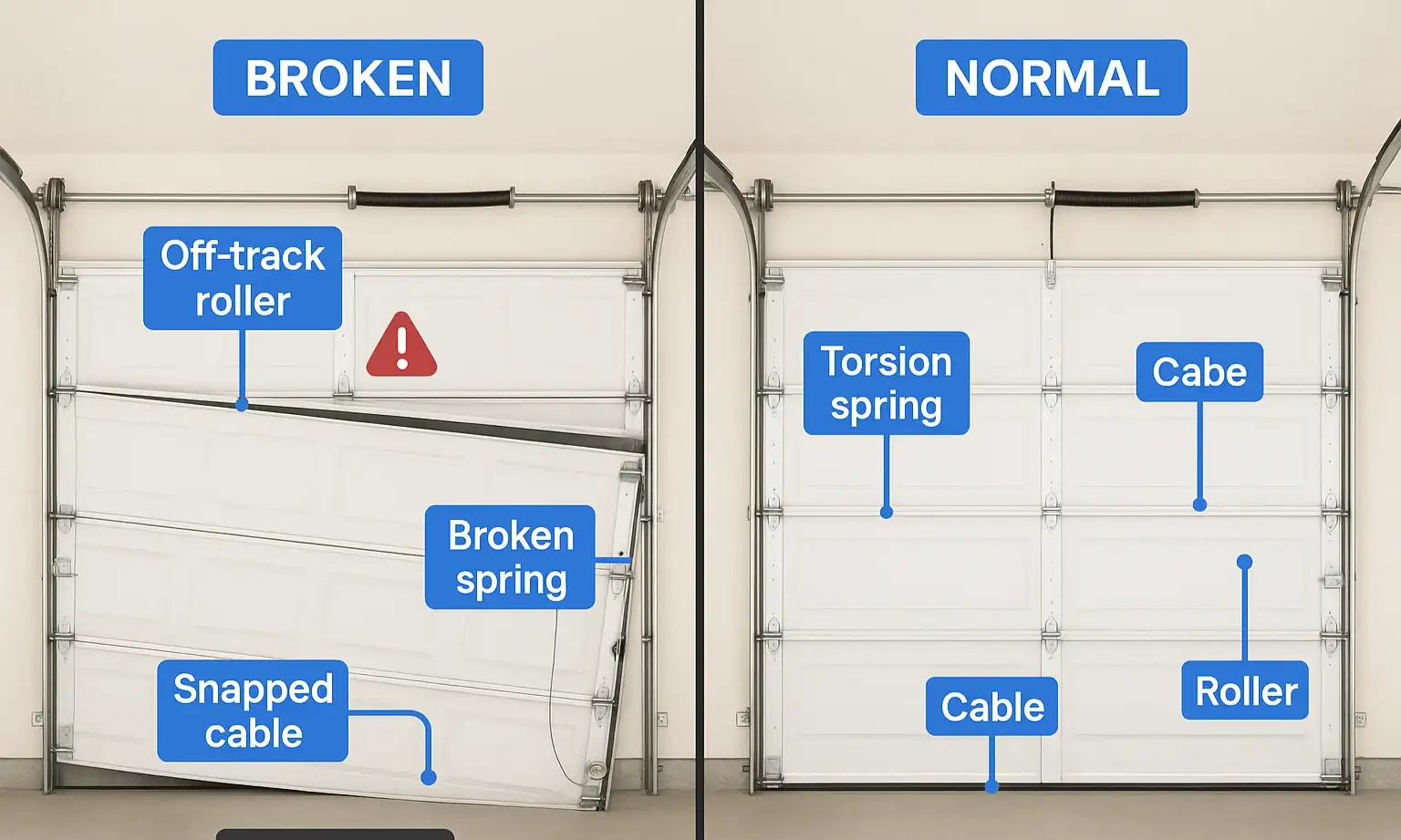

Now that the area is secure, you can try to understand the problem from a safe distance. This visual check will help you give a clear report to a professional technician, leading to a faster and more accurate service call. Do not touch or attempt to adjust any of these parts.
Look for these common culprits:
A Safe Visual Inspection from a Distance

  • Broken Torsion Spring: Look at the metal bar running above the closed garage door. You should see one or two large, tightly coiled springs. A broken spring will have a visible gap in the middle, appearing as two separate pieces. This is the most common cause of a door falling suddenly.
  • Snapped Lift Cable: Check the bottom corners of the door. You should see a steel cable on each side running up towards the top. If one is broken, frayed, or has come loose from its pulley, the door will lose support on that side, causing it to fall crookedly.
  • Rollers Off the Track: Look at the metal tracks running along the sides of the door. The small wheels (rollers) attached to the door panels should be sitting securely inside these tracks. If several rollers have popped out, the door will hang precariously or fall completely.
  • Damaged Tracks: Inspect the metal tracks themselves. A significant dent, bend, or misalignment can block the rollers, forcing them out and causing the door to derail.
At a glance: Identify the most common garage door failure signs safely without touching anything, aiding immediate diagnosis and communication with repair professionals.
A Safe Visual Inspection from a Distance

How to Secure Your Garage and Who to Call
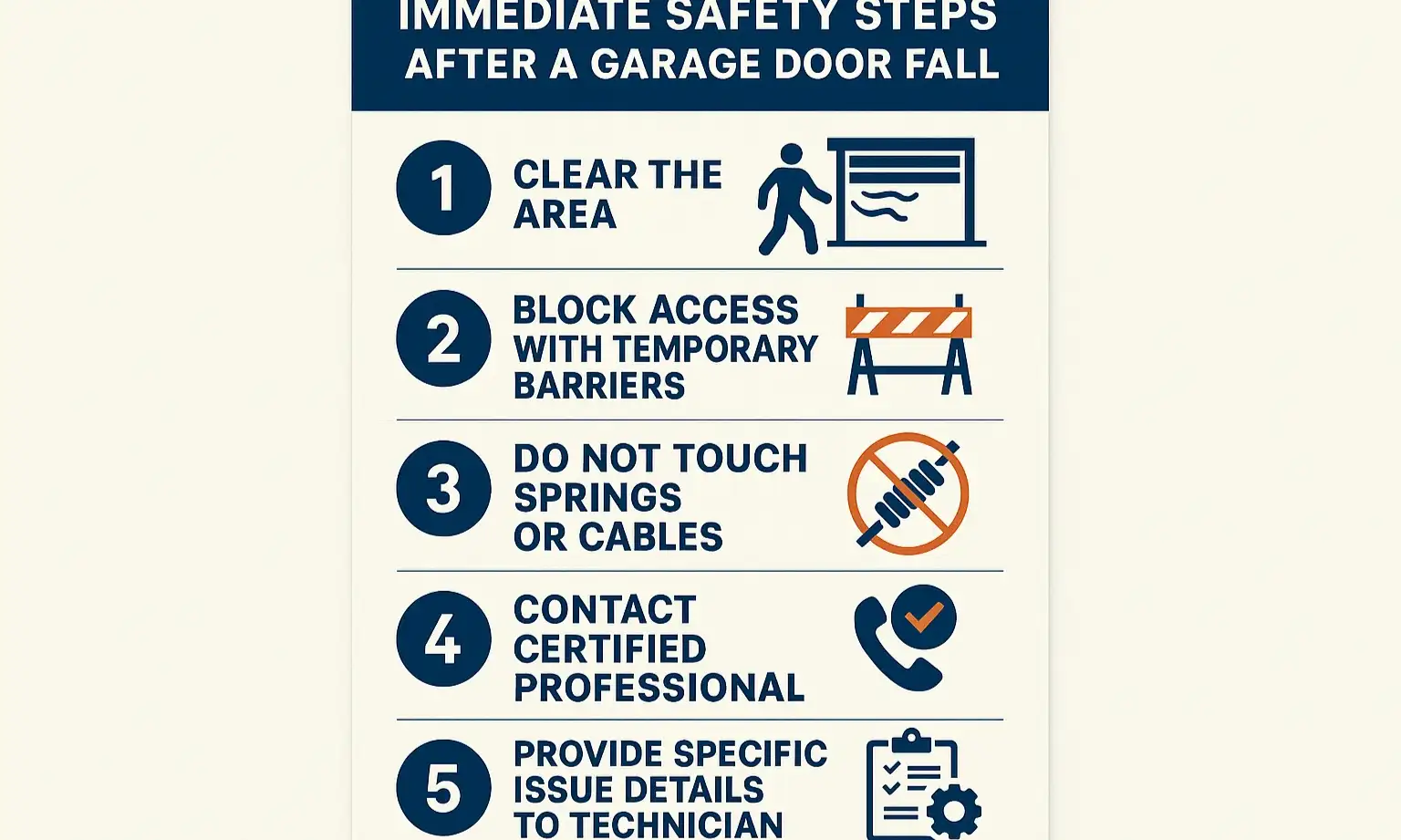

With the scene safe and a visual assessment complete, your next steps are to secure your home and contact a professional.
How to Secure Your Garage and Who to Call

Securing the Opening

If your garage door is stuck partially or fully open, your home's security is compromised. While waiting for a professional, you can take temporary measures.

  • Block the Entryway: Place a large, heavy object like a workbench or lawnmower in front of the opening from the inside.
  • Use Plywood: If you have it, leaning a large sheet of plywood against the opening can act as a visual deterrent.
  • Lock the Interior Door: Ensure the door connecting your garage to your home is locked and secured. For more robust solutions, our guide on how to secure your garage door offers additional tips for preventing break-ins.

Calling a Professional

When you call for emergency service, providing clear information helps the technician come prepared. Be ready to tell them:
  1. What you see: "My garage door is crooked, and I can see a gap in the big spring above it."
  2. What you heard: "I heard a loud bang, like a firecracker, before the door fell."
  3. The state of the door: "It's completely off the tracks on the right side and stuck halfway open."
  4. Your immediate safety steps: "I have cleared the area and unplugged the opener."
How to Secure Your Garage and Who to Call
Reputable companies like Up & Down Garage Doors offer 24/7 emergency services because these situations can't wait. A trained and insured technician has the specialized tools and knowledge to handle the weight and tension of the door safely.
Follow this trusted emergency action plan to secure your home safely and ensure the right professionals handle repairs, minimizing risk and downtime.

Moment: Why Garage Doors Fail


Moment: Why Garage Doors Fail
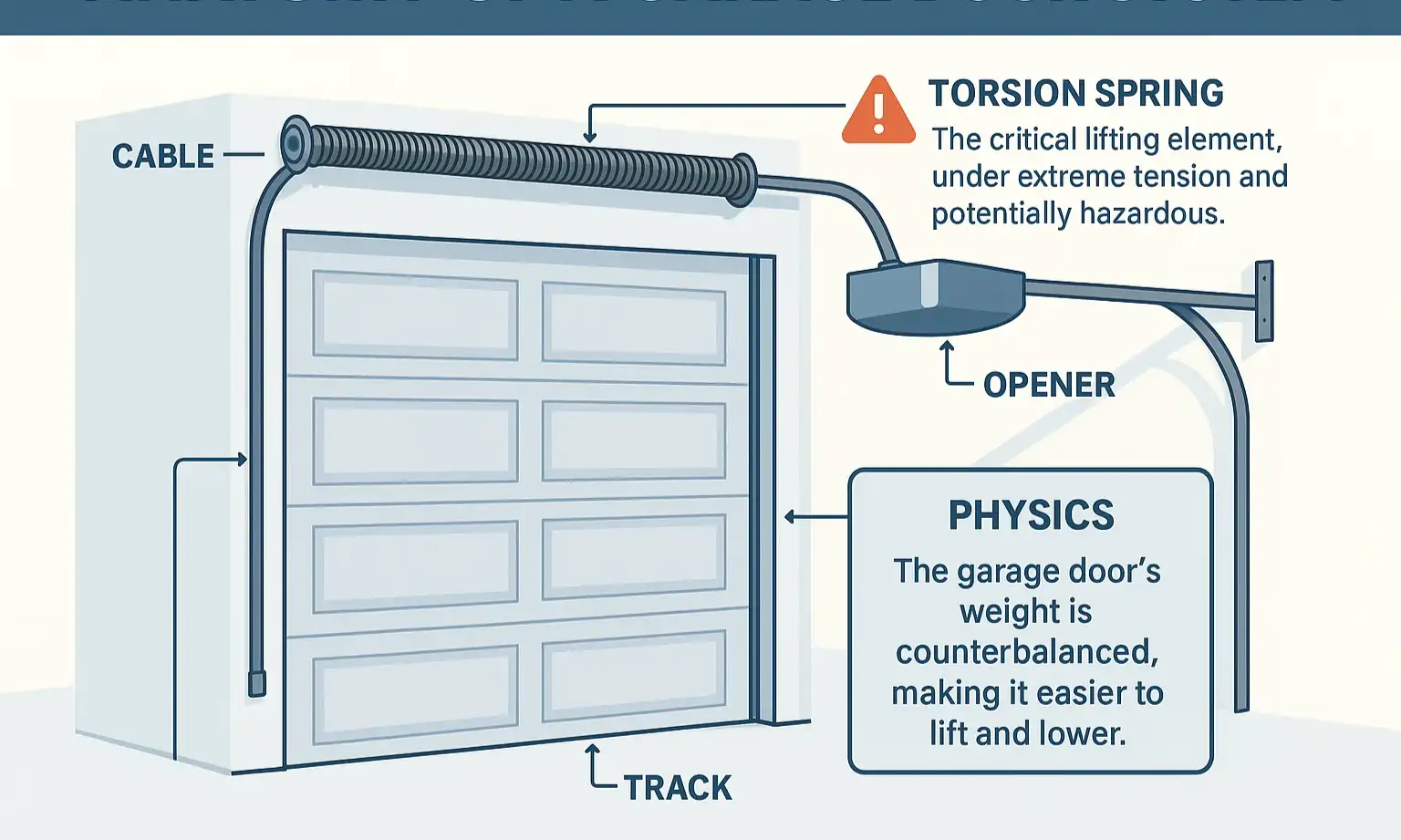
Here’s a fact that surprises most homeowners: your garage door opener doesn’t actually do the heavy lifting. The real workhorses of the system are the springs.
This is the core concept of a counter-balance system. A garage door can weigh anywhere from 150 to 400 pounds. The torsion springs are wound under immense tension—enough to perfectly offset the door's weight. When you press the remote, the opener simply gives the door a little push, and the springs take over, making the door feel weightless as it moves.
This is why a broken spring is so catastrophic. The moment it snaps, the opener is suddenly trying to lift hundreds of pounds of dead weight, a task it was never designed for. The support is gone, causing the door to crash down.
WARNING: EXTREME DANGER
Never attempt to adjust, repair, or remove a garage door spring yourself. Torsion springs store enough energy to cause severe injury or even death if they release unexpectedly. This is a job reserved exclusively for trained professionals.
Understand why the torsion springs control your door’s movement and why these components require professional handling for your safety.

Moment: Why Garage Doors Fail

From Crisis to Prevention: Your 15-Minute Annual Checkup
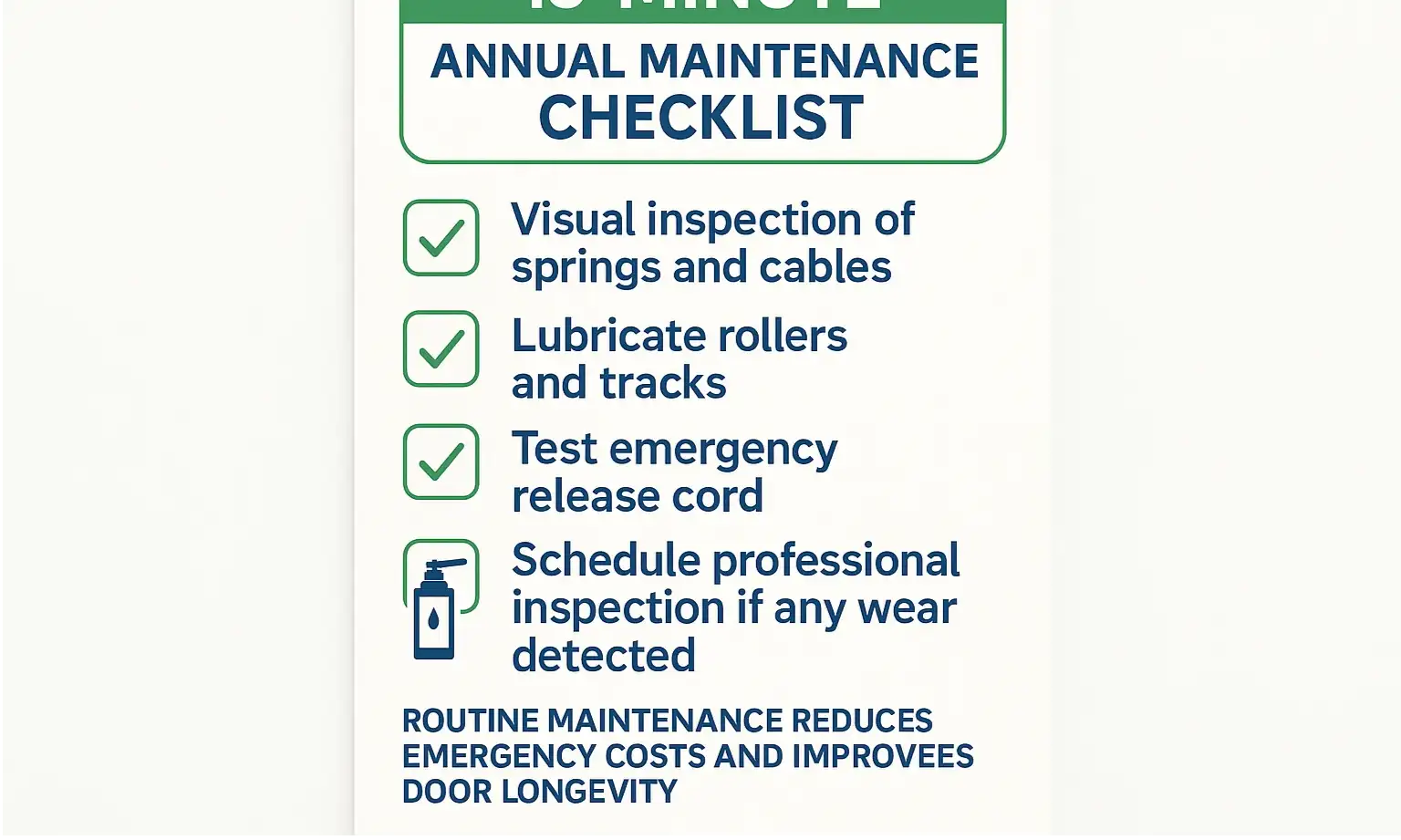

From Crisis to Prevention
The best way to deal with a garage door emergency is to prevent it from ever happening. Most catastrophic failures are preceded by smaller signs of wear and tear. By spending just 15 minutes once a year, you can catch problems early.
Here’s a simple checklist for a visual inspection:

  • Listen: Operate the door and listen for any scraping, grinding, or squeaking sounds.
  • Look: Visually inspect the rollers, cables, and tracks for signs of rust, fraying, or damage.
  • Balance Test (With Caution): With the door closed, pull the red emergency release cord. Then, try to lift the door manually. It should lift smoothly and hold its position about halfway open. If it feels extremely heavy or slams shut, the springs are failing. Reconnect the opener to the door after the test.
For a complete routine, our guide on DIY garage door maintenance provides a more detailed walkthrough. Paying special attention to the springs is also critical; our garage door spring maintenance guide tells you what to look for.
Take control and prevent sudden garage door failures with this straightforward maintenance routine that saves time, money, and stress.
From Crisis to Prevention

Frequently Asked Questions (FAQ)


Can I just put the door back on the track myself?

We strongly advise against it. While some online guides present this as a simple DIY project, they often dangerously oversimplify the process. A door that has fallen off its track is usually a symptom of a larger problem, like a broken spring or cable. Trying to force it back without addressing the root cause can lead to the door falling again, causing injury or property damage. Understanding how to put the garage door back on track reveals the complexity and confirms why it's a job for a pro.

What is the red emergency release cord for?

The red cord is designed to disconnect the door from the opener, allowing you to operate it by hand. It should primarily be used during a power outage when the door is fully closed. Pulling the cord when the door is open and has a broken spring can cause it to slam shut instantly. Learning how to manually open garage door systems safely is crucial knowledge for any homeowner.

How much will it cost to fix a fallen garage door?

The cost depends entirely on the cause. A simple fix like getting rollers back on an otherwise undamaged track might cost a couple of hundred dollars. However, if the cause was a broken torsion spring, which is common, the repair could range from $200 to $500 or more, depending on the door's size and weight. A professional technician can give you a precise quote after a safe, thorough inspection.

Your Next Step: Stay Safe and Call an Expert


A fallen garage door is a serious and potentially dangerous situation. By following the safety steps outlined above, you can manage the immediate crisis and prevent further risk. Your priority is not to fix it yourself but to secure the scene and call for professional help.
If you're facing this emergency, remember that you don't have to handle it alone. The trained and insured technicians at Up & Down Garage Doors are available 24/7 to safely and efficiently get your garage door—and your peace of mind—back on track.

You may also like