





Identifying and Addressing Garage Door Frame Damage
Published: Apr 16, 2026
You’ve been there. You press the button on your remote, the garage door starts its descent, and then… it stops. Or it closes unevenly, leaving a gap on one side. You’ve done the usual dance: you’ve checked the photo-eye sensors, cleared away obstructions, and even replaced the remote batteries. Yet, the problem persists.
It’s a frustrating scenario, and it’s one where most online guides stop. They help you solve the top 20% of common electronic issues, but what happens when the problem is more physical, more… structural?
What if the problem isn’t with your garage door opener at all, but with the very frame that holds it? And what if that frame is trying to tell you something much more important about the health of your entire home?
Hook: Your Garage Door Won't Close. You've Checked the Obvious. What Now?
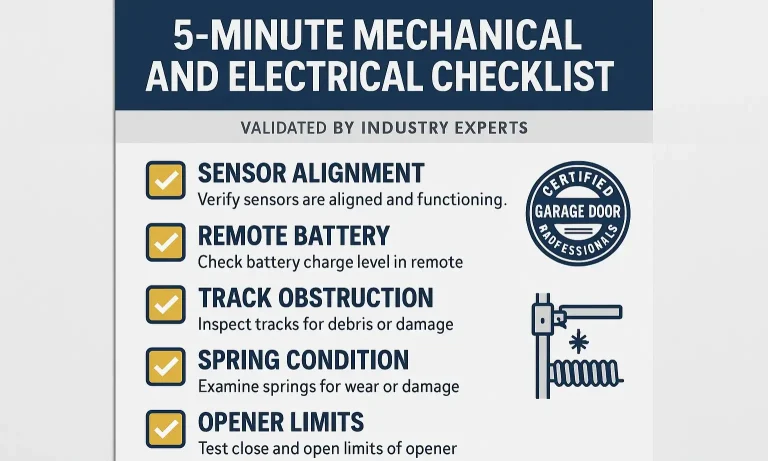
Before we dive into the deep end, let’s validate the steps you’ve likely already taken. Running through a quick checklist ensures you’ve ruled out the simple fixes and confirms you’re right to suspect a deeper issue.
If you’ve checked these boxes and are still stumped, it’s time to shift your focus from the electronics to the physical structure of the door and its opening.
The 5-Minute Mechanical & Electrical Check
Let’s quickly confirm the basics aren’t the culprit. Most garage door issues are related to power, sensors, or track obstructions. For a detailed breakdown of these common problems, our guide covering 5 reasons your garage door wont close and how to fix them is a great starting point.
Here’s a rapid-fire list:
- Safety Sensors: Are they aligned with solid lights? Dirt, cobwebs, or a slight bump can knock them out of alignment. If you’re wondering, “are garage door sensors universal,” the answer is a bit complex, but cleaning and aligning them is a universal first step.
- Tracks: Are they clear of debris, tools, or toys?
- Opener Settings: Has the “close-force” or “travel-limit” setting been accidentally changed?
- Manual Lock: Is the manual slide lock engaged?
If you’ve cleared all these and the door still binds, sticks, or closes unevenly, your instincts are correct. It’s time to look at the frame.
Building: Beyond the Basics - Diagnosing the Door and Frame Itself
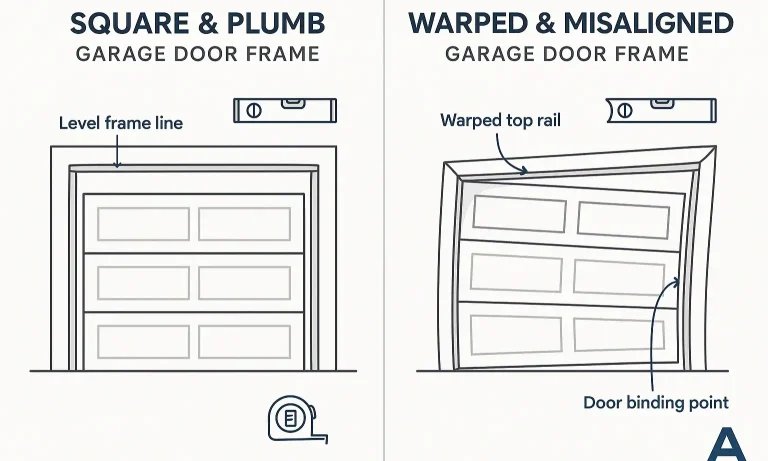
Now, we pivot from what moves the door to what surrounds it. A perfectly functioning opener can’t overcome a physical barrier. A warped, bent, or misaligned garage door frame creates that barrier, forcing the door to struggle.
Think of it like trying to close a perfectly good interior door in a crooked doorway. It’s going to stick and scrape. When your garage door sticks when opening, it’s often because the frame is no longer perfectly square.
Here’s how to check for frame and alignment issues:
- The Visual Test: Stand back and look at the door as it closes. Does it hit the ground evenly, or does one side touch down first? Look at the gaps along the sides. Are they consistent from top to bottom? A noticeable gap between the garage door and frame is a tell-tale sign of misalignment.
- The Level Test: Place a long carpenter’s level on the header (the top beam of the frame). Is it perfectly horizontal? A sagging header is a major red flag. Do the same with the vertical side jambs. They should be perfectly “plumb” (straight up and down).
- Inspect the Frame Material: Look for signs of wood rot, moisture damage, or cracks in the wood or metal frame itself. Sometimes, the issue is simple degradation. If you see this, a professional garage door frame repair might be all that’s needed.
If your frame is visibly warped or the gaps are uneven for no apparent reason—no rot, no impact damage—we’ve arrived at the crucial question this guide was built to answer. What is causing the frame itself to move?
Mastery: Is Your House the Real Problem? Identifying Foundation-Related Damage
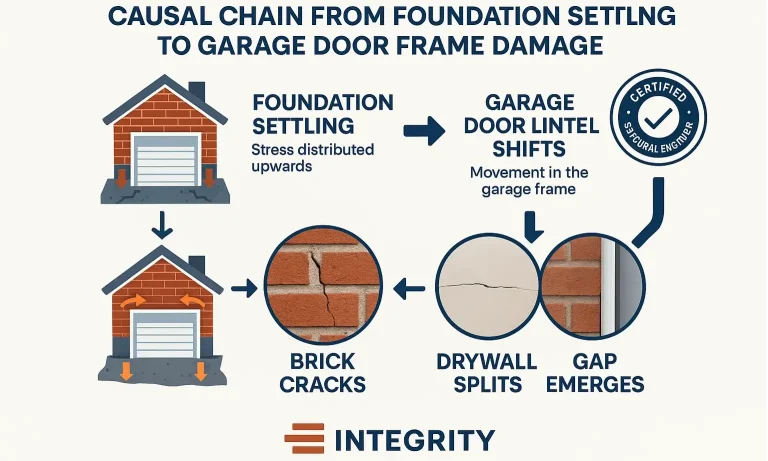
Here is the “aha moment” most homeowners miss: Your garage door opening is the largest, weakest structural point in your home. Because it’s such a wide span without support, it acts like a canary in a coal mine, showing the earliest and most dramatic signs of foundation stress.
A tiny shift in your home’s foundation—something you’d never notice elsewhere—can translate into significant pressure on the garage door frame, causing it to sag, twist, and warp. This isn’t just a garage door problem; it’s a house problem.
Here are the signs that your garage door frame damage is a symptom of house settling or foundation shifts:
- Cracks in the Exterior Brickwork: Look for “stair-step” or zigzag cracks in the brick or masonry around the corners of the garage door. This is a classic sign of foundation movement.
- Cracks in Interior Drywall: Check the interior walls of your garage. Are there new cracks appearing in the drywall, especially coming off the corners of the door frame?
- Gaps Around the Foundation: Is there a new or widening gap between your concrete garage slab and the driveway, or between the slab and the garage walls?
- Sticking Doors and Windows: Are other doors or windows in your home suddenly harder to open and close? This indicates the problem isn’t isolated to the garage.
- Uneven Floors: Does the garage floor itself seem to slope more than it used to?
If you see these signs in addition to a warped frame, you’ve likely found the root cause. Simply performing a garage door frame replacement without addressing the underlying foundation issue is a temporary fix; the new frame will eventually warp, too.
Action: Who to Call and When: A Triage Guide
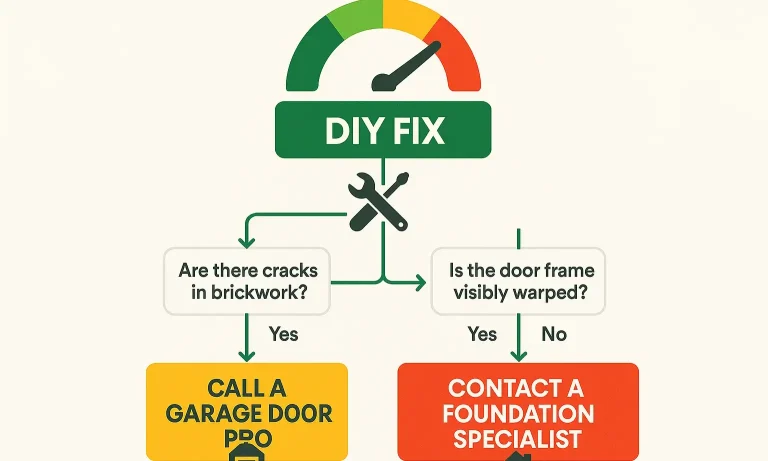
Understanding the source of the problem is the first step. The next is knowing who to call for help. Trying a DIY fix on the wrong problem can waste time and money, while calling the wrong professional can lead to an incomplete solution.
Here’s a simple triage guide to help you make the right call.
GREEN (DIY Fix):
- Symptoms: Minor cosmetic issues, peeling paint on the frame, or a small patch of wood rot on the outer trim (weather stripping).
- Action: These issues can often be addressed with wood filler, sanding, and a fresh coat of paint.
YELLOW (Call a Garage Door Professional):
- Symptoms: The door is binding or sticking, there are visible gaps, the frame itself is clearly rotted or damaged, or the door has come off its tracks. You’ve checked for foundation issues and see none.
- Action: A garage door expert can diagnose the extent of the damage. They can determine if simple garage door alignment is needed or if it’s time to explore the cost to replace your garage door frame.
- Symptoms: You have a warped garage door frame plus one or more of the “RED” signs: stair-step cracks in the brick, significant drywall cracks, or sloping floors.
- Action: This is crucial. Before you call a garage door company, have a structural engineer or foundation repair specialist assess your home. They will identify the root cause and recommend a solution. Once the foundation is stabilized, you can then have a garage door professional repair or replace the frame with confidence.
RED (Call a Foundation Specialist FIRST):
FAQ: Your Questions on Garage Door Frame Damage Answered
Can I just replace the warped frame if my house is settling?
You can, but it’s not a permanent solution. The same foundational pressures that warped the original frame will eventually warp the new one. It’s essential to address the root cause (the settling) first to ensure any repairs to the garage door frame last.
Is a small crack in the drywall near my garage door a big deal?
A single, hairline crack might just be from normal temperature changes. However, if the crack is widening, is part of a “zigzag” pattern, or is accompanied by other signs like a sticking door, it warrants a closer look. It’s about the collection of symptoms, not just one.
How can I tell the difference between normal house settling and a serious foundation problem?
All houses settle over time, especially in the first few years after construction. Normal settling usually results in minor, hairline cracks. Problematic settling involves more dramatic signs: cracks wider than a quarter-inch, stair-step cracks in masonry, doors that stick or no longer latch, and floors that are noticeably unlevel. When in doubt, a professional assessment is worth the peace of mind.
Can a misaligned frame damage my garage door opener?
Absolutely. When the door has to fight against a warped frame, it puts immense strain on the opener’s motor, gears, and chain or belt. Over time, this can lead to premature failure of the opener system, turning a frame problem into an expensive opener replacement.
Taking the Right Next Step
Your garage door does more than just secure your home; it communicates its health. By learning to look beyond the simple electronic glitches, you can spot potential structural issues long before they become major problems.
If you’ve walked through this guide and suspect your frame is warped, misaligned, or showing signs of deeper stress, the next step is a professional inspection. A trained eye can quickly diagnose the issue, saving you from frustrating guesswork and ensuring you get the right solution the first time, whether it’s a simple adjustment or a more comprehensive repair.
You May Also Like
How to Know When It’s Time to Replace Your Garage Door Frame
A strong garage door frame is the foundation of your garage's security and operation. However, even the strongest frames are susceptible to deterioration over time, which reduces their usefulness. Early detection of…
Published Date: Jan 30, 2025
Is Your Garage Door Frame Out of Shape? Here’s What to Do
A misaligned garage door frame can be a real headache — from difficulty opening and closing to gaps that let in drafts and pests. These issues may seem minor now, but they can lead to serious damage, expensive…
Published Date: Apr 3, 2025
The Ultimate Guide to Garage Door Frame Installation and Repair
Your garage door frame is more than just a border—it keeps your door running smoothly. Even a brand-new door might not function properly if your frame is off. It’s similar to a house foundation—the structure can’t…
Published Date: Mar 18, 2025