





How Specific Lubricants Prevent Garage Door Security Vulnerabilities
Published: Jul 6, 2026
That groaning, scraping, squealing sound your garage door makes isn’t just an annoyance. It’s a warning sign. While most of us grab a can of something oily to silence the racket, we’re often missing the bigger picture. That noise is your garage door—the largest moving object in your home—telling you it’s under stress. And a stressed door isn’t just a noisy door; it’s a security vulnerability.
Think of it this way: a smooth, quiet door is a strong, secure door. The friction that causes squeaks and shakes also causes premature wear, creating weak points that can be exploited. Proper lubrication isn’t just about maintenance; it’s a critical, proactive step in hardening one of your home’s main entry points. Let’s go beyond just fixing squeaks and explore how using the right lubricant, in the right way, is one of the smartest security upgrades you can make.
Foundation: The Science of Smooth—Friction, Wear, and Your Home's Biggest Machine
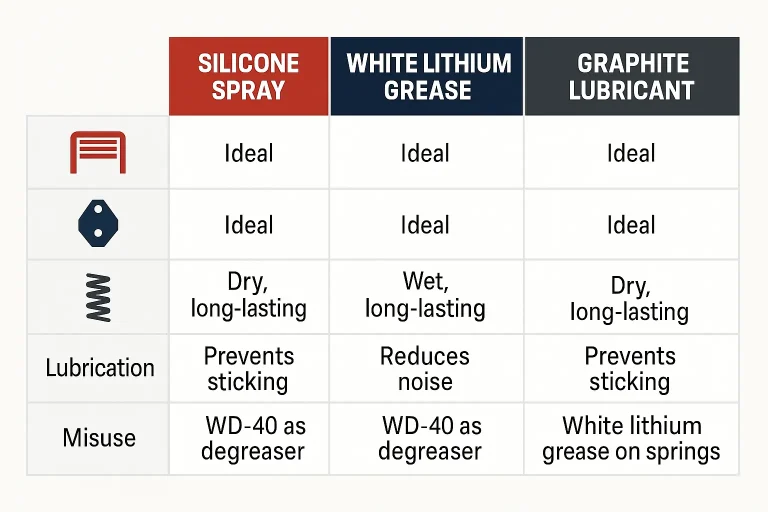
At its core, a garage door is a complex system of metal parts all working together to lift a massive weight. You have rollers gliding in tracks, hinges pivoting, and a powerful spring coiling and uncoiling. Every single movement creates friction.
Without proper lubrication, this friction leads to:
- Increased Strain: Metal grinds against metal, forcing the opener to work much harder to move the door. This excessive strain can burn out the motor and weaken mechanical components.
- Accelerated Wear: Unprotected parts wear down faster, leading to loose connections, misalignments, and eventual failure.
- Binding and Sticking: Parts that should move smoothly begin to catch and stick, causing the jerky, shuddering movements that signal a system under duress.
These aren’t just mechanical issues; they are the seeds of security flaws. A door that doesn’t close flush, a track that’s slightly bent from strain, or a lock that doesn’t engage properly because of panel misalignment are all direct results of unmanaged friction. The long-term problems arising when you don’t lubricate your garage door extend far beyond simple noise.
Building: The Pro's Toolkit: Choosing the Right Lubricant for the Right Job
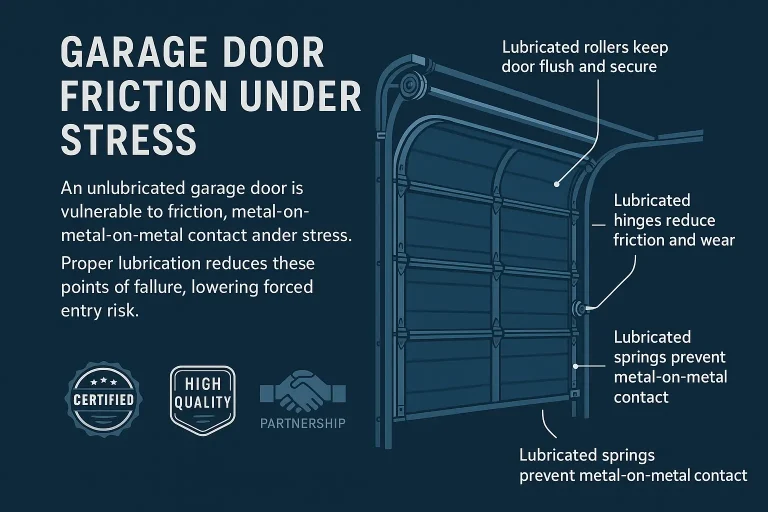
Walk into any hardware store and you’ll see a wall of spray cans. It’s tempting to think they’re all the same, but for a garage door, choosing the wrong one can be worse than using nothing at all.
The Great WD-40 Myth: A Maintenance “Aha” Moment
Let’s address the most common mistake first: using WD-40. It’s a household name, and it stops squeaks, so it must be perfect, right?
Wrong. WD-40 is not a true lubricant. It’s a water-displacing solvent and degreaser. When you spray it on your garage door parts, it actually strips away any existing lubricant. While it might quiet the noise temporarily, it leaves the metal bare and unprotected. Worse yet, its sticky residue is a magnet for dust and grime, creating a gummy paste that clogs up rollers and tracks, accelerating the very wear you’re trying to prevent.
Silicone vs. White Lithium Grease: The Right Tool for the Job
To do the job correctly, you need two primary types of lubricant in your toolkit. They have different properties and are designed for different parts of the door system.
- Silicone Spray: This is your go-to for parts that slide or are exposed to the elements. Silicone creates a slick, waterproof layer that doesn’t attract dust. It’s perfect for the metal tracks, preventing the rollers from sticking without creating a gunky mess.
- White Lithium Grease: This is a thicker, more durable lubricant designed for metal-on-metal pivot points. It adheres well and provides long-lasting protection against grinding and wear. It’s ideal for hinges, the opener’s chain or screw drive, and the bearings inside the rollers.
Mastery: The Step-by-Step Security Lubrication Process
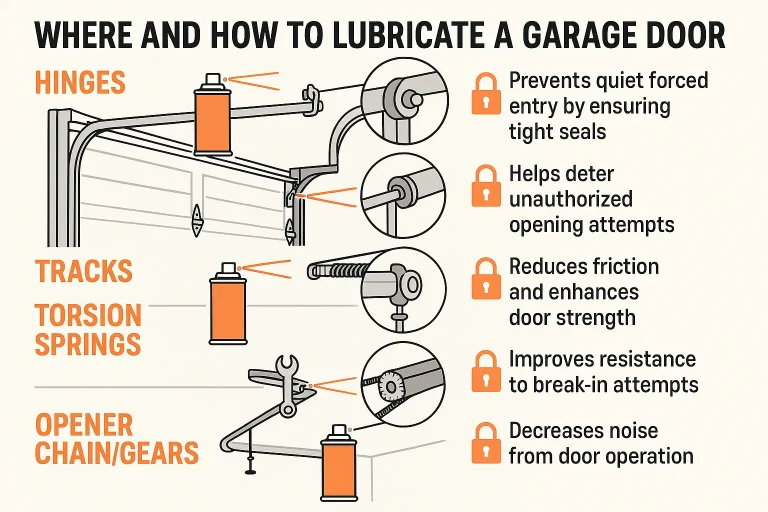
Properly lubricating your door is about precision, not volume. Applying the right product to the right spot ensures smooth operation and closes security gaps. Before you start, close the garage door and disconnect the automatic opener for safety.
- Hinges: Apply a small amount of white lithium grease to each hinge pivot point. Open and close the door manually a few times to work the grease into the joint.
- Security Benefit: Smoothly pivoting hinges prevent the panels from binding and creating gaps. Proper garage door hinge maintenance ensures the door closes tightly and evenly, a detail you can sometimes check by looking at the garage door hinge numbers.
- Rollers: For unsealed nylon rollers, apply white lithium grease to the ball bearings inside the roller. Do _not_ spray lubricant on the nylon part itself. For steel rollers, lubricate the bearings as well. The question of how to lubricate garage door rollers properly is key to quiet operation.
- Security Benefit: Well-lubricated rollers move freely, reducing strain on the tracks. This prevents the tracks from bending or pulling away from the wall, which is a common vulnerability an intruder might exploit with a crowbar.
- Springs (Torsion & Extension): Lightly coat the entire surface of your garage door springs with silicone spray. This prevents rust and allows the coils to move without grinding against each other.
- Security Benefit: A sudden, catastrophic spring failure is incredibly loud and can damage the door, potentially leaving it stuck partially open. Proper garage door spring maintenance preserves the spring’s integrity, preventing this security event.
- Tracks: First, wipe the inside of the tracks clean with a rag. Then, apply a thin layer of silicone spray. This is the most crucial part of effective garage door track maintenance. Do not use grease here, as it will attract dirt and obstruct the rollers.
- Security Benefit: Clean, lubricated tracks ensure the door closes flush with the floor and seals tightly against the frame, leaving no gaps for prying tools.
- Opener Chain/Screw: Apply a small amount of white lithium grease to the opener rail and chain/screw. This reduces noise and wear on the drive mechanism.
- Security Benefit: A smooth-running opener is a reliable one. It ensures the door closes completely and engages the lock mechanism every time, without straining or stopping short.
Action: The 15-Minute Garage Security Tune-Up
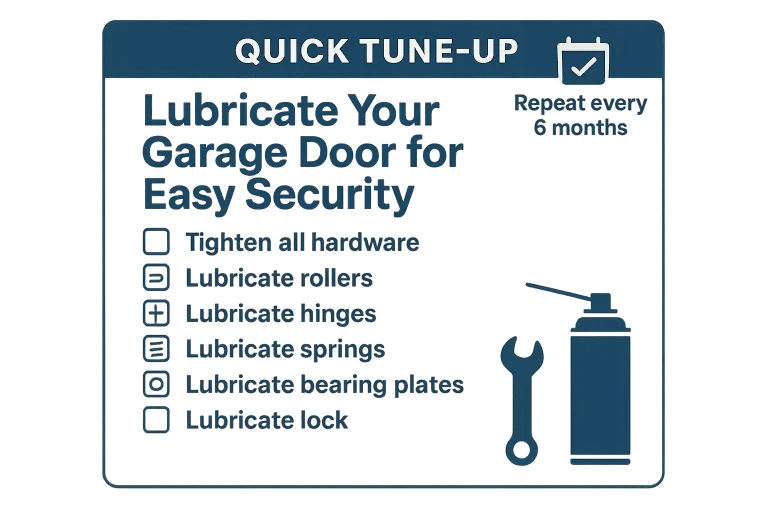
Turn this knowledge into action. You don’t need to wait for a problem. Set a reminder to perform this simple tune-up every six months. It’s one of the highest-impact security routines you can do for your home. Consistent garage door maintenance lubrication is the key to longevity and security.
Your 6-Month Checklist:
- Wipe down tracks with a clean cloth.
- Apply silicone spray to tracks.
- Apply silicone spray to torsion/extension springs.
- Apply white lithium grease to all hinge points.
- Apply white lithium grease to roller bearings (if applicable).
- Apply white lithium grease to opener rail/chain.
- Open and close the door 2-3 times to distribute lubricant.
The Unseen Connection: How a Sticking Door Invites Trouble
A professional burglar looks for the path of least resistance. A poorly maintained garage door provides exactly that. Here’s how:
A loud, grinding door isn’t just noisy to you; it’s also noisy to someone trying to force it open. Conversely, a garage door sticking due to lack of lubrication puts immense, constant pressure on the tracks and panels. This pressure can slightly warp the tracks or create tiny gaps between panels.
For a burglar, these weaknesses are an open invitation. A slightly bent track makes it easier to pry the rollers out. A small gap at the bottom is a perfect place to insert a tool. The strain on the system means that less force is required to break in, making the attempt quieter and faster. Ignoring these signs introduces hidden vulnerabilities, similar to the inherent second hand garage doors risks you would naturally want to avoid. Proper lubrication eliminates this strain, keeping the door solid, aligned, and formidable.
Frequently Asked Questions
What are the main signs my garage door needs lubrication?
The most obvious signs are noises like squeaking, grinding, or scraping. You may also notice the door moving in a jerky or hesitant way, or that it seems to struggle as it opens and closes.
Can I use too much lubricant?
Yes. Over-lubricating, especially with grease, can cause a sticky buildup that attracts dirt and debris, eventually clogging the system. Apply thin, even coats. After applying, wipe away any excess drips with a rag.
I lubricated everything, but it’s still noisy. What’s next?
While lubrication solves most noise issues, persistent problems could indicate more serious issues like worn-out rollers, misaligned tracks, or an unbalanced door. If your tune-up doesn’t solve the problem, it’s a good sign that it’s time to call a professional for an inspection.
How is lubricating a commercial garage door different?
The principles are the same, but commercial doors are often larger, heavier, and see much more frequent use. They may have more complex components and require a more robust, heavy-duty lubricant and a more frequent maintenance schedule.
Your First Line of Defense
Your garage door is more than just a convenience; it’s a key part of your home’s security system. By investing just 15 minutes every six months into a proper lubrication routine, you’re not just silencing a squeak. You’re reducing wear, preventing costly repairs, and actively hardening a major entry point against intrusion.
The next time you hear that groan, don’t just reach for any old can. See it as an opportunity to make your home safer, stronger, and more secure. And if you notice issues that go beyond a simple need for lubrication—like frayed cables or damaged panels—don’t hesitate. The experienced team at Up & Down Garage Doors is available 24/7 to ensure your door is operating at its best, keeping your home and family safe.
You May Also Like
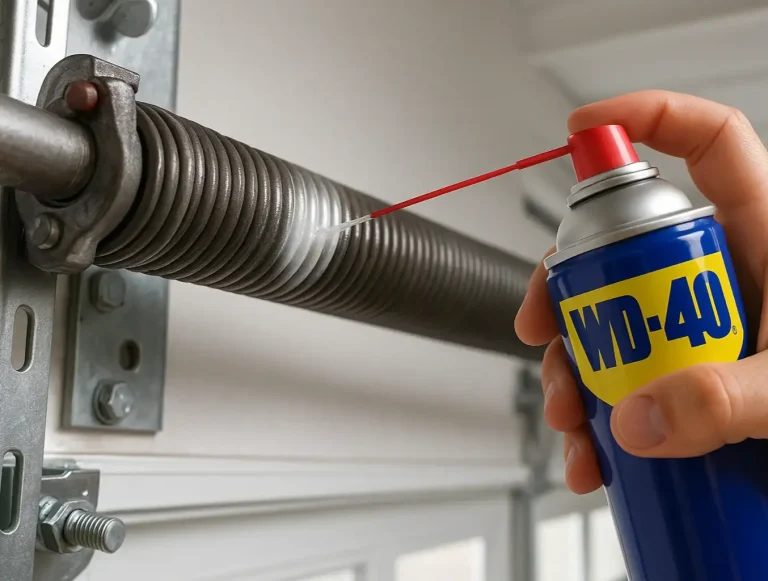
Your Ultimate Guide to Garage Door Spring Lubrication
That ear-splitting screech your garage door makes isn’t just an annoying wake-up call. It's a cry for help from the hardest-working part of the entire system: the springs. Before you resign yourself to the noise or…
Published Date: Apr 7, 2026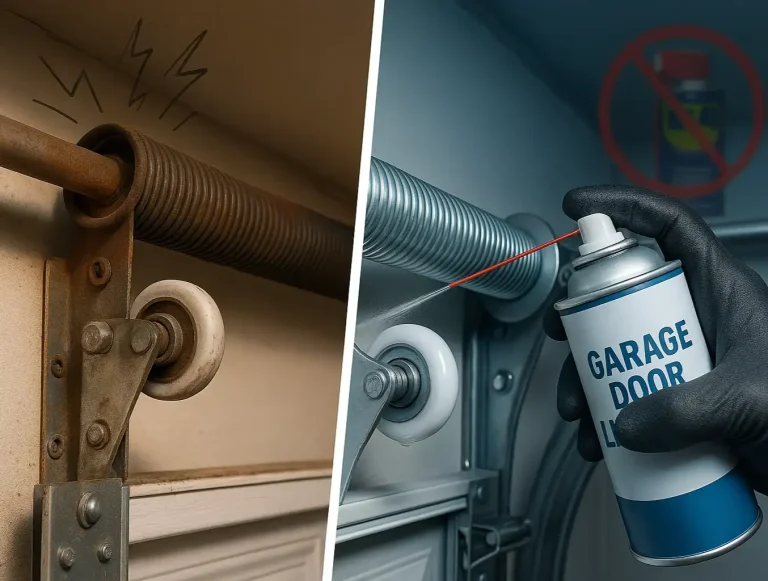
Silence the Squeal: Your Ultimate Guide to Garage Door Lubrication
Is your garage door the loudest thing on the block? That shuddering, grinding, and high-pitched squealing isn’t just an annoying wake-up call—it’s a cry for help. The metal components of your door are in a constant…
Published Date: Jan 27, 2026
How to Lubricate Your Garage Door Rollers: A 5-Step Guide
If you’re tired of that noisy garage door screeching open every morning, it might be time to show your rollers some love. Knowing how to lubricate garage door rollers the right way can save you from costly repairs,…
Published Date: Oct 30, 2025