Commercial vs. Residential Garage Doors
Published: Mar 24, 2026
Think about the difference between your family car and a commercial delivery truck. The car might make a few trips a day to work, school, and the grocery store. The delivery truck, however, runs 12 hours straight, making hundreds of stops, carrying heavy loads, and facing constant wear and tear. You wouldn't expect them to follow the same service schedule, would you?
This is the single best way to understand the difference between residential and commercial garage doors.
While they both go up and down, a commercial door is a workhorse engineered for high-frequency, heavy-duty operation. A residential door is built for reliability, safety, and curb appeal. This fundamental difference in purpose dictates everything from their construction to, most importantly, their maintenance needs. Understanding this distinction is the key to ensuring safety, preventing costly downtime, and maximizing the lifespan of your investment.
Foundation: At-a-Glance Comparison
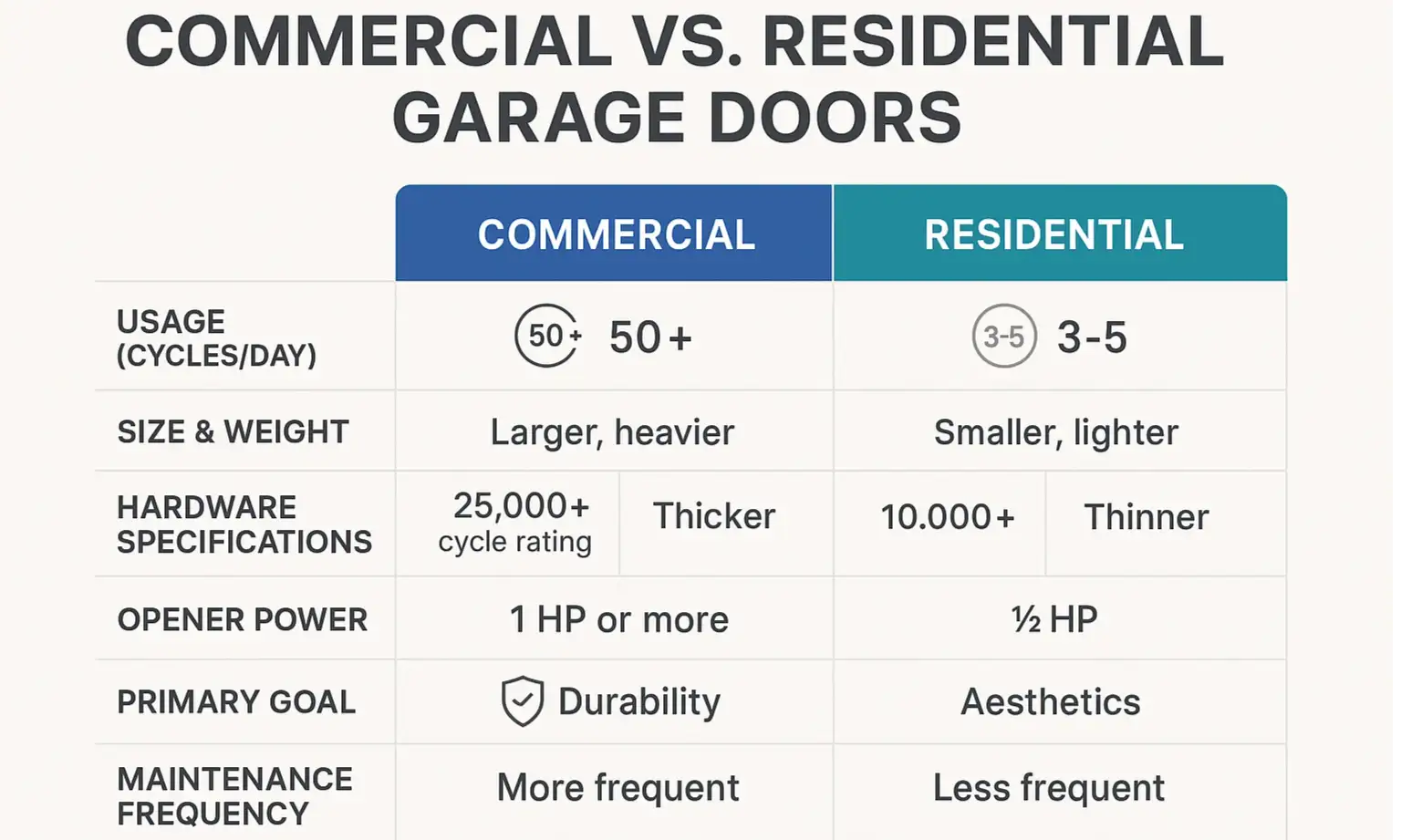
Residential vs. Commercial Garage Doors
- Primary Goal: Residential doors prioritize curb appeal, convenience, and security. Commercial doors are built for maximum durability, constant uptime, and operational efficiency.
- Typical Usage: A home garage door typically sees 2 to 4 cycles per day, whereas a commercial door is engineered to handle a rigorous 20 to over 100 cycles daily.
- Size & Weight: Residential doors come in standard sizes and are made from lighter materials. Commercial facilities require custom, oversized doors constructed from heavy-gauge steel.
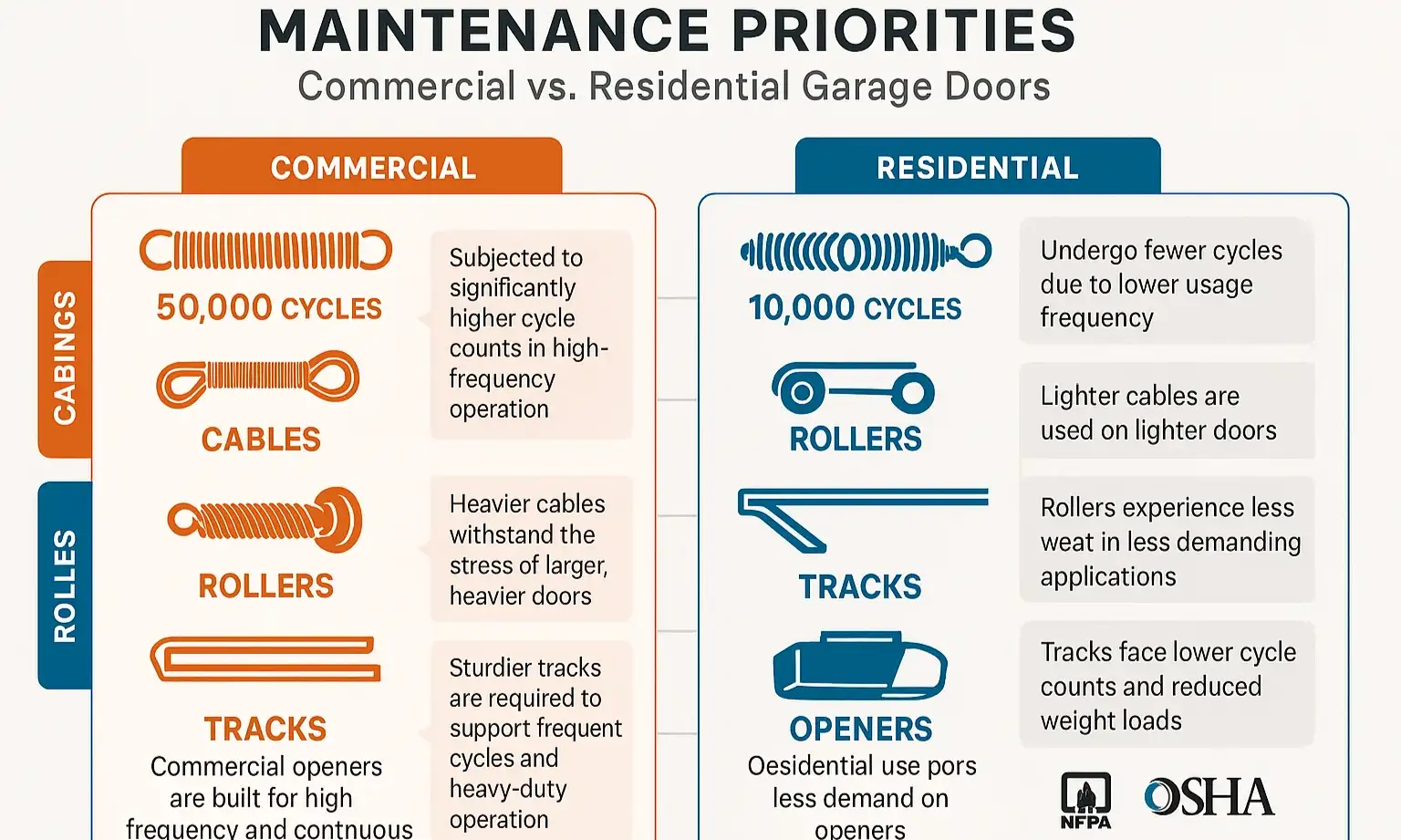
- Spring System: Residential springs are usually rated for 10,000 cycles (lasting about 7-10 years). Commercial springs are heavily reinforced, rated anywhere from 25,000 to well over 100,000 cycles.
- Hardware: You will find lighter gauge tracks and standard rollers on a residential setup. Commercial doors rely on heavy-duty tracks and case-hardened rollers to manage the extra weight and friction.
- Opener System: Residential openers are lighter duty and specifically designed for quiet operation. Commercial openers are heavy-duty machines focused entirely on power and speed.
- Maintenance Frequency: A home garage door usually only needs an annual professional inspection. A commercial door requires quarterly or even monthly professional checks to prevent costly business downtime.
Building: Deconstructing the 'Why' - Component Breakdown Section
Torsion Springs: The Muscle of the System
- The Difference: Your home garage door likely has springs rated for 10,000 cycles. A cycle is one full open-and-close action. At four cycles a day, those springs will last over seven years. A commercial door at a busy warehouse cycling 50 times a day would exhaust those same springs in less than seven months. This is why commercial doors use springs rated for 25,000, 50,000, or even 100,000 cycles.
- Why It Matters: A broken spring is the most common major garage door failure. For a homeowner, it’s an inconvenience. For a business, a broken spring means a loading dock is out of commission, shipments are delayed, and revenue is lost. Understanding how a garage door spring works is key to appreciating its importance.
- Maintenance Priority: Regular tension checks and balance tests are critical for commercial doors to prevent catastrophic failure.
Tracks and Rollers: The Guiding Path
- The Difference: Residential tracks are typically made from thinner, 16-gauge steel. Commercial tracks are often 12-gauge or thicker and may be 3 inches wide instead of the standard 2 inches to handle heavier doors and prevent flexing. Rollers on commercial doors often have sealed ball bearings to withstand constant friction, unlike the simpler nylon rollers found in many homes.
- Why It Matters: A bent or misaligned track can bring a massive commercial door to a grinding halt. The constant, heavy movement puts immense stress on these components.
- Maintenance Priority: Knowing how to lubricate garage door tracks and rollers is crucial, especially for high-friction commercial systems. Regular cleaning to remove debris and inspection for bends or damage are non-negotiable.
The Opener: The Engine of the Operation
- The Difference: Residential openers are designed for quiet, smooth operation. A commercial opener is a powerhouse built for torque and speed. It needs the raw strength to lift a door that can weigh over a thousand pounds, hundreds of times a day, without overheating.
- Why It Matters: Using a residential opener on a commercial door is a recipe for rapid burnout and a serious safety hazard. A robust LiftMaster commercial garage door opener, for example, has features like logic controls and high-starting torque motors specifically for this purpose.
- Maintenance Priority: Commercial opener maintenance involves checking motor health, belts or chains, and safety sensor alignment far more frequently to ensure it can handle the daily workload.
Mastery: The Business Impact vs. Home Convenience
For Businesses: It’s About Uptime, Security, and Compliance
- Cost of Downtime: A stuck loading dock door can halt shipments, idle employees, and delay customer orders. The cost of a single hour of downtime can easily exceed the cost of a full year of preventative maintenance.
- Workplace Safety (OSHA): A malfunctioning commercial door is a significant safety hazard. Regular inspections are essential for compliance and, more importantly, for protecting your team from injury.
- Security: A commercial door that doesn't close properly is a massive security vulnerability, leaving valuable inventory, equipment, and assets exposed.
- Compliance: Certain industries require fire-rated doors that must pass specific inspections (like NFPA 80). Neglecting maintenance can lead to failed inspections and potential fines.
For Homeowners: It’s About Convenience, Safety, and Peace of Mind
- Convenience: The primary goal is ensuring you can get in and out of your garage reliably every day without being late for work or stuck in the rain.
- Family Safety: Modern residential doors have excellent safety features like auto-reverse sensors. Regular maintenance ensures these features are working correctly to protect children and pets.
- Protecting Your Property: A well-maintained door secures your home and belongings.
Action: The Ultimate Maintenance Checklist
For the Homeowner: The Annual Plan
- Lubricate all moving parts.
- Check spring tension and balance the door.
- Tighten all hardware.
- Perform a full safety inspection.
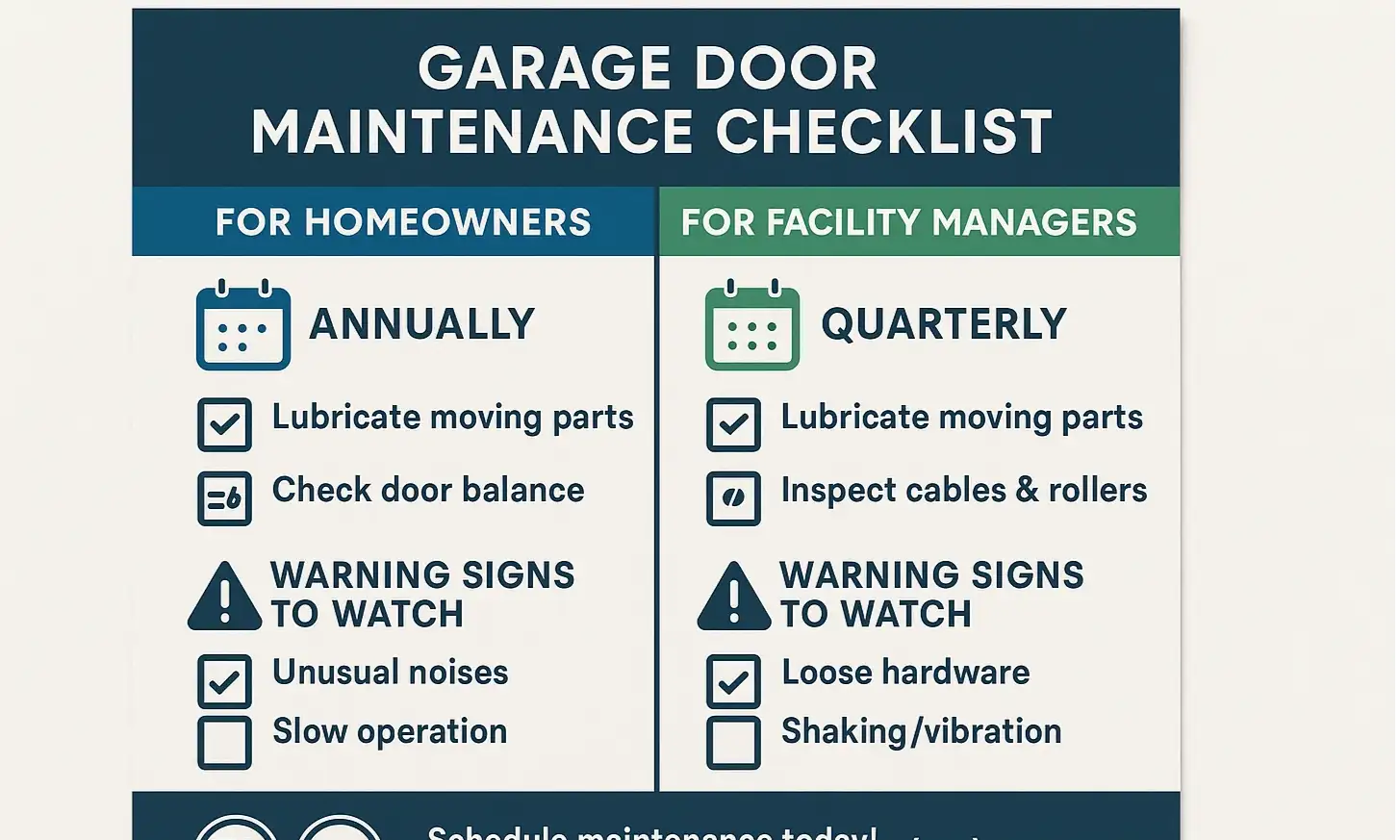
For the Facility Manager: The Quarterly Plan
- Perform all the checks from the homeowner list.
- Clear tracks of any debris.
- Check weather stripping for damage to maintain climate control.
- Perform a full lubrication and tune-up.
- Inspect all welds and high-stress structural points.
- Check chain/belt tension on the opener.
- Test all activation systems (remotes, wall buttons, loop detectors).
- Provide a detailed report for your maintenance logs.
Need more information?
Get a free quote
Frequently Asked Questions (FAQ)
Can I use a commercial door on my house?
Can I use a residential opener on a commercial door?
What are the earliest warning signs of failure on a commercial door?
Your Next Step: From Learning to Action
You may also like