Your Stamford Homeowner's Guide to Garage Door Noises & Safety
Published: Feb 19, 2026
It’s one of the most jarring sounds a homeowner can hear. A sudden, sharp BANG from the garage that sounds like a gunshot. Your mind races. What was that? Is everything okay?
If this has happened to you, you’re not alone. That alarming sound is often the first and most dramatic sign that something is seriously wrong with your garage door. It’s your home’s largest moving object telling you it needs immediate attention.
But what do all the other sounds—the squeals, grinds, and rattles—mean? Think of this guide as your personal translator for your garage door. We’ll help you decode the noises, understand the parts involved, and most importantly, learn what you can safely inspect yourself and when you absolutely need to call a professional for garage door repair in Stamford, CT.
Foundation: The Garage Door Symptom & Sound Cheat Sheet
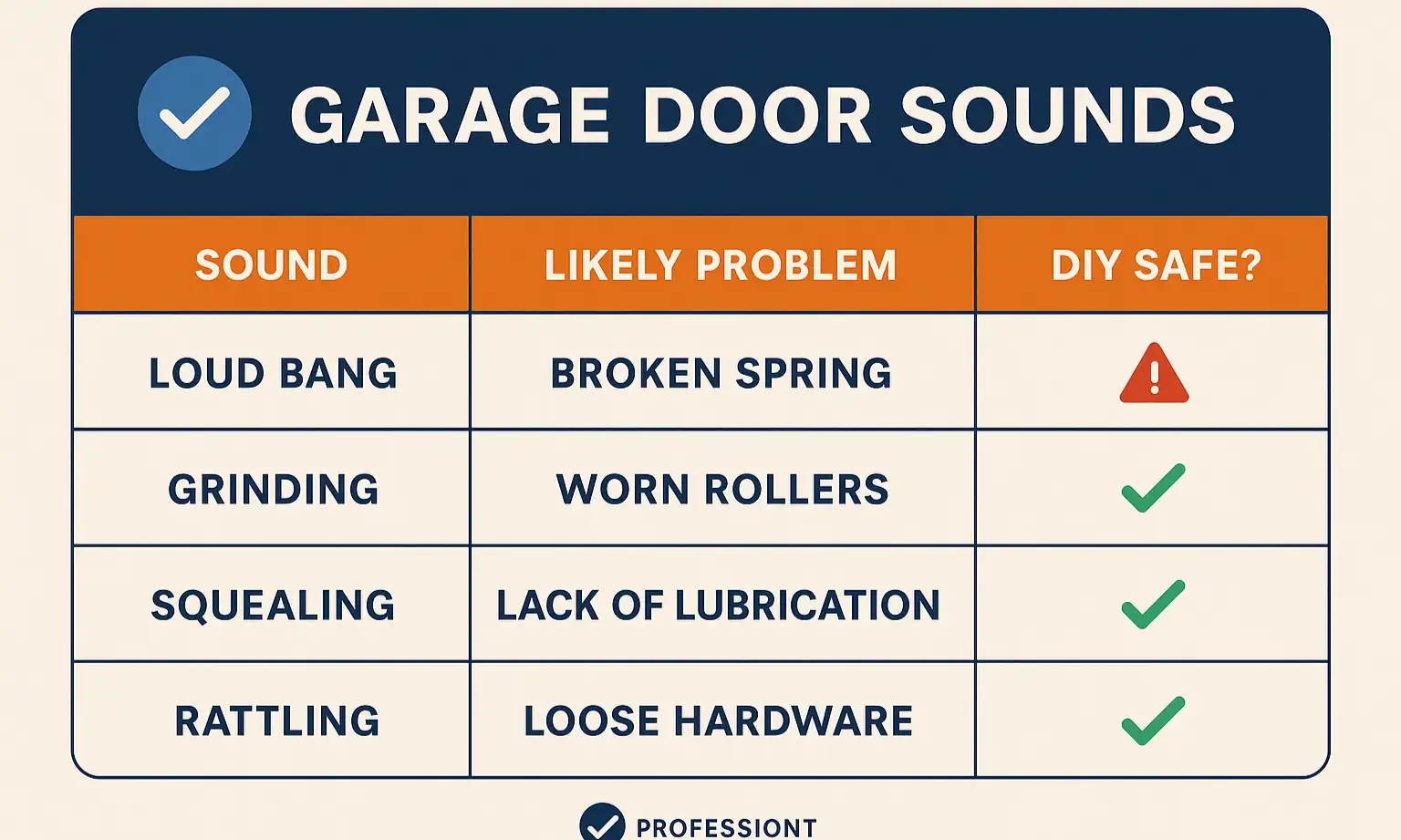
- Loud Bang or Pop: This is the classic sound of a broken torsion spring. The spring is under immense tension, and when it snaps, it releases that energy instantly. This is a high-priority issue that requires immediate professional attention.
- Grinding or Scraping: This often points to a problem with the alignment of the door in its tracks. It could be a frayed cable rubbing against the track or worn-out rollers struggling to move. If left unchecked, the door could come off its tracks.
- Squealing or Screeching: High-pitched squealing usually means your rollers or hinges need lubrication. It’s the sound of metal-on-metal friction. This is one of the few issues you might be able to address yourself with the right lubricant.
- Rattling: A rattling door can be caused by loose nuts, bolts, or hinges. It can also indicate that the door is not balanced properly. While tightening bolts seems simple, it's crucial to know which ones are safe to touch.
Building: Anatomy of Your Garage Door (The Safety-First Edition)
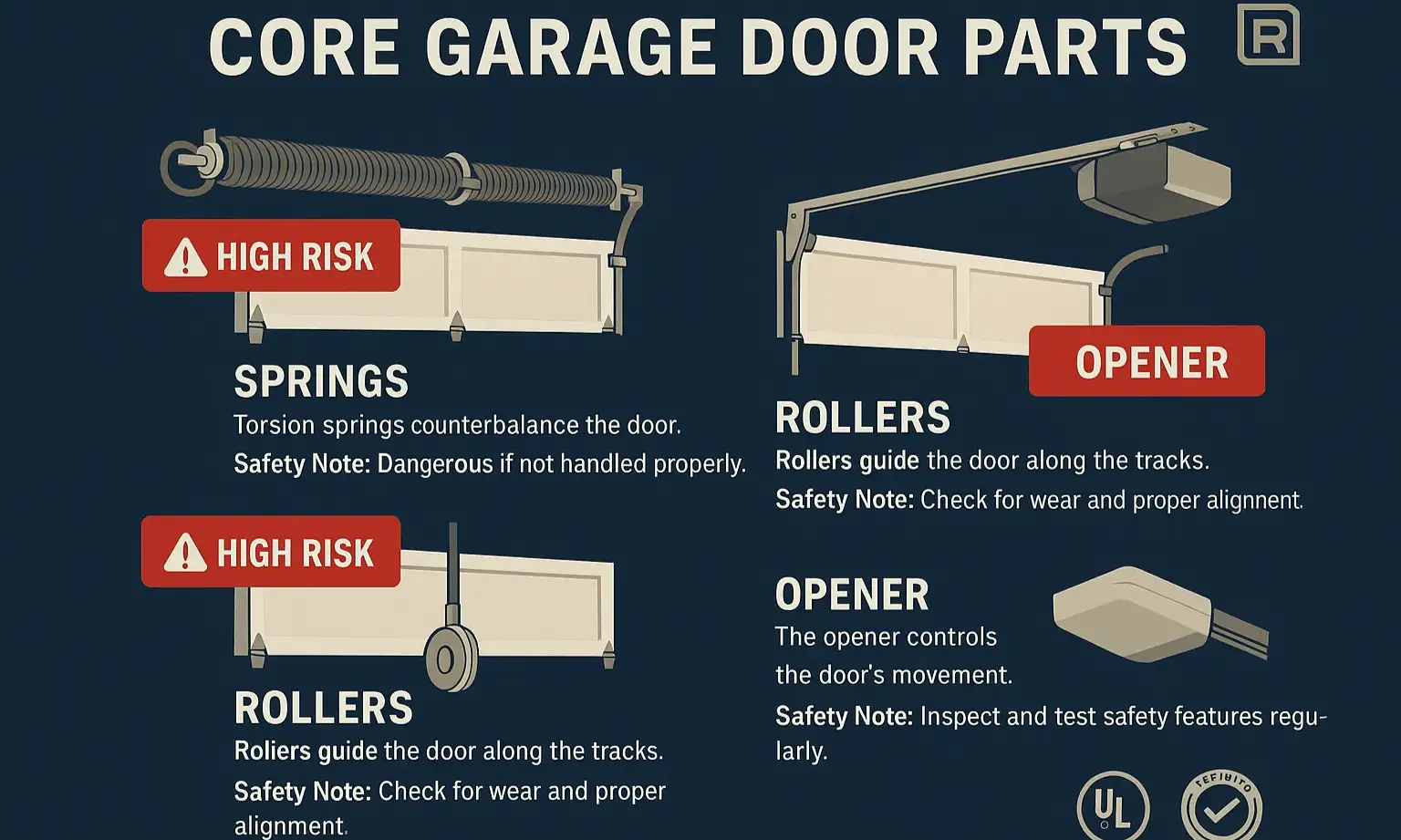
Springs: The Muscle of the System (HIGH RISK)
- Torsion Springs: Mounted on a bar above the door opening. They are safer because if they break, the spring is contained by the bar.
- Extension Springs: Located on the sides of the door, stretching and contracting as the door moves. If one of these breaks, it can fly off with dangerous force.
Cables & Rollers: The Guidance System (MEDIUM RISK)
- Lifting Cables: These high-tension steel cables are attached to the bottom of the door and work with the springs to lift the weight. If you see a frayed or snapped cable, do not touch it or operate the door. Safe garage door cable replacement is a job for a trained technician.
- Rollers: These wheels guide the door along the tracks. If they are worn or broken, you’ll hear grinding and the door will struggle to move.
Panels & Tracks: The Skeleton (LOW TO MEDIUM RISK)
- Tracks: These guide the rollers. If they are bent or misaligned, the door can get stuck or even fall.
- Panels: These sections make up the face of your door. A dented or damaged panel can affect the door’s operation. While a minor garage door panel replacement might seem straightforward, it can impact the door’s balance.
Garage Door Opener: The Brains (LOW RISK)
Mastery: The Homeowner's Safe Maintenance Checklist
- Look and Listen: Operate the door and watch it move. Does it look balanced? Is it jerky? Are the sounds different than usual?
- Lubricate Moving Parts: Apply a garage-door-specific lubricant (avoid heavy grease like WD-40) to the hinges, rollers, and springs. This simple step can eliminate most squeaks and squeals.
- Check the Safety Sensors: Place a small object (like a roll of paper towels) on the ground in the door’s path. When you close the door, it should immediately reverse when the sensor beam is broken. If it doesn’t, the sensors need adjusting or professional service.
- Clear the Tracks: Ensure the tracks on both sides are free of debris or dirt.
Need more information?
Get a free quote
Action: When to Call a Pro - The Definitive List
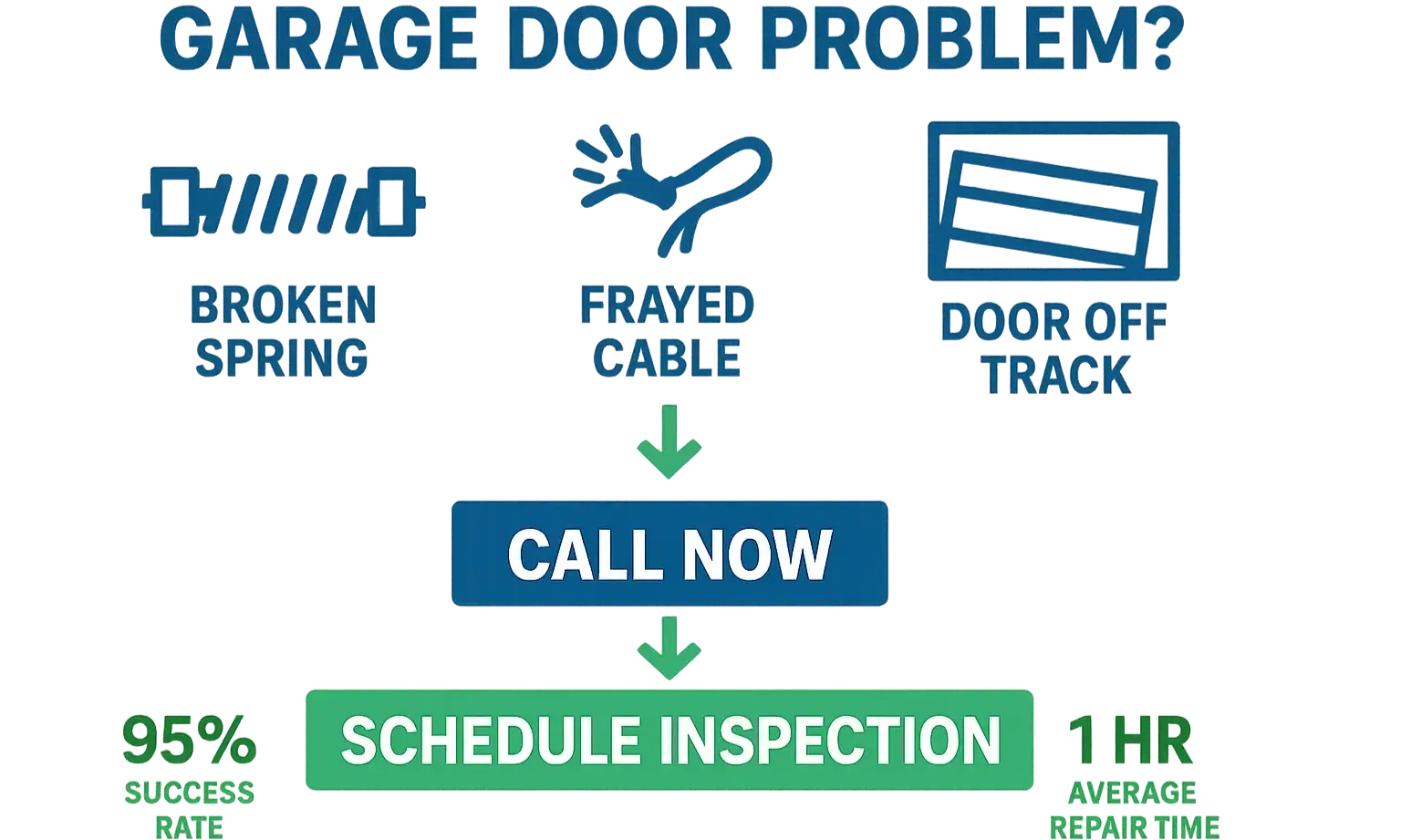
- A Broken Spring: If you heard that loud "bang" or can see a visible gap in the spring, your door is unsafe to operate. This is the number one reason for emergency garage door repair in Stamford, CT.
- A Snapped or Frayed Cable: This is a critical failure. The door could fall suddenly.
- The Door is Off-Track: A door that has come out of its tracks is unstable and can be extremely heavy and dangerous to move. This is often a symptom of other issues, like a broken cable or roller.
- Damaged Panels: If a panel is significantly bent or broken, it compromises the structural integrity of the entire door.
- The Door Feels Extremely Heavy: If you disengage the opener and try to lift the door manually, and it feels incredibly heavy, your springs are no longer counterbalancing the weight.
Frequently Asked Questions (FAQ) About Garage Door Service
Why won't my garage door open all the way?
Is it worth repairing garage door springs?
My garage door makes a loud noise when opening, what could it be?
Are smart garage door opener systems secure?
You may also like