Understanding Garage Door Pinch Points and Anti-Pinch Panel Design
Published: Jan 15, 2026
Your garage door is the largest moving object in your home. You probably know about the importance of its safety sensors—the little electronic eyes near the floor that stop the door from closing on an object. But what about the danger you can’t see as easily?
It’s the space between the door sections, a risk that safety experts call a "pinch point." Shockingly, research has shown that nearly one-third of garage doors that pass standard safety tests could still pose a significant finger-crushing hazard to children. Understanding this hidden danger is the first step toward creating a truly safe home for your family.'
This guide will walk you through everything you need to know about pinch points, from identifying them on your current door to understanding the modern technology that has made them a thing of the past.
What Exactly Is a Garage Door Pinch Point?
The Solution: Anti-Pinch by Design
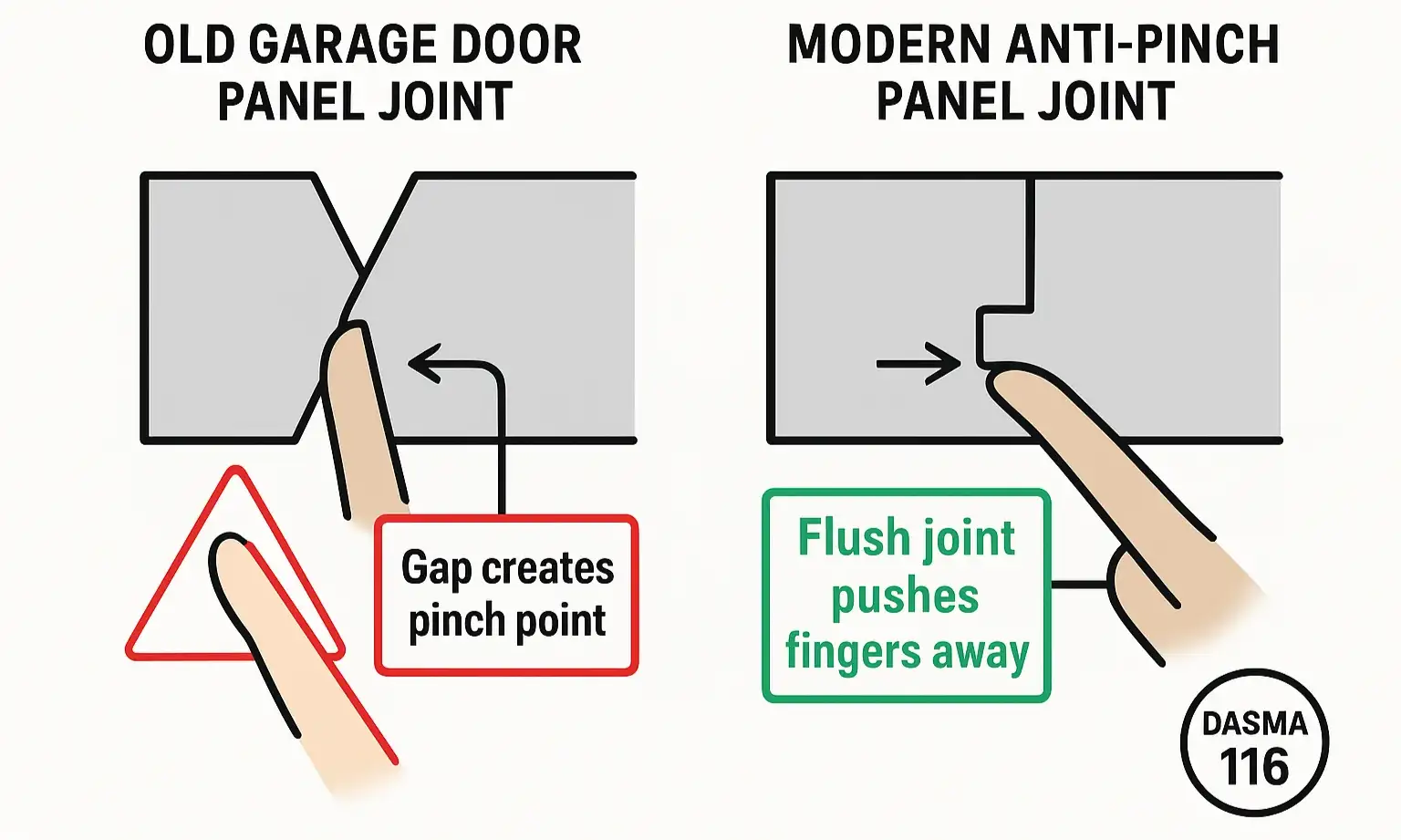
- Older Doors often have V-shaped or tongue-and-groove joints that create a distinct gap as the door opens. This is the danger zone.
- Modern Pinch-Resistant Doors use a ship-lap or other specialized joint design. As the door moves, these joints roll together in a way that pushes fingers out and away, rather than pulling them in. There is no gap for fingers to get trapped.
A Complete Safety System: More Than Just Sensors
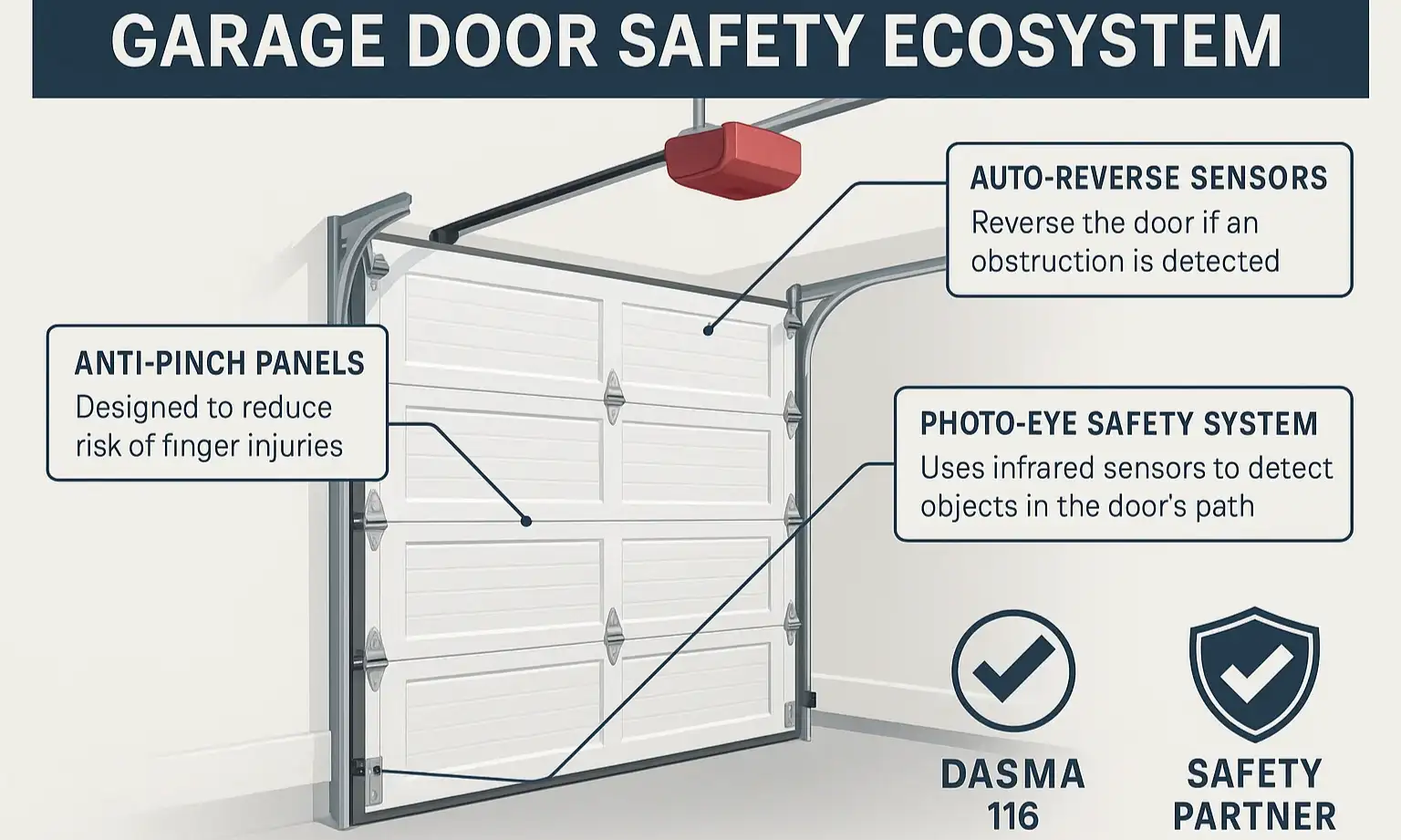
- Photo-Eye Sensors: Prevent the door from crushing a person or object underneath it.
- Auto-Reverse Mechanism: Reverses the door if it makes physical contact with an object while closing.
- Anti-Pinch Panels: Prevent fingers from being crushed between the door sections.
Your 1-Minute Home Inspection Guide
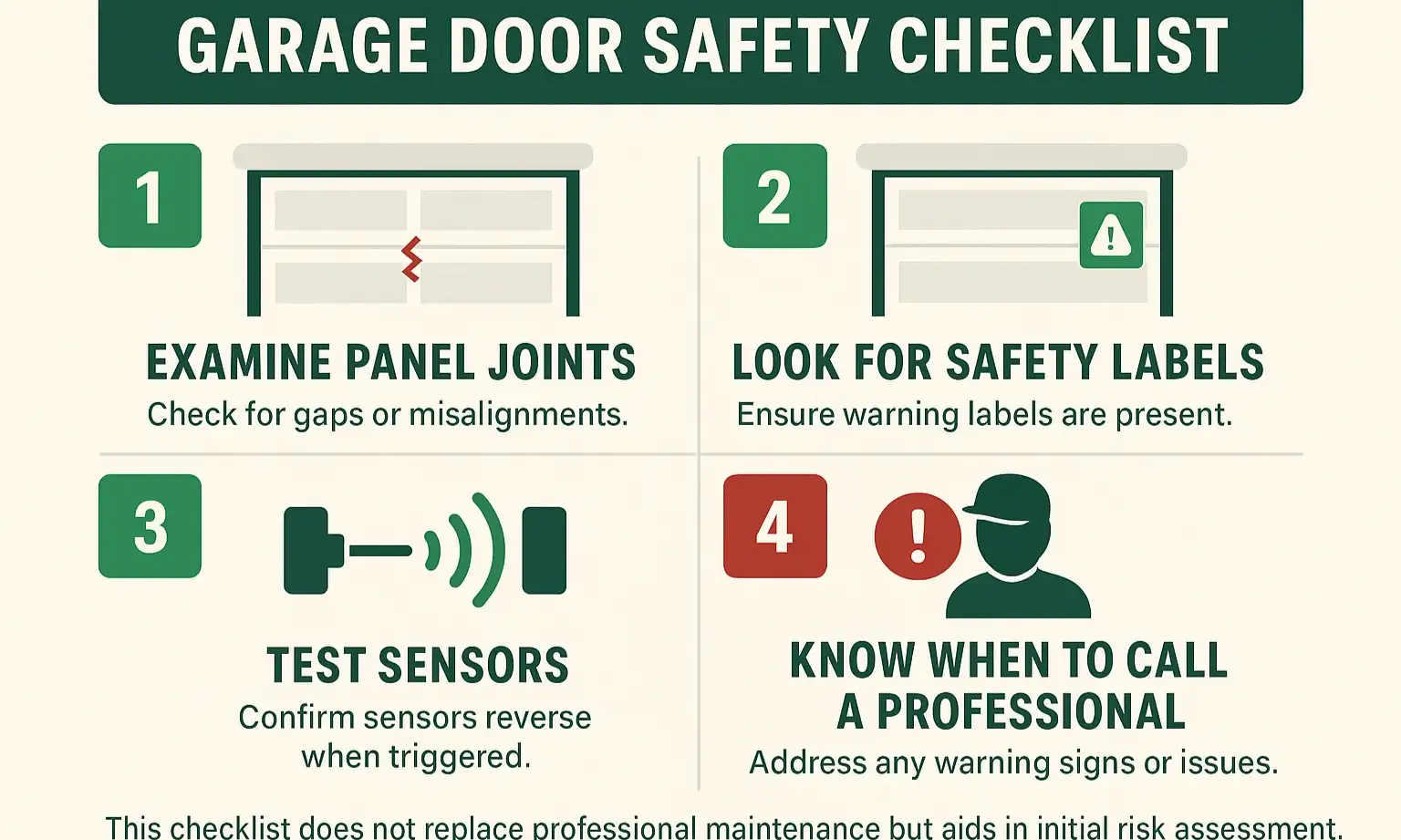
- Examine the Panel Joints: With the garage door closed, look closely at the horizontal seams where the panels meet. Do they form a tight seal, or can you see a potential gap where the panels will separate when the door opens? Compare it to the "Dangerous Gap" vs. "No Gap" diagram above.
- Look for Warning Labels: Modern, pinch-resistant doors usually have safety labels from the manufacturer near the bottom panel or track, often indicating that they meet safety standards. The absence of these labels can be a sign of an older, non-compliant door.
- Check Your Door's Age: If your home was built before the late 1990s and the garage door is original, there's a high probability it does not have anti-pinch technology.
Frequently Asked Questions
Are all new garage doors pinch-resistant?
Can I make my old garage door pinch-safe?
My door has safety sensors, so do I really need anti-pinch panels?
What does DASMA 116 mean?
A Final Word on Safety
You may also like