Your New Garage Door Opener’s Best Friend: A DIY Reinforcement Guide
Published: Mar 17, 2026
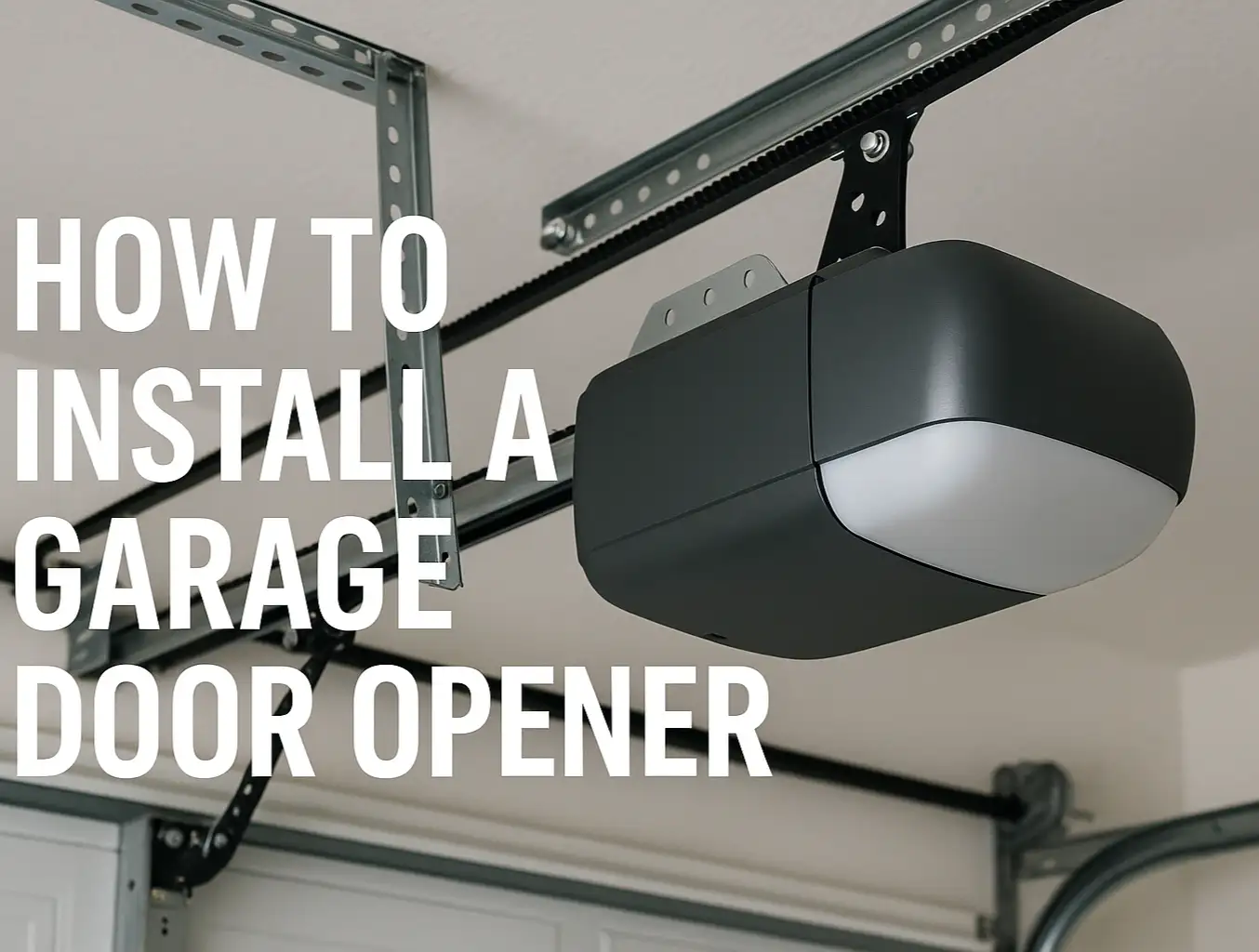
You’ve got the box. Inside is a brand-new garage door opener, promising the convenience of opening your garage with a simple click. It seems like a straightforward weekend project. But there’s a crucial first step that many DIY instructions gloss over, a step that can mean the difference between a successful installation and a costly, door-destroying disaster.
That step is reinforcement.
Most modern garage doors are built to be as light as possible, which is great for manual operation but not so great for handling the focused forces of an automatic opener. An opener doesn’t lift your door like you do—it pulls and pushes on a single, small section of the top panel, day after day. Without proper support, this concentrated pressure can bend, crack, or even rip the metal of your door right off.
This guide is about preventing that nightmare scenario. We’ll walk you through how to determine if your door needs strengthening and exactly how to do it, ensuring your new opener has a solid foundation to work with for years to come.
Foundation (The 5-Minute Diagnosis): Does My Door Need Help?
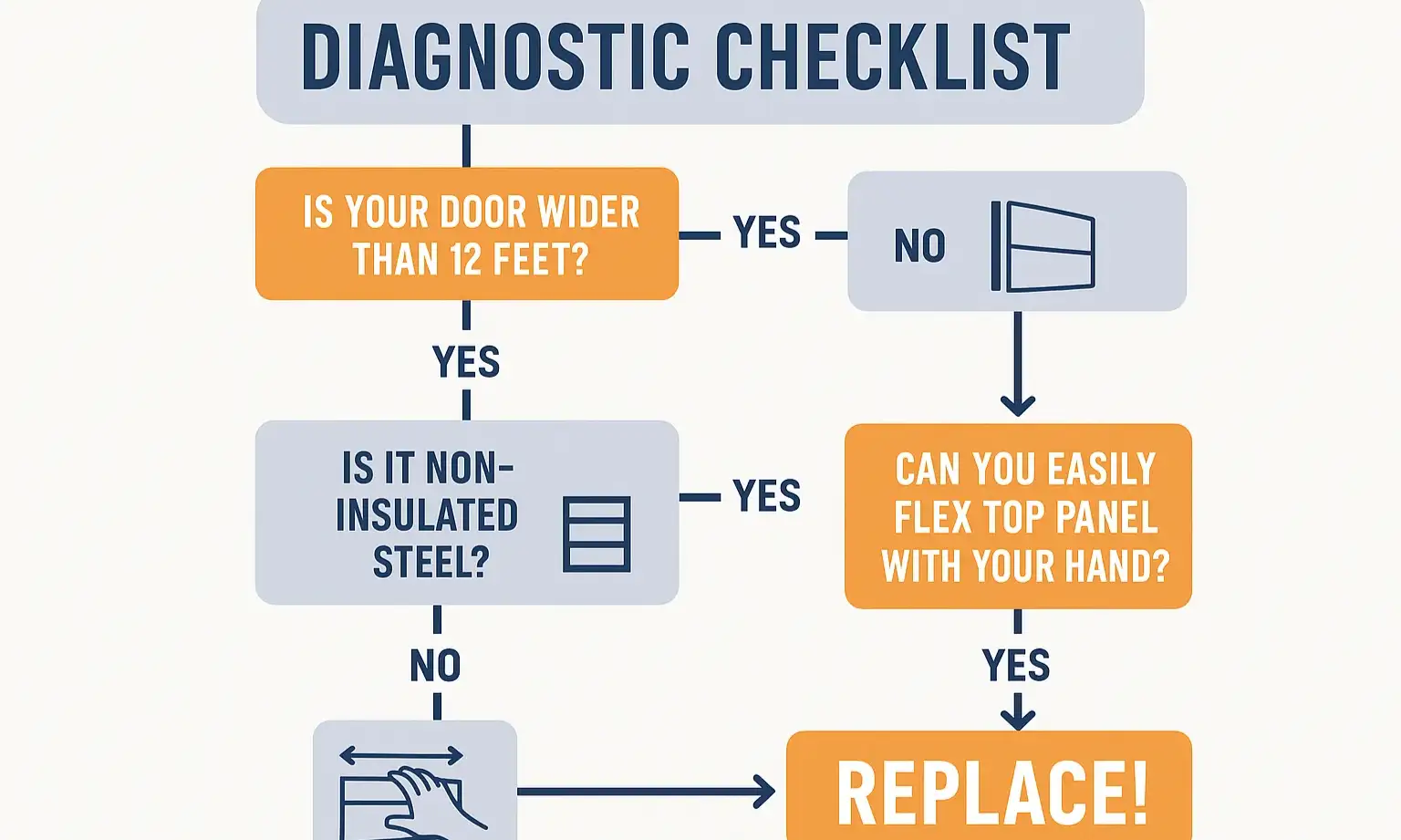
- Is your door wider than 12 feet? Double-wide doors (14-18 ft) have long, flexible panels that are highly susceptible to bending without a strut.
- Is it a single-layer steel door? These "pan" doors are very lightweight and often have thin steel that can't handle the opener's force alone.
- Is your door non-insulated? Insulated "sandwich" doors are inherently more rigid. Non-insulated doors are much more likely to flex and buckle.
- Can you easily flex the top panel with your hand? Stand inside your garage and push gently on the center of the top panel. If it gives easily, it needs support.
Building (The Solution & How-To): Your Step-by-Step Reinforcement Plan
Part 1: Choose Your Reinforcement
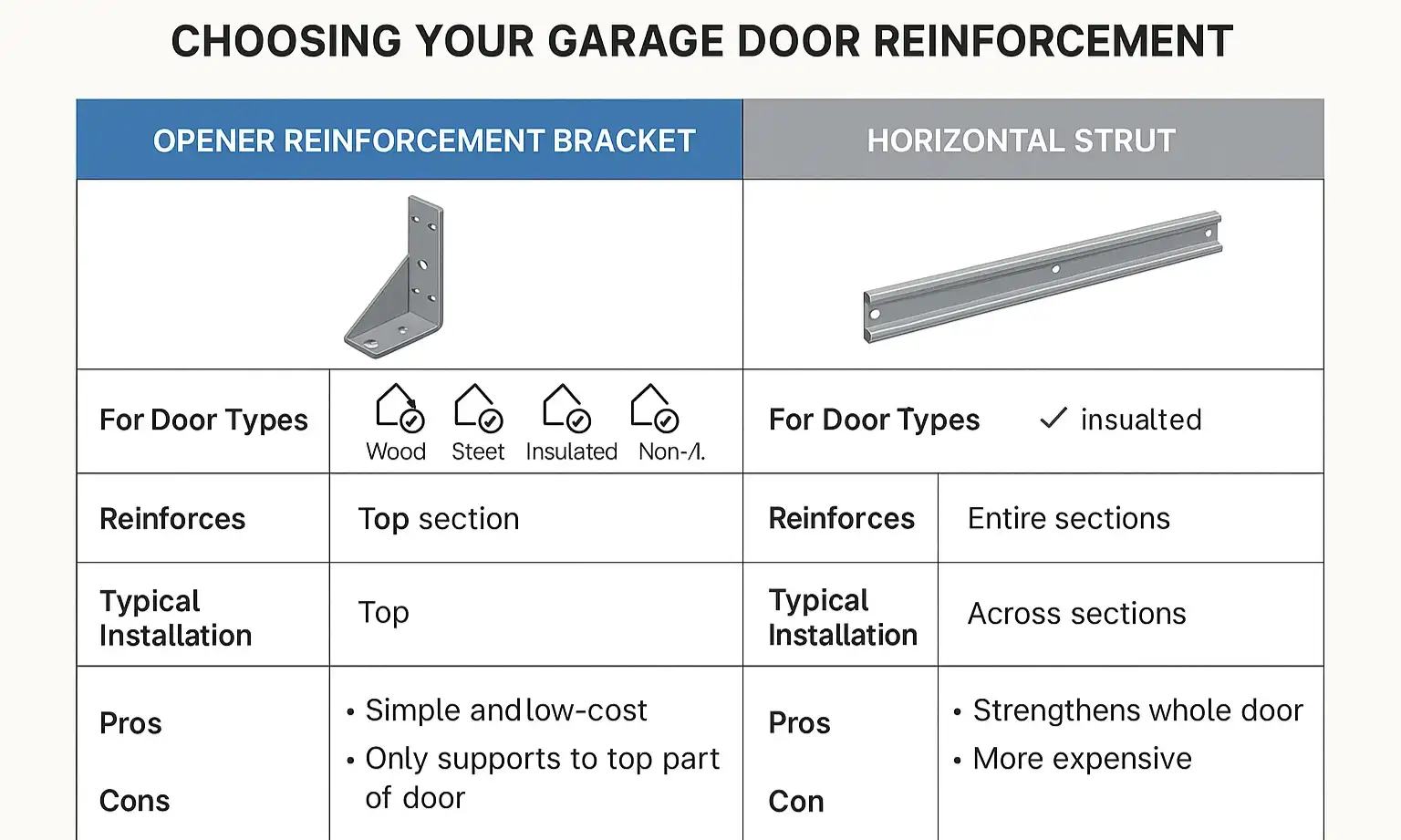
- Almost All Doors: Install an Opener Reinforcement Bracket (ORB).
- Double-Wide Doors (>12 ft): Install an ORB and at least one horizontal strut across the top panel.
- Single-Layer Steel Doors: Install an ORB and a strut, even if it's a single-car garage door.
- Doors Already Showing Minor Sagging: A strut is essential. For more information, you can learn about how to fix a sagging garage door using this method.
Part 2: Your Shopping List
- Drill or Impact Driver
- 5/16" or 3/8" Hex-Head Driver Bit (to match your screws)
- Tape Measure
- Pencil or Marker
- Clamps (optional, but very helpful for holding the strut) Safety Glasses
Part 3: The Step-by-Step Installation
- Find the Center: Locate the vertical center of the top panel. This is where your opener arm will attach.
- Position the Bracket: Place the ORB over the center stile of the door. The top of the bracket should sit just below the top edge of the door panel.
- Secure to the Stile: Drive at least four self-tapping screws through the bracket into the center stile.
- Secure to the Panel: Add screws along the top and bottom edges of the bracket, fastening it to the door skin. This is what distributes the force. Don't be shy with the screws; use all the provided holes.
Need more information?
Get a free quote
Mastery (Troubleshooting & FAQs)
What do I do if the screw holes for my old bracket are stripped or ripped out?
Where is the exact right place to install the strut?
My door is already slightly bent. Can I still reinforce it?
What should I do if my garage door track brackets look bent or misaligned?
I installed everything, but my opener is still acting strange. What's next?
Your Door is Now Opener-Ready
You may also like