The Essential Homeowner’s Guide to Garage Door Service and Repair
Published: Feb 24, 2026
Ever stop to think about your garage door? It’s the largest moving object in your home, a complex system of springs, cables, and motors you likely use every day without a second thought. That is, until the day it groans, shudders, or simply refuses to move.
That moment of panic is a universal homeowner experience. But here’s the single most important thing to understand, the "aha moment" that changes everything: your powerful garage door opener isn't actually lifting your 300-pound door. The real work is done by a set of tightly wound springs.
Your garage door is a finely balanced system. The springs are calibrated to make the door feel nearly weightless, and the opener just provides the gentle push to get it started. When that balance is broken, the system is under immense stress, and what seems like a simple jam could be a sign of a dangerously failing part.
Understanding this principle is the first step from being a worried homeowner to an informed one. This guide will walk you through how your door works, how to spot common problems, what you can safely do yourself, and when it's absolutely time to call a professional.
Foundation: How Your Garage Door Works - An Illustrated Guide
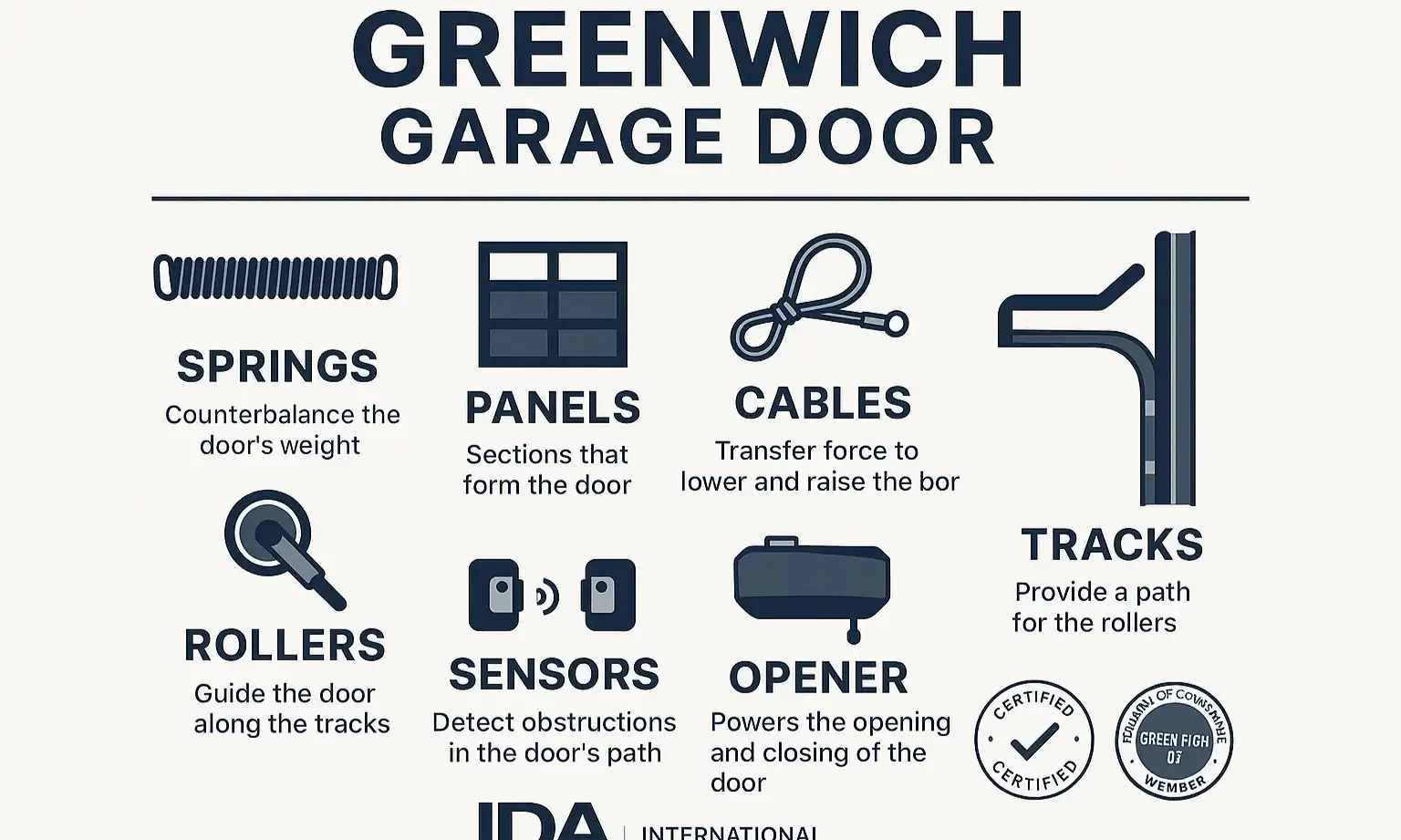
- Springs (Torsion or Extension): These are the heart of the system. Torsion springs are mounted above the door, while extension springs run along the sides. They store massive amounts of energy to counteract the door's weight.
- Cables: Connected to the springs, these steel cables do the actual lifting. If a spring is the muscle, the cable is the tendon.
- Rollers & Tracks: These are the wheels that guide the door up and down along the metal tracks. Worn-out rollers are a common source of noise and friction.
- Panels: The sections that make up the door itself. Damage to a panel can affect the door's alignment and movement.
- Opener & Motor: The motorized unit that, prompted by your remote, initiates the opening and closing cycle. It’s the brain of the operation, but not the brawn.
- Safety Sensors: Two small "eyes" near the bottom of the track that project an infrared beam. If anything breaks this beam while the door is closing, it automatically reverses.
Building: The Homeowner's Triage & Troubleshooting Guide
If Your Door Won't Open or Close at All...
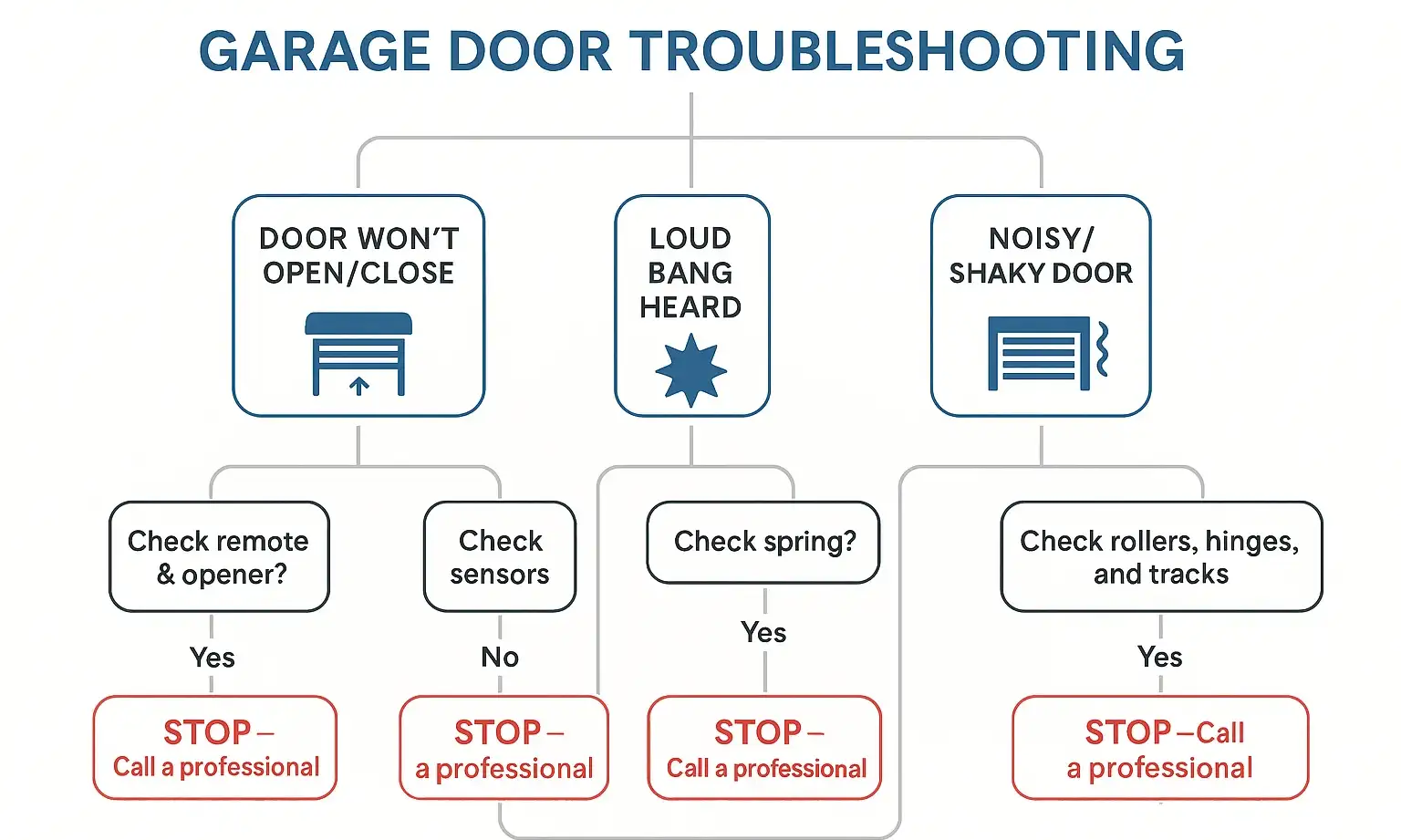
If You Heard a Loud "Bang"...
If Your Door is Noisy, Shaky, or Grinding...
If the Door Looks Crooked or is Off-Track...
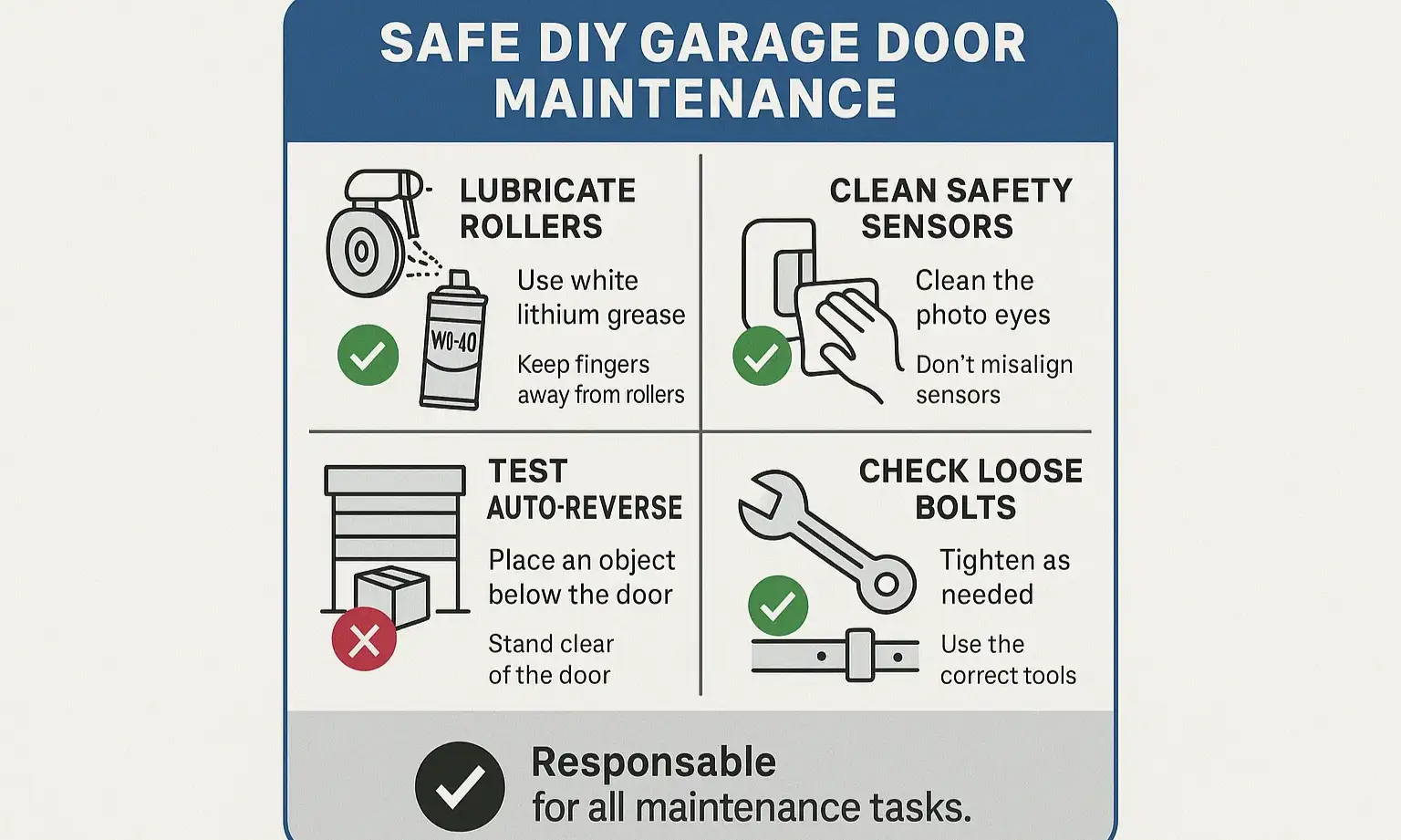
Mastery: The Safe-DIY Maintenance Checklist
- Look and Listen: Operate the door and just watch it move. Does it look smooth? Do you hear any unusual scraping, grinding, or popping sounds?
- Tighten the Hardware: Vibration can loosen bolts and brackets over time. With the door closed, use a socket wrench to gently tighten any hardware that appears loose.
- Lubricate Moving Parts: Apply a garage door-specific lubricant (white lithium grease is a great choice) to the rollers, hinges, and springs. Crucial Tip: Do NOT use WD-40. It's a solvent, not a lubricant, and can strip away the necessary grease.
- Test the Safety Sensors: With the door open, press the close button. Wave a broom handle in the path of the sensors. The door should immediately stop and reverse.
- Test the Auto-Reverse: Place a 2x4 board flat on the ground in the door's path. When the closing door touches the board, it should gently reverse. If it doesn't, the force setting on your opener needs professional adjustment.
Need more information?
Get a free quote
Action: When to Call a Professional
Red Flag #1: Broken Springs
Red Flag #2: Frayed or Broken Cables
Red Flag #3: Door Off-Track
Red Flag #4: Damaged Door Panels
FAQ: Your Garage Door Questions Answered
What are the most common garage door problems?
How often should my garage door be serviced?
How do I choose a good garage door company?
You may also like