Our company logo

State

Connecticut Homeowners: Your Guide to Garage Door Problems and Fixes


Published: Mar 4, 2026

You’re running late for work on a chilly Hartford morning. You press the button on your garage door opener, and… nothing. Or maybe you hear a loud, unnerving bang. Now what? That moment of frustration is something countless homeowners in Bridgeport, Hartford, and across Connecticut have experienced. Your garage door is more than just a convenience; it's the largest moving part of your home and a key element of its security and curb appeal.

When it stops working, it’s not just an inconvenience—it’s a disruption. But understanding what’s going on, what it might cost, and when to call for help can turn that panic into a manageable plan. This guide is your friendly first step, created to help you diagnose the problem, understand your options, and make confident decisions for your home.

Understanding Your Garage Door: A Quick Anatomy Lesson
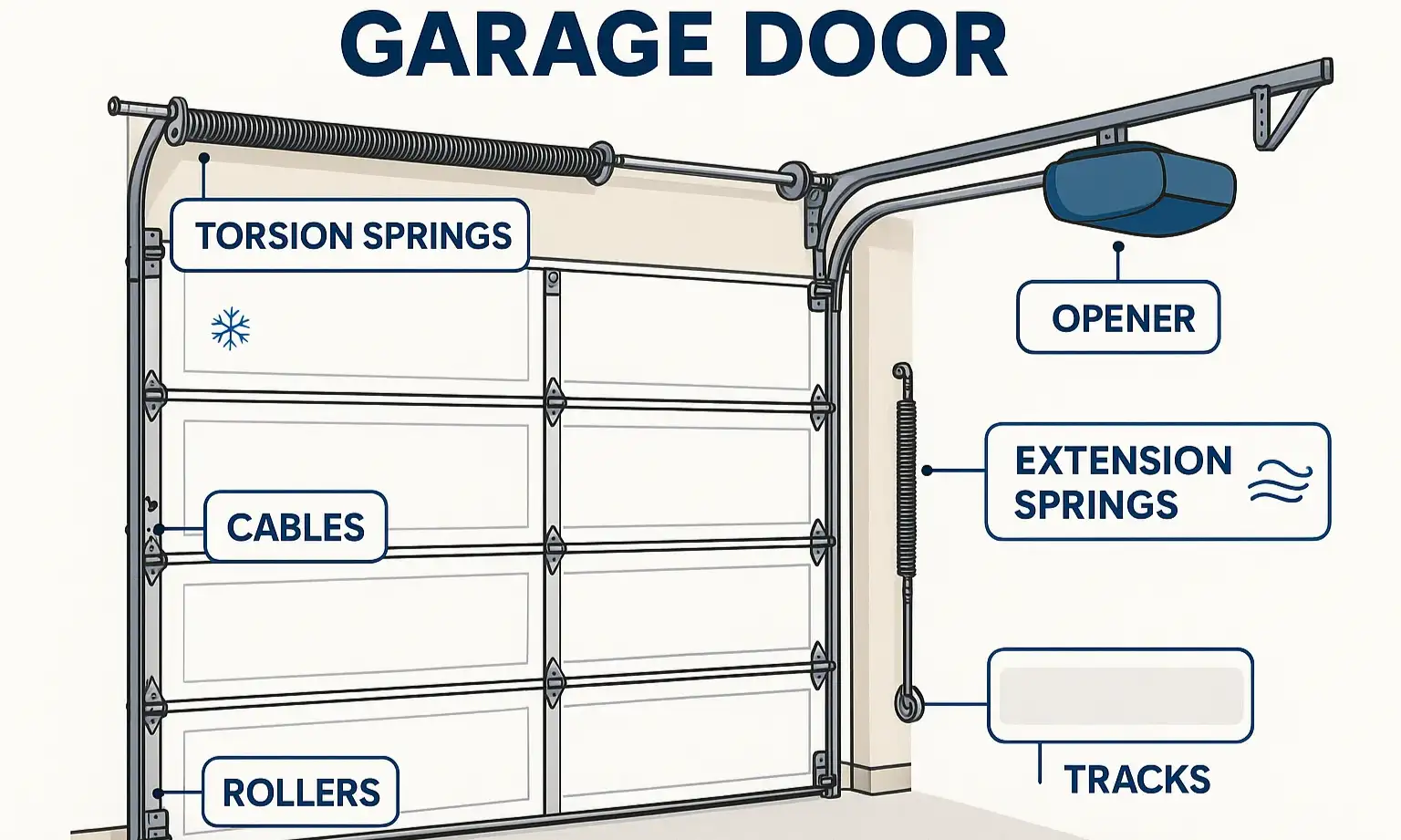

Before we dive into problems, let's get acquainted with the main players. Your garage door is a complex system of interconnected parts, and knowing the basics helps demystify what’s going wrong. Think of it like a team where every member has a specific job.
Understand the essential parts of your garage door and how local weather affects their longevity to make confident maintenance and repair decisions.

  • Springs (Torsion or Extension): These are the muscles of the system. They do the heavy lifting so the opener doesn't have to. Torsion springs are mounted above the door, while extension springs run along the sides. They are under extreme tension and are the most dangerous part to handle without training.
  • Cables: These high-tension steel cables are attached to the bottom of the door and help the springs lift it evenly. If one snaps, the door can become crooked and unsafe.
  • Rollers & Tracks: The rollers run inside the metal tracks on either side of the door, guiding it up and down.
  • Opener (Motor): This is the brain of the operation. It's the motorized device that automates the opening and closing, receiving signals from your remote or wall switch.
  • Panels: These are the large sections that make up the door itself. They can be damaged by impact from a car or even harsh weather.
Understand the essential parts of your garage door and how local weather affects their longevity to make confident maintenance and repair decisions.

That Doesn't Sound Right: Common Garage Door Problems in CT


From the salty air along the Bridgeport coast to the heavy snow and ice in the Hartford area, Connecticut's climate can be tough on a garage door's moving parts. Here are some of the most common issues homeowners face.

1. The Door Won't Open or Close

This is the most frequent complaint, and it can have several causes.
Symptoms: The door doesn't move at all, or it starts to move and then reverses.
Possible Causes:
Power Issue: The opener might be unplugged or a circuit breaker tripped.
Misaligned Safety Sensors: Those two little "eyes" near the bottom of the tracks must be pointed directly at each other. If one is bumped, the door won't close.
Broken Spring: If you heard a loud bang, this is the likely culprit. The opener isn't strong enough to lift the door's full weight without the spring's help.
DIY or Call a Pro?
DIY: Check the power, wipe the sensor lenses, and make sure they're aligned (most have an indicator light that should be solid).
Call a Pro: If you suspect a broken spring or can't identify the issue, it’s time to call a professional. A sudden, complete failure to open often points to a serious mechanical problem that needs expert handling.

2. The Door is Making a Lot of Noise

A noisy garage door is more than an annoyance; it's a cry for help. Grinding, squeaking, or rattling noises often mean parts are worn out or need lubrication.
Symptoms: Loud screeching, grinding, or popping sounds during operation.
Possible Causes:
Worn Rollers: Old metal rollers can scrape and grind against the tracks.
Lack of Lubrication: The moving parts need regular lubrication to operate smoothly, especially with the temperature swings in Connecticut.
Loose Hardware: Vibration can cause nuts and bolts to loosen over time.
DIY or Call a Pro?
DIY: You can try lubricating the rollers, hinges, and springs with a silicone-based garage door lubricant.
Call a Pro: If lubrication doesn't solve the problem, you may have worn-out parts. A professional garage door repair technician can identify what needs replacing before it fails completely.

3. The Door is Off-Track or Crooked

An off-track door is a serious safety hazard. It can happen if a cable snaps or if one of the rollers is damaged.
Symptoms: The door is visibly uneven, hangs at an angle, or has come out of its tracks.
Possible Causes:
Broken Lift Cable: This is a very common cause, leaving one side unsupported.
Impact: Hitting the door with a car can easily knock it off its tracks.
DIY or Call a Pro?
Call a Pro Immediately. Do not try to move the door yourself. It is unstable and could fall, causing serious injury or property damage. This situation requires specialized tools and knowledge to safely reset.

Need more information?

How to Choose a Garage Door Technician in Bridgeport
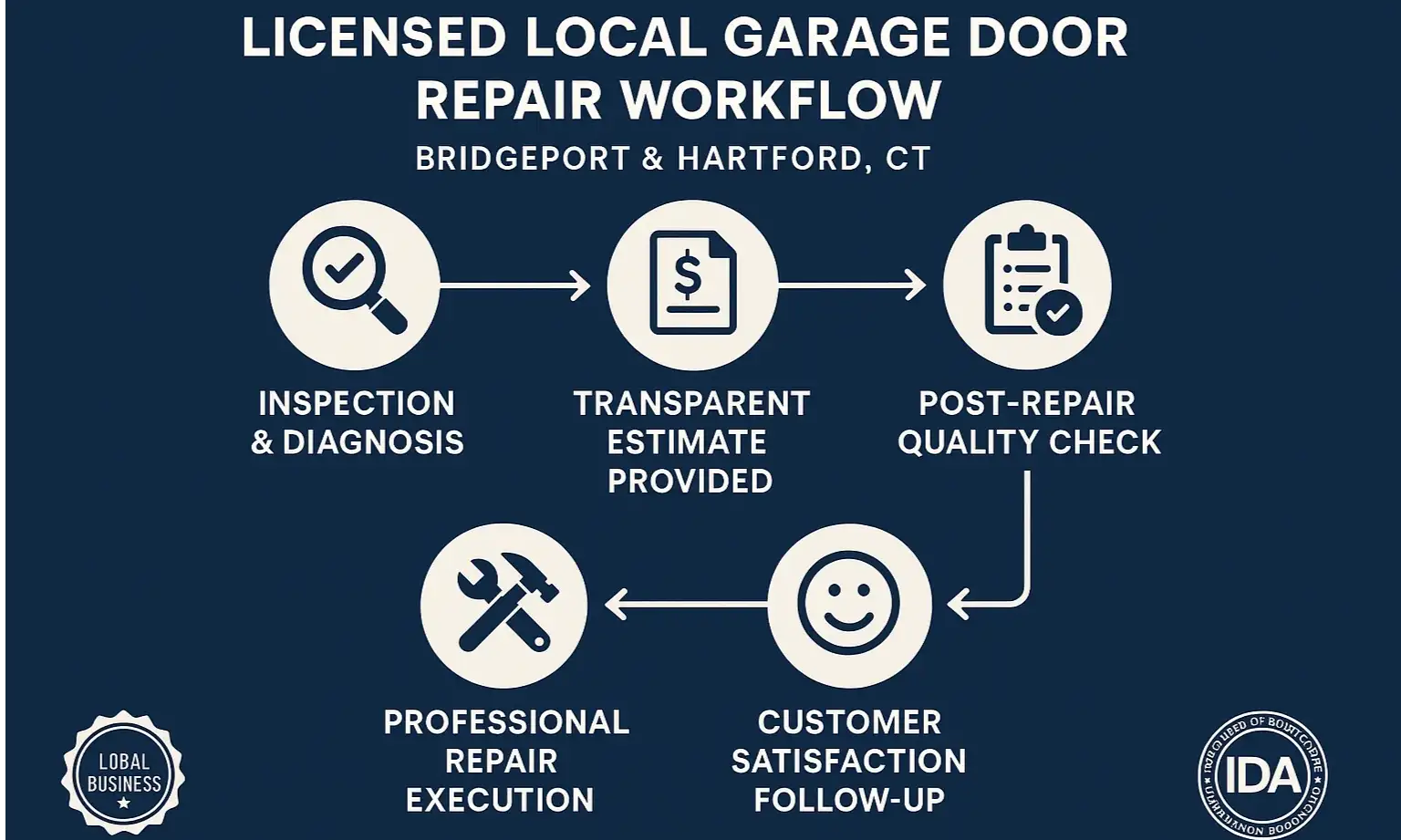

When you need professional help, choosing the right company is crucial. You want someone reliable, honest, and experienced. Local competitors often have basic websites, but a true authority provides value first.
Understanding our trusted repair process ensures confidence and peace of mind when choosing your local garage door expert.
Here’s what to look for:

  1. Local Presence: Choose a company with a physical address and proven track record in your area. They’ll understand local needs and be more accountable.
  2. Clear Pricing: They should be able to provide a clear, itemized estimate before any work begins. Be wary of anyone who gives a vague price over the phone without an inspection.
  3. Licensed and Insured: This protects you and your property in case of accidents. Always ask for proof.
  4. Positive Reviews: Check Google, Yelp, and Angi for reviews from other homeowners in your community. Look for comments on professionalism, timeliness, and fairness.
  5. 24/7 Availability: Garage door problems don't always happen during business hours. A company that offers emergency service provides true peace of mind.
Understanding our trusted repair process ensures confidence and peace of mind when choosing your local garage door expert.

Frequently Asked Questions (FAQ)


How long do garage door springs last?

In a climate like Connecticut's, the average lifespan is about 7-10 years, or roughly 10,000 cycles (one cycle is one open and one close). Heavier use or extreme temperature fluctuations can shorten this.

Can I replace a garage door spring myself?

We strongly advise against it. Garage door springs are under immense tension. A mistake during removal or installation can cause the spring or cable to snap, leading to severe injury or even death. This is a job best left to a trained and insured professional who handles complex torsion spring issues every day.

What is the difference between a chain drive and a belt drive opener?

Chain drives are durable and affordable but can be noisy. Belt drives use a steel-reinforced rubber belt, making them significantly quieter—a great choice if you have a bedroom above the garage.

Why did my garage door open by itself?

This "phantom opening" is rare with modern openers but can be caused by radio frequency interference from a nearby device or a neighbor's remote. It could also indicate a short in the wiring or a faulty circuit board.

What are the benefits of a smart garage door opener?

A smart opener connects to your home's Wi-Fi, allowing you to open, close, and monitor your garage door from your smartphone anywhere in the world. You can get alerts when the door is used, grant temporary access to visitors, and even schedule it to close automatically.
Your garage door is a vital part of your daily routine. By understanding how it works and what to do when it doesn't, you can handle any issue with confidence. When you face a problem that’s beyond a simple fix, don't hesitate to reach out to a trusted, local professional. For homeowners looking for reliable garage door repair near me, having an expert partner makes all the difference.

You may also like