Greenwich Garage Door Problems Explained: A Practical Homeowner’s Guide
Published: Feb 24, 2026
It often starts with a sound. A new groan, a sudden shriek, or a clunk that wasn't there yesterday. Your garage door, the largest moving object in your home, is trying to tell you something. For many homeowners in Greenwich, CT, that sound is the first sign of a problem that feels both urgent and overwhelming. Where do you even begin?
You're in the right place. This isn't just another service page; it's your first step toward understanding what's happening with your garage door. Think of this as a friendly conversation over coffee, where we'll demystify the complex machine that guards your home, help you diagnose common issues, and empower you to make the smartest, safest decision for your family.
The Anatomy of Your Garage Door: Understanding the Core System
- The Springs (The Muscle): This is the single most important—and dangerous—part of your door. Whether you have large torsion springs on a bar above the door or long extension springs on the sides, their job is to do the heavy lifting. Through a principle called counterbalancing, these tightly wound springs make your 300-pound door feel light enough for you or the opener to move.
- The Opener (The Brains): This is the motorized unit on your ceiling. It doesn't actually lift the door's full weight (that's the springs' job). The opener simply provides the force to get the door moving. Modern units are incredibly sophisticated, and learning about smart garage door opener installation can reveal how much technology has advanced.
- Cables & Drums (The Ligaments): The lift cables are attached to the bottom of the door and wind around drums as the door opens. They transfer the lifting force from the springs to the door itself.
- Rollers & Tracks (The Skeleton): The rollers are the small wheels that sit in the metal tracks on the sides of your door, guiding it up and down smoothly. Worn-out rollers are a primary source of noise and friction.
- Sensors (The Eyes): Those two little boxes near the floor on either side of your door are a critical safety feature. They project an invisible infrared beam. If anything breaks that beam while the door is closing, the door will automatically reverse.
- Panels (The Facade): These are the individual sections of your door. While mostly cosmetic, a damaged panel can compromise the door's structure and insulation.
Sound Diagnosis: What Is Your Garage Door Trying to Tell You?
Symptom 1: The Door is Excessively Noisy (Grinding, Squeaking, Banging)
- Likely Cause: Most often, this is caused by worn-out metal rollers or a desperate need for lubrication on hinges and springs. A grinding or scraping noise could mean the rollers are shot and are now dragging instead of rolling. A loud bang, especially when the door opens or closes, could signal a much more serious issue, like a spring about to break.
- Next Step: Proper lubrication is a great first step. However, if the noise persists or sounds like metal grinding on metal, it's a sign that parts need to be inspected by a professional. If you're tired of the racket, you might be interested in learning about the quietest garage door opener models available.
Symptom 2: The Door Won't Open or Close All the Way
- Likely Cause: If the door opens a few inches and stops, you likely have a broken garage door spring. The opener can't lift the door's dead weight without the spring's help. If the door closes partway and then reverses, the number one culprit is misaligned or dirty safety sensors. A less common cause could be an issue with the opener's travel limit settings.
- Next Step: First, check your safety sensors. Are the little lights on them both solidly lit? If one is blinking, they're not aligned. Wipe the lenses and try to adjust them until both lights are solid. If you suspect a broken spring (you may even see a physical gap in the spring), do not operate the door. This is a job for a professional.
Symptom 3: The Door is Off its Track or Looks Crooked
- Likely Cause: This usually happens for one of two reasons: either a roller has worn out and fallen out of the track, or one of the lift cables has snapped. If you see a cable dangling, that's your problem. The door is now being lifted from only one side, causing it to tilt and jam. For a detailed breakdown of this issue, a guide on garage door cable repair can provide more context.
- Next Step: Stop using the door immediately and call for emergency service. Trying to force a crooked door can cause more panels to bend and potentially lead to the door falling.
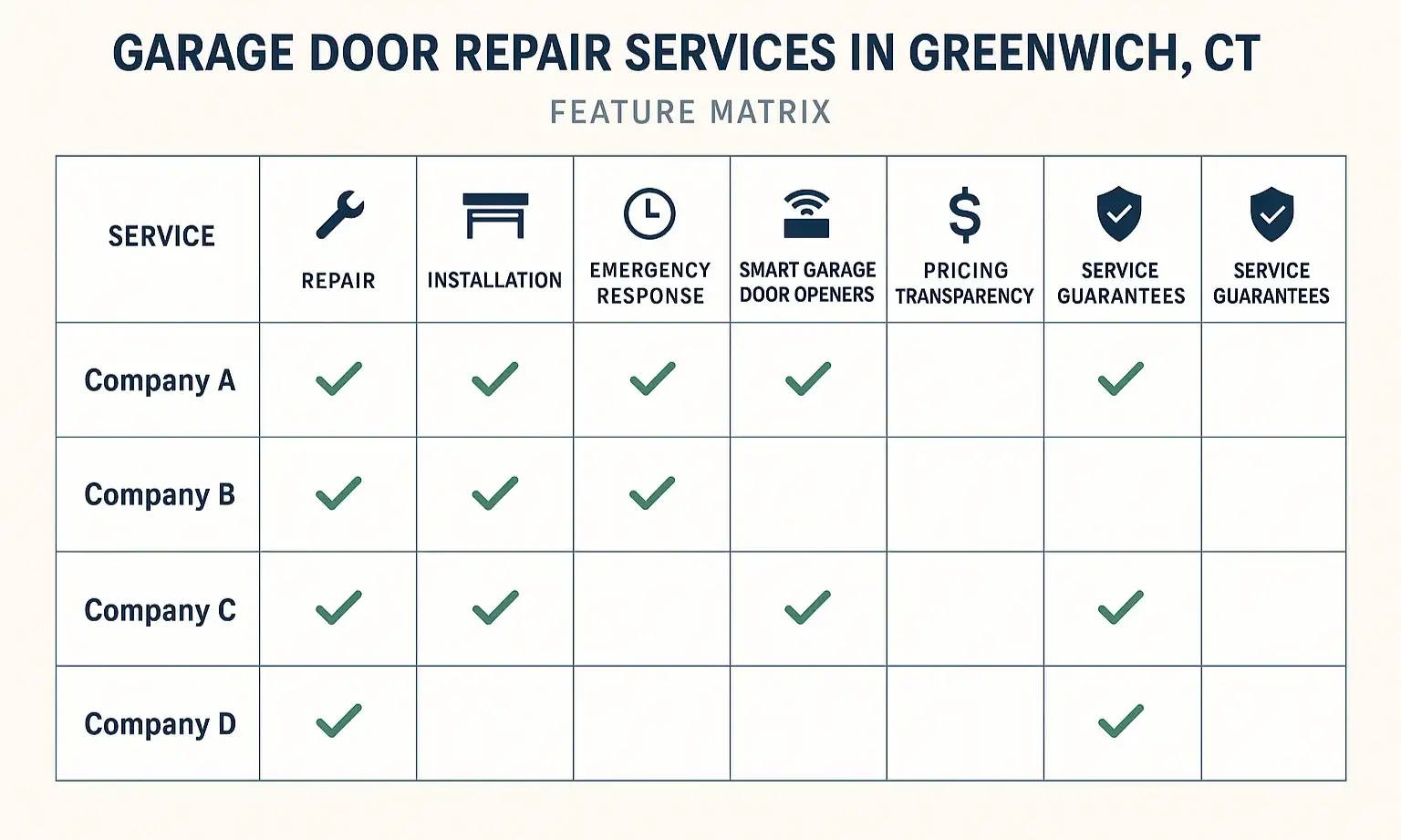
Choosing Your Garage Door Service Provider: Feature Comparison
DIY vs. Professional Repairs: A Crucial Safety Decision
DIY SAFE Tasks:
- Lubricating Moving Parts: Spraying a silicone or lithium-based lubricant on hinges, rollers, and springs can quiet a noisy door. Warning: Do NOT use WD-40, as it attracts dust and grime.
- Cleaning and Aligning Sensors: As mentioned earlier, this is a simple and common fix for a door that won't close.
- Checking for Loose Hardware: Tightening nuts and bolts can reduce rattling.
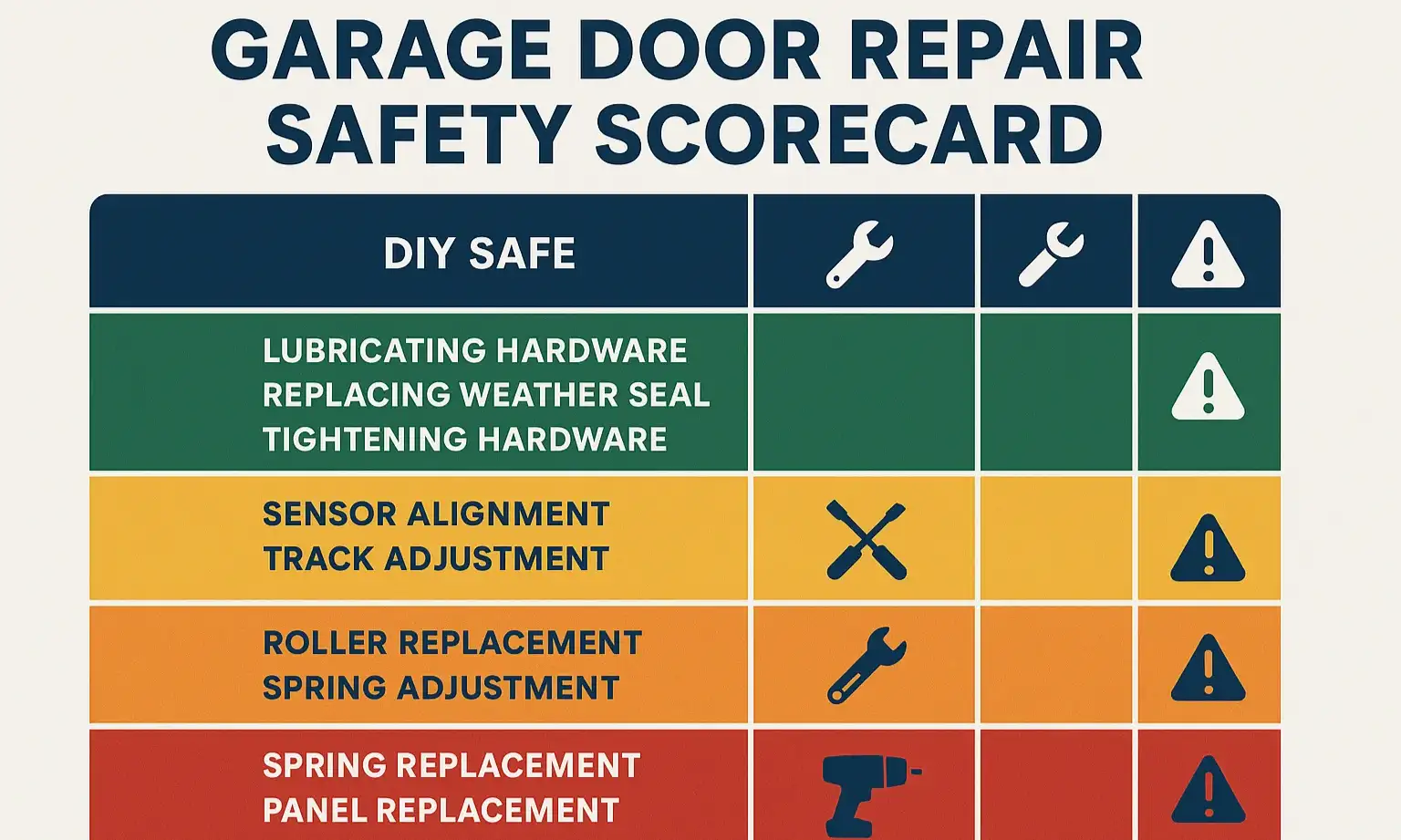
PRO REQUIRED Tasks:
- Spring Repair or Replacement: This is non-negotiable. A spring snapping during a DIY attempt can cause severe injury or death.
- Cable Repair or Replacement: Like springs, cables are under high tension and are part of the same dangerous counterbalance system.
- Door Off Track: This requires specialized tools to safely realign the door and address the root cause without causing further damage.
- Panel Replacement: While it seems straightforward, replacing a panel requires de-tensioning the door and can be more complex than it looks. You can learn more about the process in our garage door panel replacement guide.
Need more information?
Get a free quote
The Garage Door Repair Process: Our Expertise
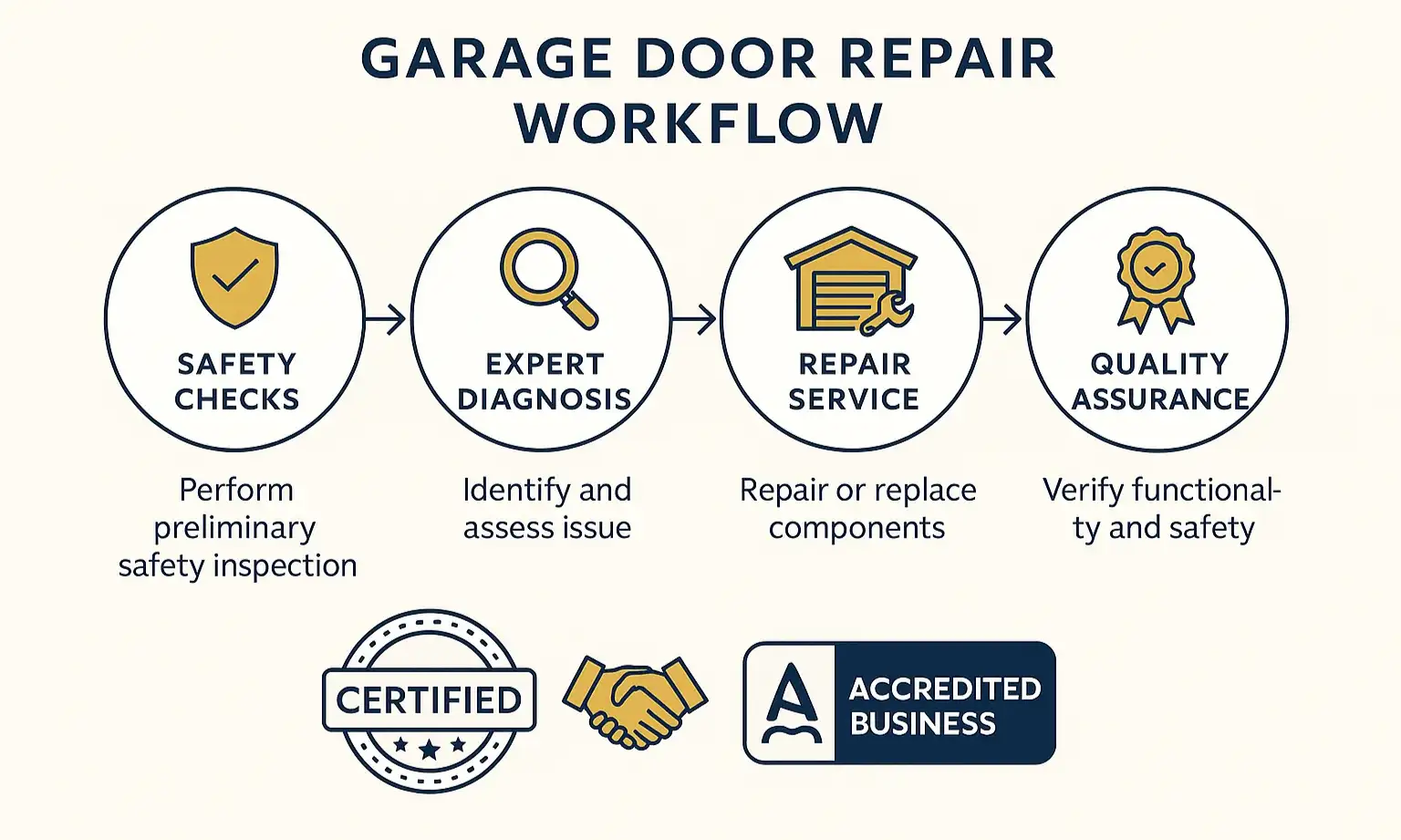
- A Thorough Safety Inspection: A true pro doesn't just fix the obvious problem. They perform a full inspection of your entire system to identify underlying issues or parts that are nearing the end of their life.
- Clear Diagnosis and Options: The technician should explain exactly what they found, what caused the problem, and what your repair options are. They should provide a clear, upfront price before any work begins.
- Professional Execution: The repair should be done with the right tools and high-quality parts, ensuring the job is done safely and correctly the first time.
- Testing and Confirmation: After the repair, the technician should test the door's balance, safety features, and overall operation to ensure everything is working perfectly.
Frequently Asked Questions for Greenwich Homeowners
How often should my garage door be serviced?
What is the most common garage door problem?
Can I just replace one panel of my garage door?
My garage door is stuck. What should I do?
You may also like