Garage Door Issues Explained: Safe Solutions for Homeowners
Published: Mar 5, 2026
That dreaded sound—the shudder, the groan, the screech, followed by silence. A garage door that won’t open isn't just an inconvenience; it's a sudden, heavy barrier between you and your day. For many homeowners in Cypress, TX, this moment triggers a wave of questions: What’s wrong with it? Can I fix it myself? How much is this going to cost?
It’s a common scenario, but you’re not powerless. Understanding the basics of how your garage door works is the first step toward saving time, avoiding costly mistakes, and, most importantly, staying safe. This guide is your friendly first touchpoint, designed to turn confusion into clarity and help you make the best decision for your home.
Foundation: The Anatomy of a Garage Door
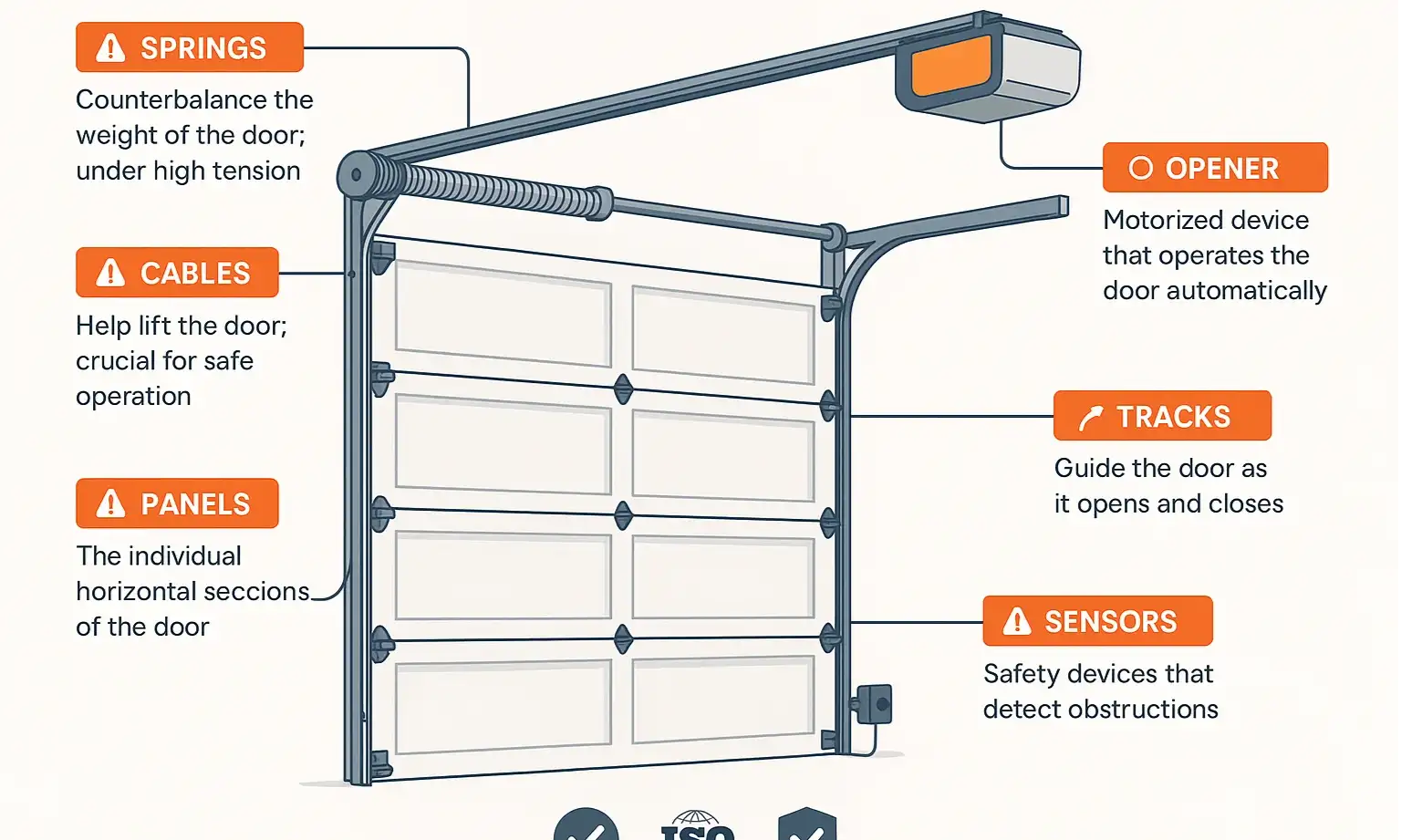
- Springs (The Muscles): These are the true heavy lifters. Whether they are torsion springs (a bar above the door) or extension springs (on the sides), they are wound incredibly tight to counterbalance the door's weight. This is why a broken garage spring repair is one of the most common—and dangerous—issues.
- Cables (The Tendons): These steel cables connect the springs to the bottom of the door, transferring the lifting force. If a cable snaps, the door can become crooked or slam shut.
- Rollers & Tracks (The Skeleton): Rollers are the wheels that sit in the metal tracks on the side, guiding the door up and down smoothly. If they are worn or the tracks are bent, you'll hear it.
- Panels (The Face): These are the sections that make up the door itself. Damage here can be more than just cosmetic; it can affect the door's alignment and insulation.
- Opener (The Brain): The electric motor that automates the opening and closing process. When the opener malfunctions, the door might not respond, or it could reverse unexpectedly.
Diagnosis: The Garage Door Detective's Guide
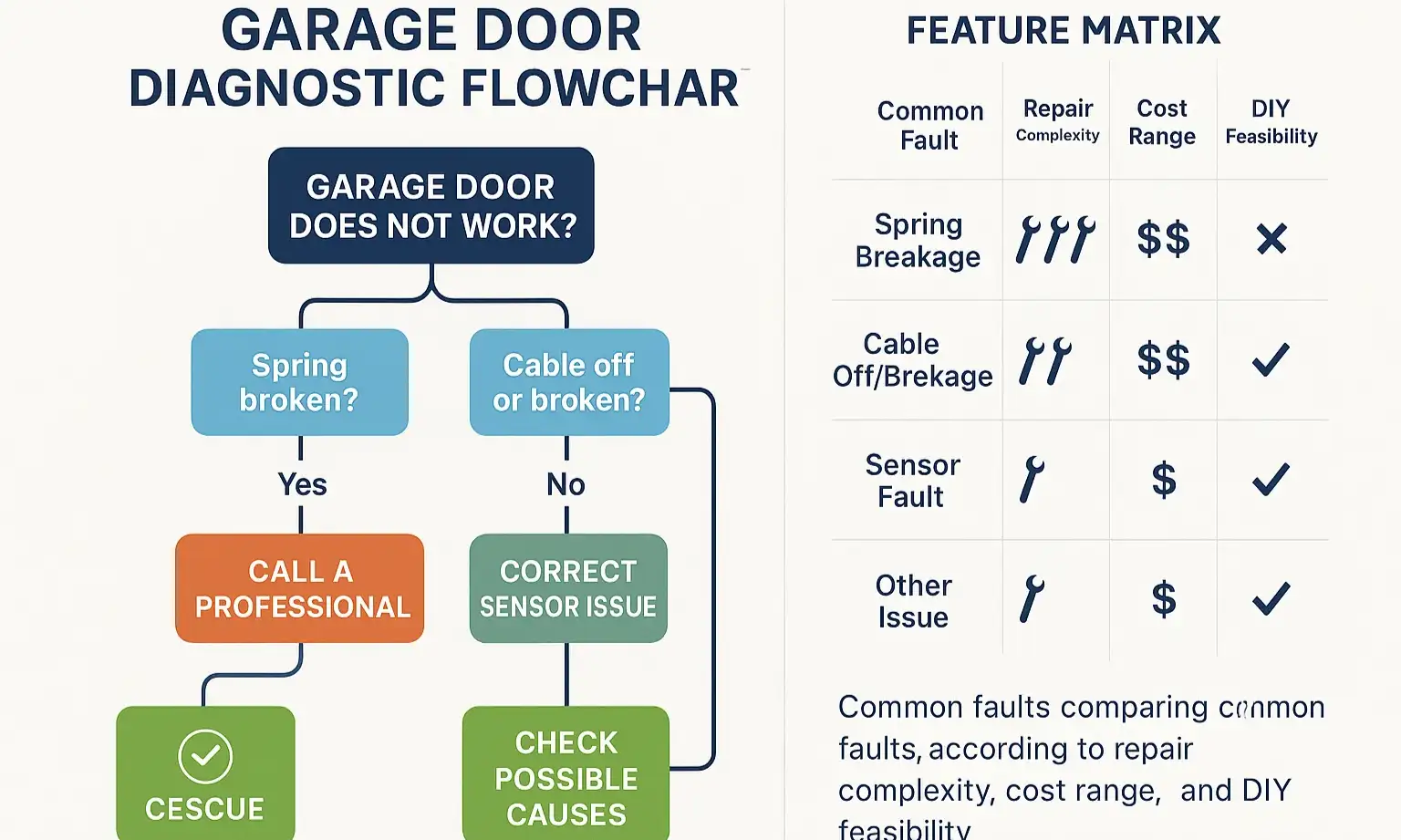
- Loud Bang Followed by a Non-Working Door: This is the classic sign of a broken torsion spring. The "bang" is the sound of the spring releasing its immense tension all at once. The opener may still try to run, but it can't lift the door's full weight without help.
- Door is Crooked or Jammed: This often points to a problem with the cables or rollers. A frayed or snapped garage door cable on one side will cause the door to lift unevenly.
- Door Reverses Before Hitting the Floor: This is usually a safety sensor issue. The small "photo eyes" at the base of the door tracks must be perfectly aligned. If they're dirty, blocked, or misaligned, the opener thinks something is in the way and reverses as a precaution.
- Grinding or Squeaking Noises: This is often a cry for lubrication. The rollers, hinges, and springs need regular lubrication to operate smoothly. If neglected, it can lead to premature wear and tear on your garage door parts.
- Opener Motor Runs, But Door Doesn't Move: This could be a stripped gear inside the opener unit or a disengaged trolley. Check the emergency release cord (the red handle) to make sure it hasn't been accidentally pulled.
DIY Garage Door Repair & Maintenance (The Safe Zone)
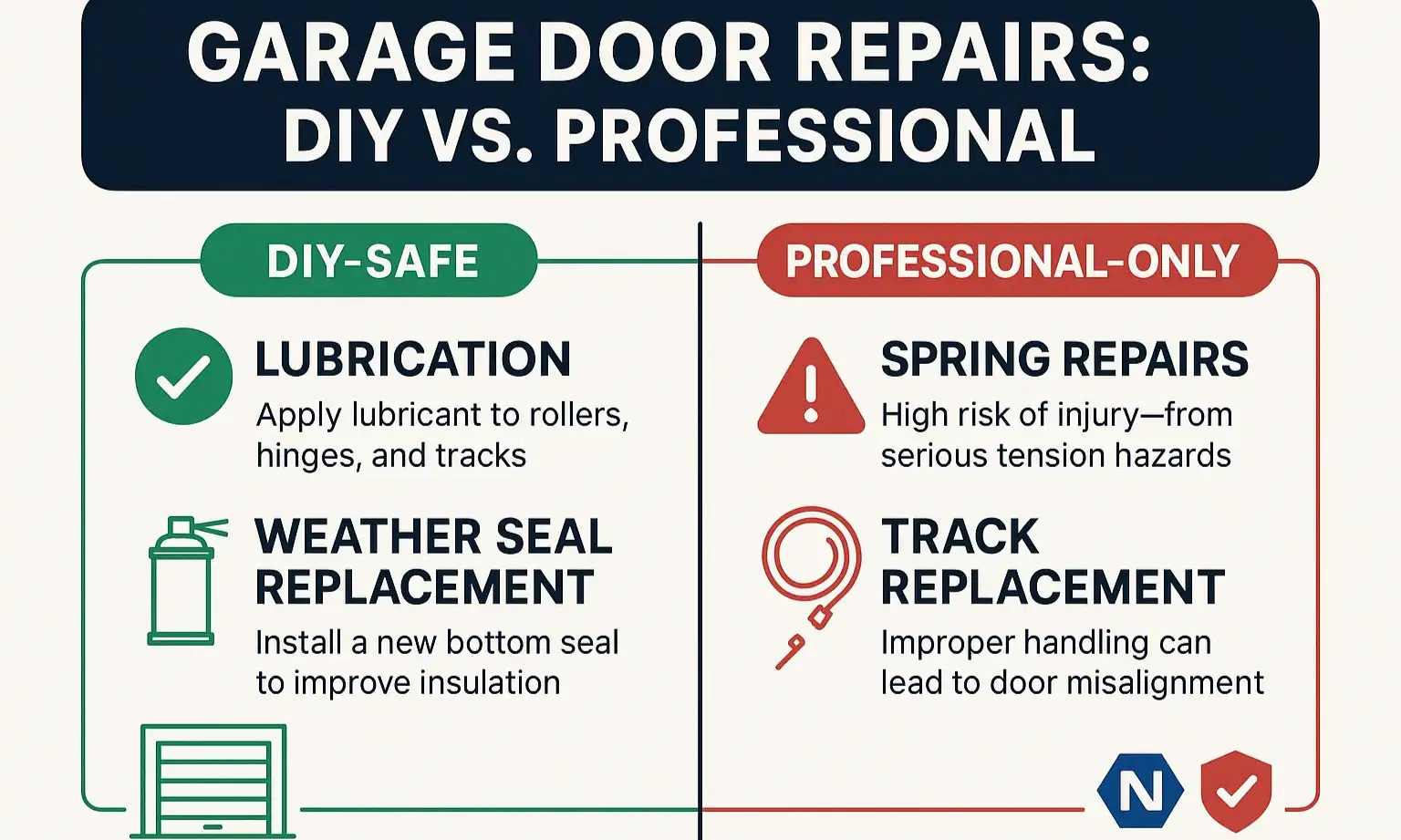
- Lubrication: Use a silicone-based or white lithium grease spray on all moving parts (rollers, hinges, springs) every six months.
- Sensor Cleaning & Alignment: Gently wipe the lenses of the safety sensors with a soft cloth. Ensure they are pointing directly at each other (most have an indicator light that turns solid when aligned).
- Tighten Hardware: The door's constant vibration can loosen nuts and bolts. Periodically check and tighten them with a socket wrench.
- Remote & Keypad Batteries: If your remote or keypad stops working, the first and easiest fix to try is replacing the batteries.
Need more information?
Get a free quote
When to Call a Professional (The Danger Zone)
- Garage Door Springs: This is non-negotiable. Torsion and extension springs store enough energy to cause catastrophic failure. A snapping spring or an uncontrolled release of tension can be incredibly dangerous.
- Broken or Frayed Cables: Like springs, cables are under high tension. If one snaps, it can whip around with tremendous force.
- Bent or Damaged Tracks: Realigning tracks requires balancing the door's weight, which can be unstable and unpredictable.
- Garage Door Panel Replacement: Replacing a single panel requires disconnecting other parts of the system and ensuring perfect realignment, a job best left to a qualified garage door technician.
Your Ultimate Garage Door FAQ
Can I repair a garage door spring myself?
How often should I get a garage door service?
Is it cheaper to repair or replace my garage door?
What is a smart garage door opener?
You may also like