The Ultimate Garage Door Repair Guide for Danbury Homes
Published: Feb 26, 2026
It’s a sound every homeowner dreads: the sudden, deafening BANG from the garage, followed by silence. Or maybe it’s a persistent grinding, a juddering halt halfway up, or the simple, frustrating refusal to open at all. When your garage door acts up, it doesn’t just trap your car; it throws your entire day off track.
In that moment of panic, it’s easy to jump to conclusions or rush to find a quick fix. But here’s something most people don’t realize: your garage door is likely the largest and heaviest moving object in your home. Understanding it is the first step to safely resolving the problem.
This guide isn’t just a list of things to fix. It’s a way to help you understand what’s happening, what you can safely check yourself, and most importantly, when to step back and call a professional. We're here to turn your stress into confidence, starting with the basics.
Foundation: Anatomy of Your Garage Door: The 5 Parts You Need to Know
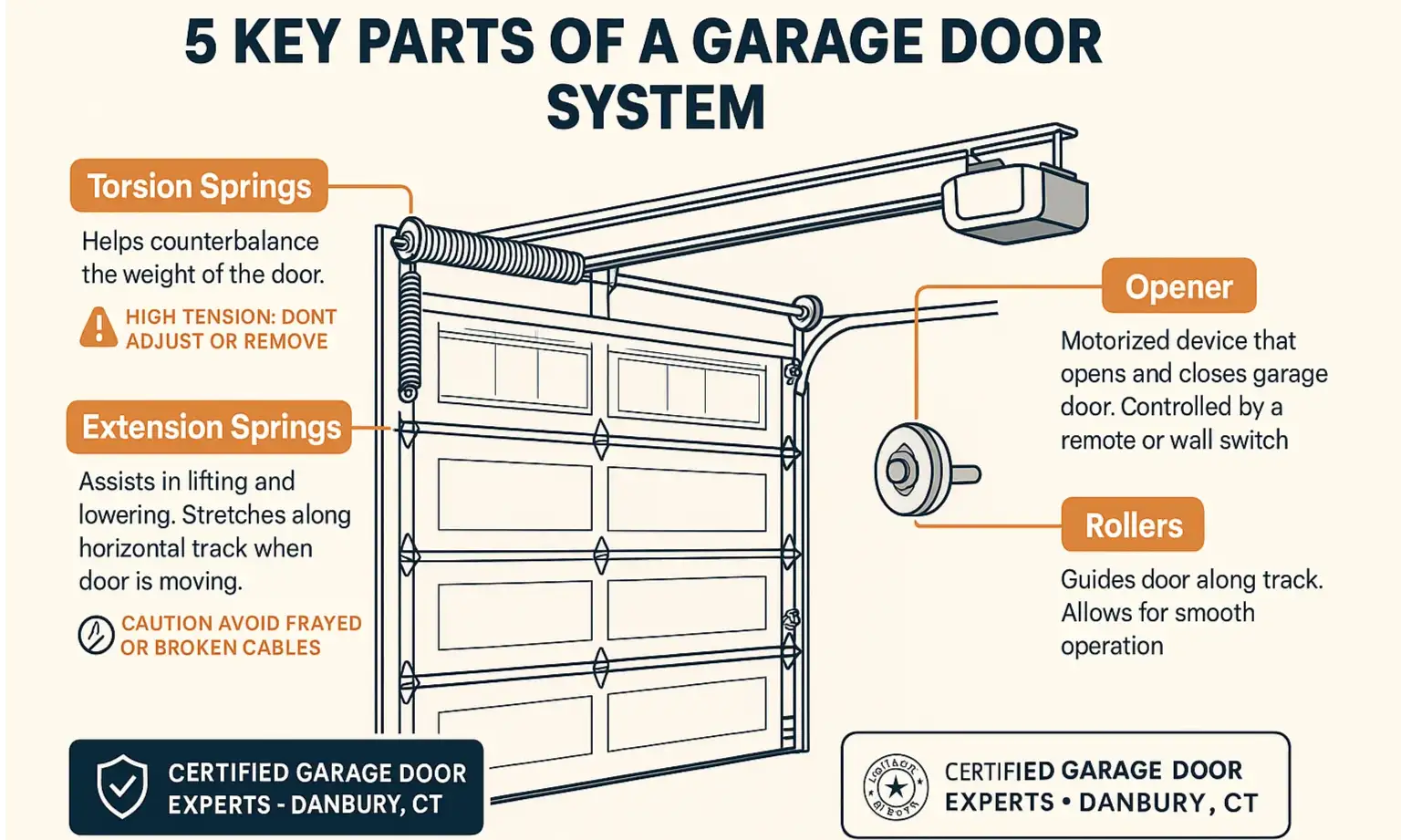
- The Springs (The Muscle): This is the single most important—and dangerous—part of your door. Whether you have large torsion springs mounted above the door or long extension springs running along the sides, they do the heavy lifting. The opener just guides the door; the springs counterbalance its 150+ pounds. A broken garage door spring is the most common major repair, and it's a job strictly for professionals due to the extreme tension.
- The Cables (The Lifelines): These high-tension steel cables connect the springs to the bottom of the door. They work in tandem with the springs to lift the door evenly. If a cable snaps or comes loose, the door can become crooked or slam shut. A safe garage door cable repair requires special tools and knowledge of the spring system.
- The Rollers & Tracks (The Guide Rails): The rollers are the small wheels that sit in the metal tracks on either side of your door, guiding it up and down. If they are worn or the tracks are bent, you’ll hear grinding, and the door may get stuck.
- The Panels (The Body): These are the individual sections of your door. While durable, an accidental bump from a car can cause damage. Fortunately, you don't always need a full replacement; a skilled technician can often handle a garage door panel replacement for a single section.
- The Opener (The Brains): This is the motorized unit that powers the opening and closing process. While it seems like the star of the show, it's really just the conductor of the orchestra. Issues with the garage door opener often relate to its safety sensors, remote controls, or the drive chain/belt.
Building: The SAFE-T-FIRST™ Diagnostic Flowchart
Step 1: Check the Power
- No: The unit may be unplugged, or the circuit breaker might have tripped. Check your electrical panel and the outlet.
- Yes: Proceed to Step 2.
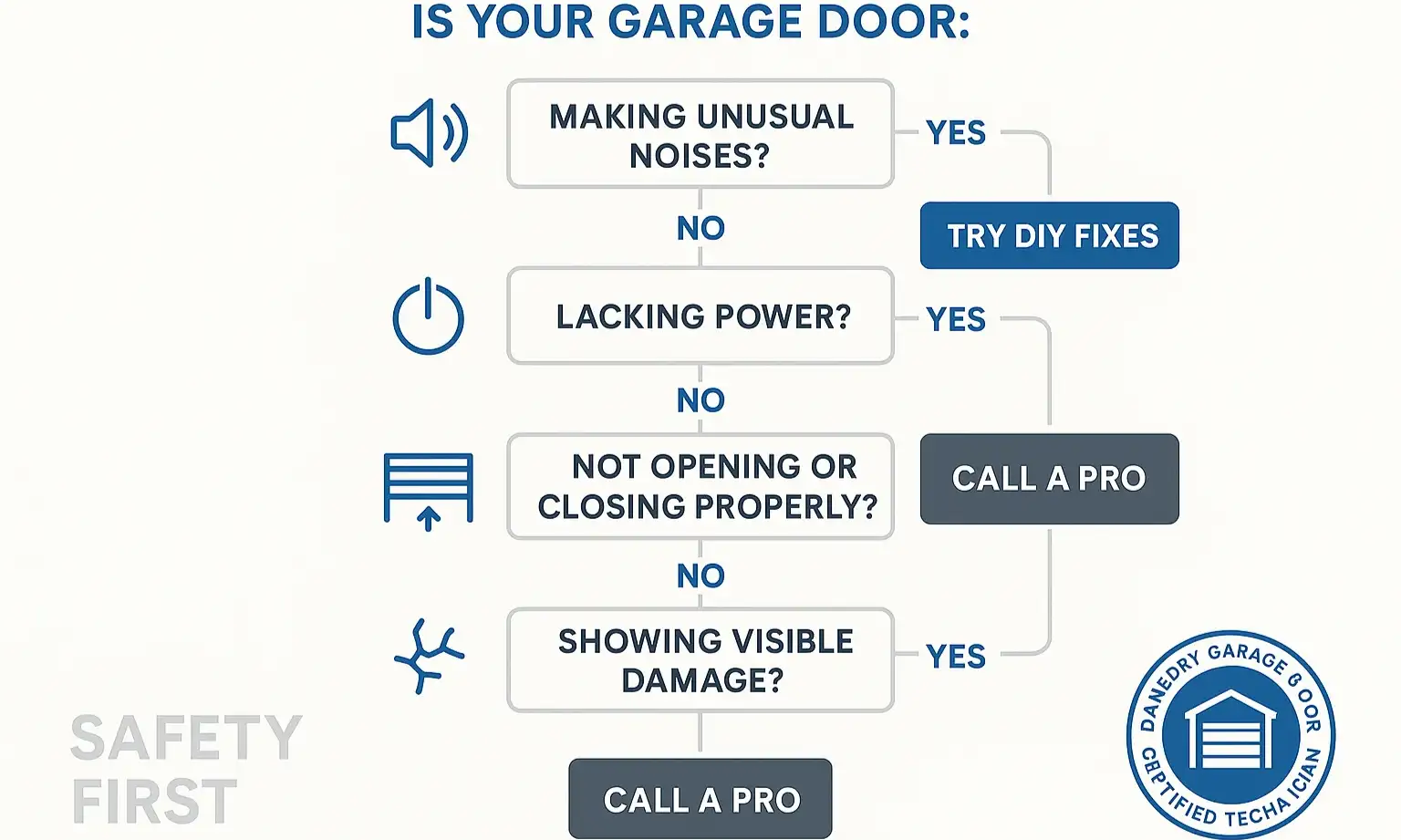
Step 2: Listen to the Opener.
- No (and the light works): The problem could be your remote. Try the wall button. If that works, replace your remote's batteries.
- Yes, it hums but the door doesn't move: This could mean the opener is disconnected from the door (the emergency release cord has been pulled) or there’s a stripped gear inside the motor. If it’s not the release cord, it’s time to call a pro.
- Yes, and the door tries to move: Proceed to Step 3.
Step 3: Observe the Door's Movement.
- It goes down a few inches, then reverses: This is a classic sign of misaligned or obstructed safety sensors. These are the small black boxes near the bottom of the tracks. Make sure nothing is blocking them and that their indicator lights are solid (not blinking).
- It moves unevenly, shudders, or gets stuck: This points to a mechanical issue. Look for bent tracks or worn-out rollers. Do not force the door. This could also be a symptom of a much more serious problem. If you don't know how to open a stuck garage door from the outside safely, it's best to stop here.
- It doesn't move at all, or you heard a loud BANG: STOP. THIS IS CRITICAL.
Step 4: The Visual Safety Inspection (From a Distance)
.Need more information?
Get a free quote
Action: Your Next Step: Get a Professional Safety Inspection in Danbury, CT
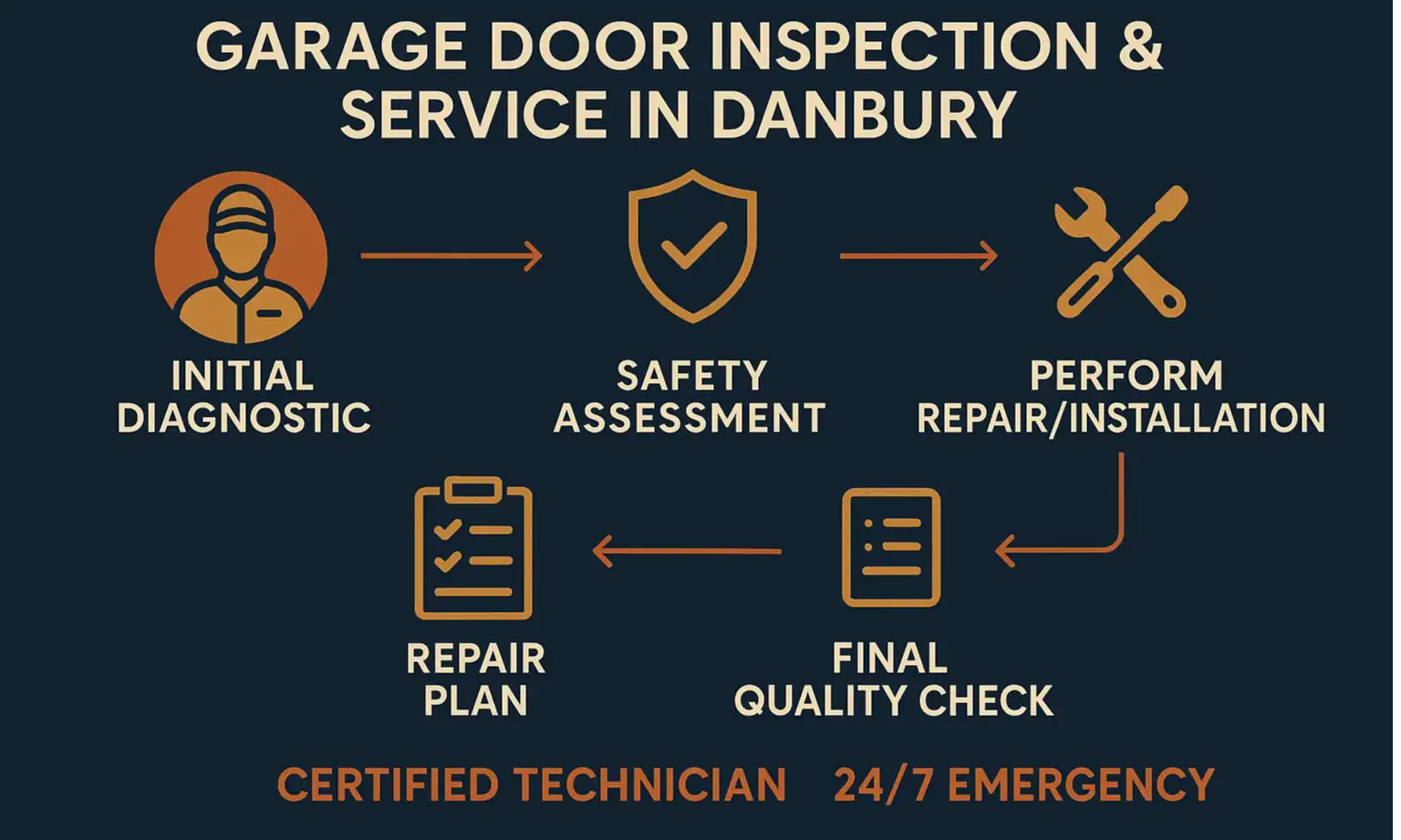
Frequently Asked Questions for Danbury Homeowners
What is the most common garage door repair?
Is it worth repairing a garage door opener?
Can I just replace one spring if the other one looks fine?
How do I know if a garage door company is reputable?
What should I ask a technician before they start working?
- Can you explain exactly what's broken and what needs to be done?
- Is this quote all-inclusive (parts, labor, service fee), or could there be other charges?
- What kind of warranty do you offer on your parts and labor?
You may also like