Our company logo

State

Hartford, CT Garage Door Repair: What Every Homeowner Should Know


Published: Feb 23, 2026

It’s a familiar Hartford morning scene. You’re ready to leave for work, coffee in hand, but when you press the button, your garage door groans, shudders, and refuses to open. Your car is trapped, your schedule is ruined, and a wave of frustration sets in.

If this sounds like you, take a deep breath. You’re not alone, and the solution is often simpler than you think. Many garage door issues are common and can be quickly diagnosed.

This guide is designed to be your trusted first step. We’ll walk you through everything from 5-minute fixes you can do yourself to understanding more complex problems and knowing when it's time to call a professional. Think of this as your friendly, knowledgeable neighbor, here to help you understand what’s going on with your garage door.

Foundation: The 5-Minute Fixes to Try First


Before you assume the worst, let's rule out the simple culprits. More often than you’d think, one of these quick checks can solve the problem and save you a service call.

  • Check the Power Source: It sounds obvious, but it’s the most common issue. Is the garage door opener plugged into a working outlet? Check your circuit breaker or fuse box to make sure it hasn't been tripped.
  • Test the Remote Control & Wall Switch: If the wall switch works but the remote doesn't, you likely just need to replace the remote's batteries. If neither works, the problem is with the opener unit itself.
  • Inspect the Safety Sensors: Look for two small "electric eyes" on either side of your garage door track, about six inches off the floor. They should have small lights on them (usually green or red). If one is off or blinking, it means they are misaligned or obstructed. Wipe the lenses and ensure nothing is blocking their path. Gently adjust them until both lights are solid.
  • Check the Manual Lock: Has someone accidentally engaged the manual slide lock on the inside of the door? It’s a simple mistake that can prevent the door from opening electronically.
If you’ve tried these steps and the door still isn’t cooperating, the issue is likely mechanical. Let's move on to the next section.

Building: Diagnosing Common Garage Door Problems


When simple fixes don’t work, it’s time to play detective. Most garage door failures fall into a few common categories. Understanding these will help you know what you’re dealing with and what to do next.

Broken Springs: The Loud Bang

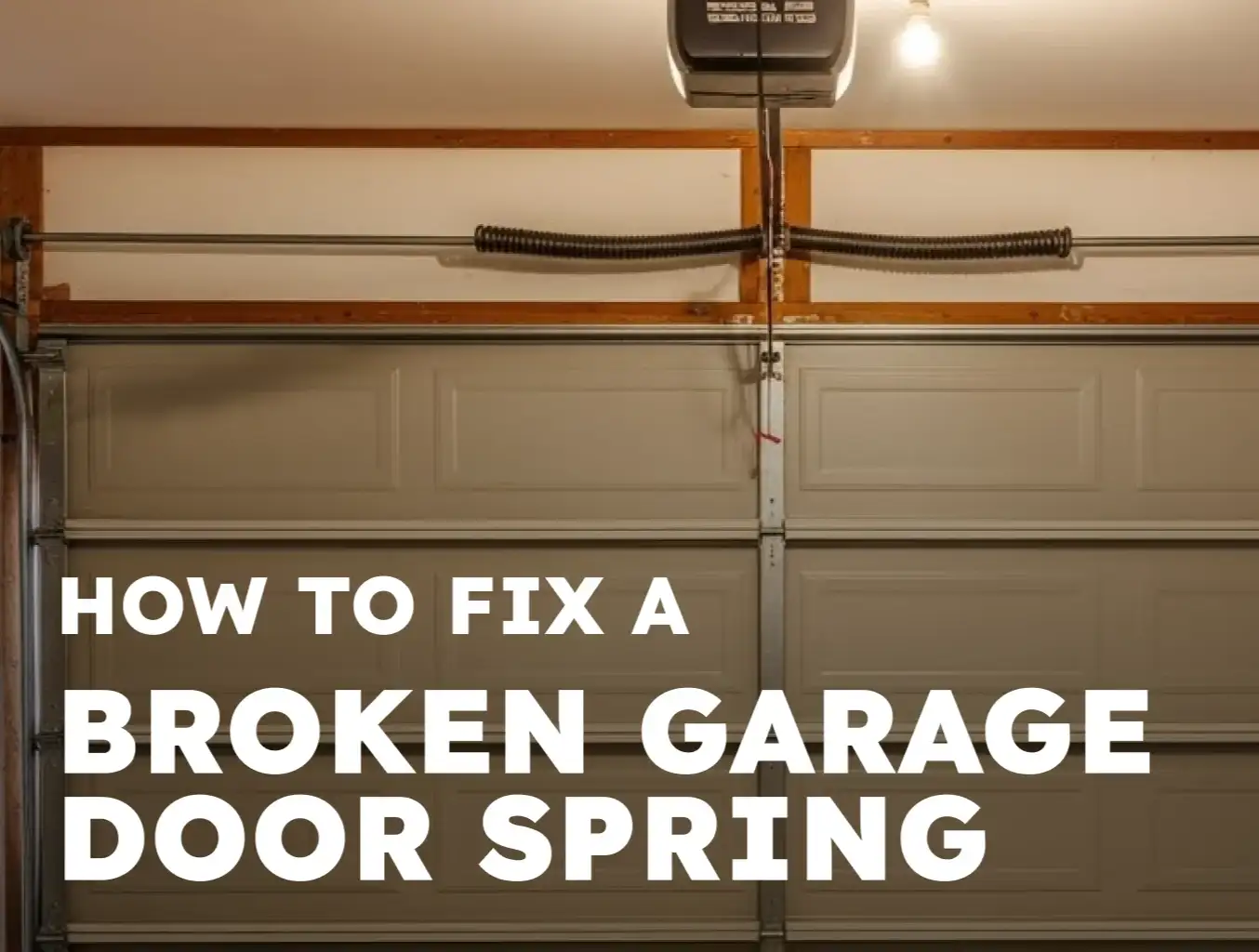
Did you hear a sudden, loud bang from the garage, almost like a firecracker? That was likely a torsion spring breaking. These high-tension springs do the heavy lifting for your door, and they have a limited lifespan.
  • Symptoms: A loud "bang," the door feeling extremely heavy to lift manually, or the opener motor running but the door not moving. You may also see a visible gap in the spring above your door.
  • Why it Happens: Springs are rated for a certain number of cycles (opening and closing). Over time, they simply wear out from metal fatigue.
  • DIY vs. Call a Pro: Call a Pro. This is the most dangerous garage door repair. The tension in these springs is immense and can cause serious injury if handled improperly. A professional repair garage door spring Hartford CT service is the safest and most reliable solution.

Frayed or Snapped Cables

Garage door cables work with the springs to lift and lower the door safely. If one snaps, the door will often look crooked or lopsided.

  • Symptoms: The door is hanging unevenly, is stuck halfway, or has come off its tracks. You may see a loose or snapped cable near the bottom of the door.
  • Why it Happens: Age, rust from Connecticut's humidity, or fraying from constant friction can cause cables to fail.
  • DIY vs. Call a Pro: Call a Pro. Like springs, cables are under extreme tension. Attempting a DIY garage door cable replacement is hazardous.

Off-Track Doors

An off-track door is a serious issue where the door’s rollers have come out of the metal tracks. This can happen if the door is hit by a car or if a cable snaps.
  • Symptoms: The door is visibly crooked, there are gaps between the door and the frame, and it won't move at all.
  • Why it Happens: Usually caused by an impact or the failure of another component like a cable.
  • DIY vs. Call a Pro: Call a Pro. Trying to force an off-track door can damage the panels, tracks, and opener. A technician can safely reset the door and fix the underlying cause, even if the garage door opener off tracks.

Opener Malfunctions

If the springs and cables seem fine, the issue might be with the opener itself.
Symptoms: The motor makes a humming or grinding noise but doesn't move the door, the chain or belt is sagging, or the door reverses immediately after hitting the floor.
Why it Happens: Stripped gears, faulty circuit boards, or misaligned travel limits can all cause opener failure.
DIY vs. Call a Pro: It Depends. You can often adjust the travel and force limits yourself using the owner's manual. However, for internal mechanical or electrical issues, a professional technician is needed.

Why Choose Local Certified Technicians?
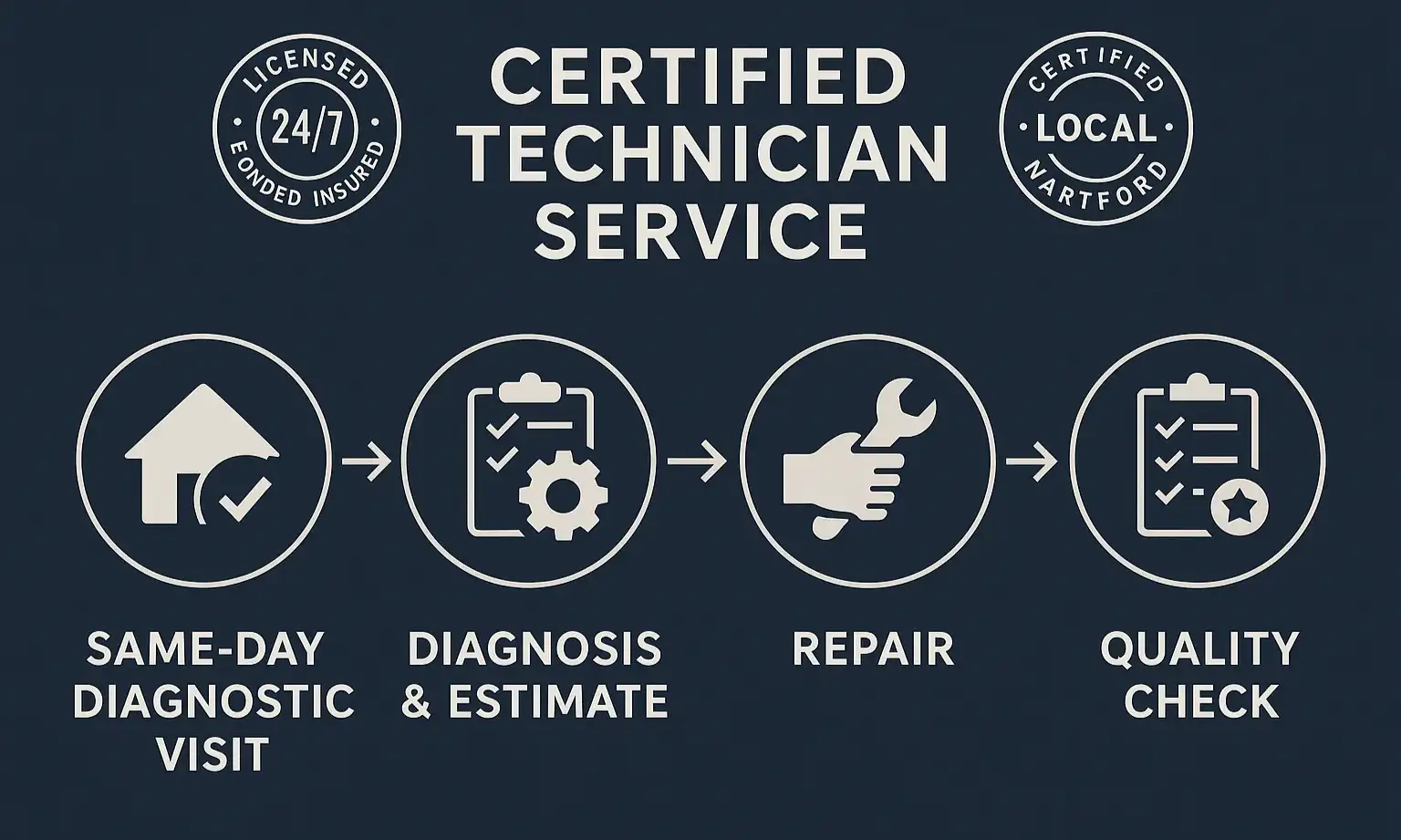

Certified Hartford techs deliver same-day diagnosis, expert repairs, and reliable 24/7 licensed service.
When you’re facing a complex or dangerous repair, the person you call matters. While a DIY video might seem tempting, a certified local technician brings safety, expertise, and peace of mind. They understand the specific challenges Hartford homes face, from humidity affecting metal parts to the need for well-insulated doors to combat winter cold.
A professional ensures the job is done right the first time, preventing further damage and ensuring your family’s safety. Many local companies also offer 24/7 availability for emergency garage door repair, so you’re never left stranded.

Certified Hartford techs deliver same-day diagnosis, expert repairs, and reliable 24/7 licensed service.

Need more information?

Frequently Asked Questions (FAQ)


How often should I get my garage door serviced?

We recommend a professional tune-up and safety inspection once a year. This includes lubricating moving parts, tightening hardware, and testing safety features, which can prevent major problems down the road.

Why is my garage door so noisy?

Squeaking, grinding, and rattling noises are often signs of worn-out rollers, loose hardware, or parts that need lubrication. While some noise is normal, a sudden increase is a clear signal to get it checked.

Can I just replace one broken spring?

It's technically possible, but highly discouraged. Garage door springs are installed in pairs and have the same lifespan. If one broke, the other is likely not far behind. Replacing both at once saves you money on a second service call in the near future.

Is it safe to use my garage door if a panel is dented?

If the dent is purely cosmetic and the door still moves smoothly in its tracks, it's generally safe to use. However, a significant dent can compromise the door's structural integrity and affect its balance, which should be inspected by a professional.

Your Local Solution: If You're Ready to Upgrade or Need Support
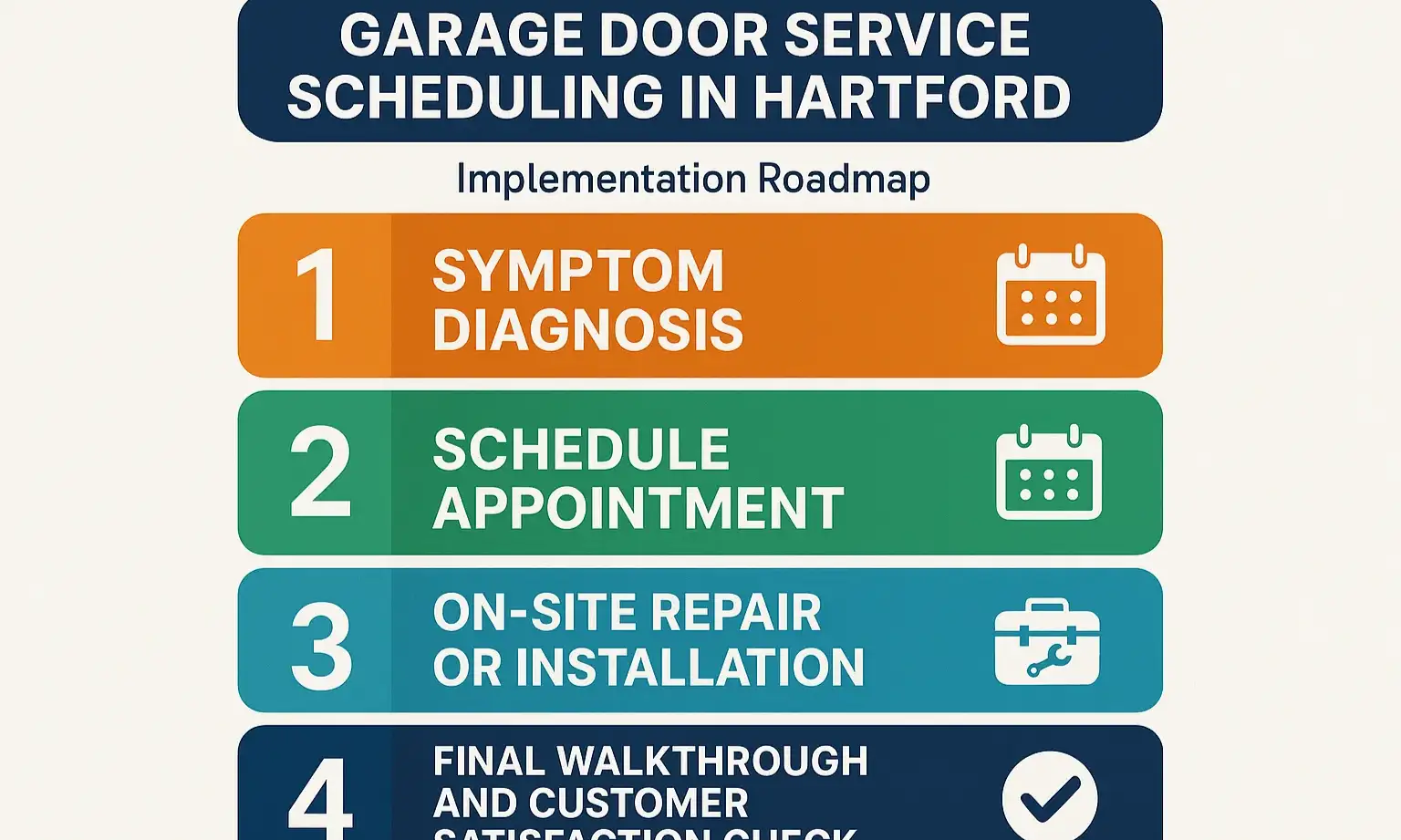

Use our simple local roadmap for smooth, transparent garage door repair or installation in Hartford.
Navigating garage door issues can be stressful, but being informed is the first step toward a solution. Whether you’ve identified a simple fix you can handle yourself or a complex problem that requires an expert, you now have a clearer understanding of how your garage door system works.
If you’ve diagnosed the problem but aren't comfortable with the repair, or if you're considering an upgrade, our team of certified technicians is here to help. As a trusted local garage door company near me, we offer same-day service throughout the Hartford area to get your day back on track safely and efficiently.

Use our simple local roadmap for smooth, transparent garage door repair or installation in Hartford.

You may also like