Diagnosing Garage Door Sounds and Issues in Houston
Published: Feb 16, 2026
That sudden, jarring BANG! from the garage. The grinding, protesting squeal as the door struggles to lift. Or maybe, just silence when it should be moving. A broken garage door is more than an inconvenience; it’s a disruption to your routine and a major security concern for your Houston home.
When you're faced with a garage door that won't cooperate, questions flood your mind: What’s wrong with it? How much will this cost? Can I fix it myself? Who can I trust to repair it?
You’ve come to the right place. This isn't a sales pitch. This is your clear, comprehensive guide to understanding what’s happening with your garage door, demystifying the repair process, and making an informed, confident decision. We'll walk you through everything, step-by-step, just like a knowledgeable friend would.
What's Wrong With Your Garage Door? A Houston Symptom Checker
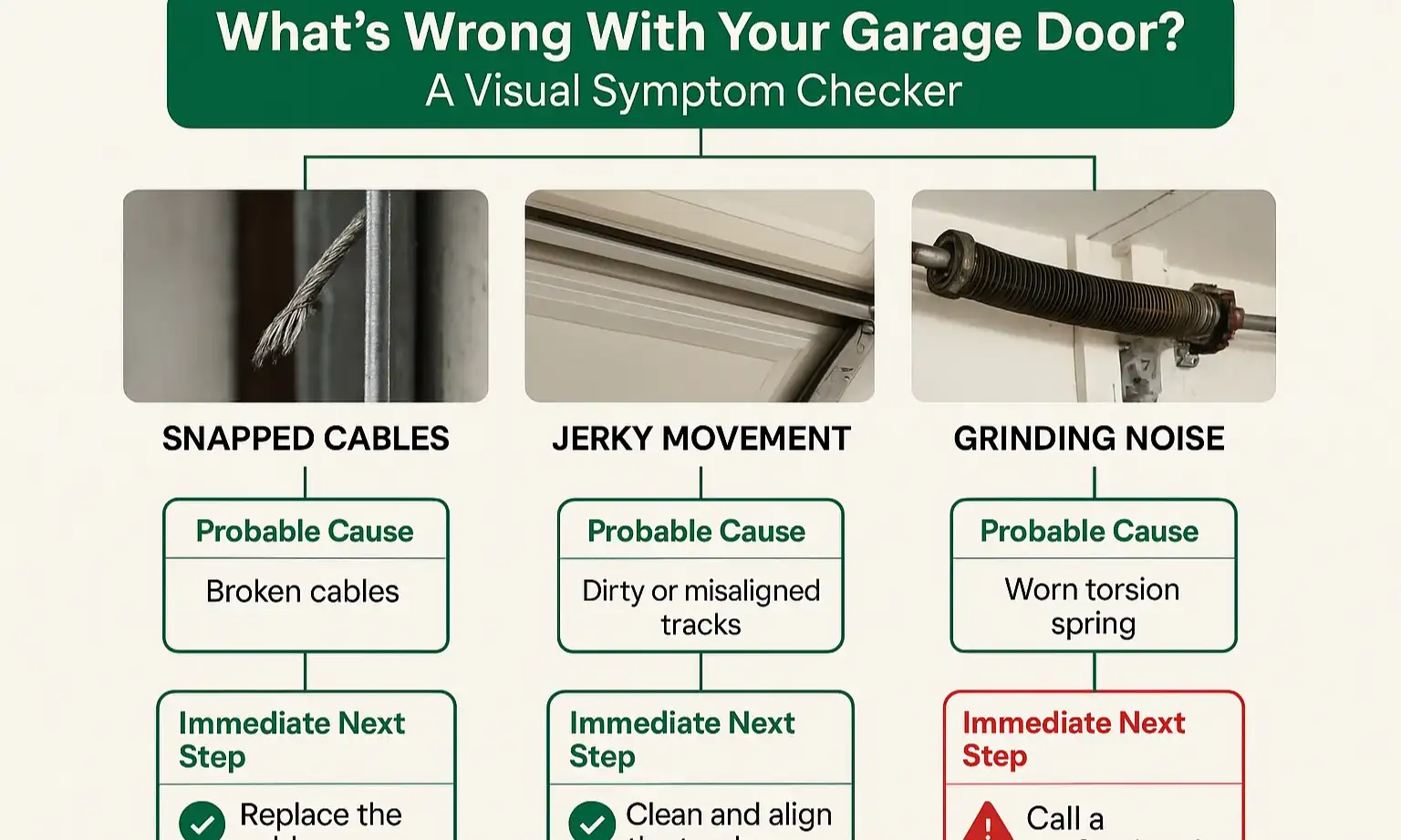
- You Heard a Loud "Bang": This is almost always a broken torsion spring. The spring holds immense tension to lift the door, and when it snaps, the noise is unmistakable. Your door will likely be impossible to open.
- The Door is Crooked or Jammed: The door has probably come "off-track." This can be caused by a snapped cable on one side or even by accidentally bumping the door with your car.
- It Makes a Grinding or Squeaking Noise: This often points to worn-out rollers or a lack of lubrication in the tracks. Houston's humidity can accelerate rust and wear, making this a common complaint.
- The Opener Motor Runs, But the Door Doesn't Move: You might have a stripped gear inside the opener unit or a disconnected trolley.
- The Door Reverses Immediately After Hitting the Floor: This is a classic sign of misaligned safety sensors. These small "electric eyes" near the bottom of the track need a clear line of sight to each other.
The Anatomy of Your Garage Door
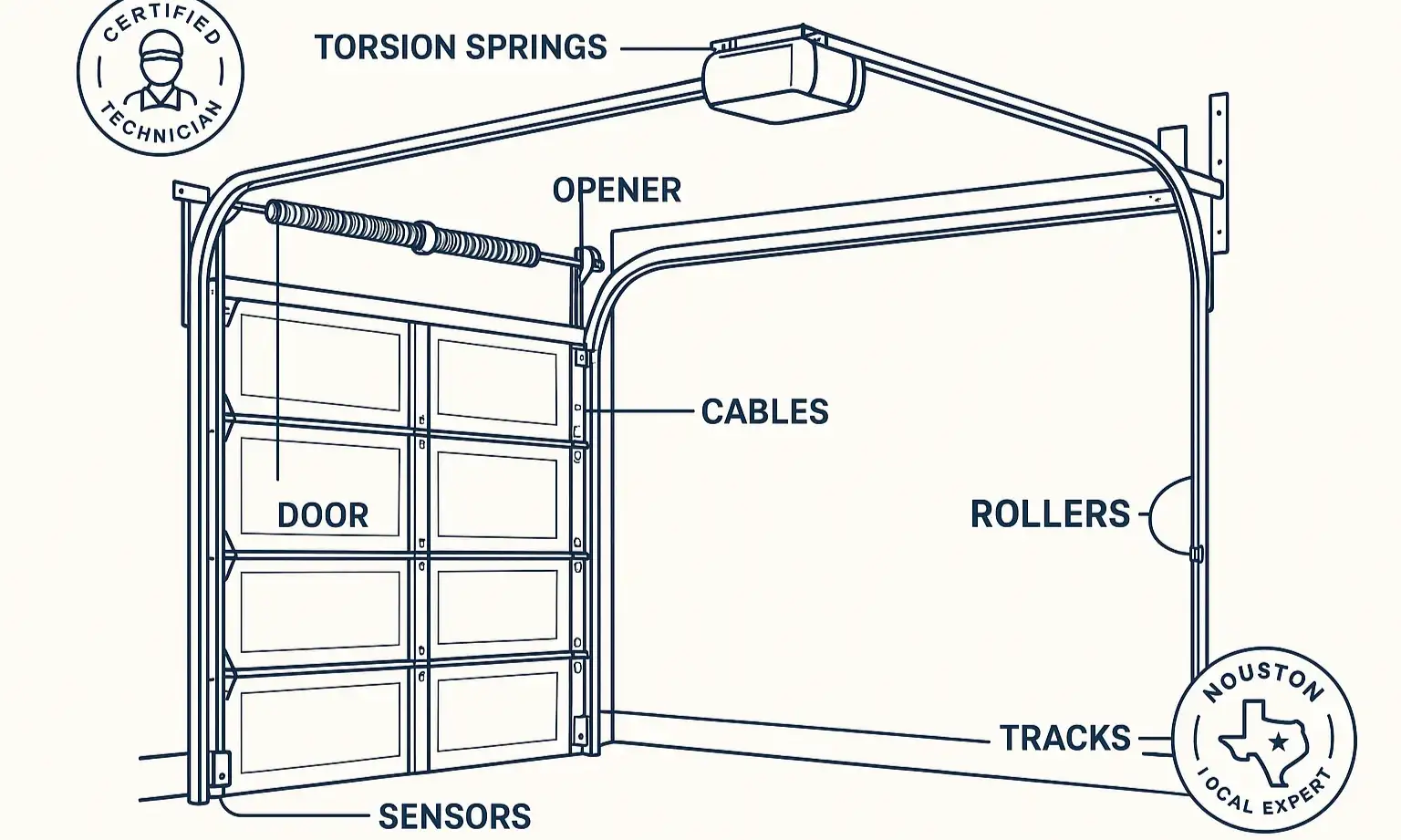
- Springs (Torsion/Extension): These are the muscles of the system. They do the actual heavy lifting, counterbalancing the door's weight so the opener can move it.
- Cables: These connect the springs to the bottom of the door, transferring the lifting force.
- Rollers & Tracks: The rollers guide the door along the metal tracks as it opens and closes.
- Panels: These are the individual sections of the door itself.
- Opener (Motor): This is the motorized device that automates the opening and closing.
Decoding the Damage: Common Problems & Causes
The #1 Culprit: Broken Springs
Opener Malfunctions
Damaged Panels and Off-Track Doors
How to Choose a Trusted Garage Door Technician in Houston

- Check for a Physical Address: A legitimate business will have a local office or workshop in the Houston area, not just a P.O. box or an untraceable number.
- Verify Insurance: Ask for proof of liability insurance. This protects you and your property in case of an accident.
- Read Recent Reviews: Look at Google, Yelp, and the BBB. Pay attention to how the company responds to both positive and negative feedback.
- Get a Written Estimate: A trustworthy technician will inspect the door in person and provide a detailed, itemized quote before starting any work. Be wary of vague quotes given over the phone.
- Ask About Warranties: Reputable companies stand by their work and the parts they use. Ask about the warranty on both parts and labor.
Need more information?
Get a free quote
Frequently Asked Questions
What is the most common garage door repair?
How long does a repair usually take?
Can I just replace a single damaged garage door panel?
How often should I have my garage door serviced?
Your Path to a Solution
You may also like