Our company logo

State

Essential Garage Door Repair Advice for McKinney Residents


Published: Feb 18, 2026

Ever had that moment? You’re running late, you hit the button on your garage door remote, and… nothing. Or maybe it’s a sound—a sudden, jarring screech that makes you wince. Your garage door is the largest moving part of your home, and when it acts up, it doesn’t just disrupt your day; it can feel like a major, intimidating problem.

But it doesn't have to be.

Most garage door issues send out clear warning signs. The trick is learning how to read them. This guide is your friendly translator. We’ll walk you through a simple diagnostic process, from quick five-minute checks you can do yourself to understanding when it’s time to call in a professional garage door technician. Think of this as your first step toward solving the problem, not just worrying about it.

Garage Door Acting Up? Start With This 5-Step Triage Checklist


Before you even think about tools or complex parts, let's cover the basics. So often, the "big problem" is something surprisingly simple. Run through this checklist first—it could save you a lot of time and a service call.

  1. Check the Remote: It sounds obvious, but when was the last time you changed the batteries? Try the wall-mounted button inside your garage. If that works, you’ve likely found your culprit.
  2. Look for Obstructions: Garage doors have safety sensors near the bottom of the tracks. If anything blocks their line of sight (a stray leaf, a broom, a child's toy), the door won't close. Check for a blinking light on one of the sensors, which often indicates an alignment issue.
  3. Inspect the Manual Lock: Many doors have a manual slide lock on the inside. It’s easy for this to get engaged by accident, preventing the opener from lifting the door.
  4. Confirm Power: Is the garage door opener plugged in? Did a breaker trip? A quick check of your home’s circuit breaker box can solve a problem that seems much bigger than it is.
  5. Give It a Nudge: With the door disconnected from the opener (usually by pulling the red emergency cord), try lifting it manually. If it feels incredibly heavy or won't move, you likely have a more serious issue, such as a broken spring.
If you’ve gone through these steps and the door is still on the fritz, it’s time to dig a little deeper.

The Symptom Checker: What Your Garage Door is Trying to Tell You


Just like a car, your garage door makes different noises and behaves in specific ways when something is wrong. Let’s break down the most common symptoms.

Symptom 1: The Door Won’t Open or Close At All

You hear the motor whirring, but the door stays put. Or you heard a sudden, loud BANG from the garage an hour ago, and now nothing moves.
Likely Cause: This is the classic sign of a broken garage door spring. That loud bang was the sound of a spring releasing its immense tension all at once. The springs do the heavy lifting, and without them, the opener isn't strong enough to move the door.
DIY Fix: None. This is the most dangerous garage door repair.
When to Call a Pro: Immediately. The cost of a professional garage door spring replacement is a necessary safety investment. Attempting this yourself without the right tools and training can lead to serious injury.

Symptom 2: It’s Making a Horrible Grinding, Squeaking, or Scraping Noise

A noisy door is an unhappy door. While it might still be working, these sounds are cries for help before a minor issue becomes a major one.
Likely Cause: Most often, this is due to a lack of lubrication on the moving parts, worn-out rollers, or loose hardware that needs tightening.
DIY Fix: You can lubricate the rollers, hinges, and springs with a silicone-based or white lithium grease spray. Pro Tip: Never use WD-40! It's a degreaser and will strip away the necessary lubrication, making the problem worse over time. Also, check for and tighten any loose nuts and bolts.
When to Call a Pro: If lubrication doesn't solve the issue or if you see that the rollers are cracked, frayed, or not spinning freely. A professional can quickly replace them and perform a full tune-up.

Symptom 3: The Door is Uneven, Jerky, or Off Its Tracks

If your door shudders on its way up or down, or one side seems to be lifting faster than the other, pay close attention. This is a sign of an unbalanced system.
Likely Cause: This could be a frayed or broken lift cable or misaligned vertical tracks. The cables work with the springs to lift the door evenly, and if one fails, the door will become crooked and can get stuck.
DIY Fix: You can check the tracks with a level to see if they are perfectly vertical and plumb. However, do not attempt to adjust the cables. Like the springs, they are under extreme tension.
When to Call a Pro: If you suspect a cable issue or the door has come completely off its tracks. This requires a professional to safely reset the door and replace the necessary garage door parts. Trying to force a door back into its tracks can cause more damage.

Symptom 4: A Section or Panel is Dented or Damaged

A stray baseball or an accidental tap from the car can leave an ugly dent in your garage door.
Likely Cause: Physical impact.
DIY Fix: For very minor dents, some DIY kits exist, but they have limited success.
When to Call a Pro: If the damage is significant or has created a crack in the panel, it can compromise the door's structural integrity. A professional can assess whether a single garage door panel replacement is possible or if a full door replacement is the more cost-effective option.

The Anatomy of Your Garage Door: A Quick Tour
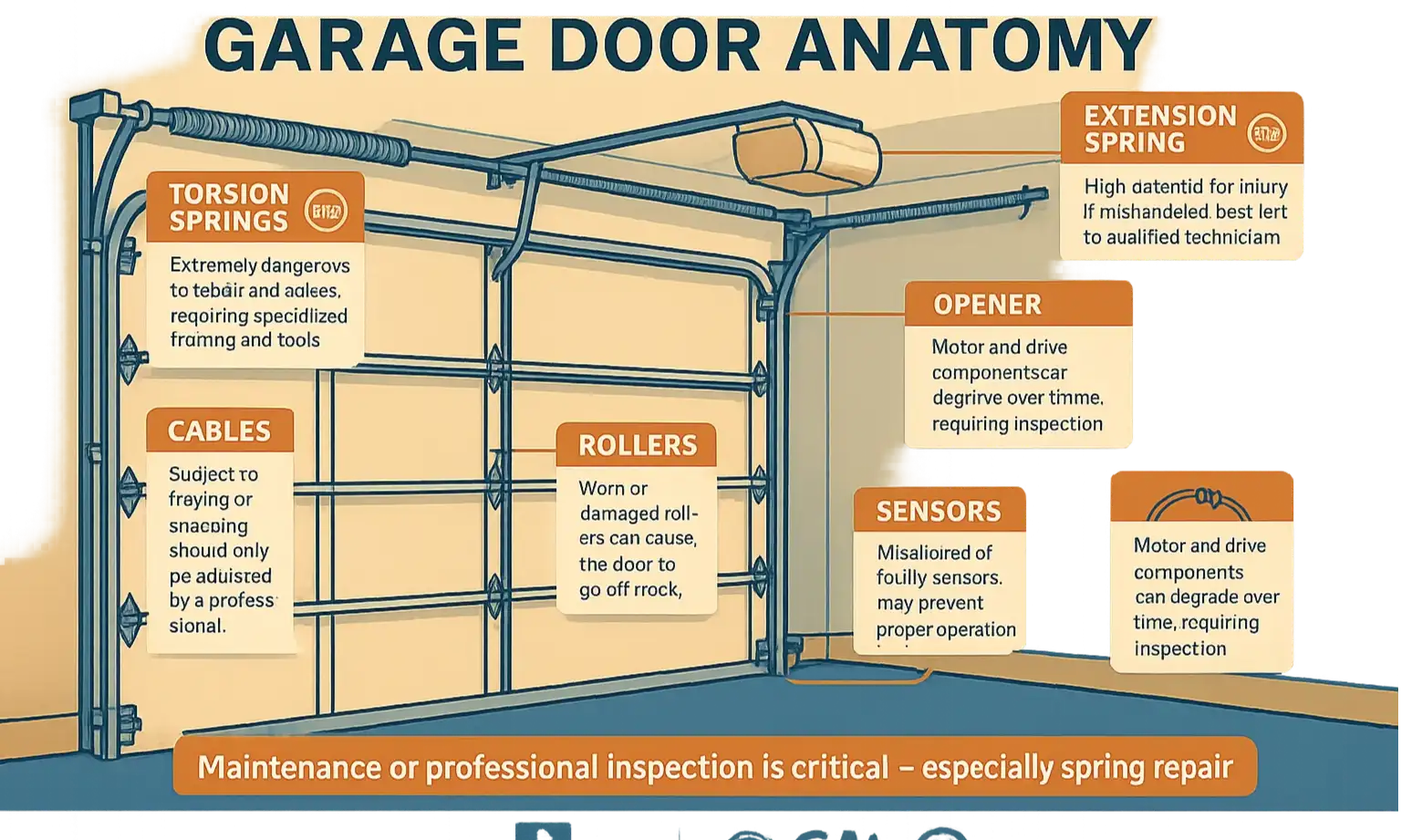

Understanding the basic parts helps demystify the repair process. It’s not just a slab of metal; it’s a complex system where every part has a critical job.
Labeled diagram of a residential garage door showing springs, cables, rollers, tracks, and opener.

  • Springs (Torsion/Extension): The powerhouse of the system. Torsion springs are mounted above the door, while extension springs run along the sides. They do 90% of the lifting.
  • Cables: Attached to the springs, these steel cables are what actually pull the door up.
  • Rollers & Tracks: The wheels (rollers) run along the metal rails (tracks) to guide the door up and down smoothly.
  • Opener: The motorized unit that automates the lifting process.
  • Sensors: The critical safety feature that prevents the door from closing on a person or object.
Labeled diagram of a residential garage door showing springs, cables, rollers, tracks, and opener.

Beyond the Fix: Maintenance and Modern Upgrades


Once your door is working properly, a little preventative care goes a long way.

A 15-Minute Annual Maintenance Checklist


  • Lubricate: Once a year, spray all moving parts (rollers, hinges, springs) with a garage door-specific lubricant.
  • Tighten: Check and tighten the nuts and bolts on the door and track hardware.
  • Test Balance: Disconnect the opener and lift the door halfway. It should stay in place. If it falls or shoots up, the springs are unbalanced and need professional adjustment.
  • Test Reversal: Place a 2x4 board flat on the ground in the door's path. When the door hits it, it should immediately reverse. If it doesn't, your opener's safety features need service.

Is It Time for a Smart Upgrade?

If you have an older opener, you might consider upgrading. Modern smart garage door systems allow you to open, close, and monitor your door from anywhere using your smartphone. This is a great way to add security and convenience to your home.

Need more information?

Finding the Right Help for Garage Door Service in McKinney, TX
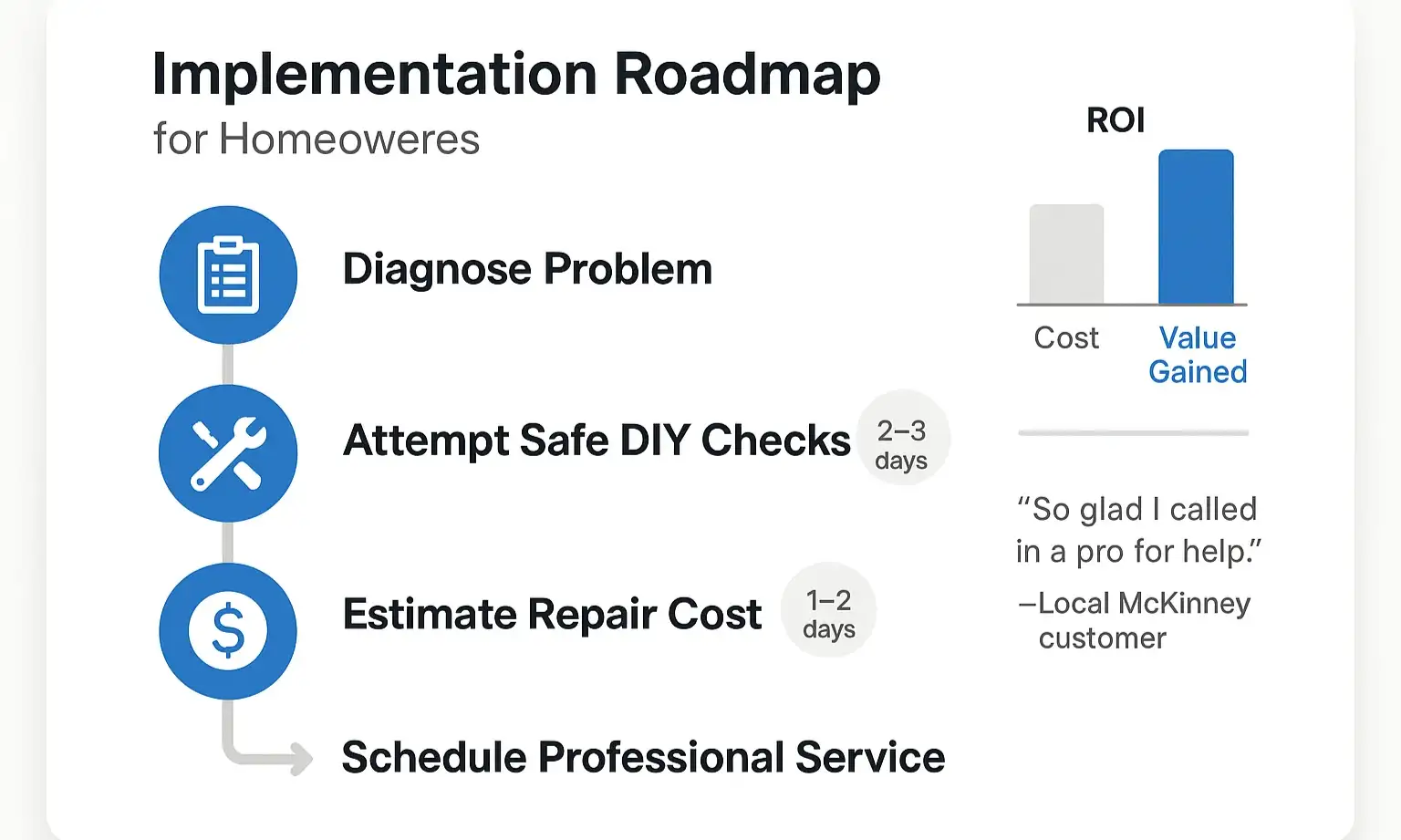

A step-by-step infographic showing the process of garage door repair, from initial diagnosis to professional service and final inspection.
When you need a professional, you want someone reliable, honest, and experienced. Look for a company that is transparent about pricing, has positive local reviews, and can provide prompt, even 24/7, emergency service. A qualified garage door technician in McKinney will not only fix the immediate problem but also inspect the entire system to prevent future issues.
Being a homeowner means being a problem-solver. By understanding the basics of how your garage door works, you're better equipped to handle minor maintenance and, more importantly, to know when to call for professional help.
For any garage door repair in McKinney, TX, from a simple tune-up to an urgent fix, our team is here to help restore your peace of mind.

A step-by-step infographic showing the process of garage door repair, from initial diagnosis to professional service and final inspection.

Frequently Asked Questions


Can I repair a broken garage door spring myself?

We strongly advise against it. Garage door springs are under thousands of pounds of tension. An uncontrolled release can cause severe injury or property damage. This is a job that requires specialized tools and professional training.

How long do garage doors and their parts last?

With regular maintenance, a garage door can last 20-30 years. The springs are the most common part to fail and typically last for about 10,000 cycles, which translates to 7-12 years of average use. Openers usually last 10-15 years.

What's the difference between torsion and extension springs?

Torsion springs are the large springs mounted on a metal bar directly above the garage door opening. They are safer and more durable. Extension springs are found on older systems and run along the sides of the upper tracks. They are more dangerous when they break, as they can snap and fly off.

Do you offer emergency garage door repair in McKinney?

Yes. We understand that garage door problems don't happen on a 9-to-5 schedule. As a family-run business, we know how important it is to get your home secure and your life back on track, which is why we offer 24/7 emergency garage door repair service.

You may also like


blog photo

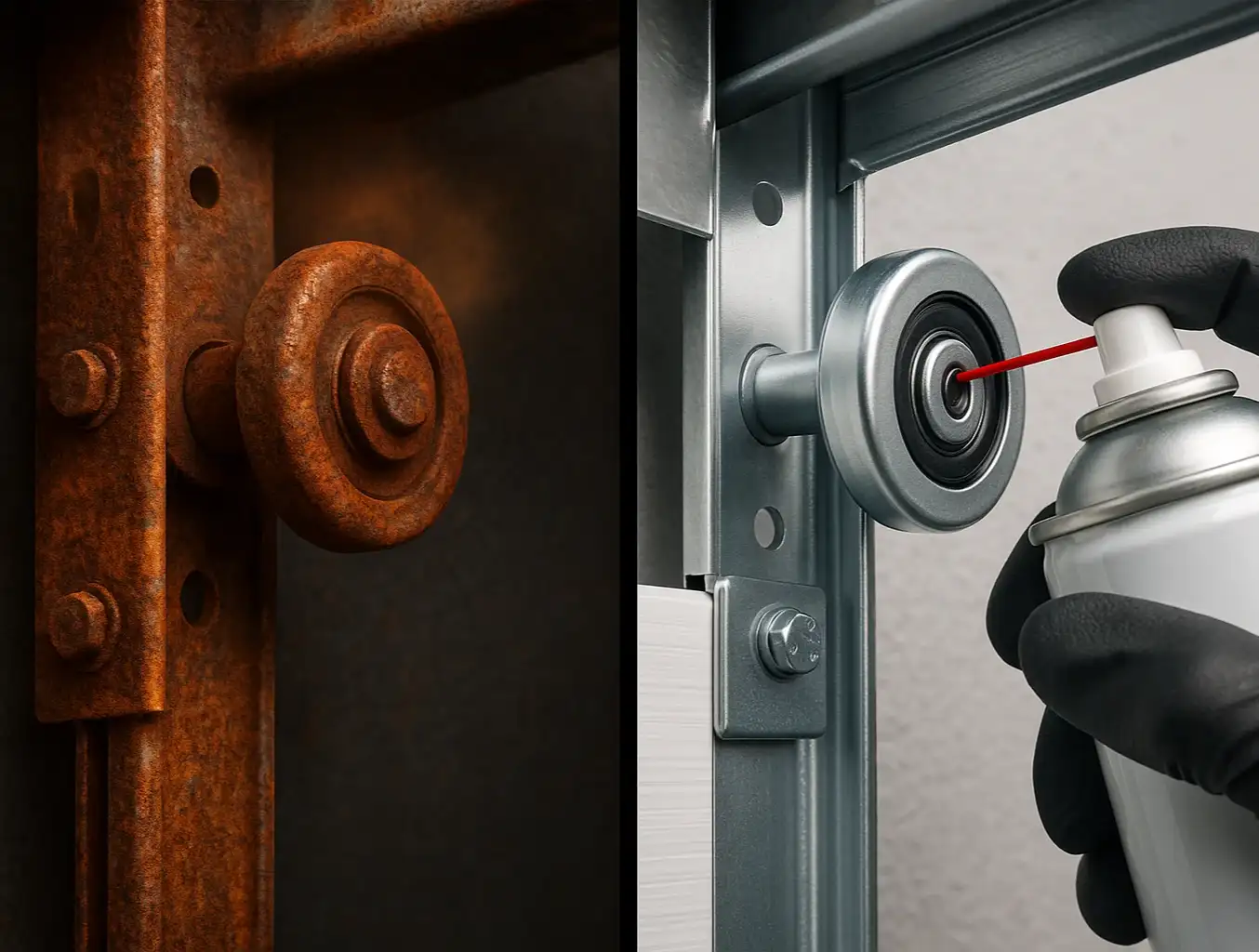
Fixing Rust on Garage Door Tracks and Rollers

Ever been jolted by a sudden grinding, squeaking, or shuddering noise as your garage door opens or closes? It’s a sound that makes you cringe, and for good reason. That noise isn't just an annoyance; it's a warning sign. Your garage door is trying to tell you something important about its health, and often, the culprit is a small, creeping problem you might not have noticed: rust. Many homeowners see a bit of rust on their garage door tracks or rollers and dismiss it as a cosmetic issue. But that reddish-brown coating is a performance killer. It creates friction, forcing your entire system to work harder and leading to bigger, more expensive problems down the line. The good news? You can often tackle this problem yourself. Understanding what's happening and why it matters is the first step toward a smoother, quieter, and longer-lasting garage door system. If you're looking for a more general guide to a noisy garage door fix, we have you covered, but here we’ll focus specifically on the damage caused by rust.