Our company logo

State

The McKinney Homeowner's Guide to Garage Door Repair and Safety


Published: Feb 18, 2026

It’s one of the most distinct—and unsettling—sounds a homeowner can hear. A sudden, sharp BANG! from the garage that echoes through the house, sounding like something has seriously broken. You rush to the garage, expecting the worst, but everything looks… normal. That is, until you press the button on your opener and nothing happens, or the motor just whirs helplessly.

If this has happened to you, you're not alone. It’s the most common entry point for McKinney homeowners into the world of garage door repair. That loud noise is your home's way of telling you that a critical part has failed under extreme tension.

But what does it mean? Is it dangerous? And what's it going to cost to fix?

Welcome to your definitive guide. We’re not here to sell you, we’re here to teach you. By the end of this article, you'll understand how your garage door works, how to visually diagnose the most common problems, and how to navigate the repair process with confidence.

Foundation: The Anatomy of Your McKinney Garage Door
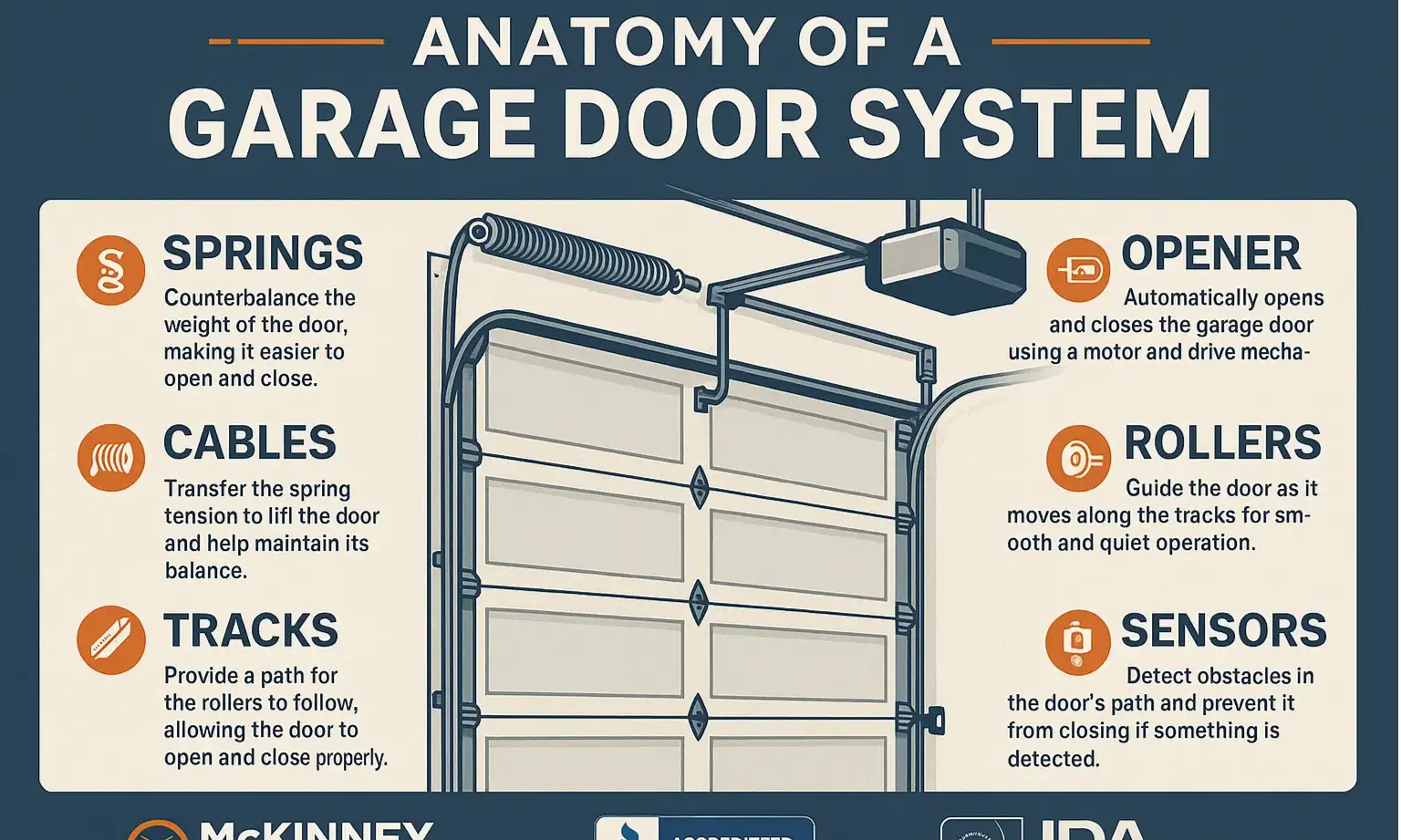

Before you can diagnose a problem, it helps to know the key players. Your garage door is more than just a big panel; it's a carefully balanced system of parts working together. Understanding these components is the first step to becoming an informed homeowner.
A detailed diagram showing the anatomy of a garage door, including the opener, springs, cables, tracks, and sensors.

  • Springs (The Muscle): These are the true heroes doing the heavy lifting. Torsion springs (mounted above the door) or extension springs (along the sides) act as a counterbalance, making your 300+ pound door feel light enough for you or an automatic opener to lift.
  • Opener (The Brains): This is the motorized device that directs the door's movement. It doesn't do the actual lifting—the springs do—but it provides the initial force to get things started.
  • Cables (The Tendons): These steel cables connect the springs to the bottom of the door, transferring the lifting force.
  • Rollers & Tracks (The Skeleton): Rollers are the wheels that guide the door along the metal tracks on either side, ensuring a smooth up-and-down journey.
  • Sensors (The Eyes): Located near the bottom of the tracks, these two "photo-eyes" project an invisible beam. If anything breaks this beam while the door is closing, the door will automatically reverse, preventing accidents.
A detailed diagram showing the anatomy of a garage door, including the opener, springs, cables, tracks, and sensors.

Building: The Visual Diagnostic Center - What's Wrong With My Garage Door?


Now that you know the parts, let's connect them to common symptoms. Use this section to visually identify what might be happening in your garage.

Symptom: A Loud 'BANG!' Followed by Silence

This is the classic sign of a broken torsion spring. Think of the spring as a tightly wound-up rubber band. Over thousands of cycles, the metal fatigues and eventually snaps, releasing all that stored energy at once—creating the "bang."
Visual Cue: Look at the spring(s) on the metal bar above your door. You'll see a distinct 1-2 inch gap where the metal has broken.
Safety Risk: EXTREME. The springs are no longer helping to lift the door. Attempting to lift it manually or with the opener is incredibly dangerous and can cause the door to fall or seriously damage the opener.
DIY or Pro?: Professional only. Torsion springs are under immense tension and require special tools and training to replace safely. This is the single most dangerous component for a homeowner to handle. For a safe and reliable fix, always trust a professional for a broken garage spring repair.

Symptom: The Motor Runs, but the Door Won't Open
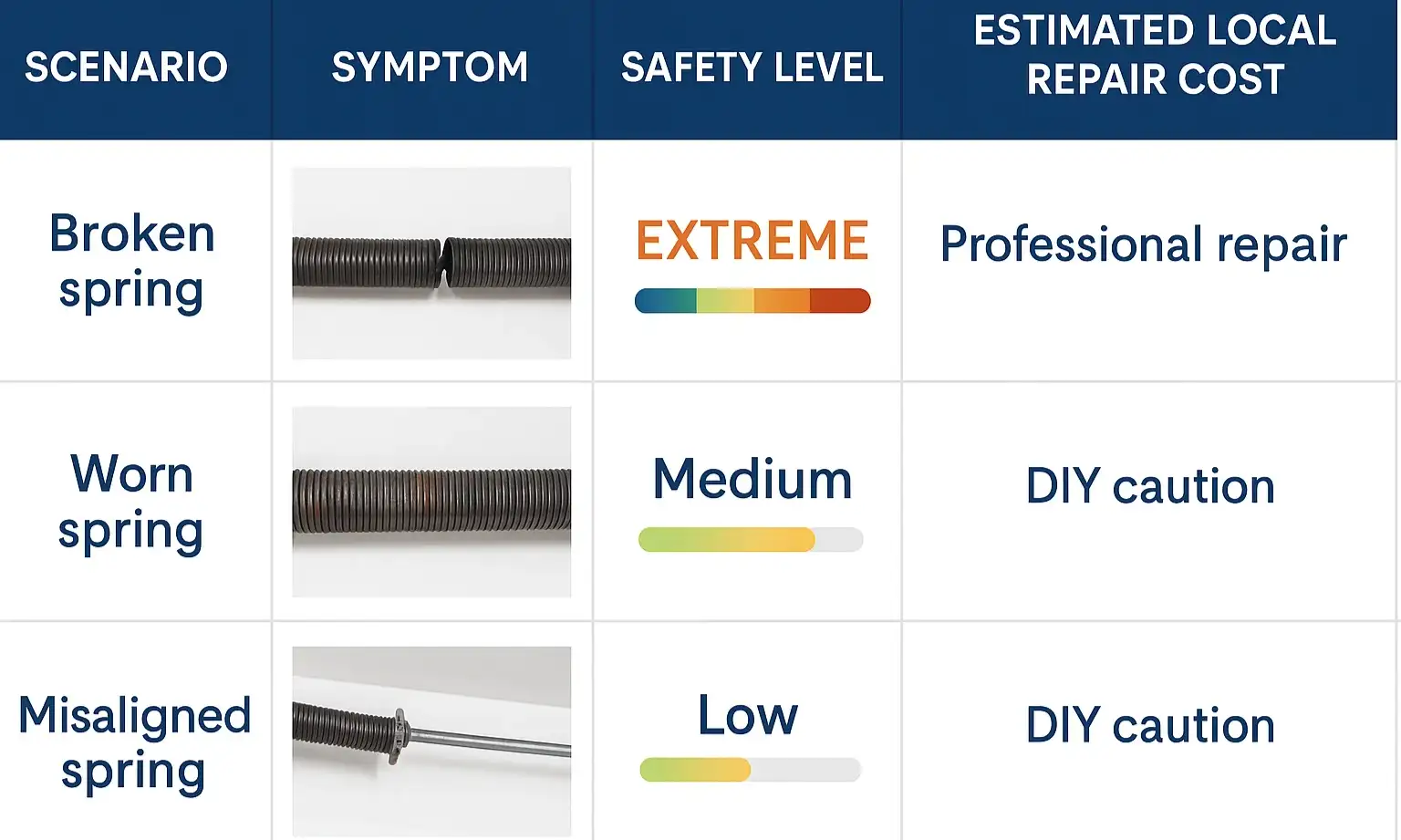
You hear the opener trying, but the door stays put. This often points to two main culprits:
The Disconnect Cord was Pulled: Look for a red rope hanging from the opener rail. If it's been pulled, the door is disengaged from the opener. This is an easy fix—consult your opener's manual to re-engage it.
A Broken Spring: This is the more serious possibility. The opener isn't strong enough to lift the door's full weight on its own. If you suspect a broken spring, do not try to re-engage the opener and run it.
Infographic comparing garage door spring failures, safety risks, and typical repair costs in McKinney, TX.

Symptom: The Door Closes, Then Immediately Reverses

This is a classic safety feature in action. It almost always means your photo-eye sensors are misaligned or blocked.
Visual Cue: Look at the two small boxes on either side of your garage door opening, about 6 inches from the floor. Each should have a small LED light. If one is blinking or off, they aren't aligned.
Safety Risk: Low, but frustrating.
DIY or Pro?: DIY-friendly. First, ensure nothing (like a broom or trash can) is blocking the beam. If not, gently adjust one of the sensors until both LED lights are solid. If that doesn't solve it, the issue might be with the opener's internal wiring, which is when you'd need a professional. Many modern units may require an expert to solve issues if you're looking for garage door opener off tracks near me.

Symptom: The Door is Crooked, Jerky, or Off Its Tracks

If your door is hanging unevenly or making terrible grinding noises, stop using it immediately. This usually points to a broken or frayed cable. The cables on each side work together, and when one fails, the door loses its balance.
Safety Risk: HIGH. An unbalanced door can easily fall out of its tracks, posing a serious risk of injury or property damage.
DIY or Pro?: Professional only. Like springs, cables are under high tension. A professional technician can safely perform a garage door cable repair and re-balance the door.

Symptom: A Single Panel is Dented or Damaged

A stray basketball or a car bumper tap can leave its mark. While often a cosmetic issue, severe damage can affect the door's structural integrity and smooth operation.
Safety Risk: Low, unless the damage is preventing the door from moving correctly.
DIY or Pro?: Professional. While it seems simple, sourcing the exact matching panel and ensuring it's installed correctly to maintain the door's balance is a job for a pro. This is especially true if you require a specific garage door panel replacement Dallas or McKinney area solution.

Infographic comparing garage door spring failures, safety risks, and typical repair costs in McKinney, TX.

Mastery: The McKinney Homeowner's Garage Door Repair Cost Guide


Okay, you've diagnosed the problem. Now for the big question: "What will this cost me?" In the McKinney and greater DFW area, pricing is generally consistent, but it's crucial to understand what you're paying for. A reputable company's invoice typically includes:

  1. Service Call Fee: This covers the technician's travel time and initial diagnosis. It's often waived if you proceed with the repair.
  2. Labor: The time it takes for the technician to perform the repair.
  3. Parts: The cost of the new springs, cables, rollers, or opener components.
Sometimes, the cost of multiple repairs on an older door can approach the price of a full replacement. Investing in modern, insulated, and aesthetically pleasing Up & Down Garage Doors can be a smarter long-term investment for your home's value and energy efficiency.

Need more information?

Action: Your Next Steps for a Safe and Reliable Repair
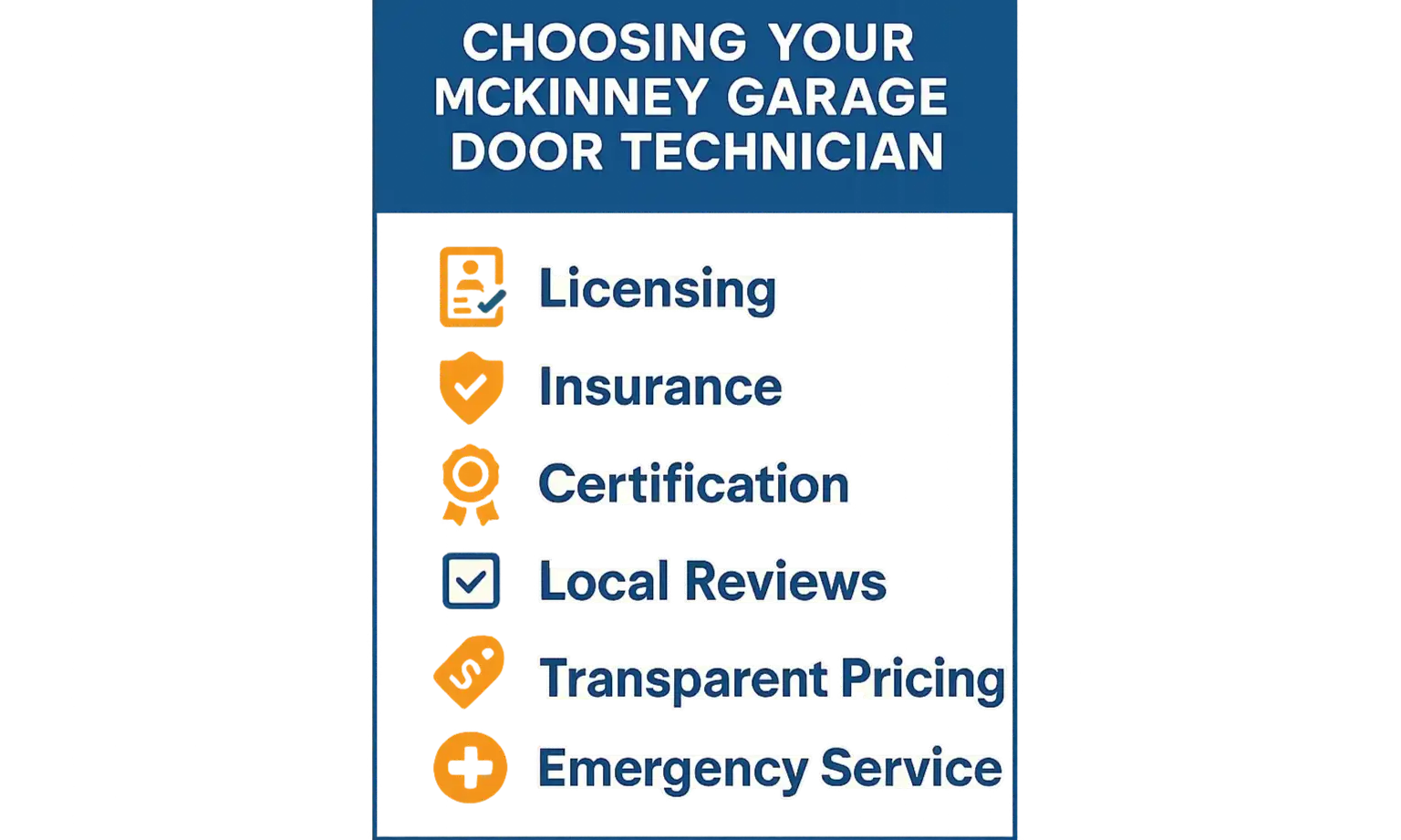

Checklist graphic for choosing a qualified McKinney garage door technician: license, insurance, reviews, and warranty.
Navigating a garage door issue can feel overwhelming, but now you're equipped with knowledge. Here’s a simple action plan:

  1. Prioritize Safety: If you suspect a spring or cable issue, do not touch anything. Keep cars, pets, and family members away from the door until a professional has assessed it.
  2. Evaluate DIY vs. Pro: For simple sensor adjustments, feel free to troubleshoot. For anything involving springs, cables, or the door being off-track, call a qualified technician immediately.
  3. Choose a Qualified Technician: Not all companies are created equal. Look for a local business with a strong reputation, clear pricing, and licensed technicians.
When you need a trusted partner, our team is here to help. If you're in Collin County and need a trusted, transparent partner for your garage door repair McKinney TX needs, we're available 24/7 to ensure your home is safe and secure.
Checklist graphic for choosing a qualified McKinney garage door technician: license, insurance, reviews, and warranty.

Frequently Asked Questions for McKinney Homeowners


Is it cheaper to repair or replace my garage door?

It depends on the age and condition of your door. If you have a single issue like a broken spring on a relatively new door, a repair is almost always the better choice. However, if your door is over 15 years old, has multiple failing parts, or has significant panel damage, a full replacement may be more cost-effective in the long run.

Can I repair a garage door spring myself?

We strongly advise against it. Torsion springs are under extreme tension, and a mistake during removal or installation can cause severe injury or property damage. This job requires specialized tools and expertise and should always be left to a trained professional.

How long should my garage door last?

With proper maintenance, a quality garage door can last 30 years or more. The springs are the most common wear-and-tear item and typically last 7-12 years, or about 10,000-15,000 open/close cycles.

What are the benefits of a smart garage door opener?

A smart opener connects to your home's Wi-Fi, allowing you to open, close, and monitor your garage door from anywhere via a smartphone app. You can get alerts when the door is opened, grant temporary access to visitors, and schedule it to close automatically. You can learn more about finding the best smart garage door opener for your home to see if it's the right fit.

How often do I need garage door service?

We recommend a professional tune-up and safety inspection once a year. A technician can lubricate moving parts, check the door's balance, test the safety features, and spot potential issues before they become major, costly problems.

You may also like


blog photo

Why McKinney Residents Should Upgrade to Insulated Garage Doors

Upgrading to insulated garage doors can significantly enhance the comfort and energy efficiency of McKinney homes. In this article, we'll explore the benefits of insulated garage doors, including improved insulation options, the advantages of steel-insulated garage doors, and how insulated garage door panels can contribute to better temperature control. Curious about what is the best insulation for garage door upgrades? We’ll break down the top materials to ensure optimal performance. Additionally, we’ll discuss how these upgrades can save on energy costs and boost your home's value. If you're considering an upgrade, look no further than Up & Down Garage Doors. Our team is ready to help you choose the perfect solution for your home!