Garage Door Repair in New Haven: Safety Tips and Smart Solutions
Published: Feb 10, 2026
It’s a sound every homeowner dreads: a sudden, loud BANG from the garage that echoes through the house. Or maybe it’s a slow, agonizing groan as the door struggles to open, followed by a frustrating silence. When your garage door acts up, it doesn't just disrupt your day; it can feel like your home's security is suddenly on the line.
Your first instinct might be to search for a quick fix. But before you grab a ladder and a wrench, it's crucial to understand what you're dealing with. A garage door is more than just a moving wall—it's a complex system of springs, cables, and rollers working under extreme tension.
This guide is designed to be your trusted first resource. We’ll walk you through a safety-first approach to diagnosing common issues, help you understand the language of your garage door, and empower you to decide between a simple DIY fix and calling a professional for garage door repair in New Haven.
Foundation: Understanding the Anatomy of Your Garage Door
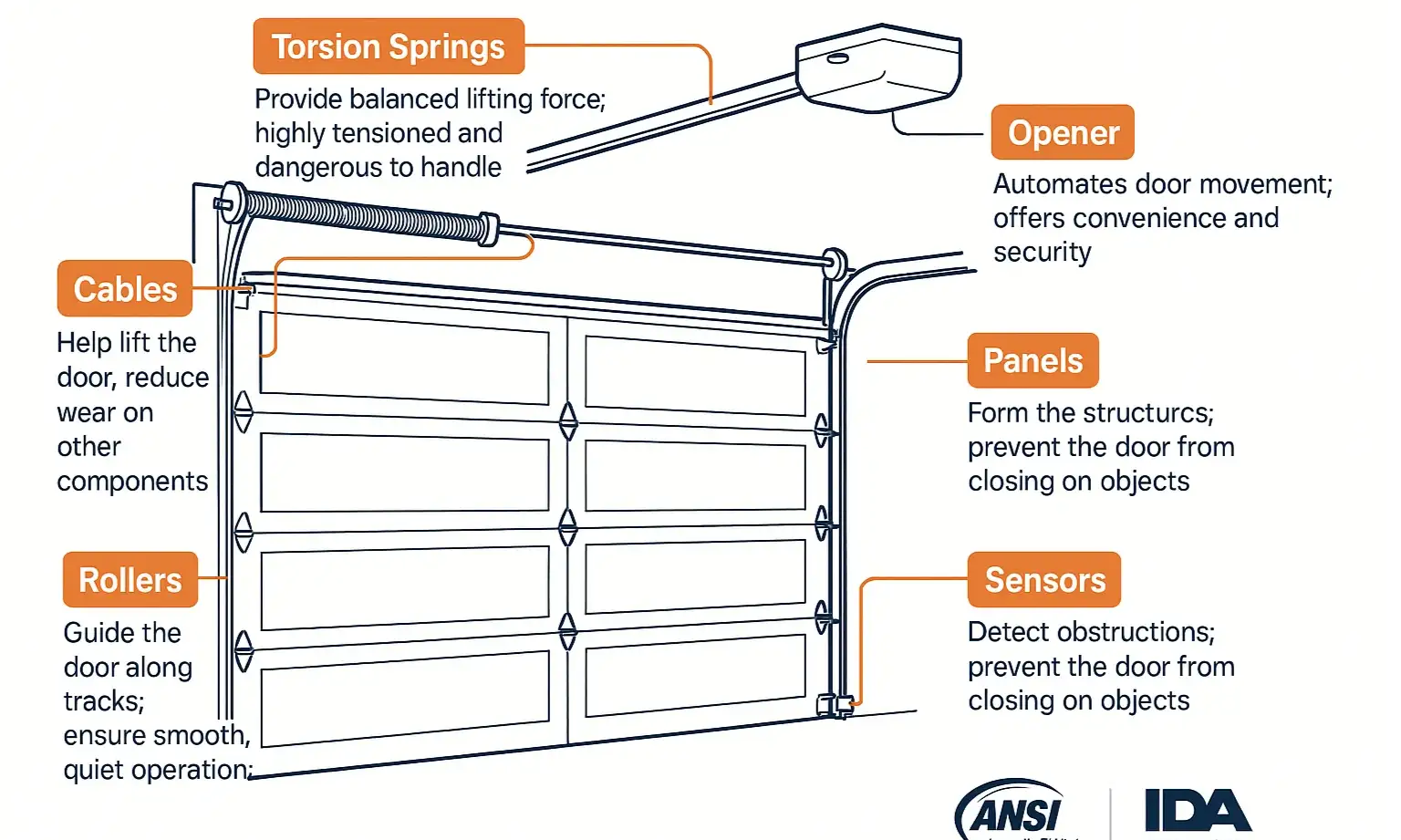
- The Springs (The Muscle): These are the true heavy lifters. Torsion springs (a large coil above the door) or extension springs (on the sides) do the work of lifting the door's weight. They are under immense tension. This is the most dangerous part of the system. To put it in perspective, a wound torsion spring has enough stored kinetic energy to cause serious injury—think of it like a giant, powerful mousetrap. A sudden release is incredibly hazardous.
- The Cables & Drums (The Ligaments): The cables connect the springs to the bottom of the door, winding around drums as the door moves. They transfer the lifting force from the springs to the door itself.
- The Rollers & Tracks (The Skeleton): The rollers are the wheels that guide the door along the vertical and horizontal metal tracks, ensuring a smooth journey up and down.
- The Panels (The Body): These are the individual sections of your garage door. While they seem simple, a damaged panel can throw off the door's balance and put stress on other components.
- The Opener (The Brain): This is the motorized unit that automates the process. It includes the motor, a trolley, and safety sensors. Many people think the opener does the lifting, but its real job is simply to guide the door once the springs have counterbalanced the weight.
Building Your Knowledge: The Symptom-Checker
If You Hear a Loud "BANG"...
If the Door is Jerky, Shaky, or Noisy...
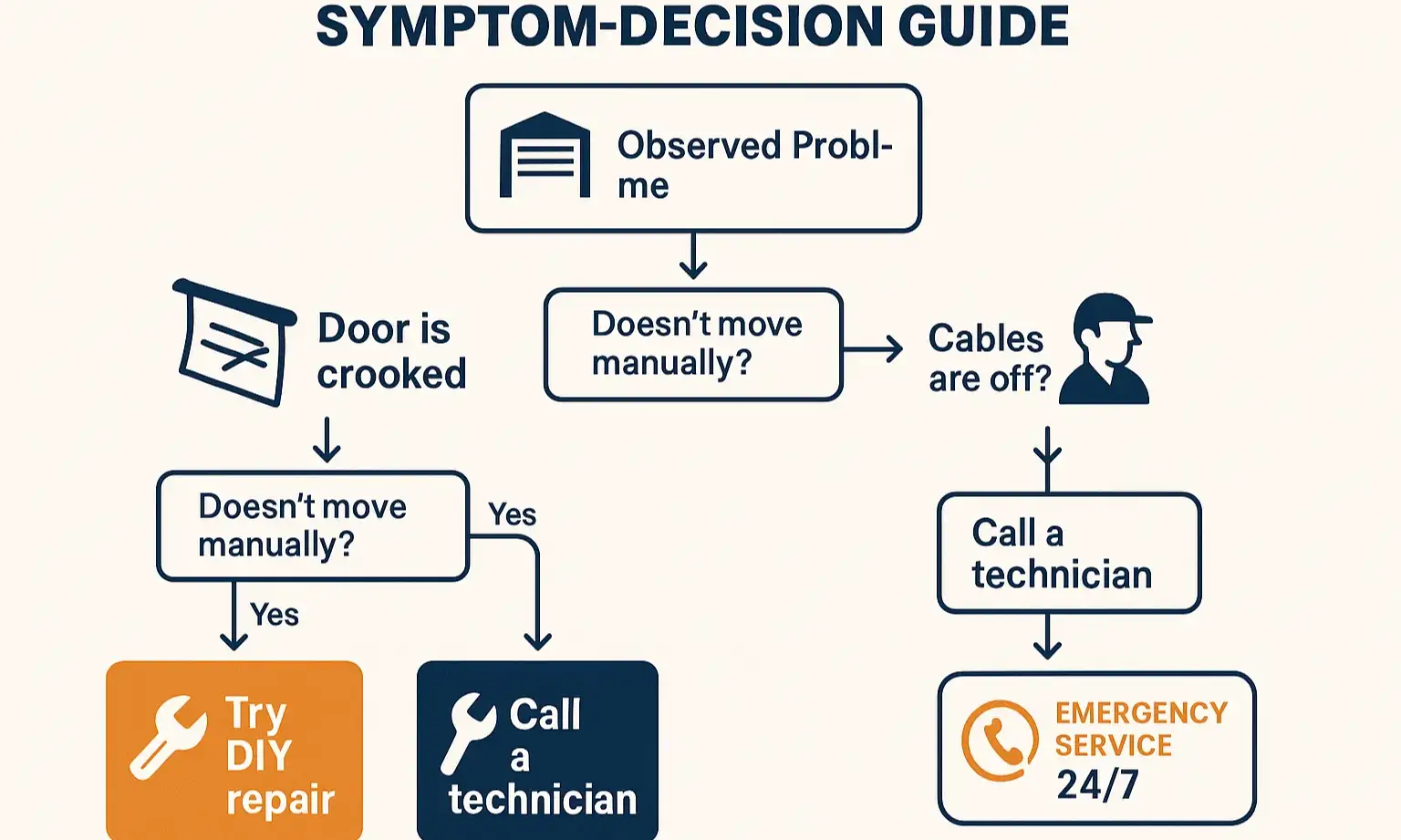
If the Motor Runs but the Door Doesn't Move...
If the Door Reverses Before Hitting the Floor...
If the Door is Crooked or Jammed...
Making the Right Call: A DIY vs. Pro Triage Framework
- Cleaning safety sensor lenses.
- Changing batteries in your remote or keypad.
- Lubricating rollers, hinges, and springs with a silicone-based spray.
- Checking for and clearing debris from the tracks.
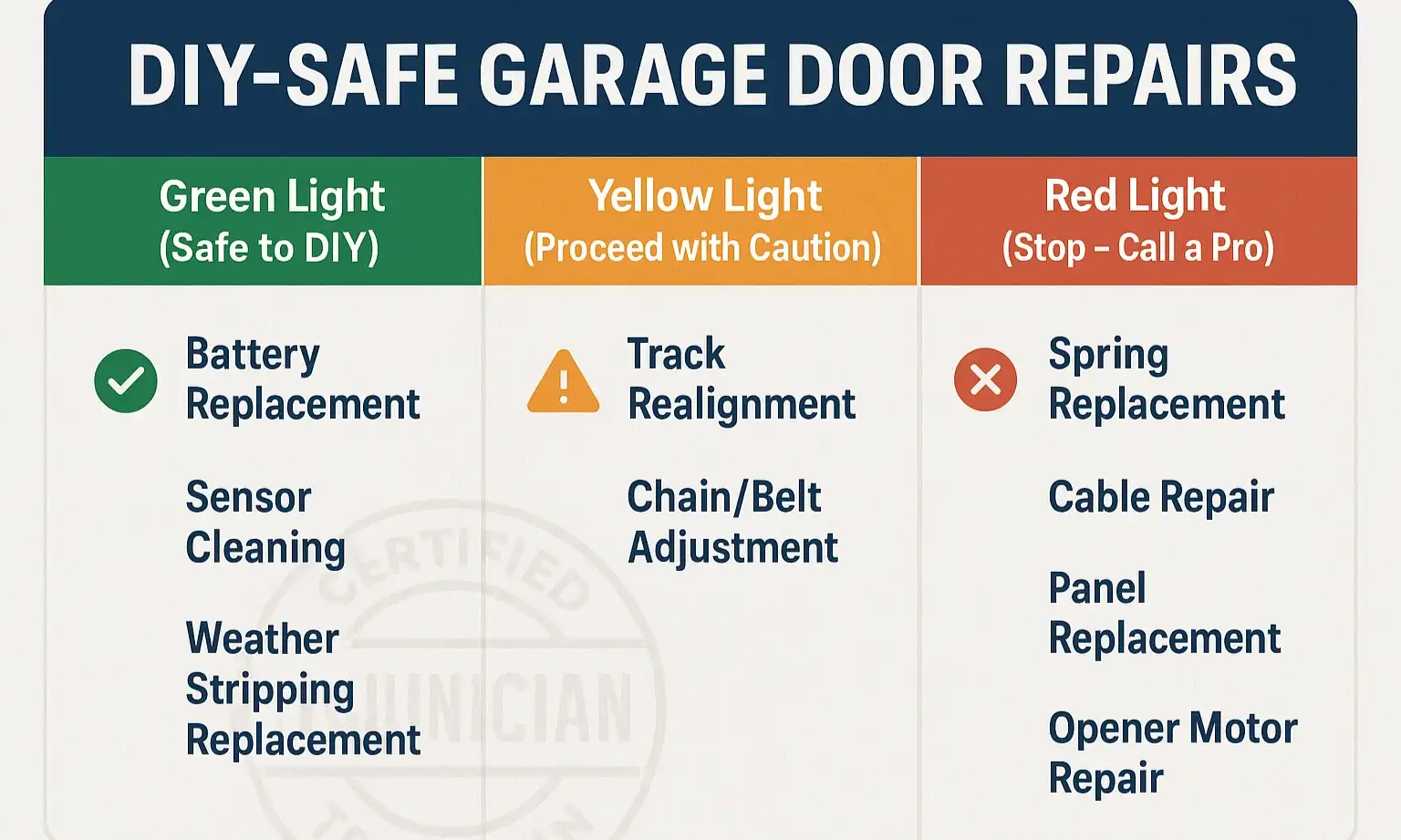
- Realigning safety sensors.
- Adjusting the opener's force and travel limits (consult your manual).
- Re-engaging the emergency release trolley.
- Anything involving springs. Replacing or adjusting springs requires special tools and knowledge of how to safely release and apply tension.
- Anything involving cables. Broken, frayed, or tangled cables are a sign of a major system failure.
- Replacing rollers in the bottom bracket.
- Major track realignment or replacement.
Mastery: Your Simple DIY Maintenance Checklist
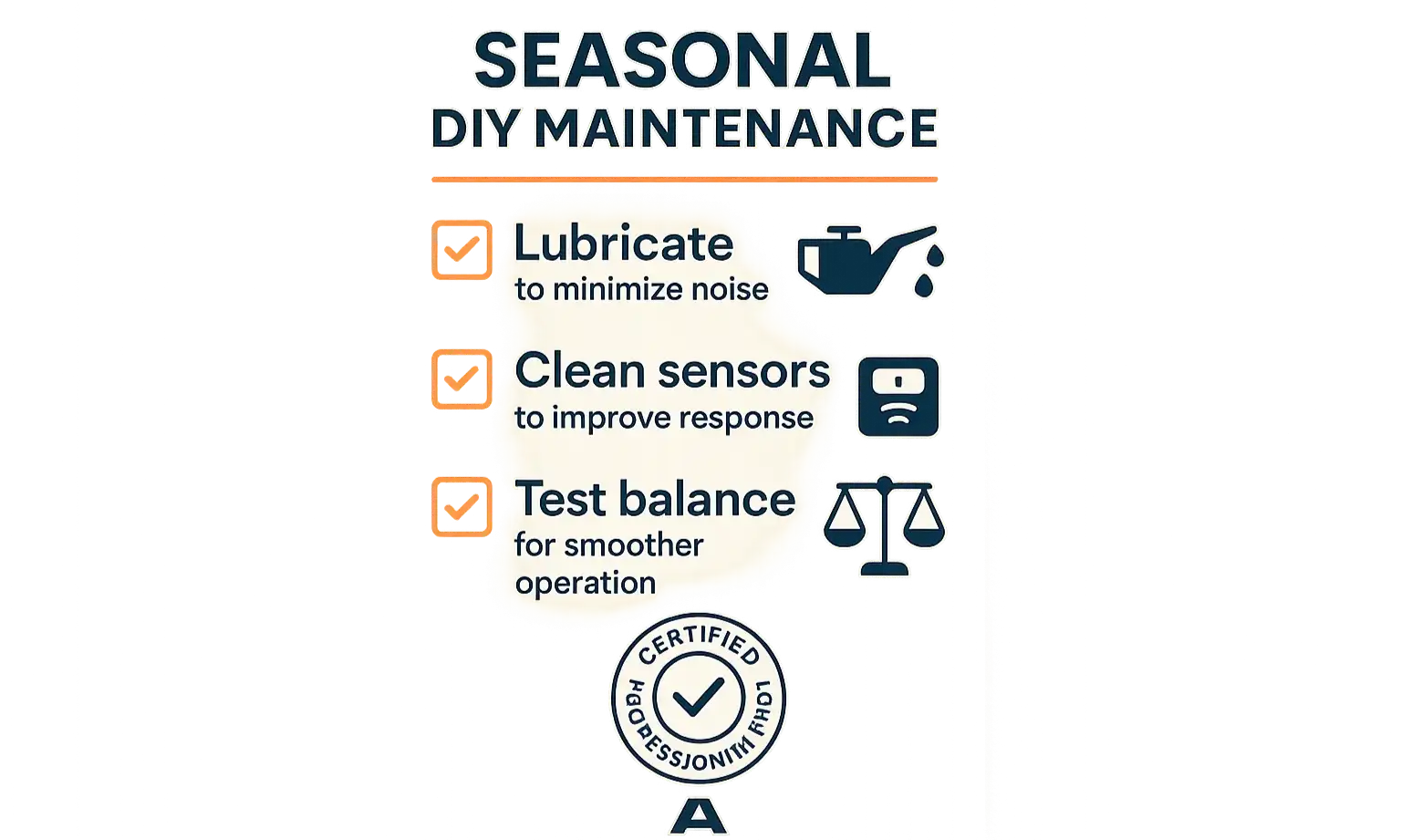
- Look & Listen: Open and close the door, paying attention to its movement and sounds. Is it smooth? Is it louder than usual?
- Balance Test: With the door closed, pull the emergency release cord. You should be able to lift the door manually with moderate effort. If it feels extremely heavy or slams to the ground, your springs are out of balance and need professional adjustment.
- Sensor Check: With the door open, place a small object (like a roll of paper towels) in the door's path and press the close button. The door should immediately reverse.
- Lubricate: Apply a garage door-specific lubricant (usually silicone-based) to all moving parts: hinges, rollers, and along the length of the springs. Do not use WD-40, as it can attract dust and gum up the parts.
Frequently Asked Questions
What's the difference between torsion and extension springs?
Are smart garage door openers worth it?
How often should I get my garage door serviced?
Your Trusted Partner for Garage Doors in New Haven
You may also like