Our company logo

State

Garage Door Troubleshooting Tips for New Haven Homeowners


Published: Feb 10, 2026

It’s a sound every New Haven homeowner knows and dreads. That sudden, jarring BANG!, a grinding shudder, or an ominous silence where the familiar hum of your garage door should be. Your home’s largest moving part has just gone on strike, and suddenly your day has a major, unexpected problem.

You’re not alone. When a garage door acts up, the first instinct is to search for answers. But sifting through generic national blogs or vague cost estimates can be frustrating. You need information that understands New Haven’s neighborhoods, our four-season New England weather, and what a fair price for a repair actually looks like in Connecticut.

This is your guide. We’re not here to sell you—we’re here to teach you. Consider this your friendly, expert resource for understanding your garage door, diagnosing common issues, and making confident decisions about its care.

Foundation: Anatomy of Your Garage Door


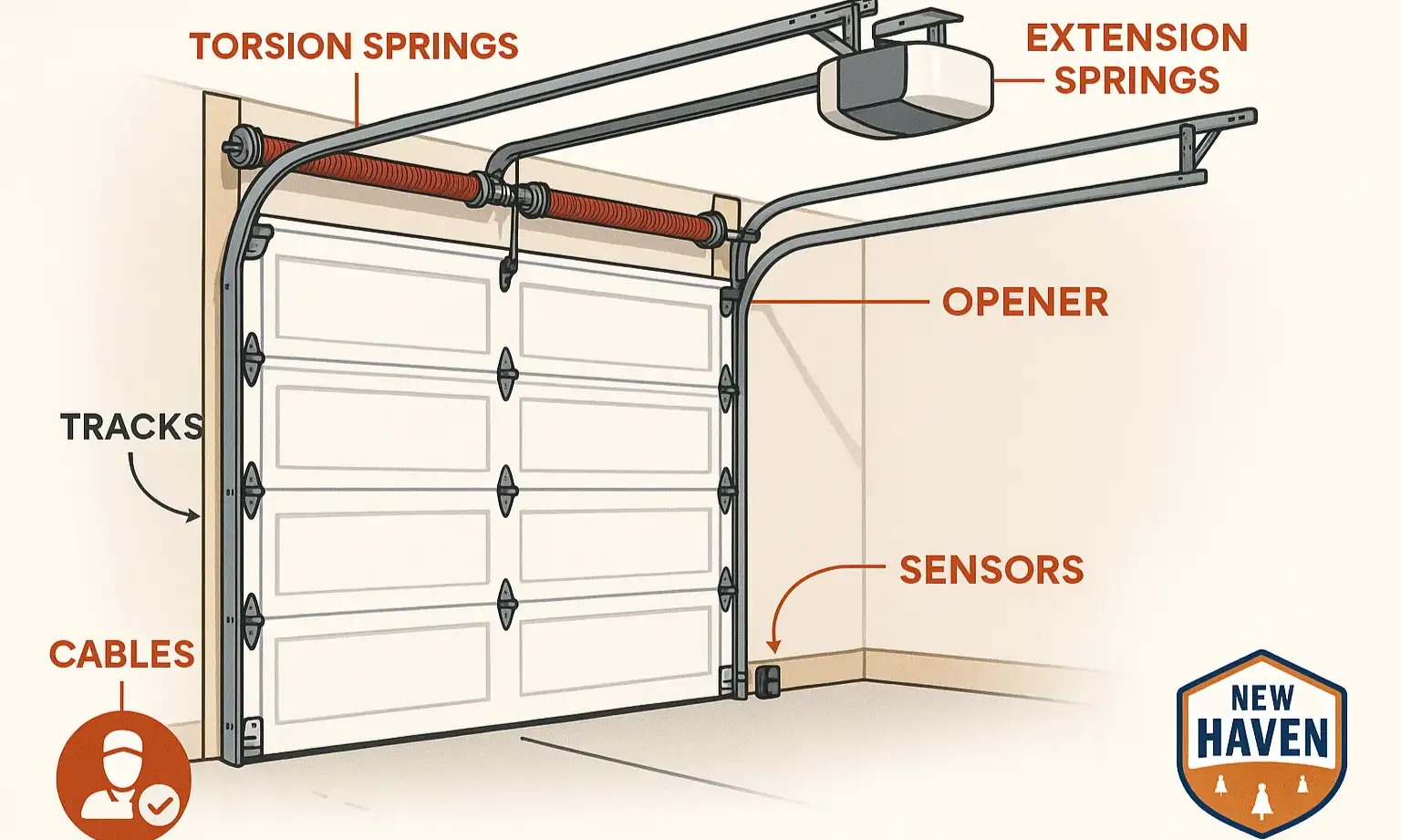
Before you can troubleshoot a problem, it helps to know the key players. Your garage door is a complex system of interconnected parts, and understanding their roles is the first step toward a solution. Think of it like a team where every member has a critical job.
Know your door: Understanding each part helps you identify issues quickly and communicate with confidence.

  • Springs (Torsion or Extension): These are the muscles of the system. They are under extreme tension and do the heavy lifting, making it possible to open a 300-pound door with one hand or with a small motor. A broken garage spring repair is one of the most common issues.
  • Cables: These steel cables work with the springs to lift and lower the door safely and evenly. If one snaps, the door can become crooked and dangerous.
  • Rollers & Tracks: The rollers run along the metal tracks on either side of your door, guiding it up and down. Worn rollers or bent tracks cause noisy, jerky movements.
  • Opener (Motor): The motorized unit that automates the opening and closing process. It controls the door's movement and includes safety features.
  • Safety Sensors (Photo-Eyes): Located near the bottom of the door tracks, these sensors project an invisible beam. If anything breaks the beam while the door is closing, it automatically reverses. This is a crucial safety feature.
  • Panels: The sections that make up the door itself. Damage to these can affect both aesthetics and function.
Know your door: Understanding each part helps you identify issues quickly and communicate with confidence.

Building: Common Problems, Local Solutions


Now that you know the parts, let's connect them to those troubling sounds and symptoms. Use this section as your diagnostic guide to figure out what your garage door is trying to tell you.

Problem 1: The Door Won’t Open or Close

What It Looks/Sounds Like: You press the button, and nothing happens. Or you hear the motor trying to work, but the door doesn’t budge.
Why It Happens: This could be as simple as dead batteries in your remote or a disconnected power source. More seriously, it could be a broken torsion spring (often accompanied by a loud bang) or a stripped gear inside the opener.
New England Wear & Tear: Extreme cold can sometimes interfere with the opener's logic board or cause lubricants to thicken, making it harder for the motor to work.

Problem 2: The Door is Shaking, Grinding, or Making Loud Noises
What It Looks/Sounds Like: A symphony of scraping, grinding, or popping sounds as the door moves.
Why It Happens: This is typically caused by worn-out rollers, poorly lubricated parts, or debris in the tracks. The tracks themselves could also be bent or misaligned.
New England Wear & Tear: Road salt and moisture kicked up during our winters can accelerate rust on tracks and hinges, leading to noise and friction.
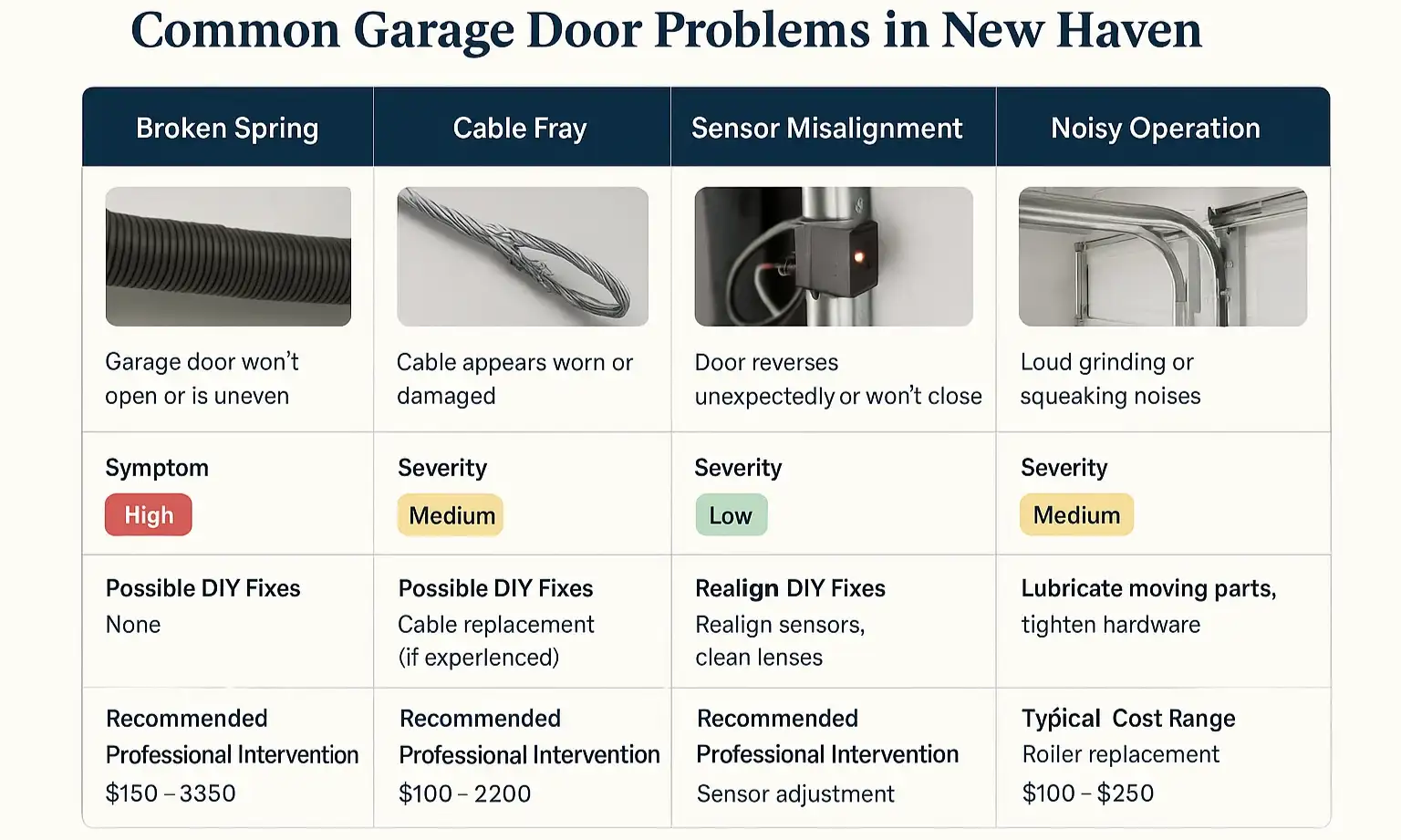
Compare common garage door issues at a glance to decide when to fix it yourself or call a trusted New Haven professional.

Problem 3: The Door Closes, Then Immediately Reverses

What It Looks/Sounds Like: The door goes all the way down, touches the floor, and then shoots back up.
Why It Happens: This is almost always an issue with the door's safety features. The photo-eye sensors at the bottom might be misaligned or blocked, or the opener’s close-force settings may need adjustment.
New England Wear & Tear: Sunlight hitting the sensors at a low angle during sunrise or sunset can sometimes trick them into thinking something is in the way.

Problem 4: The Door Looks Uneven or Sags

What It Looks/Sounds Like: One side of the door is hanging lower than the other, or it closes crookedly.
Why It Happens: This is a classic sign of a broken or frayed cable. This is a dangerous situation, as the remaining cable and spring are under immense strain. A professional garage door cable replacement is necessary.

To DIY or Not to DIY? A Clear Safety Framework

Some issues are simple fixes, while others are downright dangerous to tackle without training and specialized tools. The most important distinction a homeowner can make is knowing when to step back and call a professional. Anything involving springs or cables carries a significant risk of serious injury.

Compare common garage door issues at a glance to decide when to fix it yourself or call a trusted New Haven professional.

Your Top Garage Door Questions Answered (FAQ)


When should I repair versus replace my whole garage door?

A good rule of thumb is to consider replacement if the repair cost is more than 50% of the cost of a new door. Other factors include widespread rust, multiple damaged panels, or if the door is more than 15-20 years old and lacks modern safety features.

What's the real difference between torsion and extension springs?

Torsion springs are mounted on a bar above the door opening and are generally safer and more durable. Extension springs run alongside the tracks and are more dangerous when they break, as they can fly off like a projectile if not secured with a safety cable. Both types are under extreme tension and should only be handled by a trained technician.
This is your door’s safety mechanism at work! It usually means either the photo-eye sensors near the floor are misaligned and need to be adjusted, or the door’s “close force” setting is too sensitive and needs a minor adjustment.

Are smart garage openers really worth it in New Haven?

Absolutely. A best smart garage door opener offers incredible peace of mind. You can check if you left the door open from anywhere, get alerts when it's used, and even allow package deliveries securely. For busy families, it’s a game-changing convenience.

Your Trusted Local Partner


Understanding your garage door is the best way to care for it. By knowing the signs of trouble and recognizing when a problem requires a professional touch, you can ensure your door operates safely and reliably for years to come.
When you do encounter an issue that's beyond a simple fix, you need a partner you can trust. For reliable, expert garage door repair near me, our team is always ready to help. We believe in educating our customers, providing fair and transparent pricing, and getting the job done right the first time.

You may also like


blog photo

How Timely Garage Door Repairs Can Save Homeowners Money & Stress

A garage door is an essential part of overall home defense. It keeps your family safe, protects your belongings, and simplifies everyday life. However, like any other mechanism, it’s not immune to wear and tear. Over time, small issues can arise, including a creaky spring, a noisy track, or visible misalignments. At first, these little signs might not seem urgent. However, minor problems don’t stay small for long. Ignoring them could lead to costly repairs or even full door replacement down the line. What could be a quick, simple fix might end up as a major expense. Timely garage door repairs don’t just save you money in the long run. They also bring peace of mind, safety, and convenience. Let’s take a closer look at how a little attention now can help you avoid significant problems in the future.

blog photo

DIY Garage Door Repair vs. Professional Help

Our homes wouldn’t be the same without their garage doors. They provide convenience and security to our lives. This is why, when they break down, homeowners face a dilemma: should they fix it themselves or call an expert? This guide will help you make that decision by going over situations where you need professional help and where DIY will save you time and money. We’ll cover common garage door problems, safety precautions, and the equipment and knowledge needed to fix different issues. By the end of this article, you will have more knowledge in order to make smart decisions on garage door maintenance. Remember, some garage door repairs can be done by homeowners themselves, but others require training. Contact UAD if you have complex issues.