The Essential Guide to Safe and Effective Garage Door Repairs
Published: Mar 4, 2026
It’s a sound every homeowner dreads. You press the button on your garage door opener, and instead of the familiar, smooth hum, you hear a loud bang, a grinding crunch, or worse—absolute silence. A stuck garage door isn’t just an inconvenience; it can trap your car, disrupt your day, and leave your home insecure.
Your first instinct might be to figure out what’s wrong and if you can fix it yourself. But here’s the critical question: how do you know what’s safe to touch and what could lead to serious injury?
Welcome to your definitive guide. We’re here to walk you through the process of diagnosing your garage door’s problem, understanding which tasks are safe for a DIY approach, and knowing precisely when to call a professional. Think of this as your trusted first stop—the coffee-chat explanation from a friend who knows the ropes.
Hook (The Triage): What's Happening With Your Garage Door?
Foundation (Anatomy of a Garage Door)
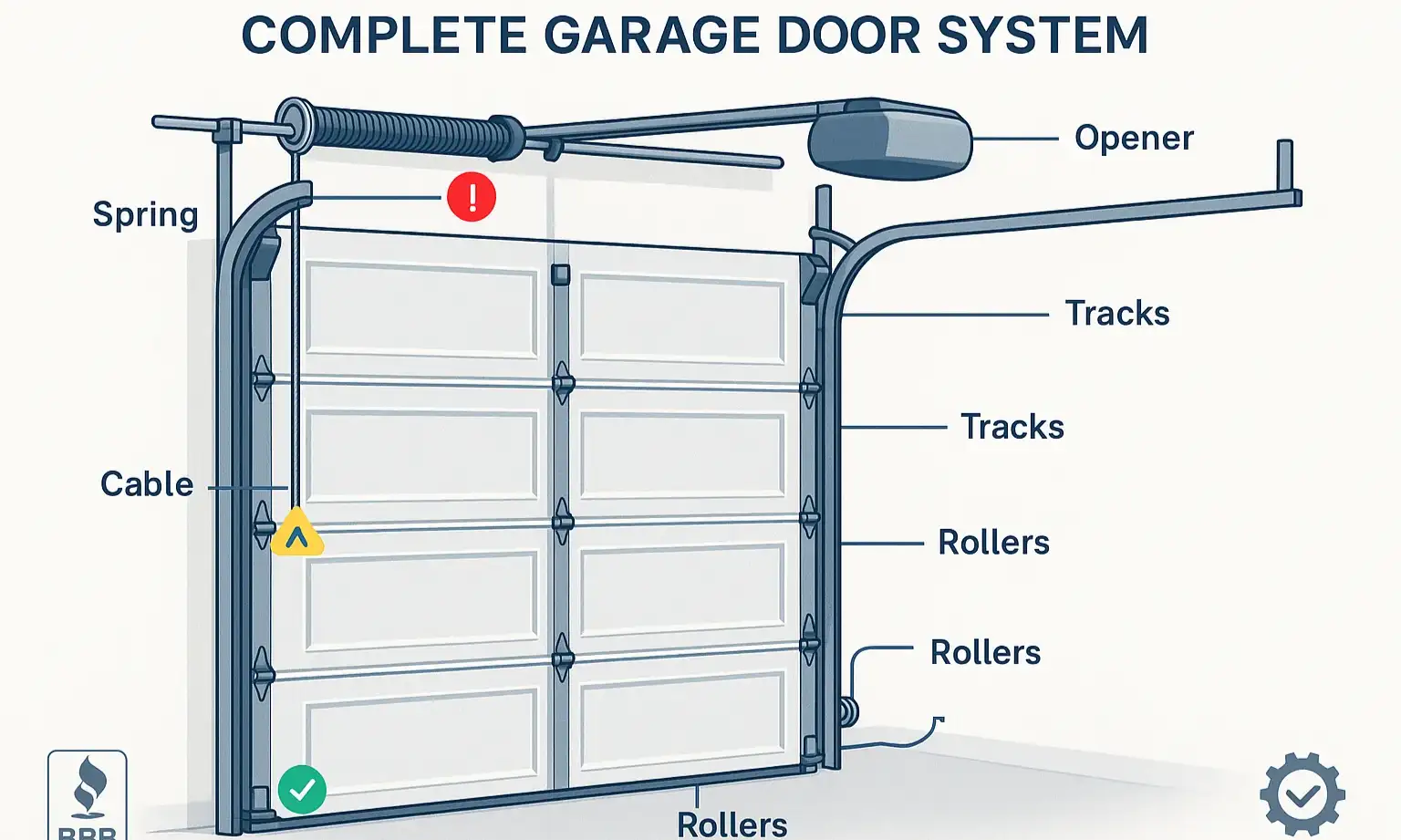
The Most Critical Components:
- Springs (Torsion & Extension): [DANGER LEVEL: EXTREME] This is the single most dangerous part of your garage door. The springs do the heavy lifting, counterbalancing the door's weight (which can be 150-400 lbs). They are wound under immense tension. If a spring breaks or is handled improperly, it can release that energy explosively. A common homeowner question is about the different types; understanding garage door spring torsion and extension systems is key to knowing the risks.
- Cables: [DANGER LEVEL: HIGH] These high-tension steel cables work with the springs to lift and lower the door. If a cable snaps or comes off its drum, the door can fall suddenly and unevenly.
- Garage Door Opener: [DANGER LEVEL: LOW to MODERATE] The motorized unit that automates the opening and closing. While the motor itself isn't typically dangerous, problems can arise from faulty wiring or a malfunctioning trolley that causes the garage door opener off tracks.
- Tracks, Rollers, and Hinges: [DANGER LEVEL: LOW to MODERATE] These components guide the door. While lubricating them is safe, trying to fix a bent track or a door that has come off its rollers can be risky without the right tools and knowledge.
- Photo-Eye Sensors: [DANGER LEVEL: SAFE] These are your primary safety feature. Two small sensors at the base of the door create an invisible beam. If anything breaks this beam while the door is closing, it automatically reverses.
Building (The 'Safe DIY' Zone)
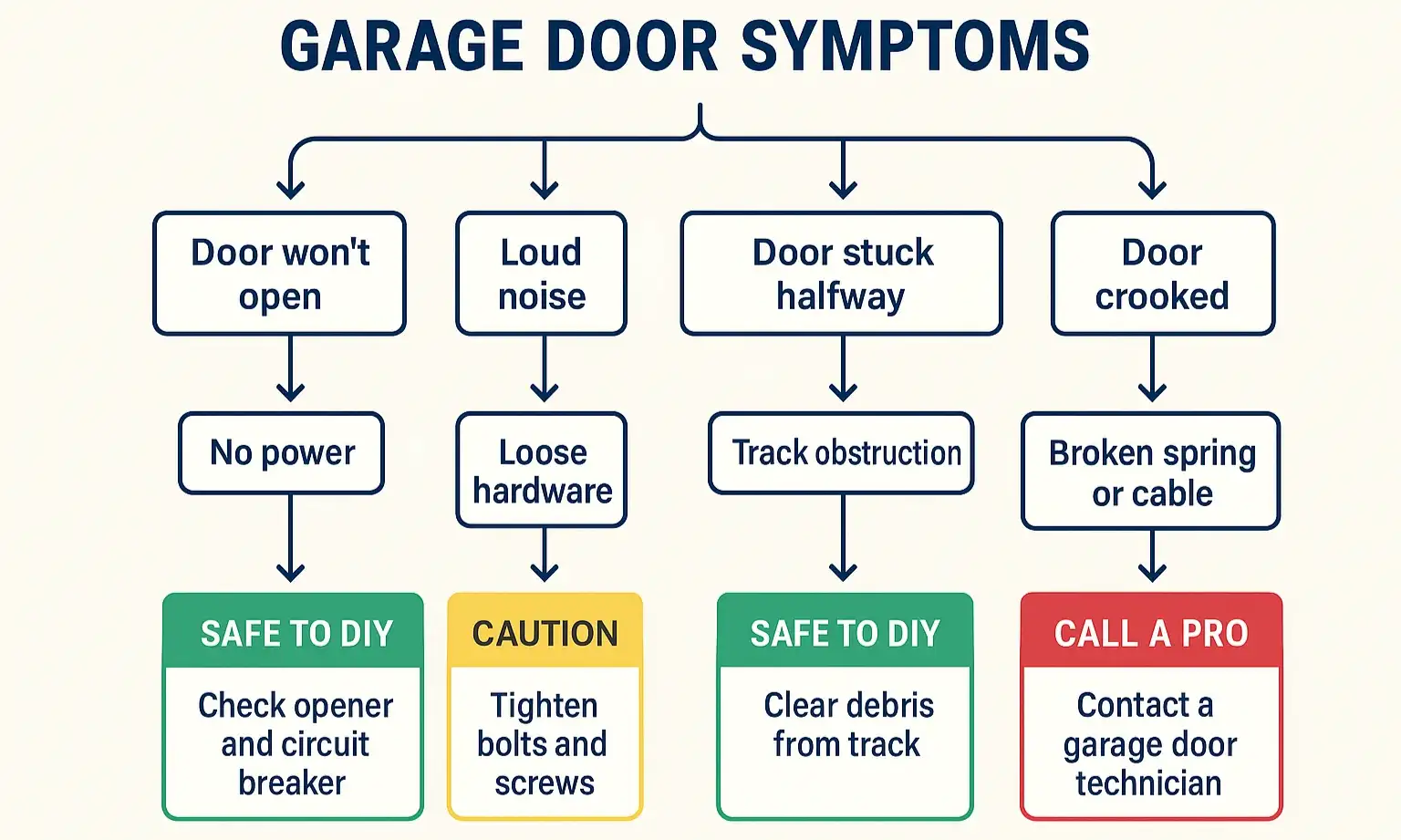
- Check and Clean the Photo-Eye Sensors: Are the sensors covered in dust or cobwebs? Are they aligned (both green lights should be on and solid)? Gently wipe the lenses with a soft cloth and ensure they are pointing directly at each other. This fixes one of the most common reasons a door won't close.
- Replace Remote Control Batteries: If the wall switch works but the remote doesn’t, a dead battery is the likely culprit. This is a simple and easy fix.
- Lubricate Moving Parts: Squeaky, grinding noises can often be silenced with a quality garage door lubricant (avoid WD-40, which can attract dirt). Lightly spray the rollers, hinges, and springs once or twice a year to keep things running smoothly.
- Clear the Tracks: Check for any debris, leaves, or small objects in the vertical and horizontal tracks that could be obstructing the rollers.
Mastery (The 'Call a Pro' Zone)
Red Light: Stop and Call a Technician Immediately If You See:
- A Broken Spring: If you heard a loud "bang" from the garage and now the door won't open, you likely have a broken spring. You might see a visible gap in one of the springs above your door. Attempting to open the door or fix this yourself is extremely dangerous. When you need a professional for a broken garage spring repair, don’t hesitate.
- A Snapped or Frayed Cable: The cables are under the same tension as the springs. A snapped cable can cause the door to slam shut or hang crookedly. This is a clear sign you need an expert.
- A Crooked or Off-Track Door: If the door is visibly sagging on one side or the rollers have come out of the track, the entire weight of the door is unstable. Trying to force it can cause it to collapse.
- Damaged Panels: A significant dent or crack can compromise the structural integrity of the door. A professional can assess whether a simple garage door dent repair is possible or if a panel replacement is needed.
Need more information?
Get a free quote
Action (Making the Right Call)
Frequently Asked Questions
How long should a garage door opener last?
Why is my garage door so noisy?
What are the signs I need a new garage door?
Can I just replace one panel of my garage door?
What are the benefits of a smart garage door opener?
Your Path Forward
You may also like