Our company logo

State

The Dallas Homeowner's Guide to Garage Door Noises, Shakes, and Stops


Published: Feb 13, 2026

Did you hear it? That sudden, startlingly loud BANG from the garage that sounds like a firecracker went off. It’s one of the most common and alarming experiences for a homeowner, and it’s often the first sign that your garage door—the largest moving object in your home—needs immediate attention.

Most of us use our garage doors every day without a second thought, expecting them to open and close on command. But when they start grinding, shaking, or stop working altogether, it can be confusing and stressful. Where do you even begin?

You’re in the right place. This guide is designed to be your trusted first step. We’re not here to sell you something; we’re here to help you understand the fascinating system at work in your garage. Think of this as a conversation with a knowledgeable friend, demystifying the sounds and symptoms so you can make confident, informed decisions for your Dallas home.

Choosing the Right Garage Door Service in Dallas, TX


When your door acts up, the first impulse is often to search for "garage door companies near me in Dallas, TX." But with so many options, how do you choose? It’s about more than just a quick fix; it’s about finding a partner you can trust. A reliable company will not only solve the immediate problem but also educate you on how to prevent future issues. The best technicians ensure you understand the work being done, providing peace of mind alongside a professional repair.

Understanding How Your Garage Door System Works


Here’s the single most important "aha moment" every homeowner should have about their garage: The garage door opener does not lift the door.
It’s a common misconception. We press a button, the motor whirs, and the door goes up. It seems simple. But the opener is just the guide. The real muscle of the operation comes from the springs. Your garage door is a finely tuned counterbalance system. The springs (whether torsion or extension) are wound with immense tension, holding the full weight of the door (which can be 200-400 pounds). The opener simply provides the small amount of force needed to get the balanced door moving.
When this system works correctly, you could disconnect the opener and lift the door with just a few fingers. When it’s out of balance, the opener strains to do a job it was never designed for, leading to premature burnout and costly repairs.
This is why a problem that seems to be with your garage door opener might actually be a spring issue in disguise. That loud BANG we mentioned earlier? That’s almost always the sound of a torsion spring snapping under tension. When that happens, the opener is suddenly trying to lift the full, dead weight of the door, which it simply can't do.

Your Homeowner's Diagnostic Toolkit

You don’t need to be a pro to spot the early warning signs of trouble. Here are three simple diagnostics any Dallas homeowner can perform.
1. The Visual Inspection:
Once a month, take a moment to look over the system. Check for:
  • Frayed Lift Cables: Look at the steel cables on either side of the door. Are there any broken strands or signs of fraying near the bottom brackets? Damaged cables are a major safety risk. If you notice an issue, it’s critical to understand the safe process for garage door cable repair.
  • Rust or Gaps in Springs: Look at the spring(s) above your door. Obvious rust is a sign of wear, and a visible gap in the coil means you have a broken spring. This is a common reason for needing garage door spring repair.
  • Worn or Broken Rollers: Check the rollers in the track. Are they cracked, worn, or wobbly? Worn rollers can cause noisy operation and put stress on the system.
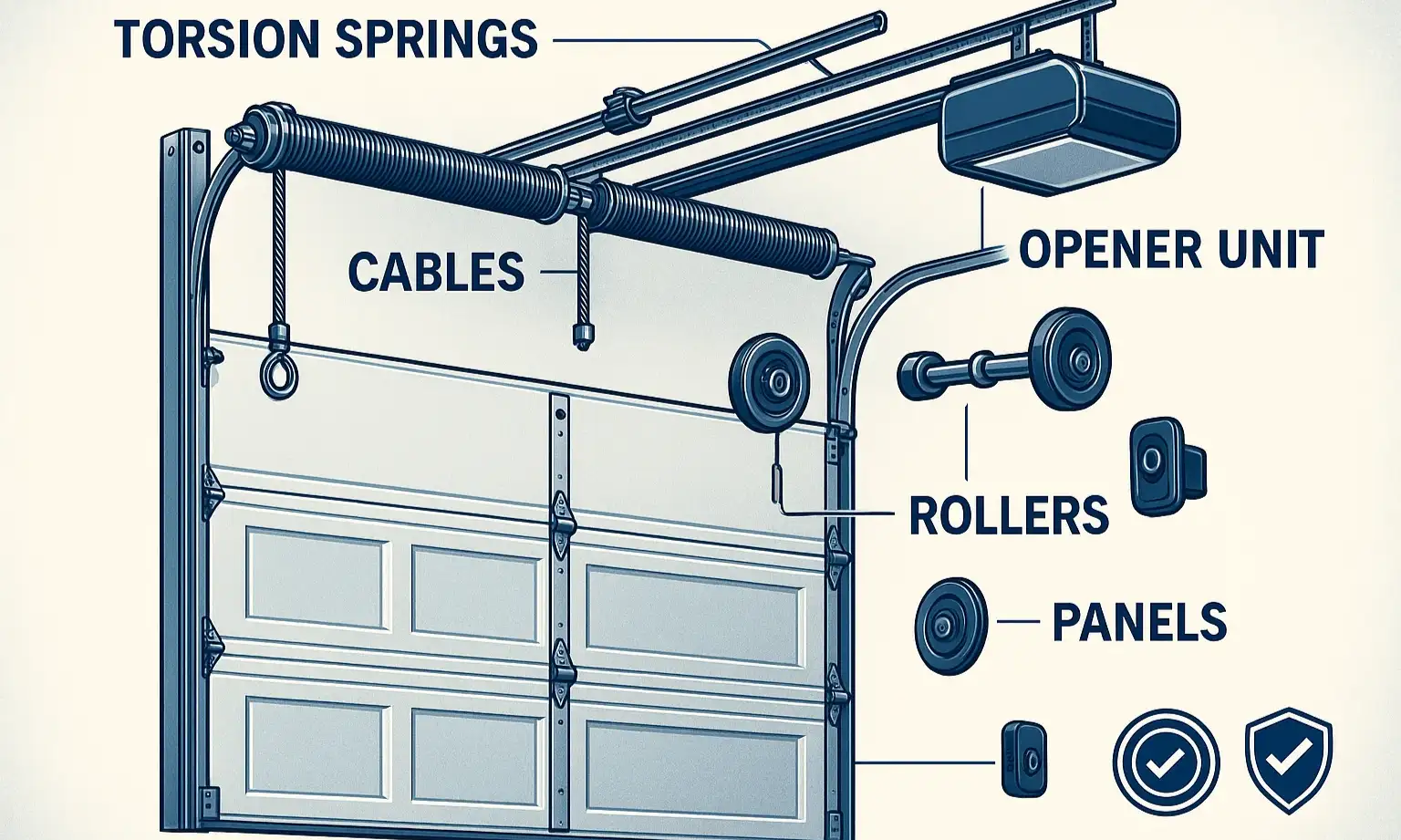
Diagram of a garage door mechanism with labeled parts
2. The Sound Library:
Your garage door speaks a language. Learning to interpret its sounds is key to catching problems early.

  • Squeaking or Screeching: This often means the rollers, hinges, or springs need lubrication. It's the door asking for a drink!
  • Grinding or Rumbling: This can indicate that the opener's gears are wearing out or that rollers are struggling to move in a bent track.
  • Popping or Banging: This is often the sound of the door sections shifting as they round the bend in the track, a sign of misalignment or worn-out hardware.
3. The Balance Test (The Most Important DIY Check):
This simple test tells you if your springs are still doing their job correctly.
  1. Close the garage door.
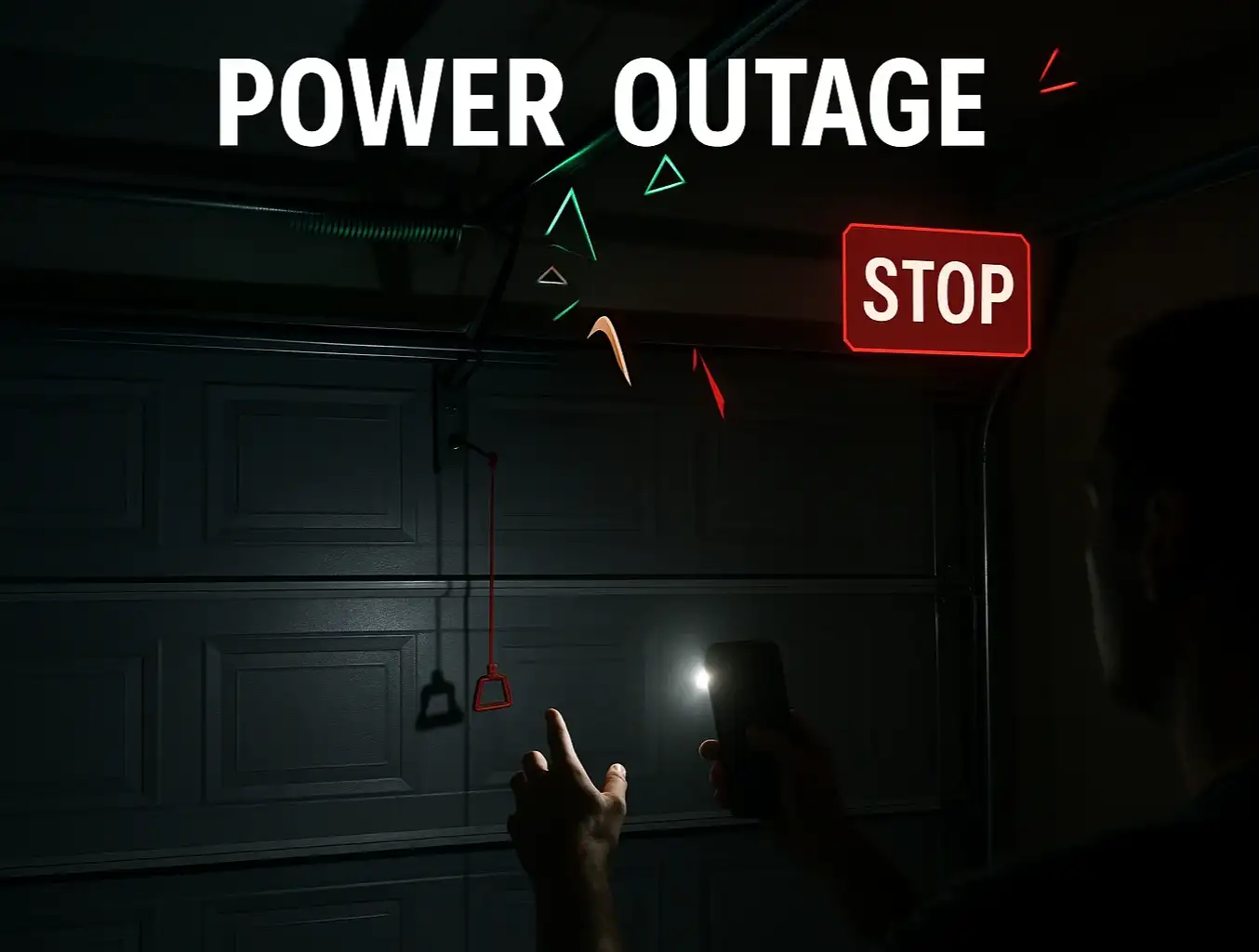
  2. Pull the red emergency release cord on the opener to disconnect it from the door.
  3. Carefully lift the door by hand to about waist height.
  4. Let go.
Diagram of a garage door mechanism with labeled parts
A well-balanced door should stay in place. If it slams down or shoots up, the springs are no longer counterbalancing the door's weight properly and need professional adjustment or replacement.

The DIY Safety Line: When to Call a Dallas Professional


While lubricating moving parts and cleaning safety sensors are great DIY maintenance tasks, some jobs carry serious risks. The springs and lift cables are under extreme tension. A mistake during a garage door repair involving these parts can cause severe injury or property damage.
Call a professional for:

  • Anything involving springs (adjustment, replacement).
  • Replacing frayed or broken lift cables.
  • Replacing a damaged bottom bracket (it's connected to the tensioned cables).
  • Fixing a door that has come off its tracks.
For these situations, you need a trained garage door technician in Dallas, TX who has the right tools and expertise to do the job safely and correctly.

Making Your Garage Door Repair Decision with Confidence


Infographic showing the garage door repair journey and costs
Understanding the costs and process can help reduce the anxiety of a needed repair or replacement. Whether it’s a simple fix like a garage door panel replacement or a full overhaul, a transparent company will walk you through the options, timeline, and pricing upfront. Knowing the estimated new garage door cost in Dallas, TX can help you budget and decide whether a repair or a full replacement makes more sense for your home.

Why Choose Our Dallas Garage Door Technicians?

Finding a trustworthy technician is paramount. Our team is not just trained in mechanics; they’re trained in customer service. We believe in showing you the problem, explaining the solution, and providing a clear, fair price before any work begins. Every service call is an opportunity to build a relationship based on honesty and expertise.

Infographic showing the garage door repair journey and costs

Need more information?

Frequently Asked Questions for Dallas Homeowners


Can I repair my garage door springs myself?

We strongly advise against it. Torsion springs are under immense tension and require special tools to safely release and install. It is one of the most dangerous home repairs a person can attempt without proper training.

Should I repair or replace my garage door opener?

If your opener is over 10-15 years old, frequently malfunctioning, or lacks modern safety features like photo-eye sensors, replacement is often the better long-term investment. Modern openers are quieter, more secure, and many offer smart home capabilities. Considering the benefits of the best smart garage door opener can significantly enhance your home's convenience and security.

How often does my garage door need service?

We recommend a professional tune-up and safety inspection once a year. This preventative maintenance can catch small issues before they become major, expensive problems, extending the life of your door and opener.

My garage door looks fine but is really noisy. What should I do?

Noisy operation is a cry for help. It usually indicates a need for lubrication on the rollers, hinges, and springs. If lubrication doesn't solve it, you may have worn-out rollers or a system that's out of alignment.

Your Next Step to a Quieter, Safer Garage


Your garage door is a complex system, but understanding the basics is the first step toward maintaining it effectively. By learning to listen to its sounds, perform simple visual checks, and know when to call for help, you can ensure it operates safely and reliably for years to come.
If you’re hearing strange noises, dealing with a door that won't open, or simply want a professional safety check, we're here to help. Explore our resources or reach out to our team of experts who provide reliable garage door repair in Dallas, TX 24/7.

You may also like


blog photo

Converting a Standard Track Garage Door to a Vertical Lift System

Ever look up at the ceiling of your garage and see wasted space? That sprawling network of horizontal tracks from your standard garage door eats up a massive amount of overhead real estate—space that could be used for a car lift, a storage loft, or just an open, airy workshop. You've probably thought, "There has to be a better way." There is. It's called a vertical lift garage door system, and converting to one is one of the most transformative upgrades you can make to your home or business. But the moment you start researching, you fall down a rabbit hole of confusing forum posts, dense DIY manuals, and videos that skip crucial details. You're left with more questions than answers: Is my garage even tall enough? What's the difference between "high lift" and "vertical lift"? And what happens if I get it wrong? This guide is your clear path forward. We're going to walk through this fascinating process like a knowledgeable friend, focusing first on the most important question: Is this conversion right for you?

blog photo

Steel vs. Nylon Garage Door Rollers: The Ultimate Guide to Lifespan

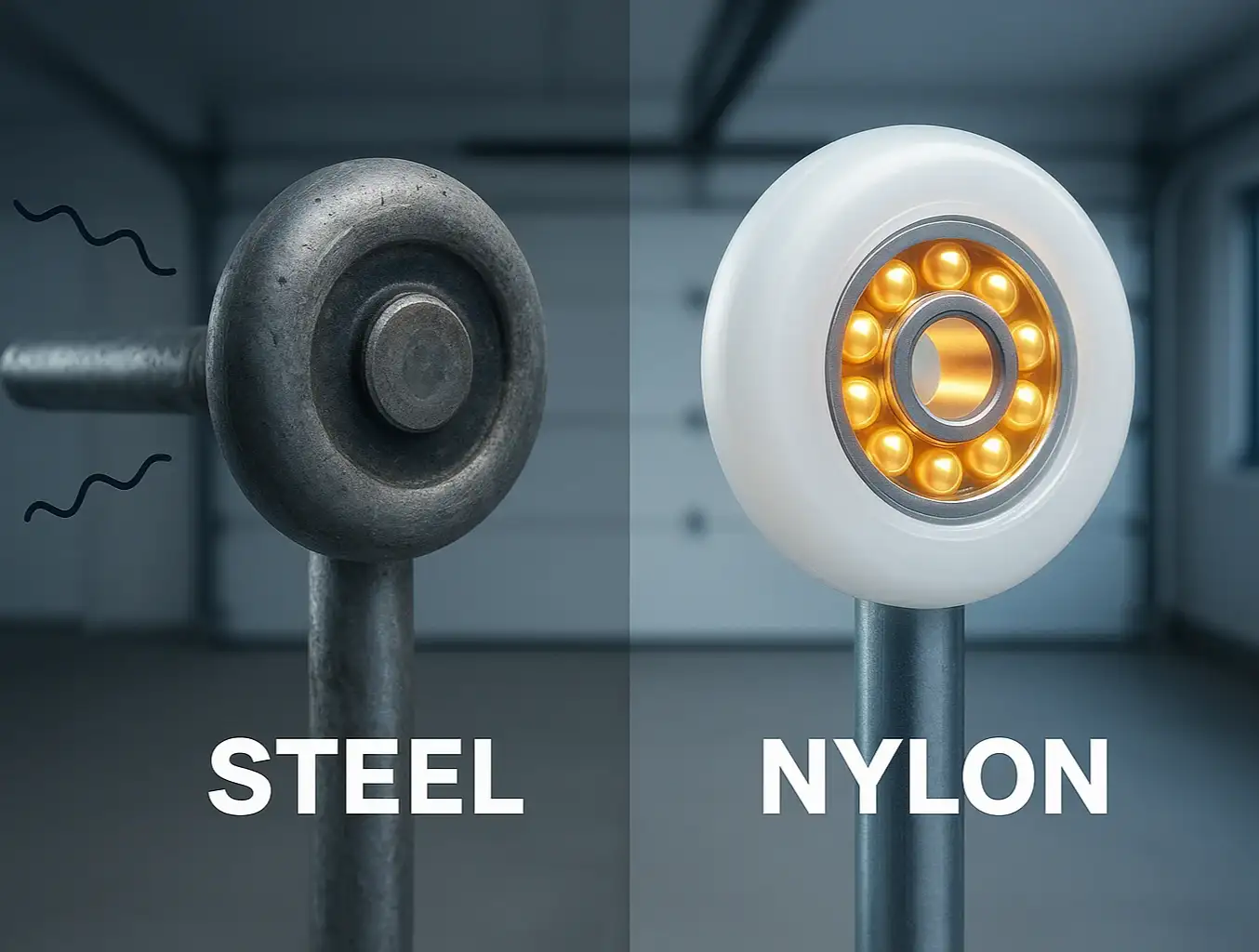
Ever stood in your driveway and winced as your garage door screeched its way open? That grating, metal-on-metal sound is a common complaint, and most people assume the solution is a simple choice: switch from steel to nylon rollers. While that's part of the story, it's like choosing a car based only on its color. The real secret to a quiet, long-lasting, and smooth-operating garage door isn't just about steel versus nylon. It’s about understanding a simple but powerful performance equation. Hook: It's Not Just About Steel vs. Nylon. The biggest "aha moment" in understanding garage door rollers is realizing that the wheel's material is only one piece of the puzzle. True performance and longevity come from a combination of factors.