





Understanding Garage Door Roller Play and its Impact on Alignment
Published: Apr 22, 2026
You’ve tried everything. You lubricated the rollers, but the grinding noise came back. You nudged the tracks, but the door still closes unevenly. It’s a common frustration: you fix the symptoms, but the root cause remains hidden. The problem might not be your tracks or your opener; it could be something more subtle, a mechanical issue experts call “garage door roller play.”
This is the wobble you can’t see but can definitely hear and feel. It’s the silent force that gradually pushes your garage door out of alignment, turning a minor annoyance into a major operational headache. Understanding this single concept is the “aha moment” many homeowners need to finally solve their persistent garage door problems.
Foundation: What is Garage Door Roller Play?
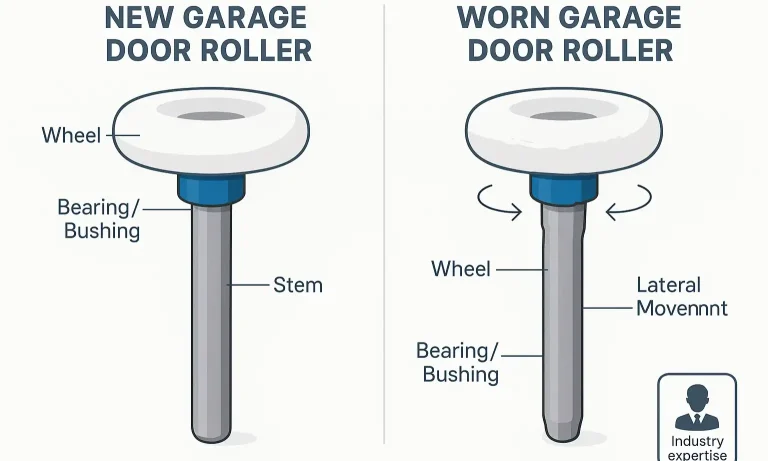
Think of a shopping cart with a wobbly wheel. It rattles, pulls to one side, and makes the whole cart difficult to steer. Garage door roller play is the exact same principle. It’s the excessive side-to-side movement, or “wobble,” of the roller wheel within the garage door track.
This doesn’t happen overnight. Brand new rollers fit snugly, gliding smoothly and silently. But over thousands of cycles, the internal bearings or bushings wear down. This wear creates a gap between the roller wheel and the stem it’s attached to. That tiny gap is the source of the “play.”
Here’s a breakdown of the key roller components:
- The Wheel: The part that rolls inside the track, typically made of nylon or steel.
- The Stem: The metal rod that inserts into the garage door’s hinges.
- The Bearings: Small steel balls sealed inside the wheel’s hub that allow it to spin smoothly around the stem. When these wear out, the wobble begins.
Worn-out bearings are the primary cause of roller play. Instead of spinning smoothly, the wheel begins to jiggle on the stem, creating noise and instability that lubrication can’t fix. Understanding the different parts of a garage door can help you pinpoint where issues like this originate.
Building: The 30-Second Wiggle Test: Your Diagnostic Guide
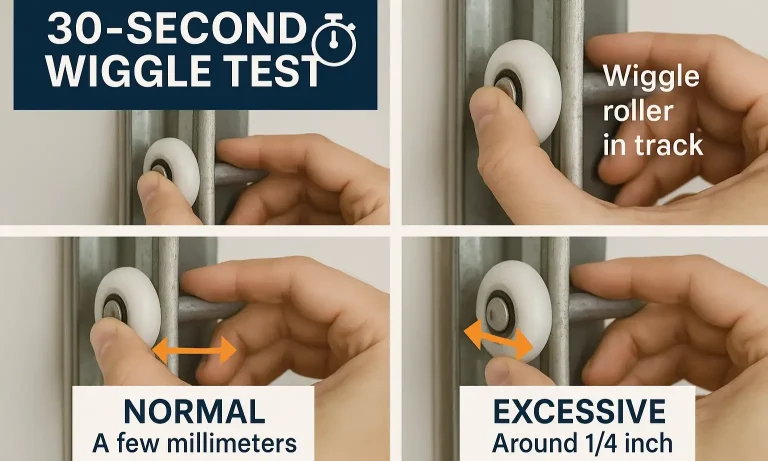
You don’t need special tools to diagnose roller play. All you need is 30 seconds and a simple physical check we call the “Wiggle Test.” This will tell you everything you need to know about the condition of your rollers.
Safety First: Perform this test with the garage door closed and the opener disconnected to ensure the door cannot move unexpectedly.
Here’s how to do it:
- Go inside your garage and stand near one of the vertical tracks.
- Grasp a single roller wheel with your thumb and forefinger. Choose one about waist-high for easy access.
- Gently try to wiggle it side-to-side, perpendicular to the track. Pay attention to how much it moves.
- Repeat the process for a few rollers on both sides of the door, including one near the bottom and one near the top.
- Normal Play: A tiny bit of movement—a few millimeters—is perfectly normal and necessary for smooth operation. The roller should feel secure.
- Excessive Play: If you can visibly see the wheel wobbling on the stem or feel a distinct “clunk” as you move it back and forth, you have excessive roller play. A gap of a quarter-inch or more is a clear sign that the bearings are shot.
What are you looking for?
This excessive movement allows the entire garage door panel to shift slightly within the tracks, which is the direct cause of long-term alignment problems.
Mastery: How a Tiny Wobble Causes a Crooked Door
It seems hard to believe that a small wobble could create so much trouble, but it’s a matter of physics. Your garage door is a large, heavy object lifted by a balanced system of springs and cables. When one component is off, the entire system is affected.
Here’s the chain reaction caused by roller play:
- The Lag Effect: As the door opens, a wobbly roller doesn’t lift its corner of the door panel straight up. Instead, it allows that corner to lag or drag for a fraction of a second.
- Uneven Stress: This lag forces the other side of the door to carry more weight, causing the door to rise unevenly. You may notice one side is slightly higher than the other as it moves.
- Track and Panel Damage: Over time, this crooked lifting puts immense stress on the door panels, hinges, and the tracks themselves. The rollers may start grinding against the track edge, causing the noise you hear.
- The Tipping Point: Eventually, the misalignment becomes so severe that the door binds in the tracks, struggles to move, or becomes garage door off track and crooked. In a worst-case scenario, this can lead to a dangerous situation where you need to learn how to put garage door back on track.
The squeaking or grinding noise you heard months ago was the early warning sign. The roller play was the cause. The crooked door is the result.
Action: Choosing the Right Replacement Rollers & Next Steps
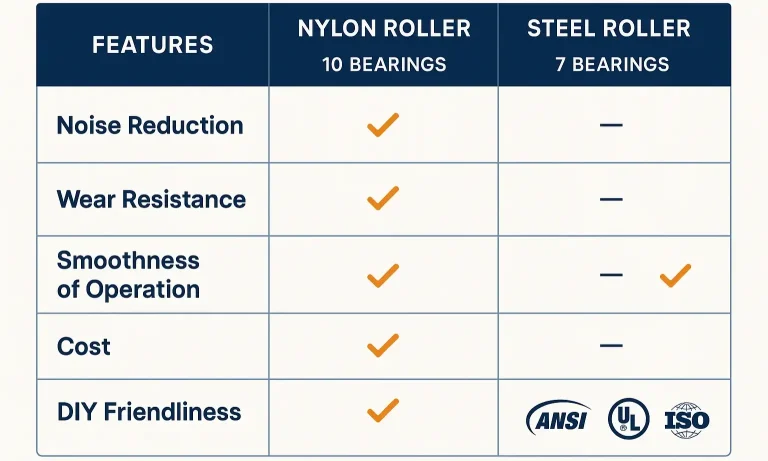
If the Wiggle Test revealed excessive play, the only solution is to replace the worn-out rollers. Simply applying more garage door lube won’t rebuild the worn-out bearings.
When you’re ready to replace garage door rollers, you’ll find a few common types:
- Standard Nylon Rollers (No Bearings): Basic, quiet, and inexpensive, but they wear out the fastest.
- Steel Rollers (With Bearings): Durable and long-lasting, but they can be noisier than nylon.
- Sealed Bearing Nylon Rollers: The best of both worlds. They offer the quiet operation of nylon with the durability of sealed ball bearings for a long, smooth life.
DIY or Call a Pro?
While replacing the upper rollers is a manageable task for a confident DIYer, the bottom rollers are a different story. The bottom brackets are connected to the high-tension lift cables. Mishandling them can result in serious injury or damage to your door.
- Consider DIY: If you’re only replacing rollers in the middle and upper hinges.
- Call a Professional: Always recommended for replacing the bottom rollers or if you’re uncomfortable with the task. A professional technician can ensure how to replace garage door rollers is done safely and correctly, while also inspecting the rest of your system for related wear and tear.
FAQ: Your Questions About Garage Door Rollers Answered
How much play is normal for a garage door roller?
A few millimeters of side-to-side movement is normal and allows the roller to move freely in the track. However, if you can wiggle it more than about a quarter-inch or it feels very loose and clunky, it’s a sign of excessive wear.
Can I just lubricate my rollers to fix the wobble?
No. Lubrication reduces friction and can quiet a noisy roller, but it cannot fix mechanical wear. If the bearings inside the roller are worn out, the wobble will remain. In fact, a lack of proper lubrication is often what accelerates bearing failure in the first place. Knowing how often should you lubricate your garage door can extend the life of your new rollers.
What causes garage door rollers to wear out?
Age and use are the primary factors. Most standard rollers are designed for about 10,000-15,000 cycles. Other factors include a lack of regular lubrication, exposure to dirt and moisture, and operating a door that is already out of balance, which puts extra stress on the rollers.
Will new rollers fix the gaps on the side of my door?
They can certainly help. If worn rollers have caused your door to shift and become misaligned, you may notice inconsistent garage door gaps on sides. Installing new, snug-fitting rollers will restore proper alignment and can help the door seal more evenly against the frame and weatherstripping.
From Wobble to Smooth Operation: What's Next?
That persistent, annoying garage door issue is often a symptom of a deeper problem. By learning to identify roller play, you’ve moved beyond temporary fixes and can now address the true cause of your door’s noise and misalignment.
Regular inspection using the 30-Second Wiggle Test can help you catch wear and tear early, before it leads to more costly repairs. If you’ve discovered your rollers are worn, the next step is a clear one. For those facing complex issues or needing local expertise, a professional service for repairs or garage door installation Hartford residents rely on can diagnose and fix any related problems safely. A smooth, quiet, and perfectly aligned garage door isn’t a luxury—it’s a sign of a healthy, well-maintained system.
You May Also Like
Beginner’s Guide to Garage Door Alignment: A DIY Homeowner’s Approach
A garage door is more than just an entry point to your home. It’s a key part of daily convenience. It plays a crucial role in your home's security. However, when it’s not working right, it can disrupt your routine.…
Published Date: Feb 19, 2025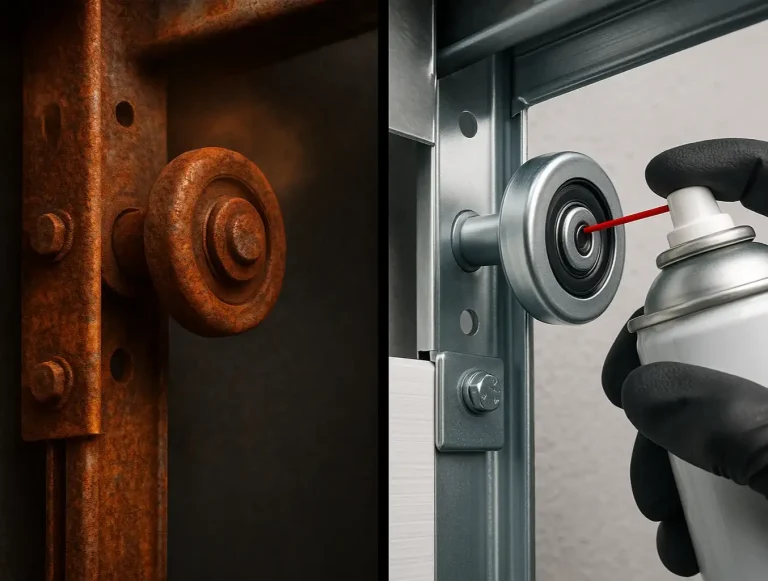
Fixing Rust on Garage Door Tracks and Rollers
Ever been jolted by a sudden grinding, squeaking, or shuddering noise as your garage door opens or closes? It’s a sound that makes you cringe, and for good reason. That noise isn't just an annoyance; it's a warning…
Published Date: Jan 23, 2026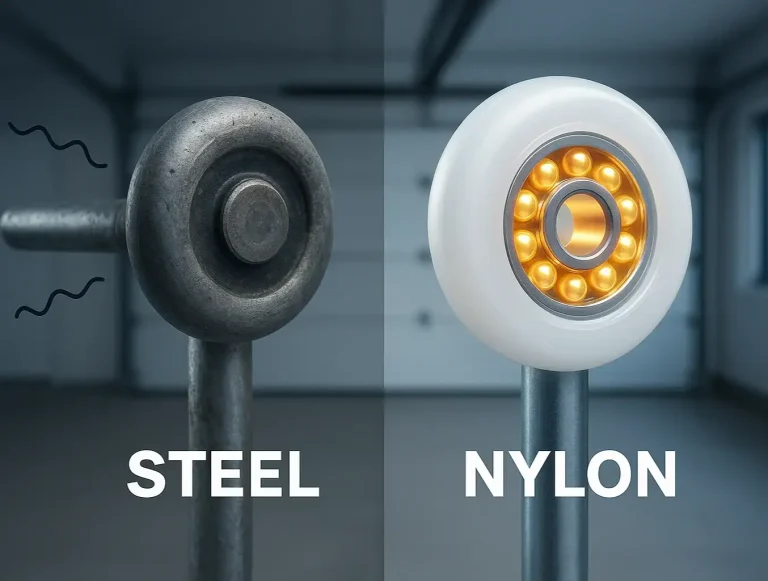
Steel vs. Nylon Garage Door Rollers: The Ultimate Guide to Lifespan
Ever stood in your driveway and winced as your garage door screeched its way open? That grating, metal-on-metal sound is a common complaint, and most people assume the solution is a simple choice: switch from steel…
Published Date: Jan 14, 2026