Garage Door Roller Replacement: Simple Fixes & Tips
Published: Dec 23, 2025
Is your garage door making strange noises or not gliding as it used to? It might be time for a garage door roller replacement. Worn-out rollers can strain your door’s system, cause jerky movement, and even damage the tracks. In this guide, we’ll walk you through simple fixes and helpful tips every homeowner should know. Whether you’re looking into a DIY garage door roller replacement or considering a professional solution, Up & Down Garage Doors is here with professional garage door repair services from experienced technicians.
Common Signs You Need Garage Door Roller Replacement
Before replacing the garage door rollers, it’s important to check for signs of wear. Ignoring these early warnings can lead to more serious damage or even safety hazards.
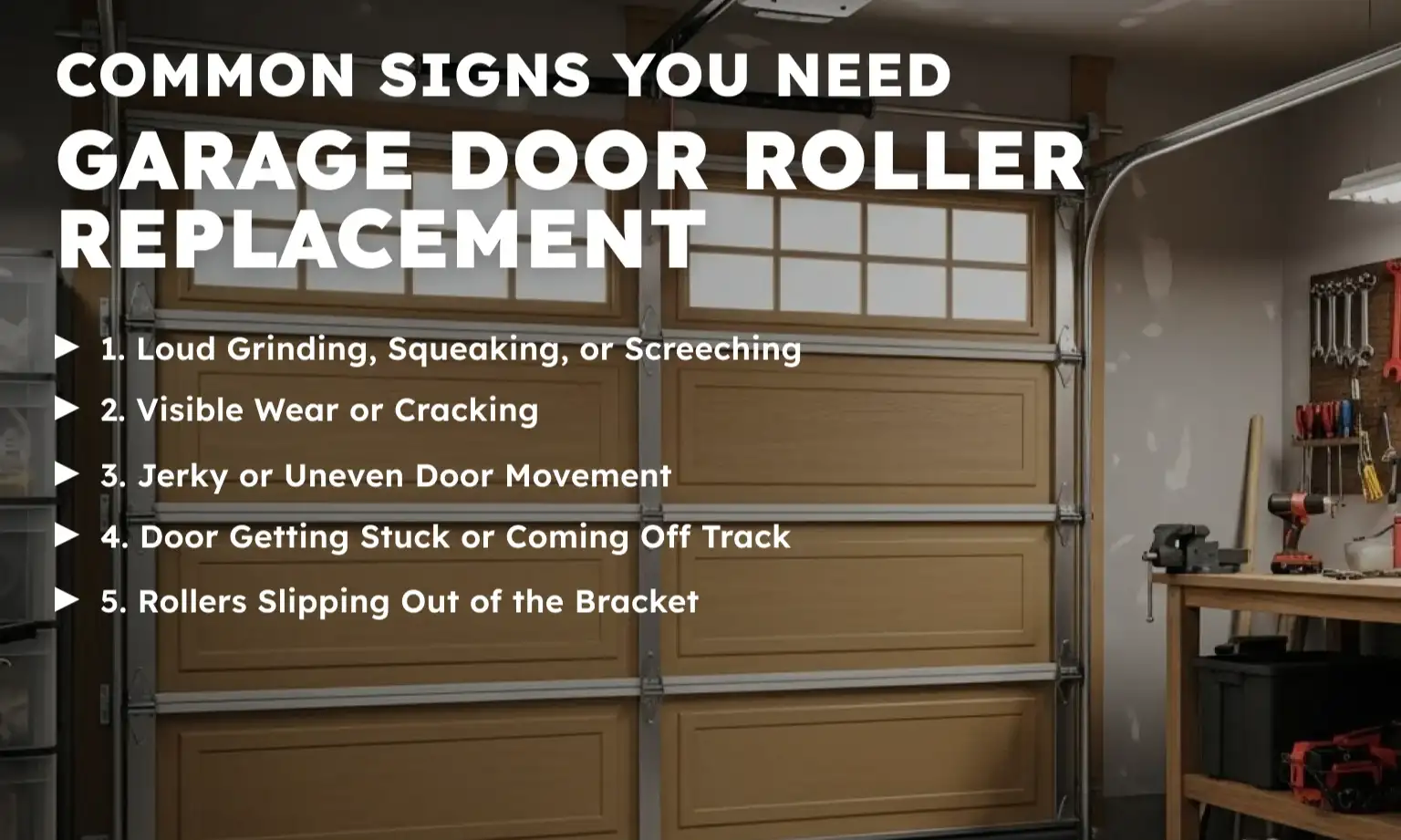
1. Loud Grinding, Squeaking, or Screeching
These noises usually mean the roller bearings are worn down and rubbing metal-on-metal. This is often the first noticeable sign that your rollers are nearing the end of their life.
2. Visible Wear or Cracking
Check for cracks, chips, or rust on steel rollers, or brittleness and breakage on nylon ones. Flat spots or deformities on the roller surface are also red flags.
3. Jerky or Uneven Door Movement
If your garage door moves in a shaky or hesitant way, one or more rollers may be seized or not spinning correctly. This strains the opener and can throw the door off balance.
4. Door Getting Stuck or Coming Off Track
When rollers are too worn or misaligned, the door may get stuck halfway or even jump the track — a safety issue that requires immediate attention.
5. Rollers Slipping Out of the Bracket
If a roller pops out of the garage door roller bracket, it compromises door stability. This often happens when both the roller and bracket are worn or loosened.
If you’re seeing one or more of these signs, your rollers are likely past their prime. Catching the issue early can save you time, money, and a potential emergency repair.
DIY or Not? Key Precautions Before Replacing Your Garage Door Rollers
Garage door rollers may look simple, but some — especially bottom rollers — carry serious tension and can be dangerous to handle without training. If you’re unsure whether to fix it yourself or call a pro, our garage door rollers installation overview explains the risks, safe DIY limits, and when expert help is the better option.
Safety First: Essential Prep Work
Here’s what to do before starting any garage door roller replacement:
- Disconnect the Power: Unplug the garage door opener from the outlet or shut off the dedicated circuit at the breaker. You don’t want the door moving unexpectedly while your fingers are near the tracks.
- Secure the Door: Use locking pliers (Vice-Grips) or heavy-duty C-clamps on both tracks. Place them just above a roller to ensure the door cannot slide down while you are working.
- Handle Spring Tension with Care: The bottom brackets are connected to the garage door’s lift cables, which are under immense tension from the springs. Never unscrew the bottom bracket unless you have been trained to release that tension safely.
When to Call a Professional
While changing a middle or top roller is often a straightforward DIY task, some issues require a specialist’s touch. It is safer to call a professional for these situations:
- Bottom Bracket Replacement: If the bracket holding the roller is damaged or needs removal.
- Misaligned Tracks: If your tracks are bent, rusted, or out of alignment, simply replacing the rollers won’t fix the underlying issue.
- Cable Issues: If the lift cables look frayed or have slipped off the drum.
The team at Up & Down Garage Doors handles everything from small fixes to full replacements, so you don’t have to risk it.
Step-by-Step: DIY Garage Door Roller Replacement
If you’re up for a DIY project, here’s a simple breakdown.
Step 1. Gather the Right Tools
Start by getting everything you’ll need. A garage door roller replacement tool kit is helpful, but most jobs can be done with basic tools:
- Flathead screwdriver
- Ratchet or socket wrench
- Pliers
- Silicone-based lubricant
- Safety gloves and glasses
Step 2. Measure the Rollers
Once you have your tools ready, measure your existing rollers to match the size — most standard doors use 2-inch rollers.
Step 3. Choose the Right Kit
Pick a garage door roller replacement kit with nylon rollers — they’re quieter and last longer than steel.
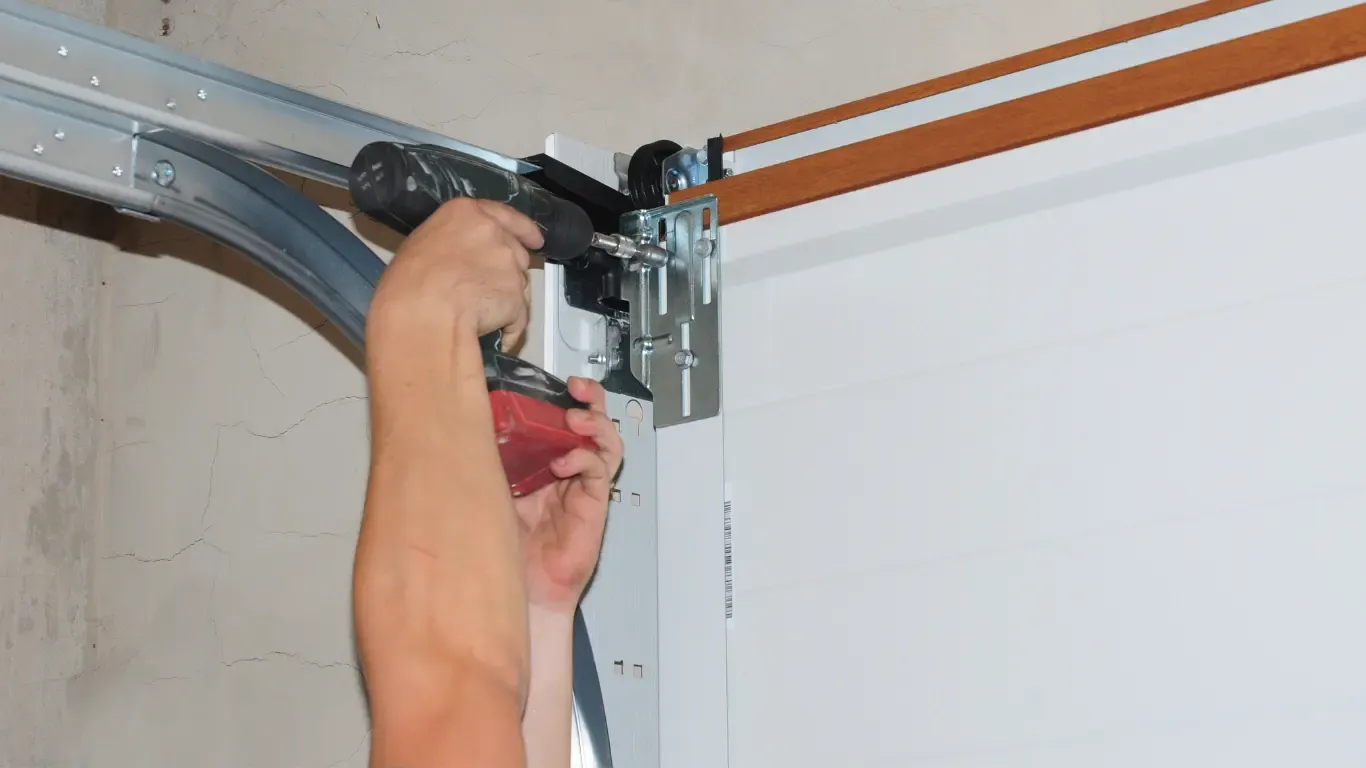
Step 4. Remove the Old Rollers
Open the door, carefully bend the track near the roller, and slide out the old one. Do not bend too far or damage the track.
Step 5. Install the New Rollers
Slide in the new roller, pop it into the hinge, and gently bend the track back.
Step 6. Test and Lubricate
Once all rollers are replaced, reconnect power and test the door. Apply garage door lubricant to each roller — not WD-40, which strips grease. Read our full guide on how to lubricate your garage door rollers for best results.
Expert Garage Door Roller Replacement by Up & Down Garage Doors
Replacing worn rollers is one of the easiest ways to extend the life of your garage door system and reduce daily noise. Whether you tackle it yourself or prefer a professional touch, choosing the right rollers and installing them safely matters.
At Up & Down Garage Doors, we work with homeowners and property managers to deliver reliable, long-lasting garage door solutions. From small fixes to full roller replacements, our garage door techs handle it all with care and precision. Need help with your garage door rollers? Contact us today to book your service or request a quote — our team will do its best to make your garage door operate as it should.
FAQ: Garage Door Roller Replacement
How to replace garage door rollers without bending the track?
Use the hinge pivot method: remove the hinge bolts, slide out the roller with the hinge, then reattach it with the new roller in place.
What are the best garage door rollers for quiet operation?
Nylon rollers with sealed ball bearings are the quietest and ideal for homes.
Can I replace just one garage door roller?
It’s best to replace all rollers at once since worn ones tend to wear out together.
Do I need a garage door roller replacement tool?
While not required, a tool kit makes the job safer and faster, especially for tight tracks.
What’s the difference between a roller and a garage door roller bracket?
The roller is the wheel that glides along the track, while the garage door roller bracket holds the roller in place on the door.
You may also like