Why Is My Garage Door Rusting Only at the Bottom
Published: Jan 21, 2026
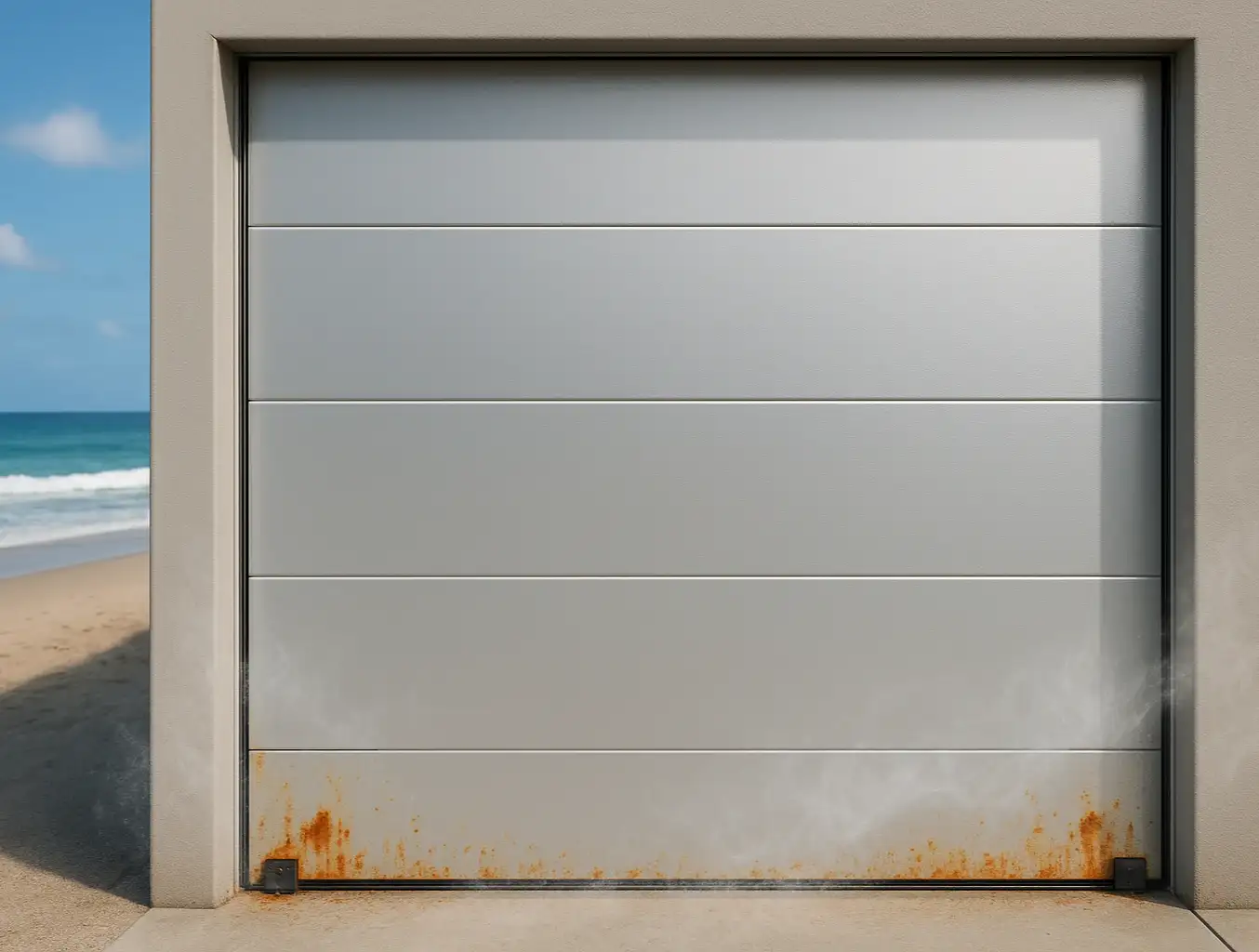
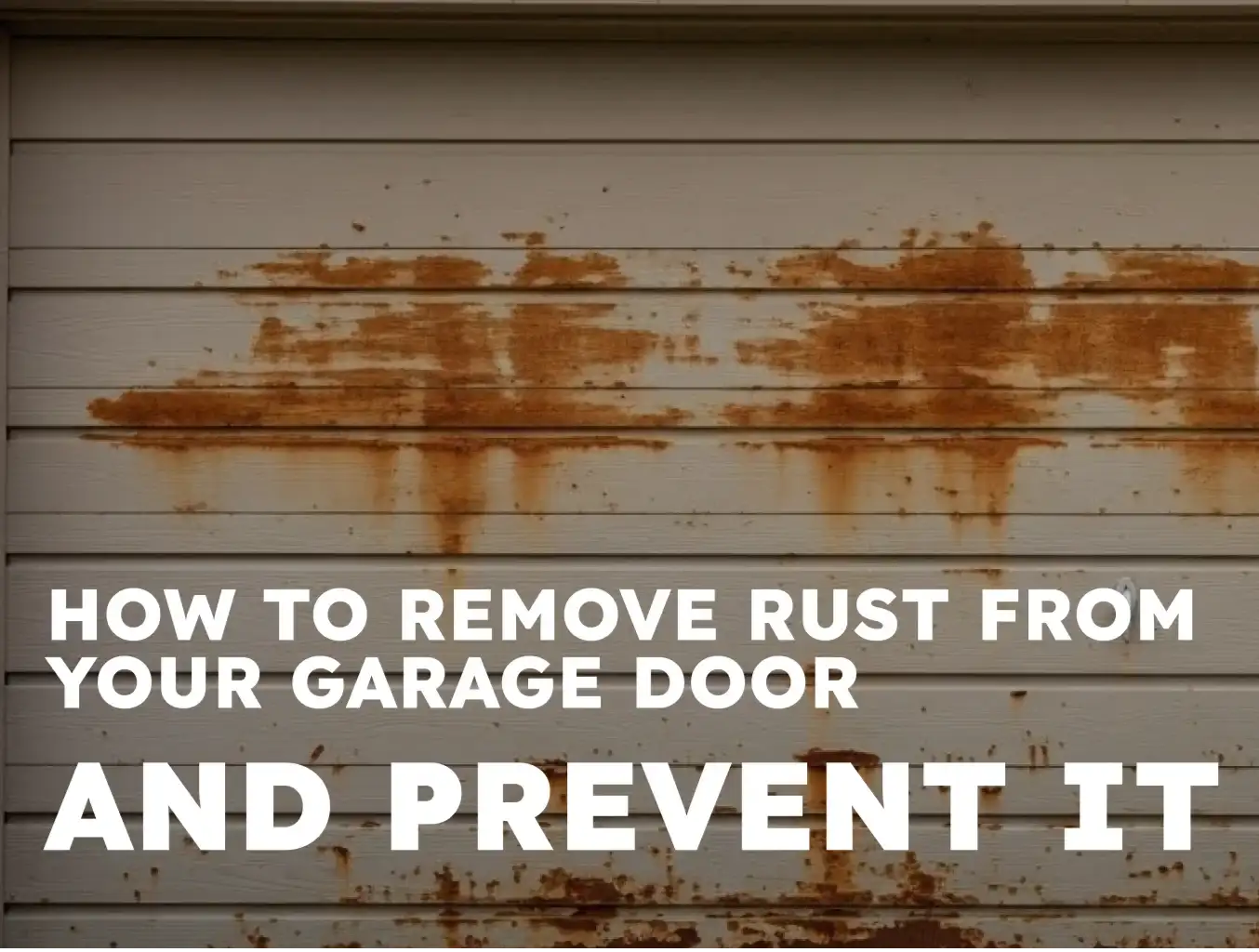
You see it every time you pull into the driveway. Those unmistakable, ugly orange-brown spots creeping along the bottom of your garage door. It starts small, but it seems to be growing, and you can’t help but wonder why it’s only happening there. The rest of your door looks perfectly fine.
It’s a frustratingly common problem, and it leaves many homeowners scratching their heads. Is the door defective? Is it a sign of a bigger issue?
Before you jump to conclusions, let’s start with a simple diagnostic. That discoloration might not even be what you think it is.
Is It Rust, or Just Pollen? A 10-Second Test
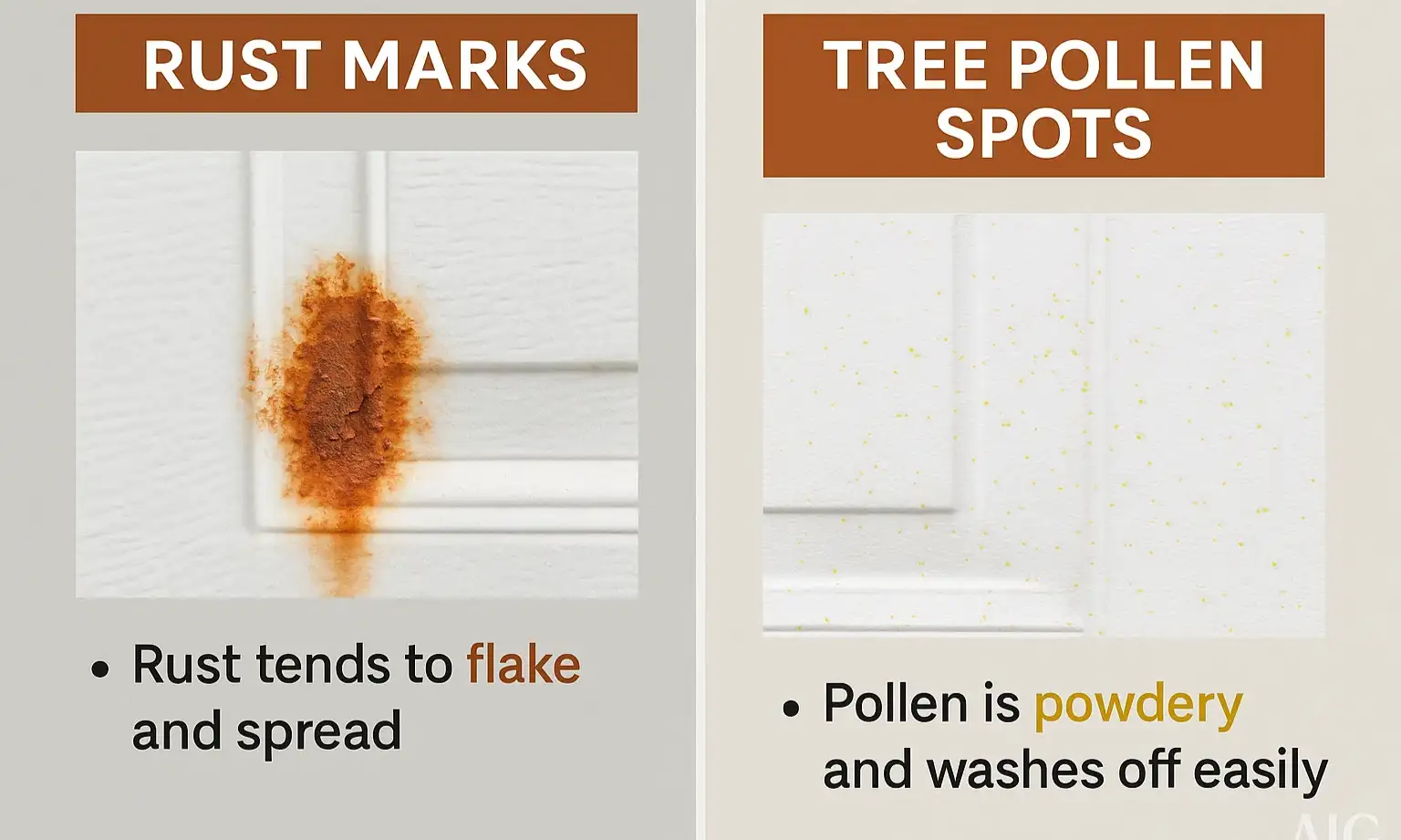
In some climates, particularly in damp or wooded areas, what looks like the beginning of rust is actually a buildup of tree pollen or dirt that has stained the door. This is great news, as it's a simple cleaning job, not a corrosion problem.
Here’s how to tell the difference in seconds:
- The Wipe Test: Dampen a clean rag with a bit of soapy water. If the reddish-brown stain wipes away, revealing clean paint underneath, you’re likely dealing with pollen or dirt.
- The Feel Test: Run your finger over the spot (carefully!). Rust will feel gritty and rough, and you might even feel the paint flaking or bubbling. A surface stain will feel relatively smooth.
If you've confirmed it's rust, your next question is probably, "Why just the bottom?" The answer is simple: water.
The Real Culprit: Why the Bottom Panel is Rust's Favorite Target
Rust, or iron oxide, is the result of a chemical reaction between iron (found in steel), oxygen, and water. While your entire garage door is exposed to oxygen, the bottom panel is uniquely vulnerable to prolonged contact with moisture.
This section of your door lives in a "splash zone" where it constantly battles the elements:
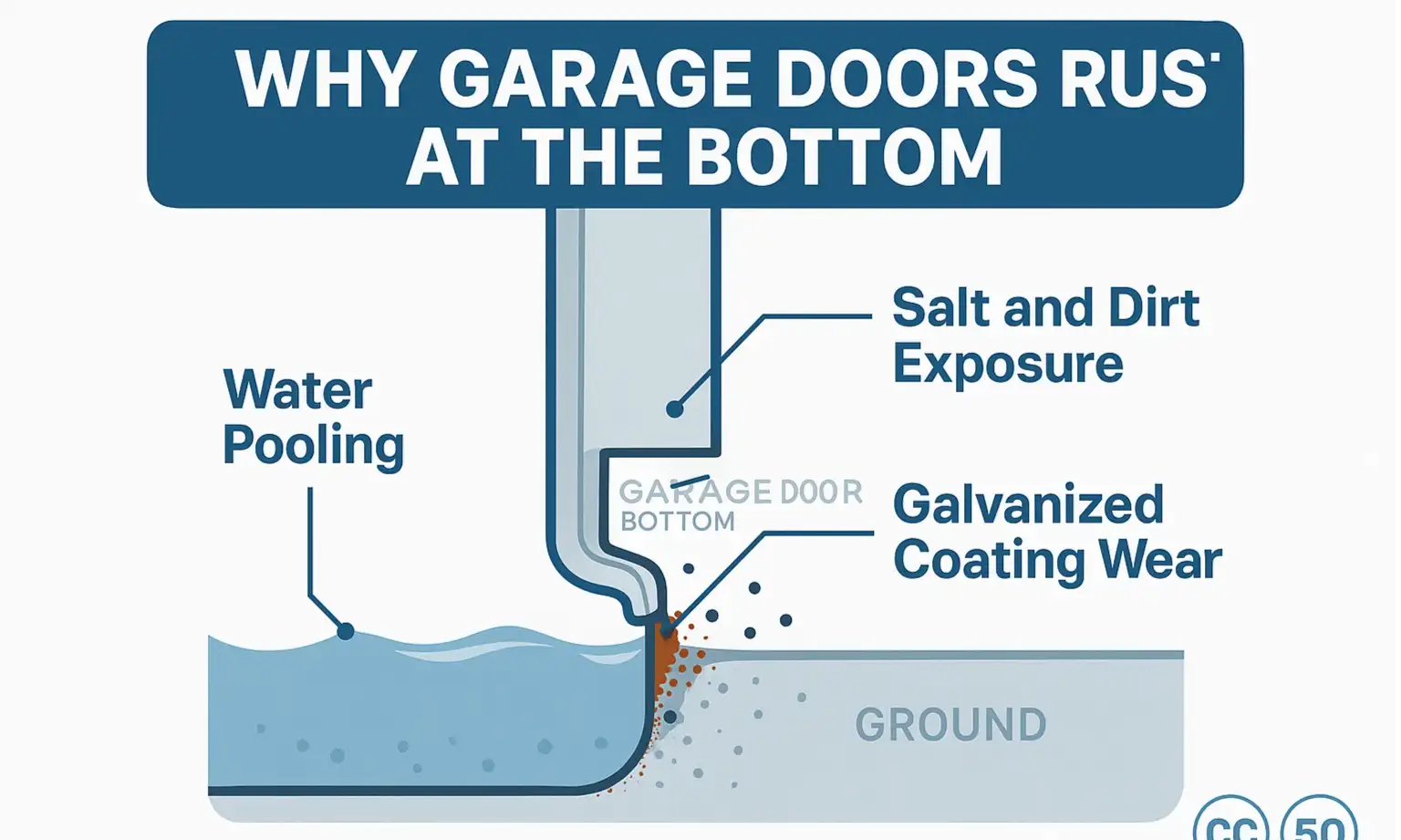
- Water Pooling: Rainwater, snowmelt, or water from washing your car naturally flows downward and pools at the base of your garage door.
- Ground Contact: Debris like wet leaves, mulch, and soil can get trapped against the bottom of the door, holding moisture against the metal for extended periods.
- Salt and Chemicals: In winter, road salt and de-icing chemicals get kicked up by your tires and coat the bottom of the door. Salt is a powerful corrosive agent that dramatically accelerates the rusting process.
- Worn Weather Seal: The rubber seal at the very bottom of your door is meant to keep water out. When it cracks or wears down, it can act like a sponge, trapping water directly against the metal edge of the door panel.
This constant exposure creates the perfect storm for rust to form, while the upper panels of your door stay comparatively high and dry.
But It's Galvanized! The 'Rust-Resistant' vs. 'Rust-Proof' Myth
"Wait a minute," you might be thinking. "I bought a steel door specifically because it was galvanized and rust-resistant." This is a common and completely understandable point of confusion. It’s crucial to understand the difference between "rust-resistant" and "rust-proof."
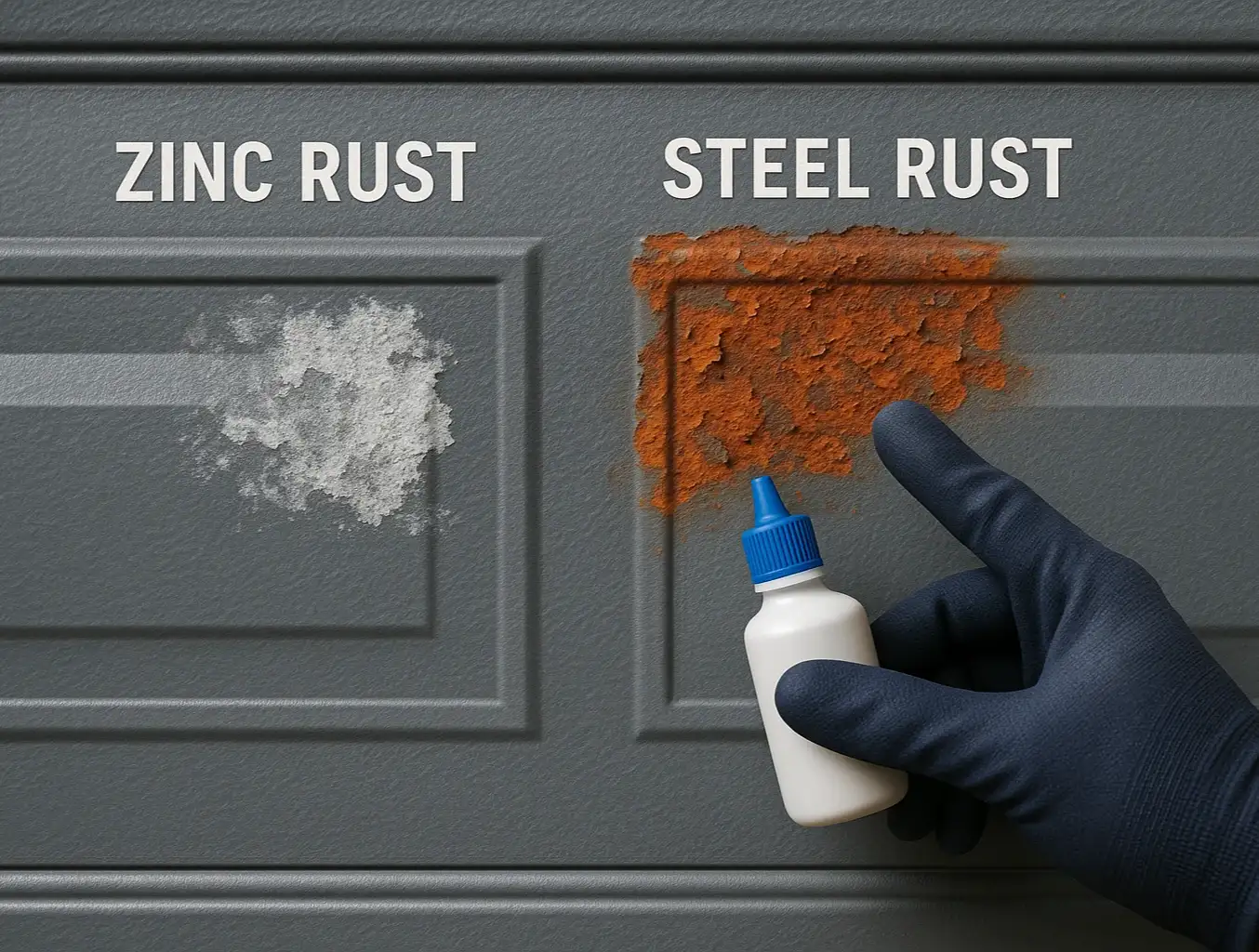
Most modern steel garage doors are galvanized, meaning they are coated with a protective layer of zinc. Zinc corrodes much, much slower than steel, so it acts as a sacrificial barrier. This is one of the key steel garage door benefits.
However, this zinc shield isn't invincible. It can be compromised by:
- Scratches and Dings: A stray rock from the lawnmower or a bump from a bicycle can scratch through the paint and the zinc coating, exposing the raw steel underneath.
- Chemical Exposure: Salt and other harsh chemicals can eat away at the zinc layer over time.
- Age: Eventually, after years of exposure, the zinc layer will naturally wear thin, especially in high-contact areas like the bottom edge.
Once the steel is exposed, rust is inevitable. This is why knowing how to remove rust from a garage door made of galvanized steel is so important—it's about treating the compromised area to stop the spread.
Your Action Plan: A Definitive DIY Guide to Fixing Bottom Panel Rust
Caught early, most bottom-panel rust is a manageable DIY project. We'll break it down into two levels, from a quick fix for minor spots to a full restoration for more advanced rust.
Before You Start - Safety First! Always wear safety glasses, gloves, and a dust mask when sanding or working with cleaning agents and rust converters.
Level 1: The Vinegar Method (For Light Surface Stains)
If you have very light surface rust without any paint bubbling or flaking, this gentle method can work wonders.
- Clean the Area: Wash the rusted section with soap and water, then dry it completely.
- Apply White Vinegar: Soak a cloth or sponge in white vinegar and apply it generously to the rust spots. Let it sit for about 30 minutes. The acetic acid will help dissolve the rust.
- Scrub Gently: Use a non-abrasive scouring pad or a soft-bristled brush to gently scrub the area.
- Rinse and Dry: Wipe the area clean with a damp cloth to remove the vinegar and rust residue, then dry it thoroughly.
- Wax for Protection: Apply a coat of car wax to the treated area to help protect it from future moisture.
Level 2: The Full Restoration (For Flaking & Deeper Rust)
For more significant rust with bubbling or flaking paint, you need to be more aggressive to ensure you remove all the corrosion. This guide explains how to remove rust from a garage door and refinish the area properly.
- Sand the Rust Away: Start with medium-grit sandpaper (around 120-grit) to remove all loose paint and visible rust. Work your way down to the bare, shiny metal. Feather the edges into the surrounding paint.
- Fine-Sand the Surface: Switch to fine-grit sandpaper (around 220-grit) to smooth the area and create a good surface for the primer to adhere to.
- Clean Thoroughly: Wipe the entire area with a tack cloth or a rag dampened with mineral spirits to remove all dust and sanding residue. Let it dry completely.
- Apply a Rust Converter/Inhibiting Primer: This is the most important step. Apply a thin, even coat of a high-quality metal primer that is specifically designed to treat rust. This chemically converts any remaining microscopic rust particles and seals the metal from moisture.
- Paint to Match: Once the primer is fully cured (check the can for times), apply two thin coats of a high-quality exterior-grade paint that matches your garage door color.
AVOID THIS: Don't just paint over the rust! This is one of the most common mistakes to avoid with garage door repair. Painting over rust is like putting a bandage on a deep wound. The rust will continue to grow and spread underneath the new paint, eventually causing it to bubble and flake off, leaving you with a bigger problem than you started with.
Repair or Replace? A Simple Framework for Making the Right Call
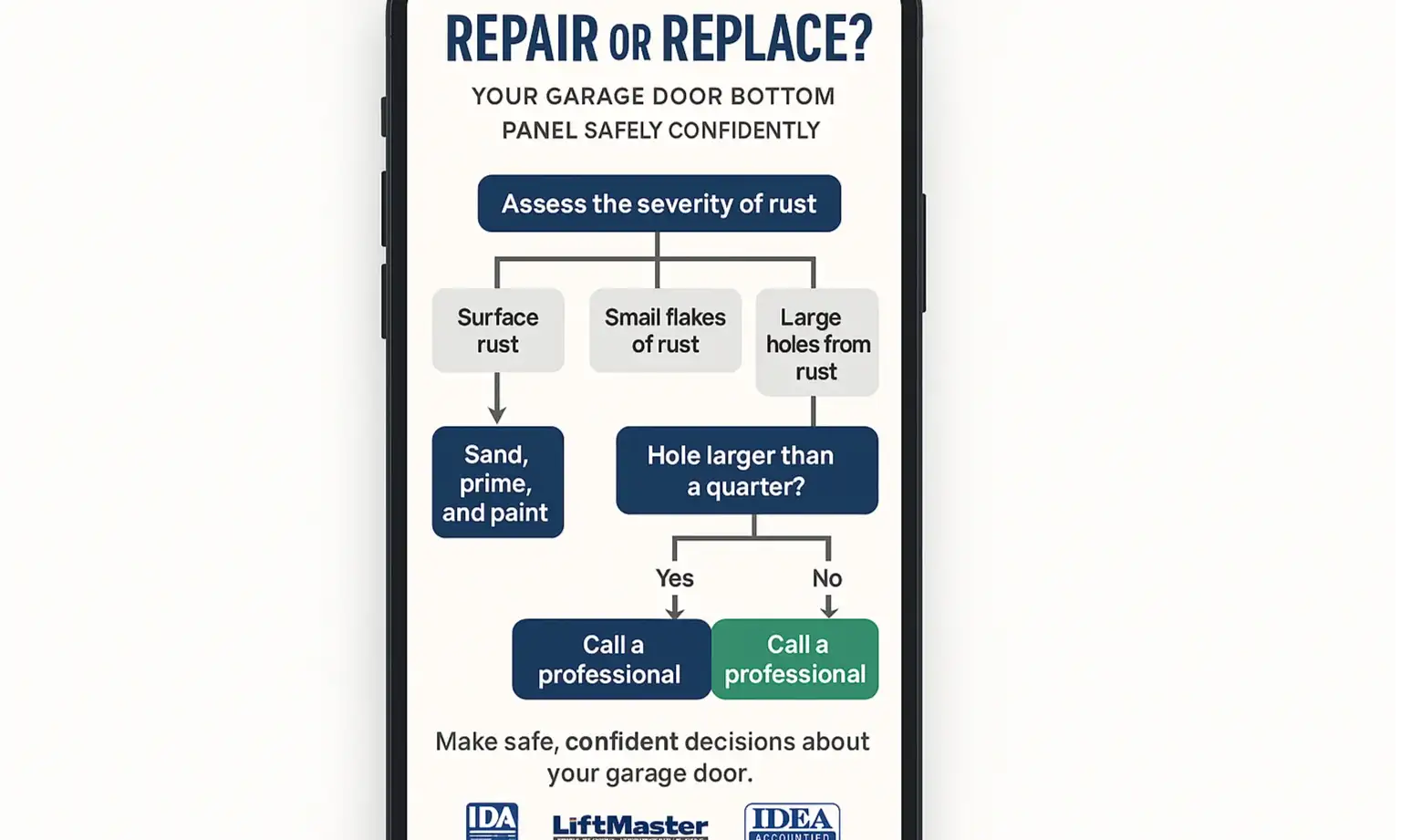
So, when does a DIY repair cross the line into needing a professional panel replacement? If the rust is severe, repairing it may only be a temporary fix.
Use this simple flowchart to help you decide.
If you have holes larger than a coin, the panel feels soft or flimsy, or the bottom edge is visibly warped, it's time to call a professional. The structural integrity of the panel has been compromised, and a simple patch-and-paint job won't fix it.
The 5-Step Rust Prevention Plan: Keep Your Door Healthy for Years
The best way to deal with rust is to stop it before it starts. Integrating a few simple habits into your home maintenance routine can save you a lot of time, effort, and money down the road.
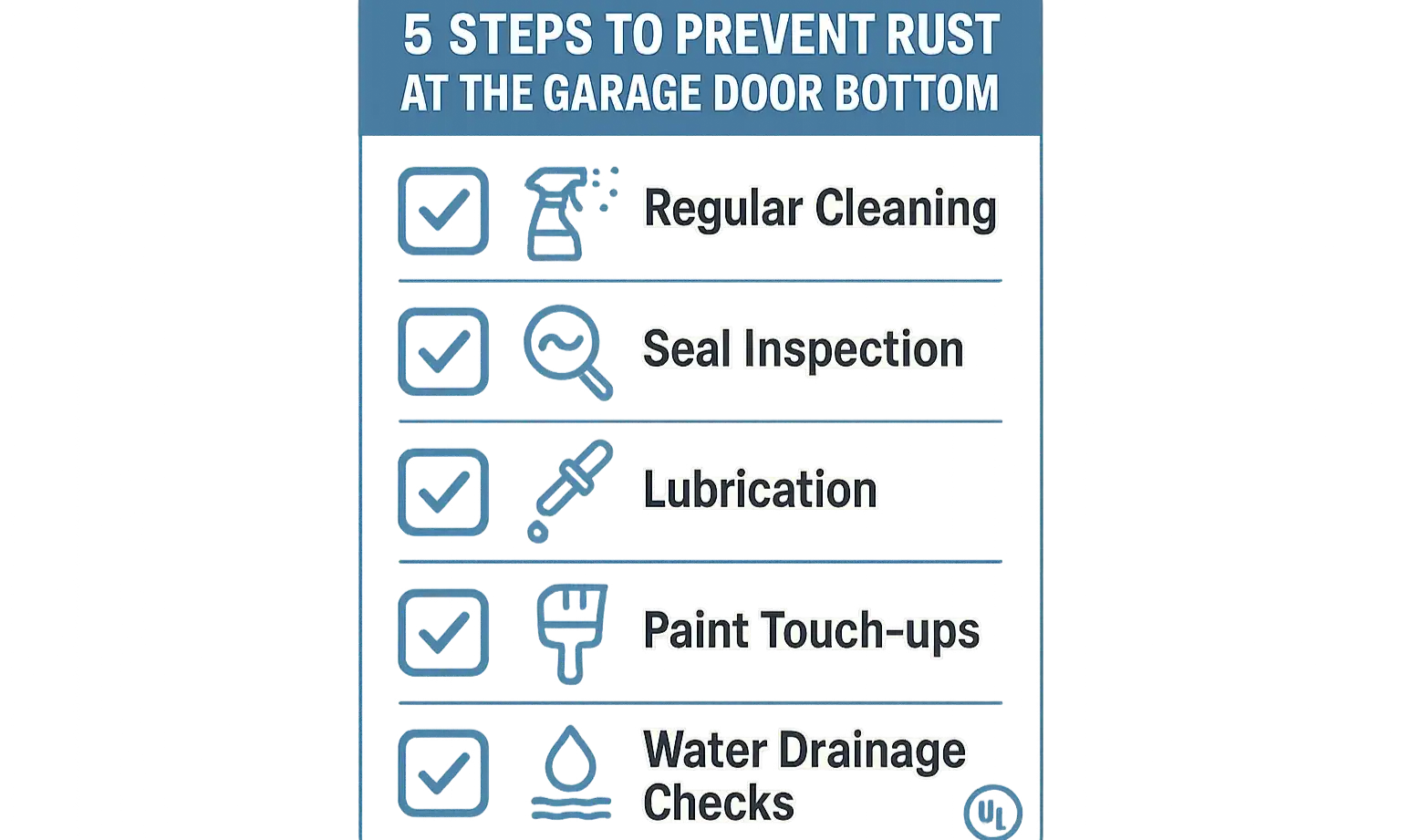
- Wash & Inspect Regularly: At least twice a year (especially after winter), give your garage door a gentle wash with mild soap and water to remove dirt, grime, and corrosive salt. This is also a great time to inspect the bottom panel for any new scratches or chips.
- Check Your Bottom Seal: The rubber seal is your door's first line of defense. If it's cracked, brittle, or flattened, it's not doing its job. A worn seal can trap water and cause both rust and garage door gap insulation issues. Thankfully, replacing garage door bottom seal components is a straightforward project that makes a huge difference.
- Ensure Proper Drainage: Make sure your driveway and the area around your garage door are graded to direct water away from the foundation. Keep gutters clean to prevent overflow that can pool at the base of the door.
- Touch-Up Scratches Immediately: Keep a small can of touch-up paint from your door's manufacturer. The moment you see a scratch, clean it and apply a dab of paint to seal the metal from moisture.
- Perform Routine Maintenance: A healthy, well-functioning door is more resistant to wear and tear. A regular garage door maintenance routine, including lubricating moving parts, ensures everything operates smoothly and reduces unnecessary stress on the panels.
Need more information?
Get a free quote
Frequently Asked Questions About Garage Door Rust
Can I just use a rust-oleum type paint directly on the rust?
While some products are marketed as "paint-over-rust" solutions, they work best on very light, clean rust. For the best and most long-lasting results on a garage door, it's always recommended to remove as much of the physical rust as possible by sanding first, then using a dedicated rust-inhibiting primer before painting.
What kind of paint is best for a garage door?
Use a high-quality, exterior-grade acrylic latex paint. It's durable, flexible enough to handle the temperature changes and vibrations of a garage door, and offers excellent protection against moisture.
How long does a steel garage door typically last?
With proper maintenance, a quality steel garage door can last 20 to 30 years or even longer. Regular cleaning and rust prevention are key to maximizing that lifespan.
Is a little bit of rust really a big deal?
Yes. Rust is like a cavity; it never gets better on its own. A small, untreated spot will continue to grow, spreading under the paint and silently eating away at the steel. Eventually, it will compromise the structural integrity of the panel, turning a small, fixable spot into a major, expensive problem.
Your Next Step to a Rust-Free Garage Door
Seeing rust on your garage door bottom can be disheartening, but it’s rarely a lost cause. By understanding why it happens and taking a proactive approach, you can effectively treat existing rust and prevent it from coming back.
Remember, the key is managing moisture. A few minutes of preventative maintenance each season is infinitely easier and more affordable than a major restoration project or a full panel replacement. Keep an eye on that bottom panel, and you’ll keep your entire garage door looking and functioning its best for years to come.
You may also like