Our company logo

State

Fixing Rust on Garage Door Tracks and Rollers


Published: Jan 23, 2026

Ever been jolted by a sudden grinding, squeaking, or shuddering noise as your garage door opens or closes? It’s a sound that makes you cringe, and for good reason. That noise isn't just an annoyance; it's a warning sign. Your garage door is trying to tell you something important about its health, and often, the culprit is a small, creeping problem you might not have noticed: rust.

Many homeowners see a bit of rust on their garage door tracks or rollers and dismiss it as a cosmetic issue. But that reddish-brown coating is a performance killer. It creates friction, forcing your entire system to work harder and leading to bigger, more expensive problems down the line. The good news? You can often tackle this problem yourself. Understanding what's happening and why it matters is the first step toward a smoother, quieter, and longer-lasting garage door system. If you're looking for a more general guide to a noisy garage door fix, we have you covered, but here we’ll focus specifically on the damage caused by rust.

Foundation: The 'Why' Before the 'How'


Before you grab a can of spray and a wire brush, let's have a quick coffee-talk chat about what's actually going on. To fix a problem, you first have to understand it. Your garage door isn't one single part; it's a team of components working together, and the tracks and rollers are the MVPs of smooth movement.

Anatomy 101: A simple, annotated diagram of the track, rollers, and hinges
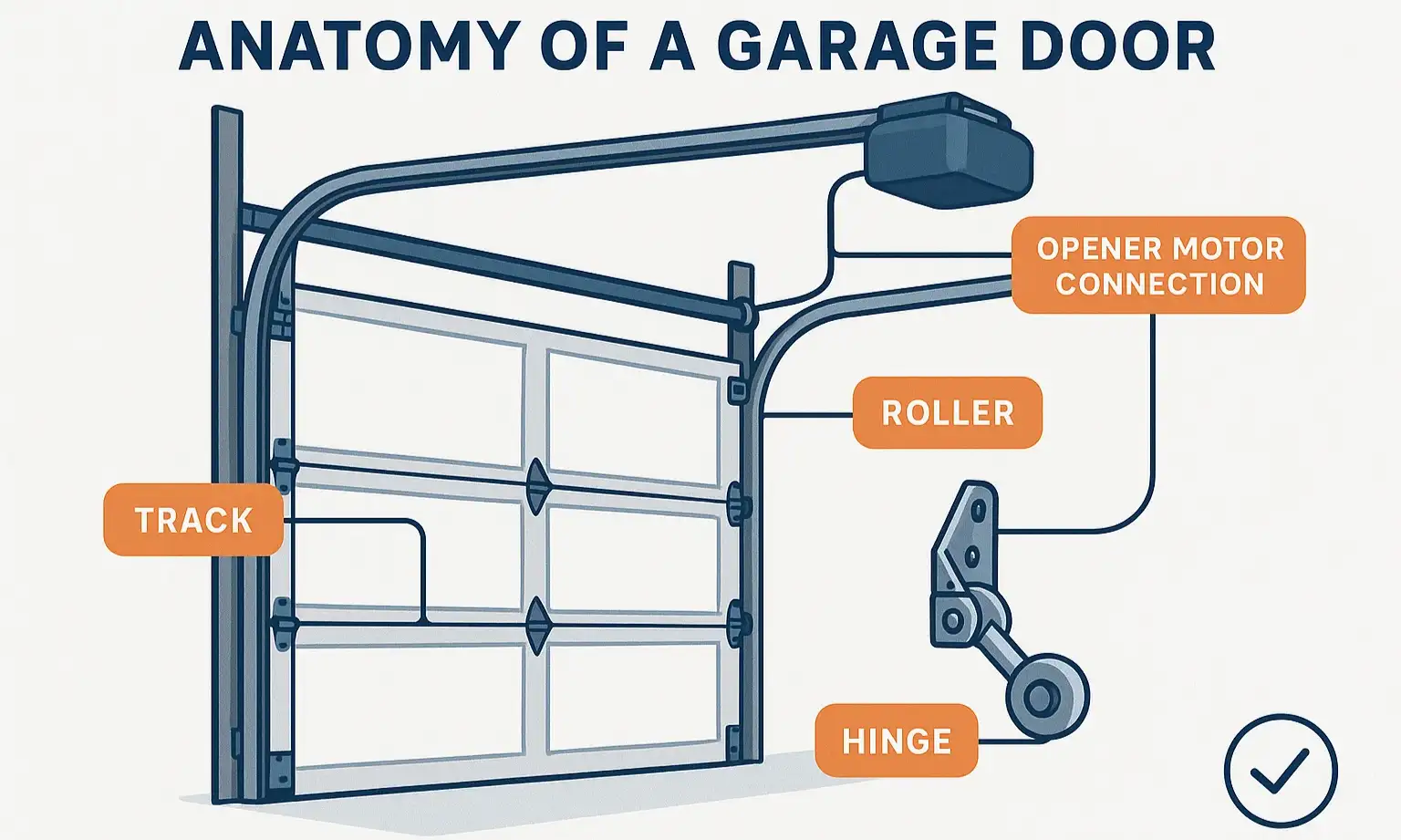
The tracks are the metal pathways that guide your garage door up and down. The rollers are the small wheels, typically made of steel or nylon, that sit within these tracks and allow the door to move. They are connected to the door panels via hinges. When everything is clean and properly aligned, the rollers glide effortlessly.
Anatomy of a Garage Door System: Understanding Tracks and Rollers to Prevent Rust Damage and Ensure Smooth Operation

The Vicious Cycle: How Rust Hijacks Your Garage Door's Performance

Rust forms when the metal on your tracks and steel rollers is exposed to moisture and oxygen—a common occurrence in garages, especially in humid climates or areas with heavy rain and snow.
Here’s the chain reaction it triggers:

  1. Friction is Born: Rust isn’t smooth. Its abrasive surface creates immense friction, forcing the rollers to scrape and drag instead of glide.
  2. The System Strains: Your garage door opener is designed to lift a specific, balanced weight. When it has to fight against friction, it puts a heavy strain on the motor, gears, and chain or belt.
  3. Damage Spreads: This constant strain can lead to premature wear on the opener, damage to the rollers themselves, and can even throw off the alignment of your door. That initial grinding sound evolves into jerky movements, a door that struggles to open, or one that stops entirely.
Ignoring rust on your tracks is like driving a car with the parking brake partially engaged. Sure, it might move, but you're causing system-wide damage with every trip.
Anatomy of a Garage Door System: Understanding Tracks and Rollers to Prevent Rust Damage and Ensure Smooth Operation

Building: The Step-by-Step Fix (The 'How')


Ready to restore peace and quiet? This process is straightforward, but taking your time and doing it right is key.

Safety First & Tools You'll Need

Before you do anything, you must prioritize safety. You are working with a large, heavy object.
! IMPORTANT SAFETY WARNING !
Disconnect Power: Unplug your garage door opener from the electrical outlet. You do not want the door to activate while you are working on it.
Engage Manual Mode: Pull the red emergency release cord to disconnect the door from the opener. This will allow you to move the door by hand. For more details, consult our guide on manual garage door safety.
NEVER Touch High-Tension Components: Do not attempt to adjust, remove, or repair the garage door springs or the red-painted cables and brackets. These are under extreme tension and can cause severe injury.
Your Toolkit:
  • Sturdy ladder
  • Gloves and safety glasses
  • Bucket of warm water and a few drops of dish soap
  • Several clean cloths or rags
  • Wire brush or steel wool
  • White vinegar in a spray bottle
  • A high-quality, garage-door-specific lubricant (lithium or silicone-based)
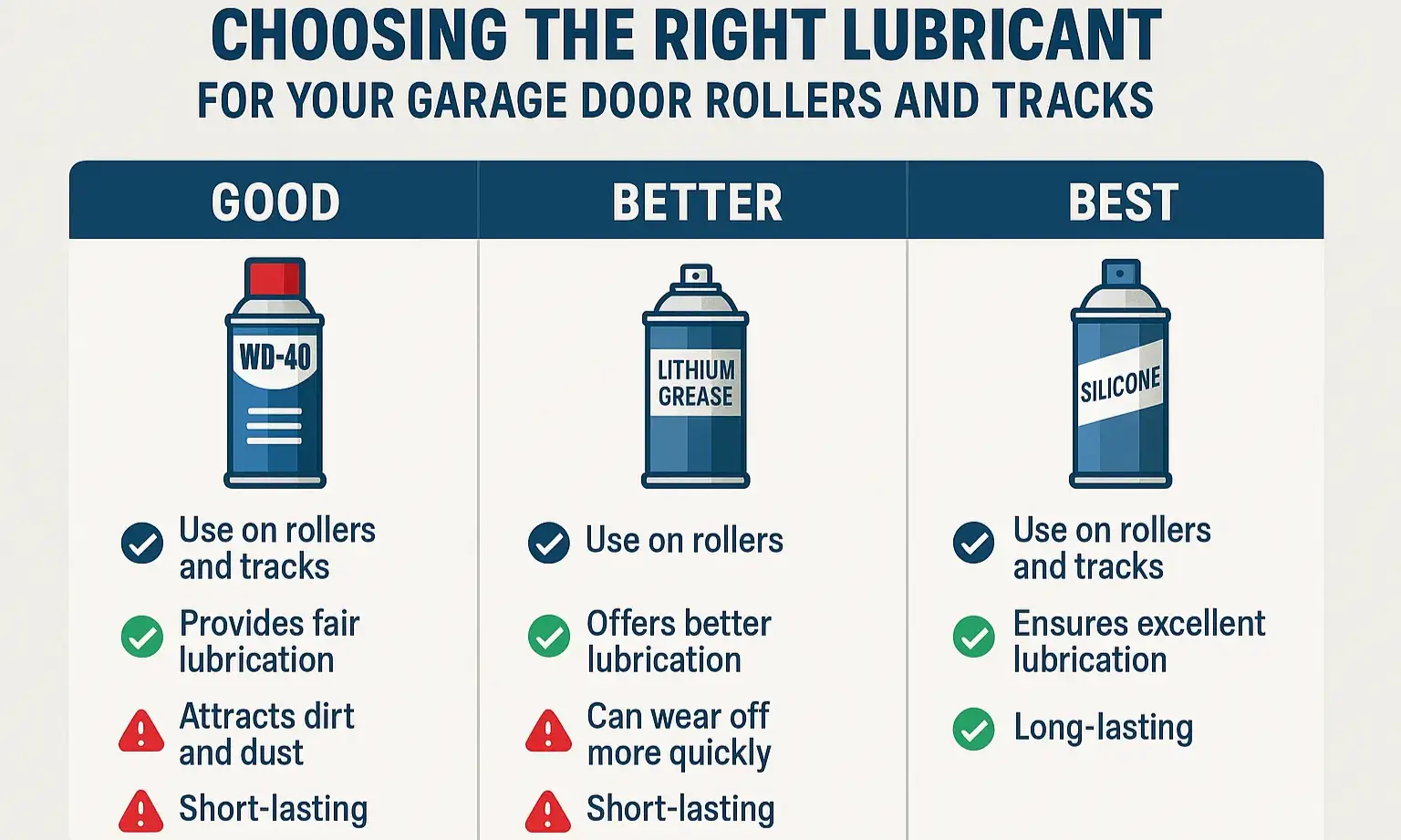
Lubricant Comparison: Understand Which Garage Door Spray Safely Protects Your Tracks and Rollers and Why WD-40 Isn’t the Answer

Step 1: The Clean-Up

You can't treat the rust until you clear away the grime. Open the garage door and, starting from the bottom, use a damp cloth to wipe down the inside of the tracks. You’ll be surprised at how much dirt, cobwebs, and debris accumulate here. This gunk alone can cause performance issues.

Step 2: Rust Removal

For light surface rust, this is where the vinegar comes in.

  1. Spray the white vinegar directly onto the rusted areas of the track.
  2. Let it sit for 5-10 minutes. The acetic acid will help break down the rust.
  3. Use your wire brush or steel wool to scrub the rust away. Work in small sections.
  4. Wipe the track clean with a fresh, dry cloth to remove all rust particles and vinegar residue.
If the rust is deep, flaking, or has eaten through the metal, the track may be compromised and require replacement.

Step 3: Lubrication - The Right Way

This is the most misunderstood part of garage door maintenance. The goal is to lubricate the moving parts, not the track itself. Lubricating the track creates a sticky surface that attracts even more dirt, quickly undoing all your hard work.
Debunking the WD-40 Myth: Many people reach for a can of WD-40, but this is a common mistake. WD-40 is a solvent and water displacer, not a long-term lubricant. It can clean parts, but it evaporates quickly and leaves a residue that attracts dust, creating a gritty paste that gums up the rollers.
Instead, choose a lubricant specifically designed for garage doors, such as a white lithium grease or a silicone-based spray.
Here’s how to do it correctly:
  1. Target the Rollers: Lightly spray the lubricant on the stems of the rollers where they connect to the hinges.
  2. Lubricate the Hinges: Apply a small amount of spray to all the door's hinges.
  3. Work it In: After applying the lubricant, manually open and close the door a few times to distribute it evenly and work it into the moving parts.
Lubricant Comparison: Understand Which Garage Door Spray Safely Protects Your Tracks and Rollers and Why WD-40 Isn’t the Answer
For a deeper dive into this topic, explore our quick guides on how to lubricate garage door systems and the specifics of lubricating garage door rollers.

Mastery: Prevention and When to Call a Pro
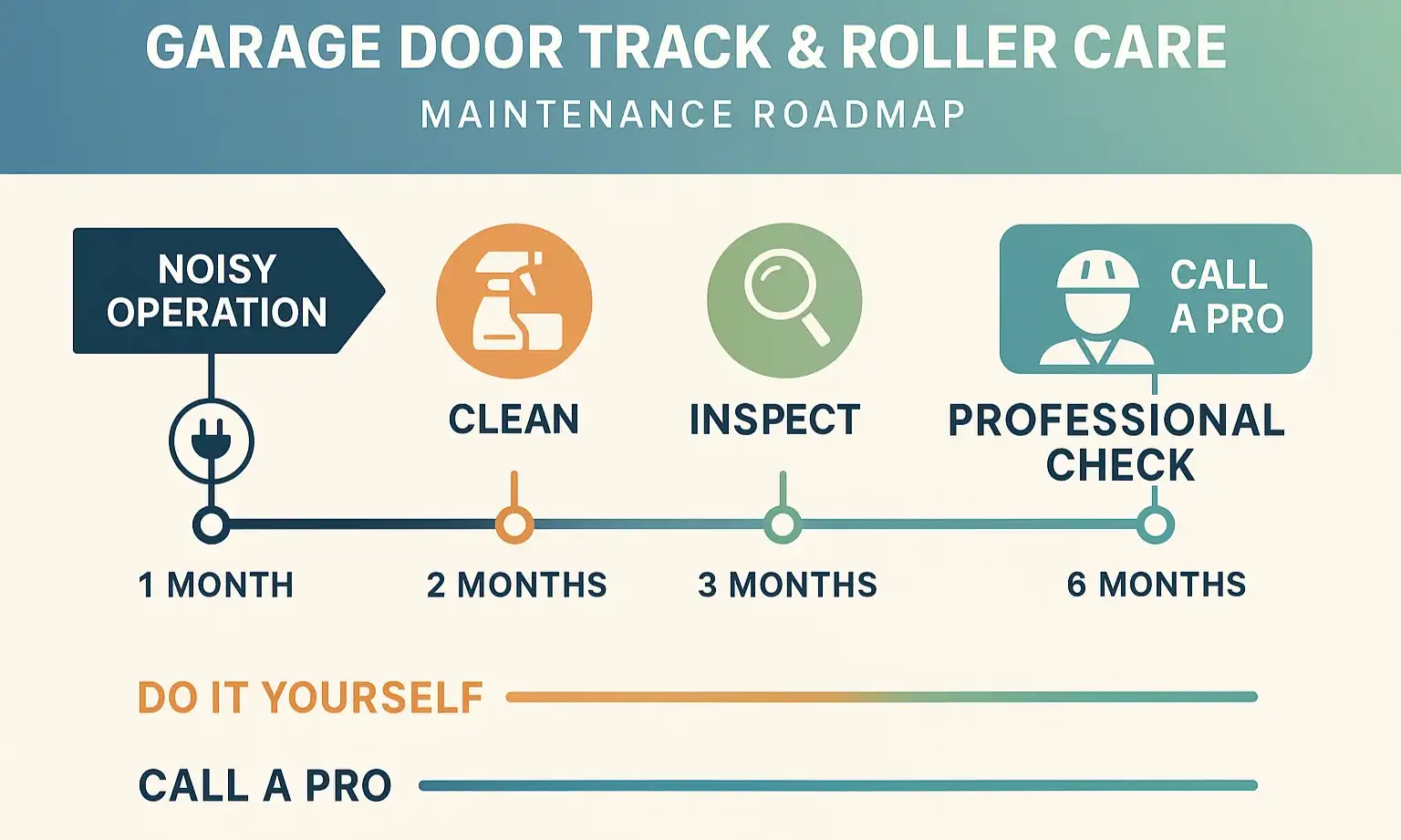

Fixing the current problem is great, but preventing it from coming back is even better. Regular garage door maintenance is the key to longevity and performance.
Your 6-Month Garage Door Maintenance Roadmap: Prevent Rust, Avoid Costly Repairs, and Know When to Call a Professional
You've cleaned the rust, but sometimes the damage is already done. It's crucial to know when a DIY fix isn't enough. Call a professional if you notice:

  • Bent or Damaged Tracks: If a track is dented or bent, no amount of cleaning will fix it. Trying to bend it back yourself can cause serious alignment issues. A professional will need to handle the garage door track installation correctly.
  • Deep, Flaking Rust: If the metal is corroded and brittle, the structural integrity is compromised.
  • Worn or Broken Rollers: If your rollers are cracked, wobbly, or seized up, they need to be replaced. A technician can help you choose and safely replace garage door rollers.
Your 6-Month Garage Door Maintenance Roadmap: Prevent Rust, Avoid Costly Repairs, and Know When to Call a Professional

Need more information?

Frequently Asked Questions (FAQ)


How often should I clean and lubricate my garage door tracks?

A good rule of thumb is to inspect and clean them twice a year—once in the spring and once in the fall. If you live in a particularly dusty or coastal area with salty air, you may want to check them quarterly.

Can I just spray lubricant on the rust without cleaning it first?

No, this is a bad idea. Spraying lubricant over dirt and rust creates a gritty sludge that will make the problem worse. Always clean the components thoroughly before lubricating.

What's the difference between steel and nylon rollers?

Steel rollers are durable but are much louder and require regular lubrication on their ball bearings. Nylon rollers are significantly quieter and often have sealed bearings, making them a lower-maintenance and popular upgrade.

My rust seems to be on the door panels, not the tracks. What should I do?

Rust on the door panels is a different issue, often caused by scratches or exposure to salt and chemicals. The cleaning process is different, and you can learn more about how to remove rust from a garage door panel in our dedicated guide.

A Smooth Finish


That disruptive grinding noise is more than just a nuisance—it’s a cry for help from one of the hardest-working features of your home. By spending just a little time on cleaning and proper lubrication, you can silence the noise, reduce strain on your entire system, and extend the life of your garage door opener.
While this guide empowers you to handle routine maintenance, always remember to trust your judgment. If a track is bent, a roller is broken, or you feel at all uncomfortable with the process, don't hesitate to call in the professionals. A quiet, smooth-running garage door isn't just a convenience; it's a sign of a well-cared-for and safe home.

You may also like


blog photo

Long-Term Rust Prevention Coatings for Coastal Garage Doors

Living by the coast is a dream. The sound of the waves, the salty breeze—it’s a lifestyle many people crave. But that same beautiful sea air that fills your lungs is quietly waging a war on your home’s biggest moving part: the garage door. It’s a common story. You install a beautiful new door, and within a few years, you spot it: the tell-tale orange-brown freckles of rust, often starting at the bottom or around hinges and handles. This isn't just a cosmetic issue; it's the beginning of a process that can compromise your door's security, function, and lifespan. But here’s the good news: this is a preventable battle. With the right knowledge, you can transform your garage door from a vulnerable target into a fortress that stands up to the salty air for years to come. Let's talk about how to win the war against coastal corrosion.

blog photo

Best Rust Removal Methods for Galvanized Steel Garage Doors

You’ve noticed it creeping up from the bottom edge of your garage door—those unmistakable orange-brown flakes. Rust. Your first instinct might be to grab some sandpaper and a can of paint, but stop right there. Treating rust on a modern garage door isn't as simple as it seems. That’s because your garage door is likely made of galvanized steel. Think of it not just as a sheet of metal, but as steel wearing a suit of armor. This "armor" is a microscopic layer of zinc, applied at the factory to protect the steel from the very rust you're seeing. The problem? Most online guides on how to remove rust from a garage door treat it like any other piece of metal. They miss the most critical point: the goal isn't just to remove the rust, it's to do so without destroying the protective zinc armor. When that armor is compromised, the rust will come back faster and stronger than before. This guide will show you the right way to fix it—by understanding what’s really happening on the surface of your door and using the correct methods to repair the armor, not just cover up the damage.