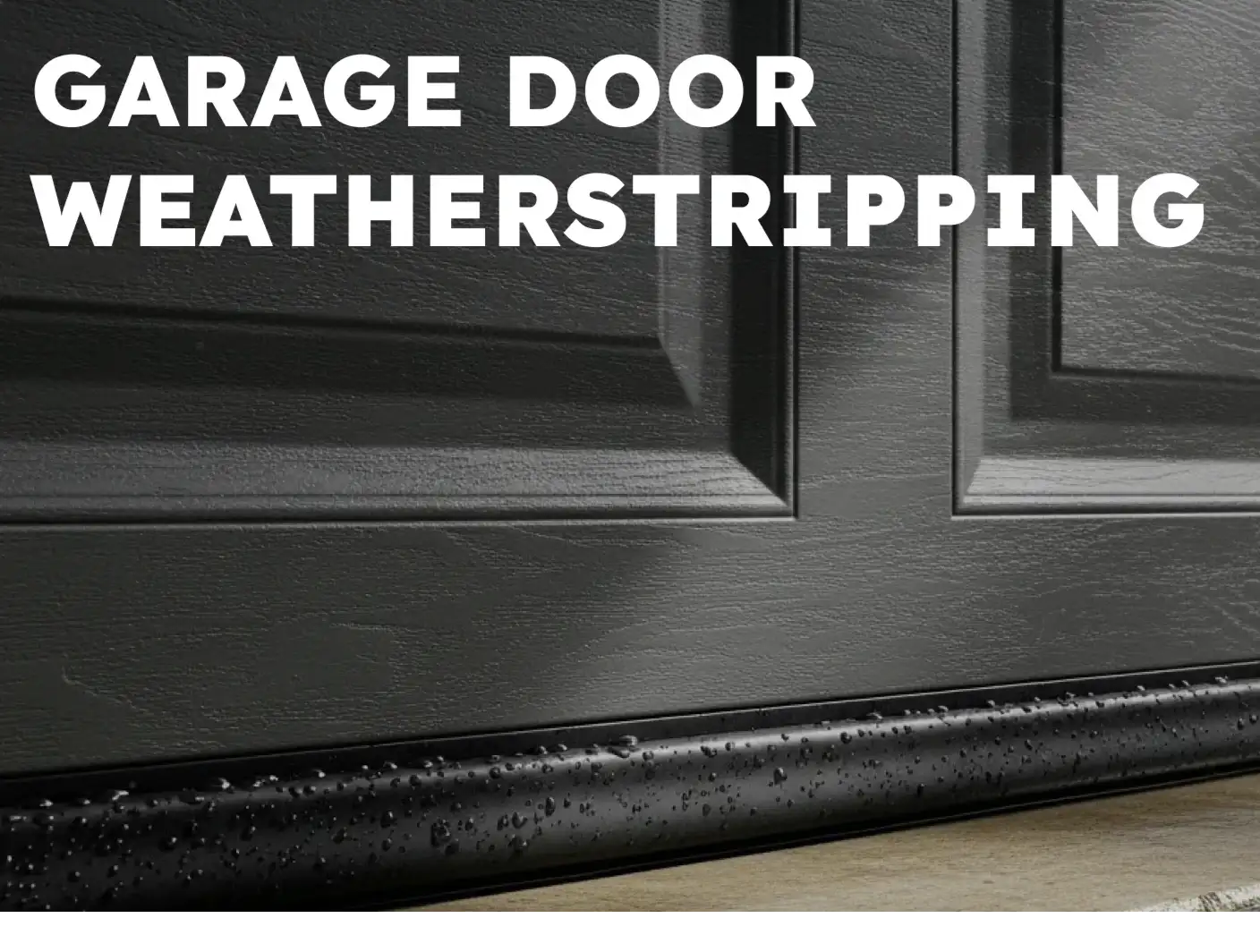
Garage Door Weather Seal & Bottom Seal Degradation
Published: Jan 27, 2026
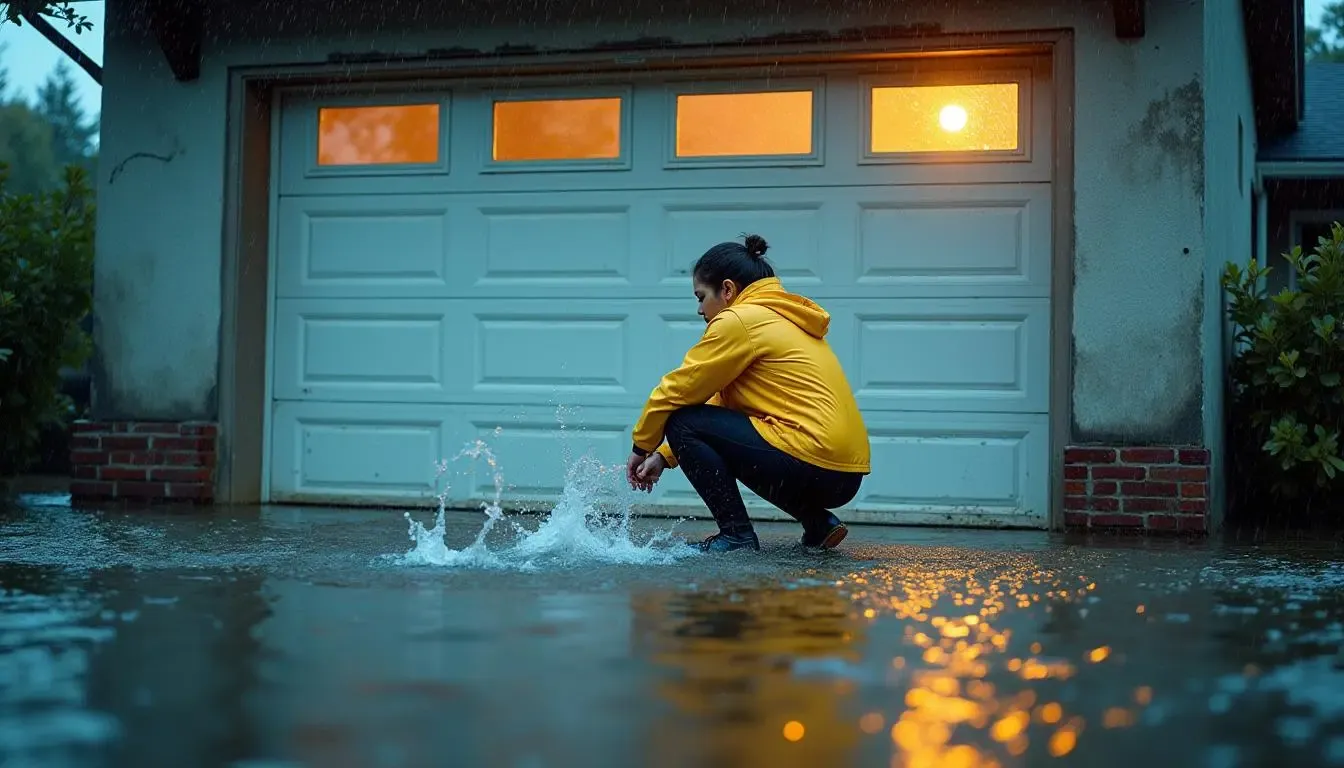
That thin strip of rubber at the bottom of your garage door might seem insignificant, but it’s one of the hardest-working parts of your home’s exterior. Think of it as the silent defender of your garage, constantly battling rain, wind, dust, and pests. But this defender doesn't last forever. Over time, it wears down, creating subtle problems that can lead to bigger headaches—from shockingly high energy bills to unwelcome critters making a home in your garage.
Most homeowners don't notice their seal is failing until there's a puddle on the floor or a draft they can't ignore. But what if you could spot the problem before it starts? There’s a simple trick you can use tonight to see just how well your seal is performing.
The "Light Test": Your First Clue
This is the easiest diagnostic you can do. Wait until it’s dark outside, then go into your garage and turn off all the lights. Close the garage door completely. Now, look around the perimeter of the door—the bottom and the sides. Do you see any slivers of daylight or streetlights peeking through? Every point of light is a breach in your garage's defense. It’s a clear sign that your seal is no longer creating a tight barrier, letting in everything you want to keep out.
A Quick Intro to Garage Door Seals
- Bottom Seal: This is the flexible rubber or vinyl strip attached to the bottom edge of the door. It’s the primary barrier against water, drafts, and pests on the floor.
- Weather Stripping (Stop Molding): This lines the top and sides of the garage door frame. It presses against the face of the door when closed, sealing the side and top gaps.
- Threshold Seal: This is an optional seal that gets affixed to the garage floor itself, creating a raised barrier that the bottom seal presses against. It’s especially useful for uneven concrete floors.
The Visual Failure Gallery: What a Bad Seal Really Looks Like
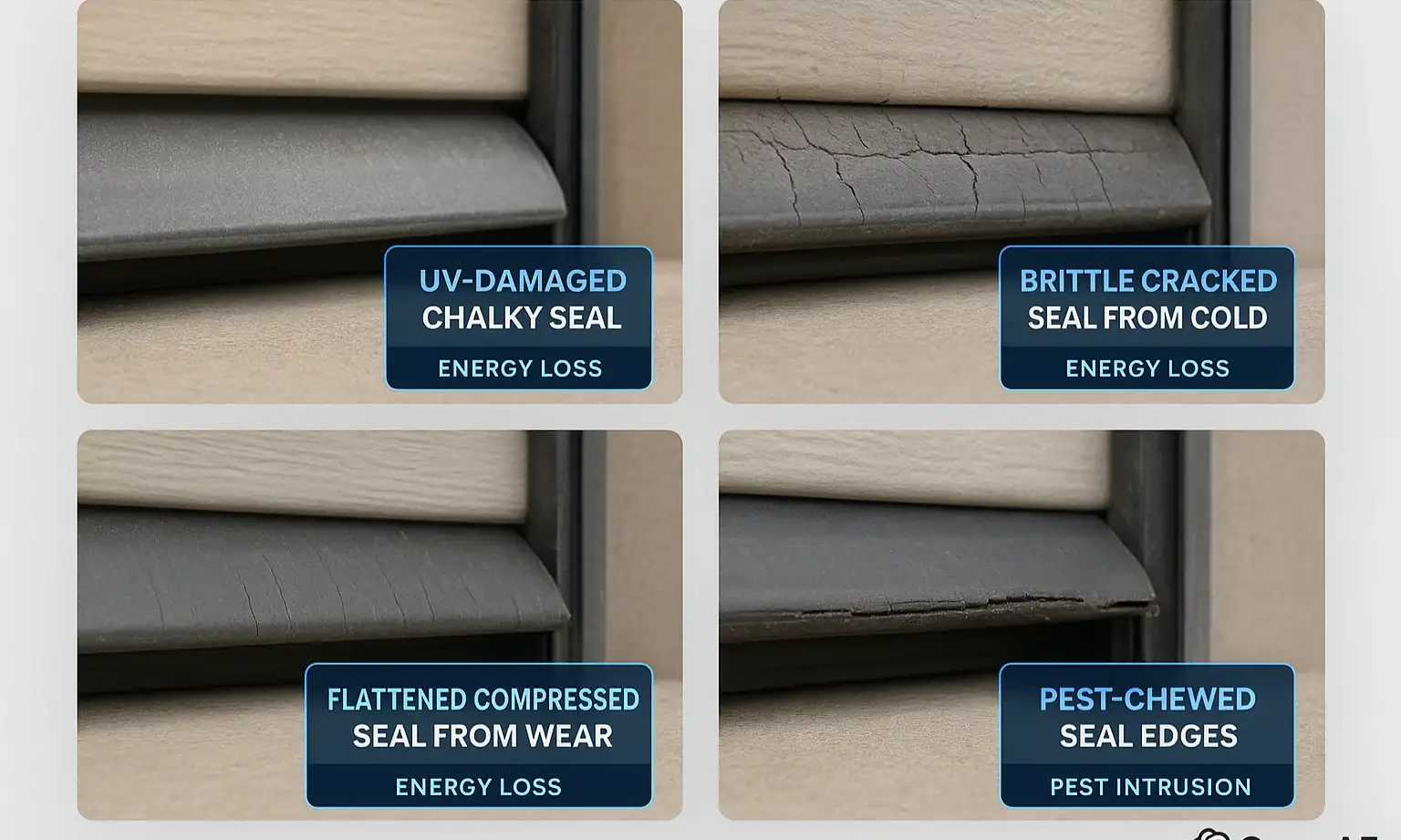
Sign #1: Hardening and Cracking
- What it Looks Like: The seal feels stiff and brittle instead of soft and pliable. You’ll see a network of fine lines or deep, obvious cracks, especially in areas that get a lot of direct sunlight. The material may have a chalky, faded appearance.
- The Cause: This is classic UV damage. Just like the dashboard of a car, constant sun exposure breaks down the chemical compounds in the rubber or vinyl, making it lose its flexibility. Cold weather can accelerate this process, causing the hardened material to snap.
- The Impact: A cracked seal can no longer compress properly to fill gaps. Water easily seeps through the cracks, and cold drafts find a direct path into your garage.
Sign #2: Flattening and Compression
- What it Looks Like: The seal has lost its original shape. A rounded "bulb" seal might look squashed, or a "U" shaped seal may appear completely flat. It has no "memory" or bounce-back when you press on it.
- The Cause: Simple wear and tear. Thousands of open-and-close cycles and the constant weight of the garage door compress the seal until it can no longer rebound.
- The Impact: A flattened seal is the primary cause of gaps. It can’t conform to minor imperfections in your garage floor, leaving spaces for air, water, and debris to enter. If you’re trying to figure out how to fix a gap at the bottom of a door, checking for a compressed seal should be your first step.
Sign #3: Tearing and Physical Damage
- What it Looks Like: This is the most obvious sign—visible rips, holes, or sections that are completely missing. You might also notice frayed or chewed-looking edges.
- The Cause: This can be from the door catching on something, dragging over a rough patch of concrete, or—more commonly—damage from pests. Rodents often chew through seals to gain entry to a garage.
- The Impact: A torn seal is an open invitation. It provides an easy entry point for insects, mice, and water. Even a small tear can compromise the entire barrier.
The Most Important Step: Identifying Your Bottom Seal Profile
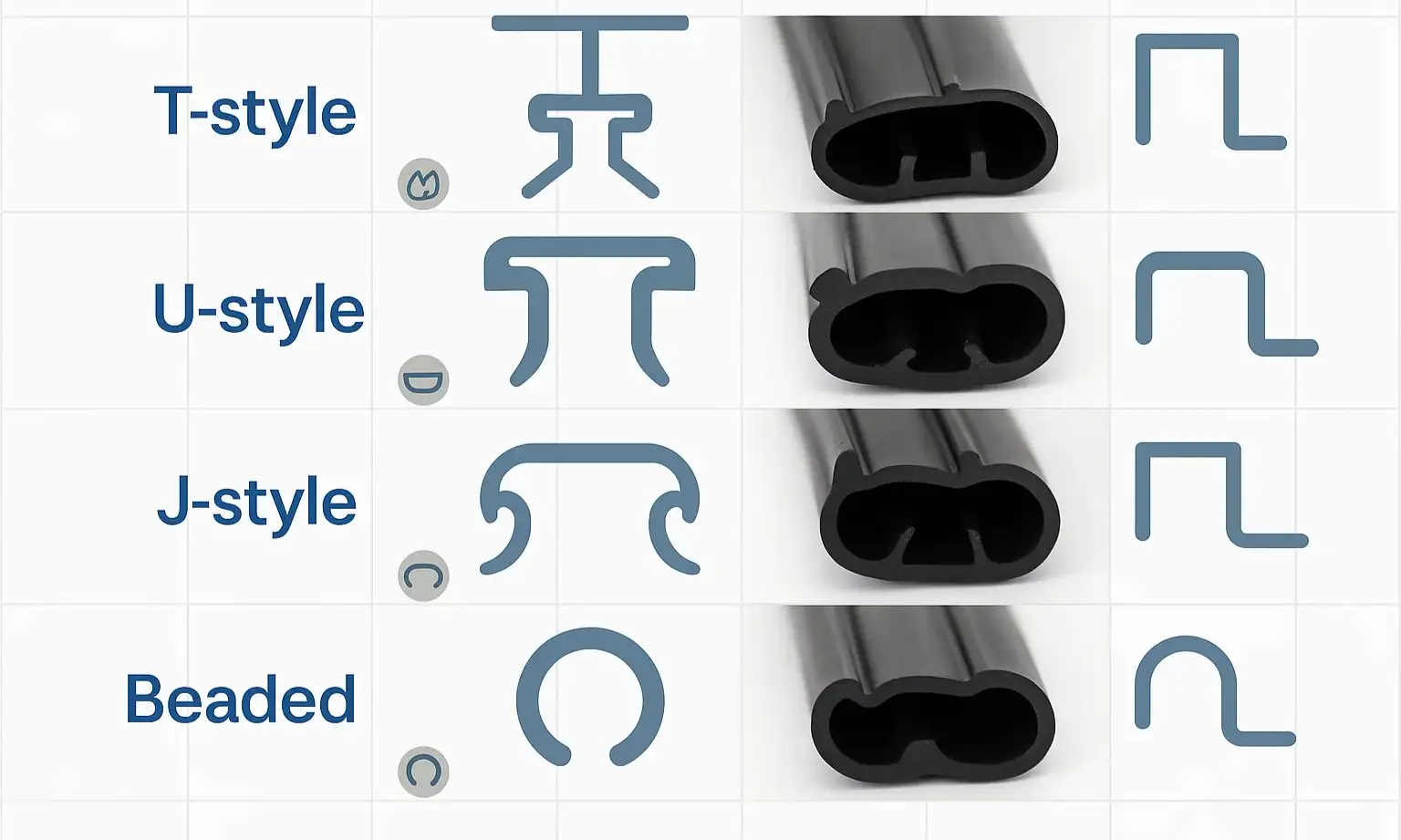
- T-Style: The most common type. The top of the seal has two "T" shaped edges that slide into two parallel tracks on the retainer.
- Bead-Style: This seal has a small, round bead on each edge that slides into a C-shaped channel on the retainer.
- Bulb, U-Shaped, or J-Style: These seals are often a single piece of vinyl that wraps around the bottom of the door and is secured by screws into the side of the door. Learning how to install a garage door bottom seal of this type is often straightforward for a handy homeowner.
Choosing Your Replacement & When to Call a Pro
- Vinyl: A great, affordable all-around choice. It holds up well in most climates but can become stiff in extreme cold.
- Rubber: More flexible and durable, especially in very cold temperatures where vinyl might crack. It often provides a better, more conforming seal on slightly uneven floors.
- The retainer track itself is bent, damaged, or rusted.
- The garage door is old, and the bottom panel is warped or damaged.
- You have trouble removing the old seal or can't get the new one to slide in evenly.
Need more information?
Get a free quote
Frequently Asked Questions
Are garage door seals universal?
How can a garage door bottom seal help with energy efficiency?
What if there are gaps on the sides of my garage door?
My garage floor is uneven. Will a standard bottom seal work?
Your Next Step to a Perfectly Sealed Garage
You may also like