





DIY Garage Door Side Gap Fixes: When to Call a Professional
Published: Apr 15, 2026
You pull into the driveway after a long day, hit the remote, and as your garage door rumbles shut, you notice it—a sliver of daylight peeking through the side. It’s a small thing, easy to ignore. But that tiny gap is more than just a cosmetic issue; it’s an open invitation for pests, a drain on your home’s energy efficiency, and a potential sign of a bigger alignment problem brewing.
Many homeowners see a gap and immediately think it’s a complicated, expensive fix. The good news is that some of the most common causes are simple enough to address yourself in under an hour. The key is knowing exactly where to look and, more importantly, recognizing the difference between a quick DIY adjustment and a dangerous problem that requires a professional.
This guide is designed to be your trusted advisor. We’ll walk you through a safe, step-by-step diagnostic process to fix common side gaps, and we’ll give you the confidence to know precisely when to put down the tools and call for expert help.
Before You Grab Your Tools: A 5-Minute Garage Door Health Check
Before you start loosening bolts, take a moment to understand what you’re looking at. A garage door is a complex system of interconnected parts, and a problem in one area often shows up as a symptom somewhere else—like a gap on the side. A quick visual inspection will give you the context you need.
Stand inside your garage with the door closed and familiarize yourself with the main components:
- Tracks: The metal rails on each side that guide the door up and down.
- Rollers: The small wheels attached to the door that run inside the tracks.
- Sensors: The two small “photo eyes” near the bottom of the tracks that detect obstructions.
- Cables: The steel cables on each side that do the heavy lifting.
- Springs: The tightly coiled torsion spring above the door (or extension springs on the sides) that counterbalance the door’s weight.
Understanding the fundamentals of garage door track alignment is crucial. The goal is for the door to sit perfectly flush against the door frame and weatherstripping, creating a complete seal.
The DIY Fix-It Funnel: From Easiest to Hardest
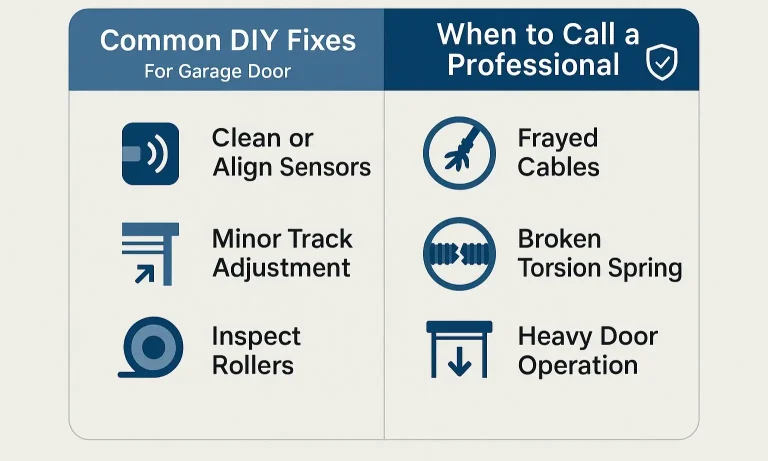
Ready to troubleshoot? We’ve structured this process like a funnel, starting with the simplest, safest, and most common fixes first. Begin at Level 1 and only move to the next level if the problem persists.
Level 1: The Sensor Sweep (The Most Common Culprit)
If your door reverses before it fully closes, leaving a gap at the bottom, the problem is almost always the safety sensors. Their invisible beam must be perfectly aligned for the door to shut.
- Check for Obstructions: Make sure no boxes, tools, or debris are blocking the path between the two sensors.
- Clean the Lenses: Use a soft, dry microfiber cloth to gently wipe the “eye” of each sensor. Dust and cobwebs can easily break the beam’s connection.
- Check the Indicator Lights: Each sensor has a small LED light. One should be solid green (power) and the other solid amber or green (alignment). If one is flickering or off, they are misaligned. Gently bend the sensor bracket with your hand until both lights are solid.
A proper garage door sensor alignment is often all that’s needed to close the gap. If the door now closes fully and the side gap is gone, you’re done!
Level 2: The Track Tune-Up
If the sensors are fine but you still see a consistent gap along one side, the vertical track may have been knocked slightly out of alignment. This fix requires a gentle touch.
- Unplug the Opener: Safety first. Always disconnect the power before working on the tracks.
- Loosen the Bracket Bolts: Use a socket wrench to slightly loosen the bolts on the brackets holding the vertical track in place. Do not remove them completely. You just want the track to have a little wiggle room.
- Gently Adjust: With the track loose, use a rubber mallet and a block of wood to gently tap it left or right until it’s perfectly plumb (straight up and down) and allows the door to sit flush against the weatherstripping. Use a level to confirm.
- Re-Tighten and Test: Securely tighten the bracket bolts. Manually lift and lower the door a few times to ensure it moves smoothly without binding.
- Visually Inspect Each Roller: With the door closed, look at each roller. Are any of them cracked, chipped, or visibly worn down?
- Check for Smooth Movement: As the door opens and closes, watch the rollers. Do they spin freely, or do they slide and scrape along the track? A seized roller can throw off the door’s entire path of travel.
Learning how to fix garage door gaps on sides with this method can solve many minor issues. If the door moves smoothly and the gap is sealed, plug the opener back in and enjoy your handiwork.
Level 3: The Roller Inspection
Worn or broken rollers can cause the door to sag or wobble in the tracks, preventing it from sealing correctly.
While a confident DIYer can handle replacing rollers that are not at the very bottom of the door, any garage door roller replacement on the bottom brackets should be left to a professional, as those fixtures are under extreme cable tension.
The "Stop & Call a Pro" Safety Protocol
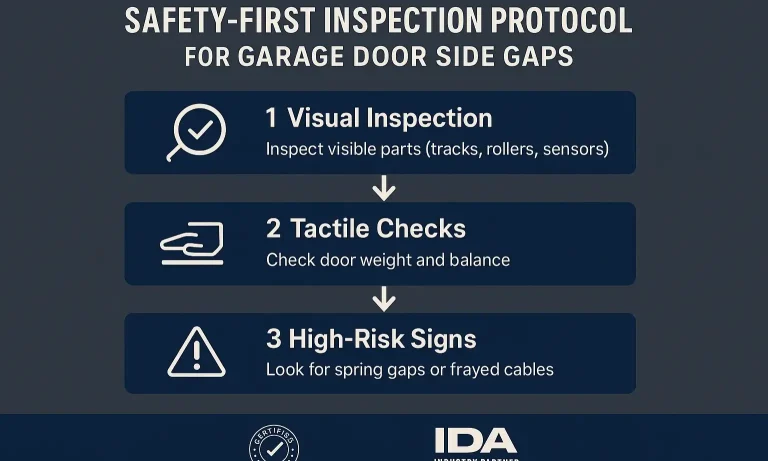
Your safety is non-negotiable. If you’ve gone through the DIY funnel and still have a gap, or if you spot any of the following red flags during your inspection, the problem is beyond a simple adjustment. The components below are under extreme tension and can cause severe injury or property damage if mishandled.
If you see any of these signs, STOP IMMEDIATELY and call a professional.
- Frayed or Broken Cables: If you see even a single frayed strand on one of the lifting cables, it is a critical failure waiting to happen. Do not operate the door. The complexity of a garage door cable installation requires specialized tools and knowledge to perform safely.
- A Gap in the Torsion Spring: Look at the large spring mounted above your door. If you see a 2-3 inch gap in the coils, the spring is broken. It is no longer counterbalancing the door’s weight, making the door dangerously heavy. Do not attempt to open it. A mission to replace garage door spring components is one of the most hazardous tasks for an untrained person.
- The Door Feels Extremely Heavy: Pull the red emergency release cord to disengage the opener. Now, try to lift the door by hand. It should feel relatively light (around 10-15 pounds). If it feels incredibly heavy and difficult to lift, the springs are failing and can no longer support the load. Proper manual garage door safety dictates that you should not force it.
- The Door Is Off-Track: If one or more rollers have popped completely out of the track, the door is unstable. Trying to force it can cause the entire door to fall.
- Severely Bent Tracks or Damaged Panels: Major dents or bends in the track or door panels can cause persistent garage door side gaps shifting, and these structural issues require professional repair or replacement.
Action: Your Go-Forward Maintenance Plan
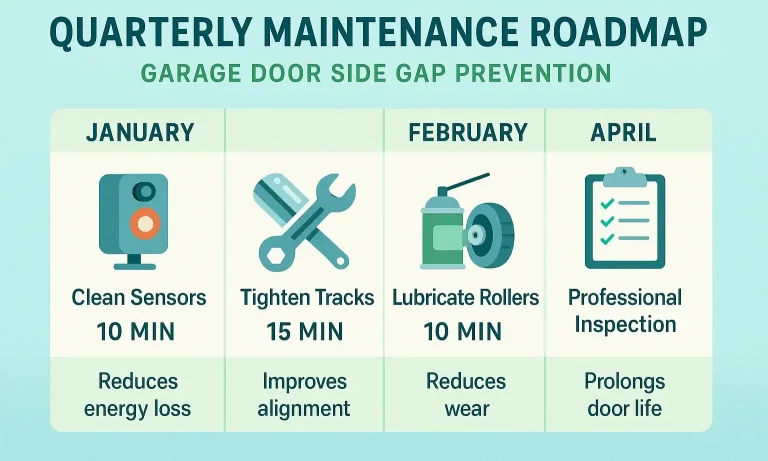
Once your gap is fixed, you can prevent future alignment issues with a simple preventative maintenance routine. A few minutes of inspection every few months can save you from bigger headaches down the road.
Here is a quick checklist to follow every 3-4 months:
- Look and Listen: Operate the door and watch its movement. Listen for any scraping, grinding, or squeaking sounds.
- Check Hardware: Visually inspect hinges and brackets. If you see any loose bolts, tighten them with a socket wrench.
- Lubricate Moving Parts: Apply a high-quality garage door lubricant to the rollers, hinges, and springs. Mistake to Avoid: Never lubricate the inside of the door tracks themselves. This attracts dirt and debris, causing the rollers to slide instead of spin.
- Test Safety Features: Place a 2×4 board flat on the ground in the door’s path to test the auto-reverse. Clean and check the sensor alignment.
For a more comprehensive guide, you can follow our ultimate garage door maintenance checklist.
Frequently Asked Questions (FAQ)
What causes garage door side gaps in the first place?
The most common causes are misaligned safety sensors, tracks being knocked out of plumb, worn-out rollers, or natural settling of your home’s foundation over time.
Is a small gap really a big deal?
Yes. Even a quarter-inch gap can let in water, snow, leaves, and pests. It reduces your home’s insulation, leading to higher energy bills, and can be a sign of a developing mechanical issue that will only get worse.
What tools do I need for the basic DIY fixes?
For the fixes outlined in our DIY funnel, you’ll only need a few common household items: a soft microfiber cloth for the sensors, a socket wrench set for track brackets, a level, and a rubber mallet.
By understanding how your garage door works and learning to spot the difference between a simple fix and a serious hazard, you can confidently manage one of your home’s most important features. Empowered with this knowledge, you can keep your garage door running smoothly, efficiently, and safely for years to come.
You May Also Like
How to Fix Garage Door Gaps on the Sides: Step-by-Step Guide
Noticing a chilly garage door draft or seeing daylight creeping in around your closed garage door? If your garage lets in cold air, daylight, or pests from the sides, it’s time to learn how to fix garage door gaps on…
Published Date: Nov 11, 2025
Garage Door Side Gaps: Is It Your Door, or Your House
You see it every time you leave—that sliver of daylight peeking around the edge of your closed garage door. It might seem like a small annoyance, a source of drafts, or an open invitation for pests. The natural first…
Published Date: Apr 10, 2026
How To Seal Garage Door Gaps: Improve Your Insulation
Noticing a draft or a bit of daylight around your closed garage door? Those small spaces can let in cold air, rain, and unwanted pests. Learning how to seal garage door gaps is a simple way to improve comfort,…
Published Date: Oct 29, 2025