
Garage Door Side Gaps: Is It Your Door, or Your House
Published: Apr 10, 2026
You see it every time you leave—that sliver of daylight peeking around the edge of your closed garage door. It might seem like a small annoyance, a source of drafts, or an open invitation for pests. The natural first thought for most homeowners is to blame the weatherstripping. And sometimes, that’s all it is.
But what if that gap is trying to tell you something more? What if it’s not a symptom of a worn-out seal, but a sign that your garage itself is subtly shifting? Understanding the difference is the key to a real, lasting fix. This guide will help you play detective, walking you through a simple diagnostic process to uncover whether the problem lies with your door or the very structure around it.
The Foundation: A 5-Minute Visual Diagnosis
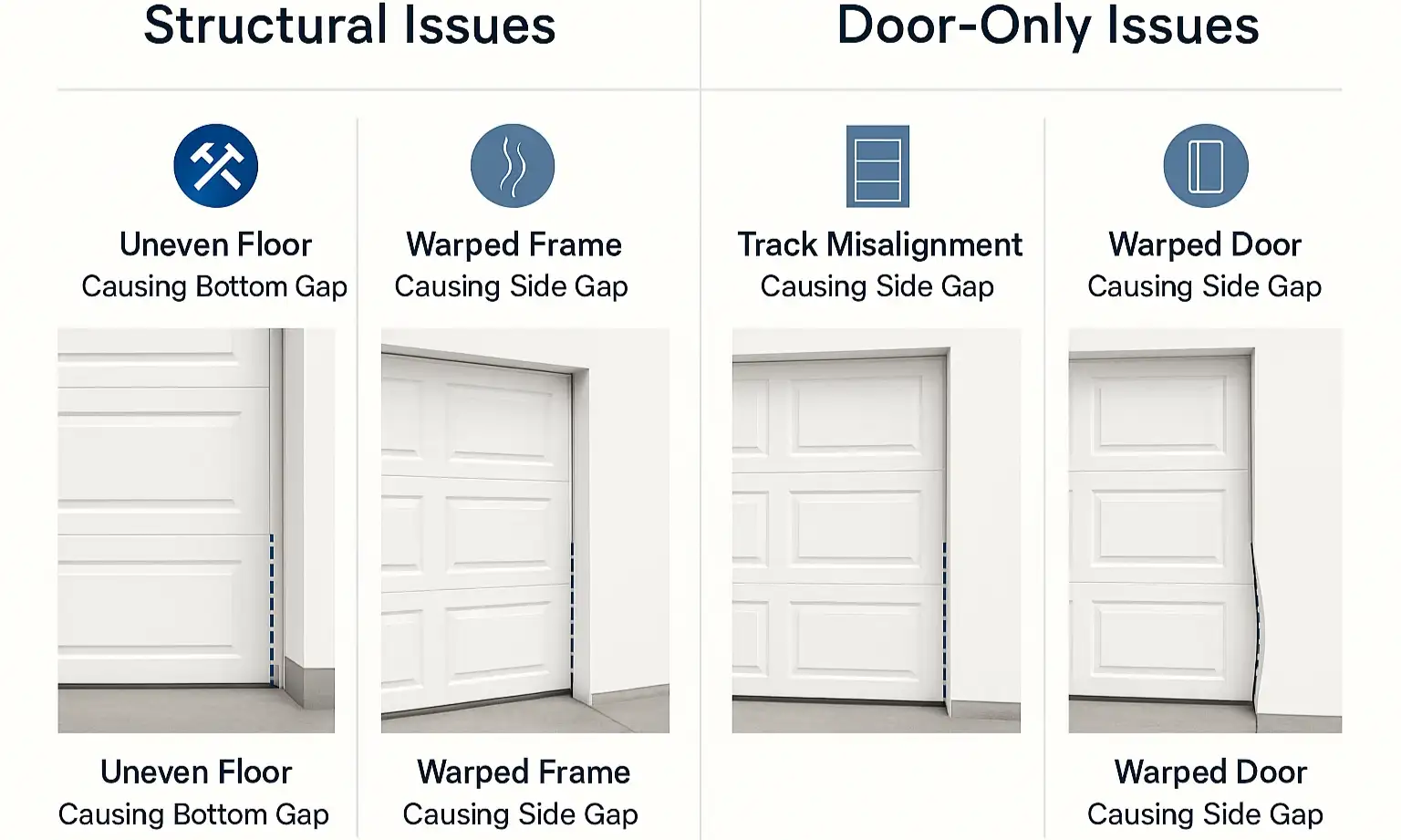
- A Tapered Gap: The gap is wider at the top or bottom and narrows along the side. This often points to the garage frame being out-of-square.
- An Even Gap Along One Side: If the gap is consistent from top to bottom but only on one side, it could be a simple track alignment issue.
- A Gap That Appears When the Door is Closed: If the door looks fine while moving but a gap appears once it's fully shut, this might indicate the door is crooked or the floor beneath it is uneven. A door that is garage door off track and crooked requires immediate attention to prevent further damage.
The Build: The Litmus Test to See if Your Garage Is Square
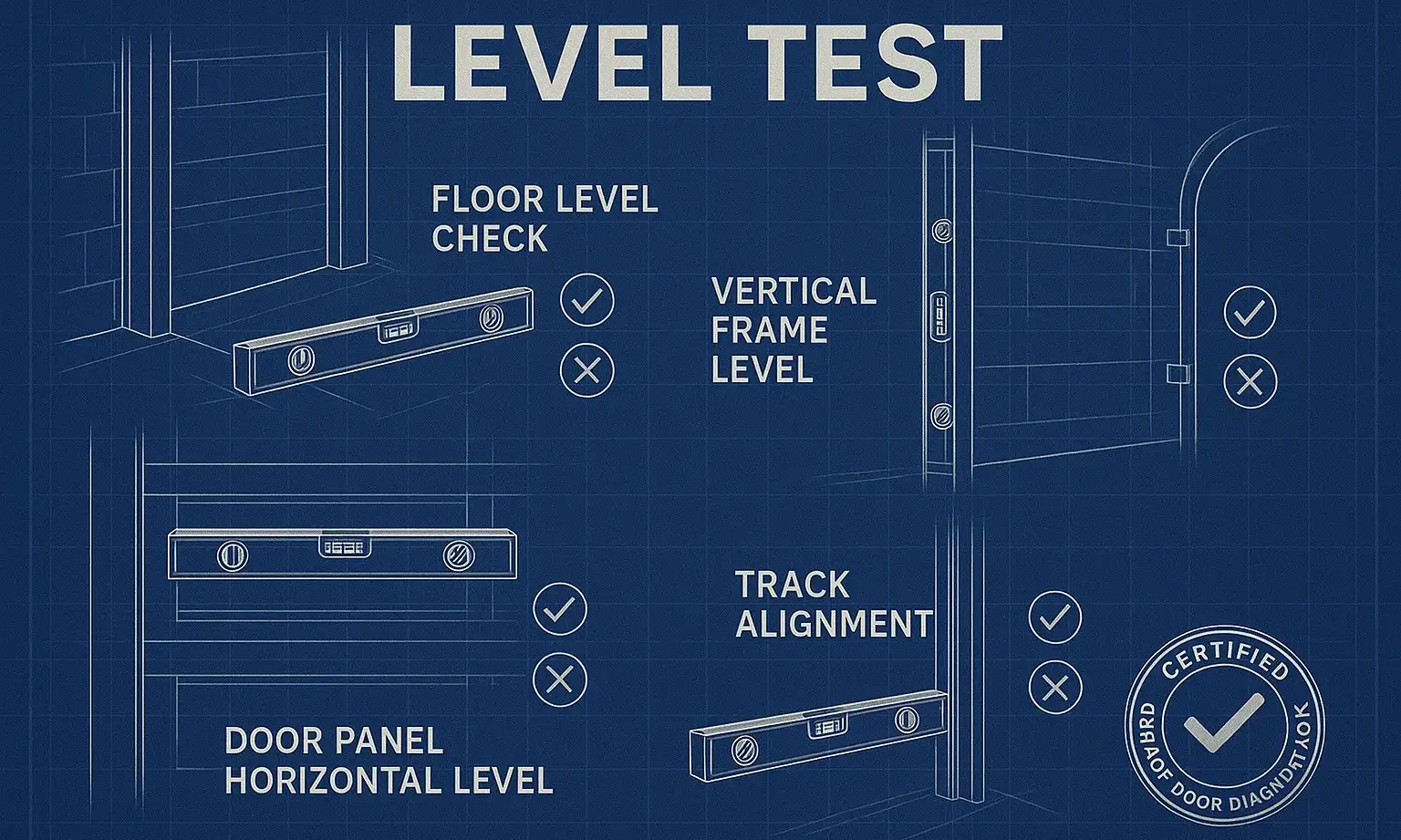
Your 3-Point Level Test:
- Check the Floor: Place the level on the garage floor directly under the closed door. Is the bubble perfectly centered? A sloping floor is a primary sign of foundation settling and a common cause of gaps.
- Check the Vertical Frame (Jambs): With the door closed, place the level vertically against the wood frame (the jamb) on each side of the door. Are both sides perfectly plumb (straight up and down)? If one side leans in or out, the opening is no longer a perfect rectangle, forcing a gap.
- Check the Door Itself: Place the level horizontally across the closed garage door panels at the bottom, middle, and top. If the floor and frame are level but the door isn't, the problem is likely with the door's mechanics, such as its rollers or garage door track alignment.
The Mastery: Solving the Real Problem
Part A: Door-Level Fixes (When Your Garage is Square)
- Adjusting the Tracks: The vertical tracks on either side of your door can be slightly loosened and moved to close a consistent side gap. This is a delicate process, as moving them too much can cause the door to bind.
- Checking Rollers and Hinges: Worn-out rollers or loose hinges can cause the door to sag or sit unevenly in the frame. Replacing them can often square up the door and eliminate the gap.
- Weatherstripping Replacement: Once all mechanical issues are resolved, installing fresh PVC stop molding or vinyl weatherstripping is the final step to create a perfect seal. For a complete walkthrough, see our guide on replacing the bottom of door weather stripping.
Part B: Structural-Level Fixes (When Your Garage is Not Square)
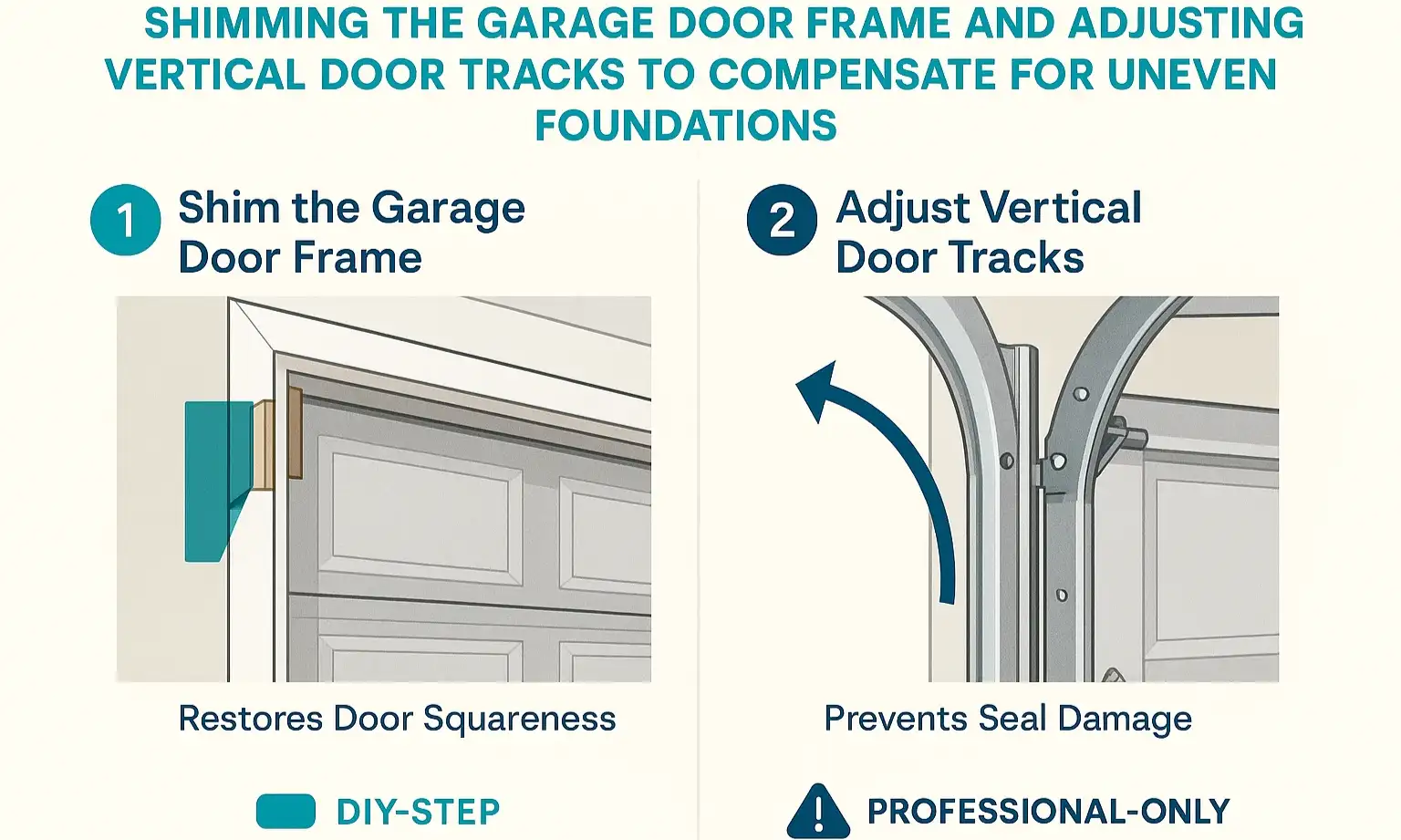
- Shimming the Wood Door Jamb: This technique involves placing thin, wedge-shaped pieces of wood (shims) behind the wood door frame to make it plumb and square again, even if the wall behind it isn't. This effectively builds a new, square opening for the door to seal against. This is a task that requires precision and is often best left to professionals who specialize in garage door frame repair.
- Compensatory Track Adjustments: Instead of just moving the track side-to-side, an expert can adjust its angle to match the slight slope of the frame. This allows the door to close flush against the frame, compensating for the structural shift and sealing the gap. Learning how to adjust garage door side gap with this method is an advanced skill.
Need more information?
Get a free quote
The Action: Your Personalized Action Plan
Garage Door Gap Diagnostic Plan