How to Decode Your Garage Door’s Squeaks, Grinds, and Pops
Published: Jan 26, 2026
Your garage door is trying to tell you something. That sudden squeal, that gravelly grind, that alarming pop—they aren't just random annoyances. They're a language. Each sound is a specific message about the health of your door, a clue that can help you catch small problems before they become expensive, dangerous failures.
Most people either ignore these sounds until it's too late or assume every noise means a costly replacement is imminent. But what if you could listen like an expert? What if you could differentiate between a simple request for lubrication and a critical warning of system failure?
This guide teaches you how to speak your garage door's language. By learning to identify the character, timing, and location of its sounds, you can move from guessing to diagnosing, saving you time, money, and stress.
Foundation: The Anatomy of a Sound
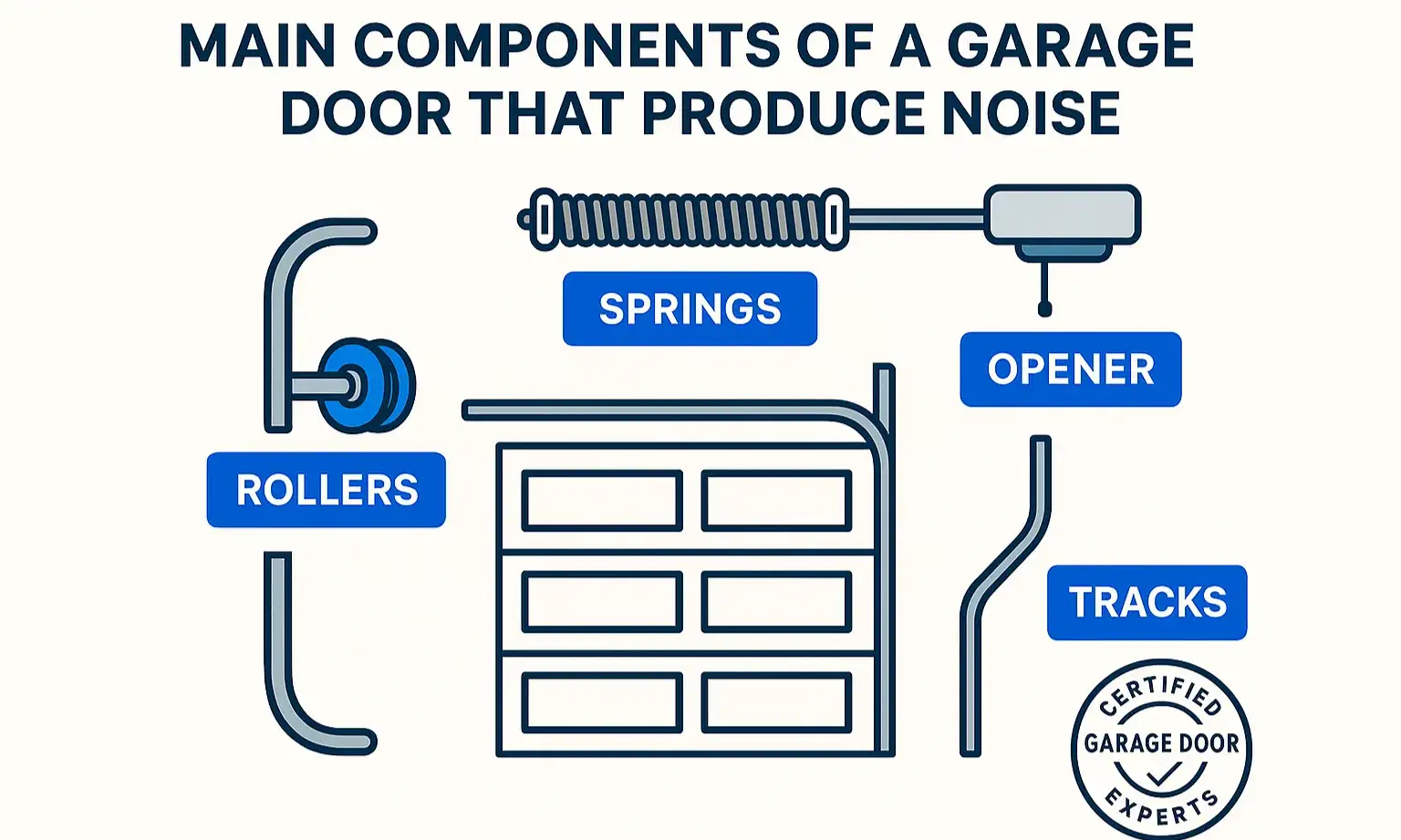
- Friction Sounds (Squeaks & Grinds): These are caused by two things rubbing together. They are often continuous and signal a need for lubrication or a part that has worn down.
- Tension Sounds (Pops & Bangs): These are caused by the immense tension stored in the system, particularly the springs. They are typically sudden, loud, and signal a potentially hazardous situation.
Building: The Sound Profile Diagnostic
Squeaks and Squeals (Friction)
- What it sounds like: A high-pitched, piercing squeeeeeal that often occurs continuously as the door moves.
- What it means: This is the sound of metal-on-metal friction. It’s your garage door asking for a drink—of lubricant. The most common culprits are unlubricated rollers, hinges, or springs. If you notice your garage door squeaking when opening, it’s a clear sign that routine maintenance is overdue.
- Safety Urgency: LOW (Green). This is typically a maintenance reminder, not a sign of imminent failure.
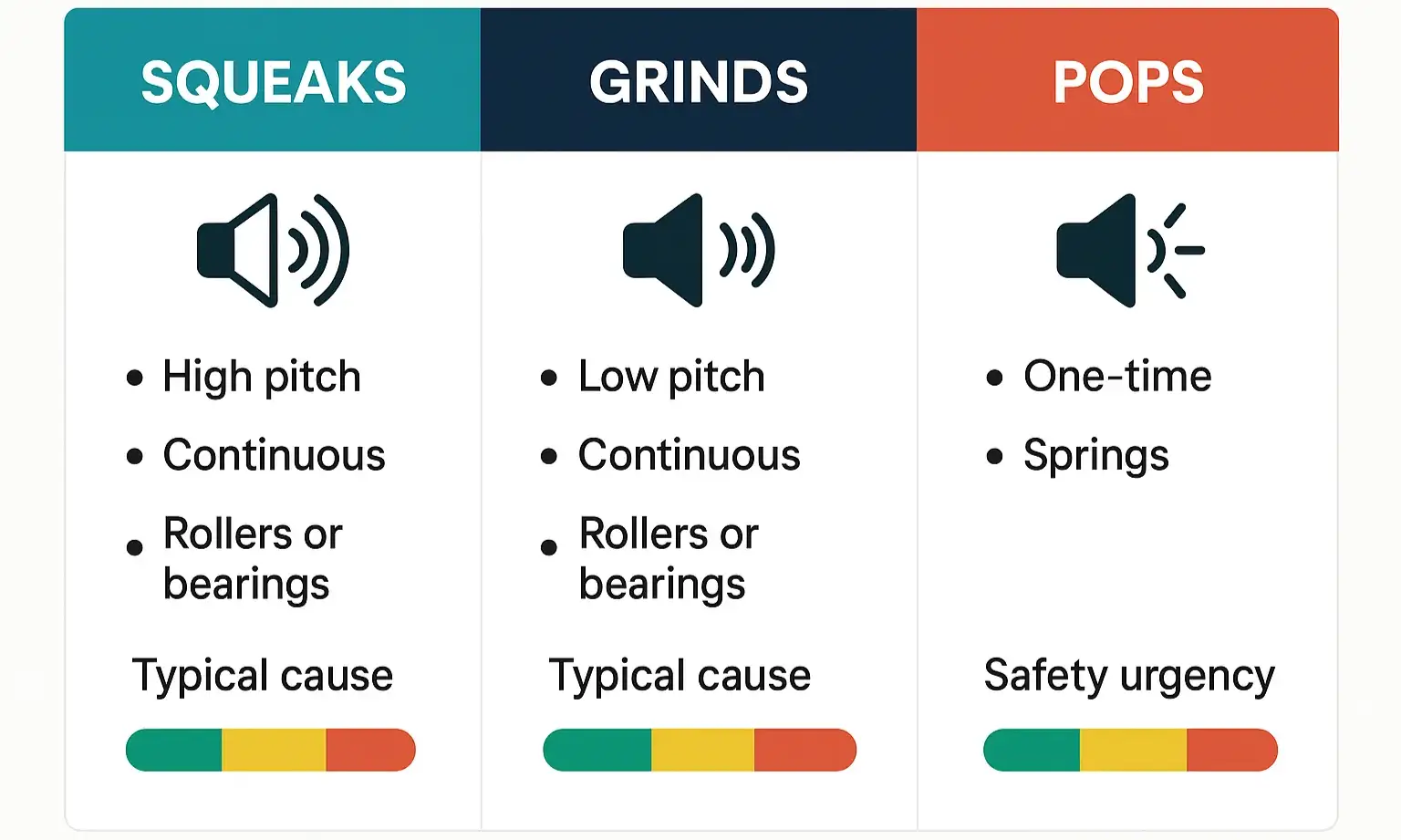
Grinds and Scrapes (Friction)
- Worn-Out Rollers: The bearings inside the rollers have failed, causing the wheel to scrape along the track. A timely garage door roller replacement can prevent further damage.
- Debris in the Track: Small stones or other debris can get caught in the track, causing the rollers to grind over them.
- Opener Motor Issues: If the sound comes from the motor unit itself, the internal gears may be stripped and failing.
Pops and Bangs (Tension)
- What it sounds like: A single, sharp, and incredibly loud BANG! or POP! that sounds like a firecracker going off in your garage. It happens in an instant and is not a continuous operational noise.
- What it means: This is almost always the sound of a torsion spring breaking. These springs are under extreme tension to lift the door's weight, and when one fails, it releases that energy violently. You may also hear popping sounds if the door panels are buckling or flexing under strain.
- Safety Urgency: HIGH (Red). A broken spring is a critical failure. The garage door is now extremely heavy and dangerous to operate. The opener is not designed to lift the full weight of the door and attempting to use it can strip the motor gears or cause further damage. Because of the extreme risks involved, ensuring proper garage door spring safety is paramount, and replacement should only be handled by a trained professional.
Action: Your Pro vs. DIY Action Plan
- Lubrication: Addressing squeaks by applying a high-quality, silicone-based lubricant is a key part of regular garage door maintenance. Not sure how to lubricate your garage door? Focus on the rollers, hinges, and bearings.
- Common Mistake: Never lubricate the tracks themselves. The rollers are meant to roll, not slide. Grease on the tracks will attract dirt and make problems worse.
- Tightening Hardware: Check and tighten any loose nuts and bolts on hinges and brackets. This can often solve rattling noises.
- Cleaning Tracks: Clear any visible debris from the tracks to prevent grinding.
- Anything Involving Springs or Cables: These components are under extreme tension and can cause severe injury or death if handled improperly. Spring replacement is never a DIY job.
- Grinding That Isn't Debris: If you’ve cleaned the tracks and the grinding persists, it’s time for a professional to inspect the rollers or opener.
- A Loud POP or BANG: If you heard this sound, do not attempt to operate the door. Visually inspect the springs above your door—you will likely see a gap in one of them. Call a professional service immediately.
Frequently Asked Questions (FAQ)
Why is my garage door making noise all of a sudden?
What does a garage door spring sound like right before it breaks?
Can I just use WD-40 on everything that squeaks?
Is it normal for a garage door to make some noise?
Don't Just Hear—Listen
You may also like