Our company logo

State

Garage Door Spring Maintenance in Extreme Weather


Published: Apr 9, 2026

Think of your garage door springs as a ticking clock. With every cycle, they wind and unwind under immense tension, lifting hundreds of pounds of weight. But here’s something most homeowners don’t realize: the weather controls how fast that clock ticks. Freezing cold, heavy humidity, and salty sea air can dramatically accelerate wear and tear, turning a 7-year spring into a 3-year failure waiting to happen.

This isn’t about just fixing a problem when it occurs; it’s about understanding the unique climate challenges your home faces and creating a maintenance plan to combat them. Just as a car in Minnesota needs different care than one in Miami, your garage door needs a climate-specific strategy to thrive.

The Science of Springs Under Stress: Why Weather Matters


Before diving into specific plans, let's have a quick "aha moment" about what's happening to that tightly wound coil of steel above your door. Garage door torsion springs are the powerhouse of your system, doing 90% of the heavy lifting. But they are vulnerable.

  • Cold: Metal contracts when it gets cold. This makes the spring steel slightly more brittle and stiff. More importantly, lubricants can thicken or "gel" in freezing temperatures, losing their effectiveness. This forces the spring and opener to work much harder, leading to strain and potential failure.
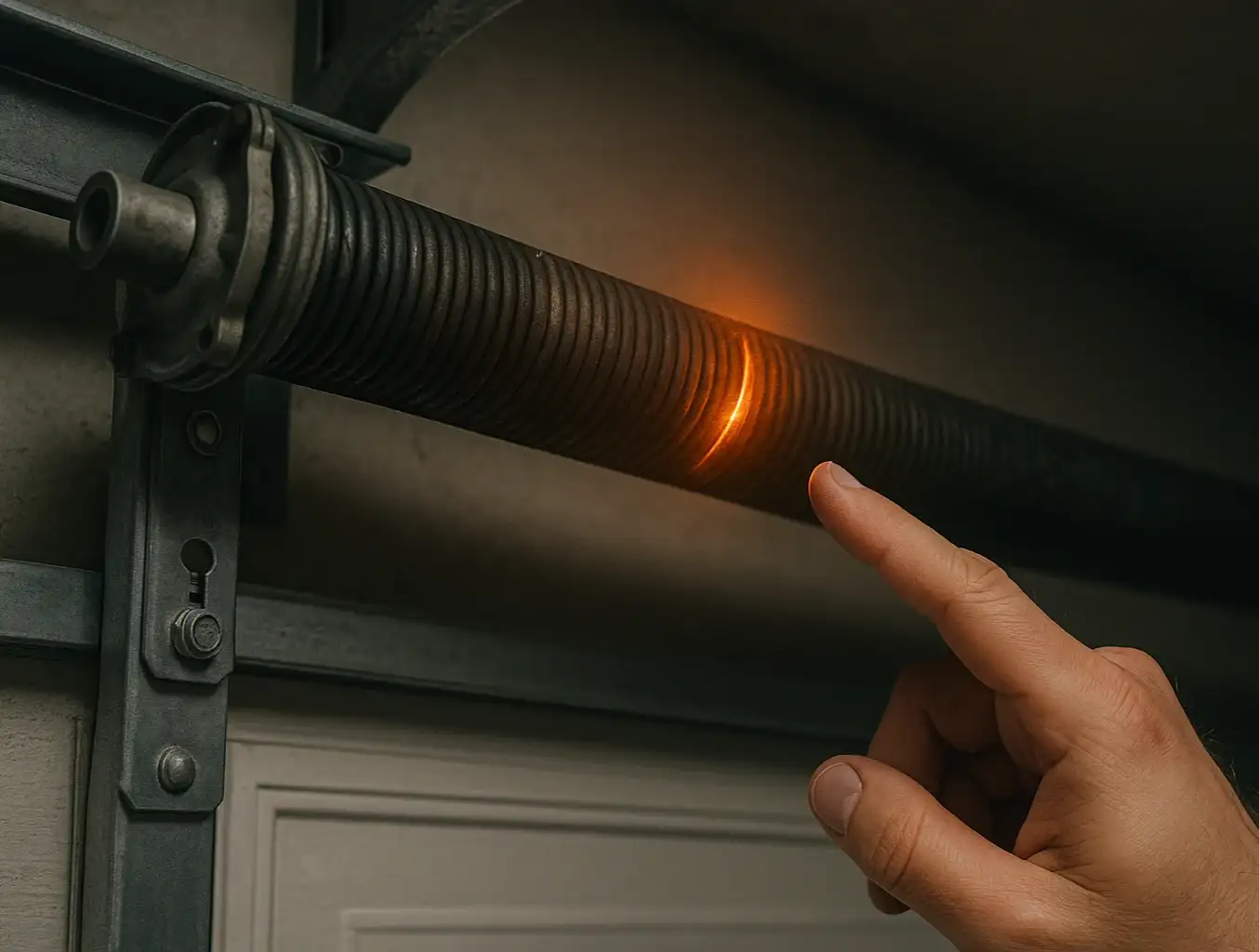
  • Humidity: The simple formula is moisture + steel = rust. Rust isn't just a cosmetic issue; it's a form of corrosion that creates friction and pits in the metal, weakening the spring's integrity from the inside out. Each pit becomes a stress point where a crack can form.
  • Salt Air: This is humidity's aggressive cousin. Salt acts as a catalyst, dramatically accelerating the rusting process through galvanic corrosion. The constant exposure to saline moisture can eat away at a spring's protective coating and the steel itself, slashing its expected lifespan.

Spring Maintenance 101: The Universal Rules


No matter your climate, some rules are universal. The foundation of weather-proofing is a solid, routine maintenance habit.
The most critical task is lubrication. Proper garage door maintenance lubrication reduces the friction between the spring's coils as they twist and turn. This simple act minimizes wear and tear and keeps the operation smooth and quiet.
A crucial word of caution: Torsion springs are under extreme tension and can cause serious injury if they break or are handled improperly. While lubrication is a safe DIY task, any adjustment or garage door spring replacement is a job for trained professionals.

Your Climate-Specific Maintenance Guide


Now, let's move from general care to a specialized action plan based on your local weather.

Chapter 1: The Cold Weather Combat Plan

If you live in a region with harsh winters, you're likely familiar with the groaning, creaking, or outright refusal of your garage door on a frigid morning. When you find your garage door frozen shut, the problem often starts with the springs and lubricant.
Your goal here is to keep components moving freely despite the contracting metal and thickening grease.
Your Winterization Checklist:
  1. Clean and Dry: Before the first freeze, wipe down the springs, rollers, and hinges to remove any old, gunky lubricant and debris. Moisture is your enemy.
  2. Lubricate with Silicone: Use a silicone-based spray lubricant. Unlike petroleum-based greases, silicone doesn't thicken or freeze in low temperatures, ensuring a smooth glide all winter.
  3. Inspect the Weather Seal: A common issue is the garage door sticking when opening because the bottom weather seal has frozen to the ground. Ensure it's clean, dry, and pliable. A light spray of silicone on the seal itself can prevent it from sticking to ice.
  4. Listen for Trouble: Pay attention to new sounds. A louder-than-usual operation is a sign that the system is under strain.
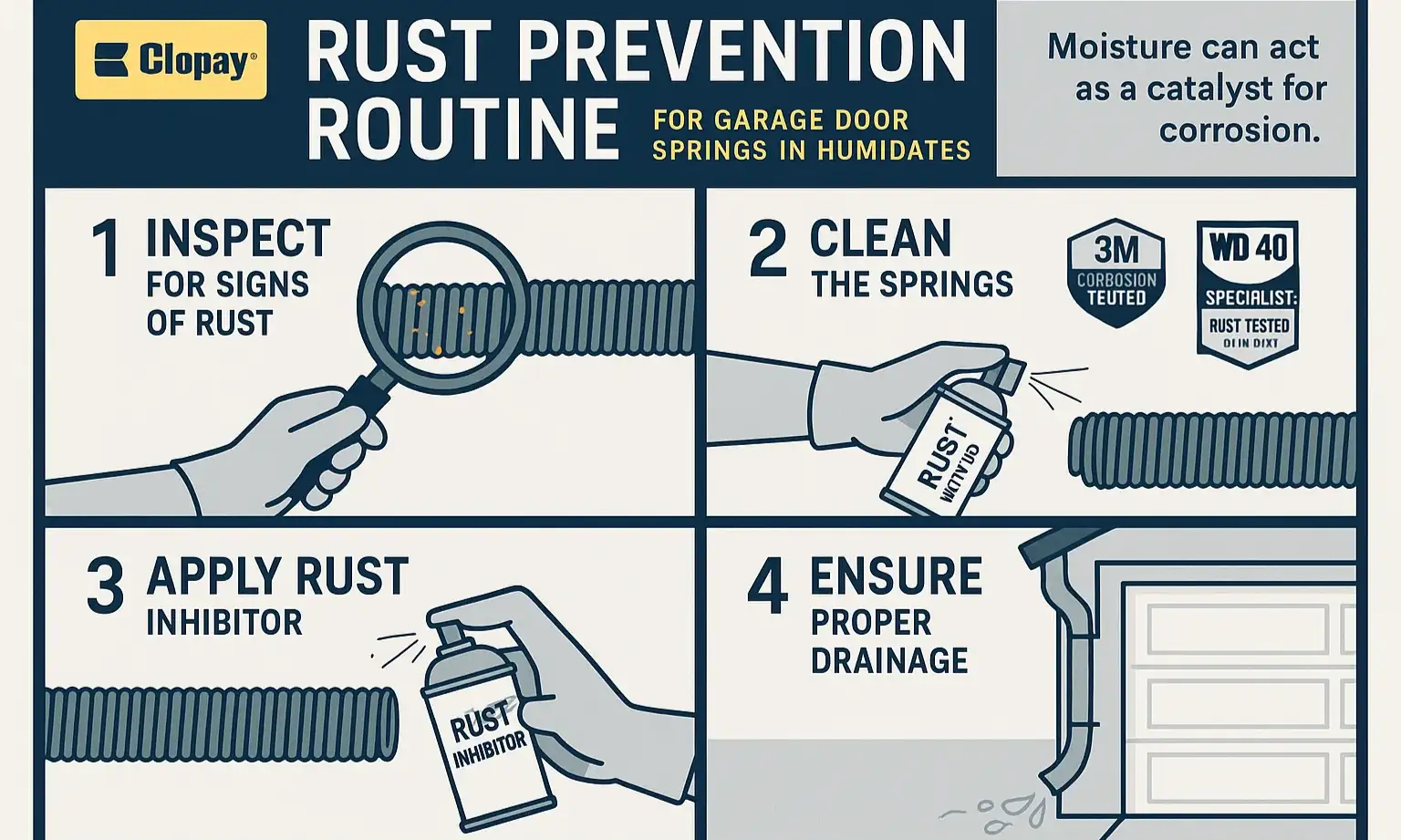
4-step rust prevention: wipe monthly, ensure airflow, apply lubricant, inspect for corrosion.
For a complete checklist, our guide to DIY garage door winter maintenance covers everything you need to prepare for the cold season.

Chapter 2: The High Humidity & Rain Defense

For those in rainy or humid climates like the Southeast or Pacific Northwest, the silent threat is rust. It can slowly build up between the coils of your torsion springs, grinding them down with each use.
Your goal is to create a barrier against persistent moisture and spot corrosion before it compromises the spring.
Your Humidity Defense Plan:

  1. Wipe Down Regularly: Every month or two, take a dry cloth and wipe down the springs. This removes condensation that can settle on the metal.
  2. Ensure Proper Ventilation: If your garage is consistently damp, improving ventilation can make a huge difference in reducing ambient moisture.
  3. Apply a Protective Lubricant Film: When you lubricate, ensure you apply a thin, even coat across the entire spring. This film acts as a barrier, preventing water from ever touching the steel.

Chapter 3: The Coastal & Salt Air Survival Guide

If you can smell the ocean from your home, your garage door is in a constant battle against corrosion. The airborne salt particles create a highly corrosive environment that can cause catastrophic garage door salt air damage. Standard maintenance isn't enough here; you need a specialized defense.
Your goal is to neutralize the corrosive salt and use tougher, more resilient products.
Your Coastal Survival Guide:
  1. Rinse and Repeat: Every month, gently rinse your garage door, tracks, and springs with fresh water to wash away salt deposits. Ensure you dry the components thoroughly afterward.
  2. Upgrade Your Lubricant: Consider using a marine-grade grease or a lubricant with a dedicated rust inhibitor. These products are specifically designed to stand up to saltwater environments.
  3. Increase Maintenance Frequency: The standard "twice a year" lubrication schedule isn't sufficient. Coastal homeowners should inspect and lubricate their springs every 3-4 months.
  4. Consider Upgraded Hardware: When it's time for a replacement, ask your technician about powder-coated or galvanized torsion springs. These offer superior protection against rust.
4-step rust prevention: wipe monthly, ensure airflow, apply lubricant, inspect for corrosion.
Following a proactive schedule is the key to maintaining your garage door in coastal areas and avoiding premature, costly repairs.

Chapter 4: Mastery - Choosing Your Arsenal
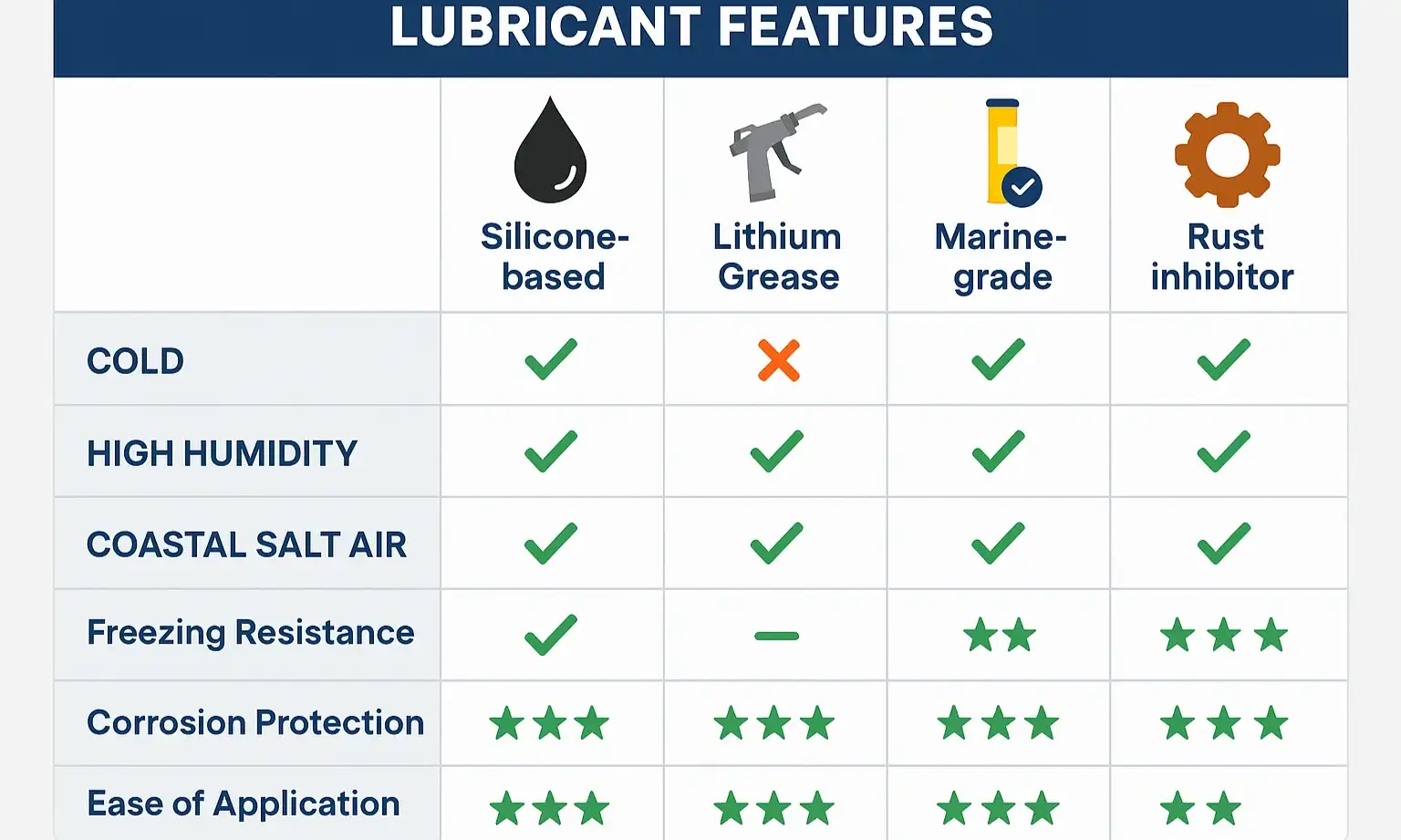

Lubricant guide by climate: silicone for cold, lithium for humidity, marine-grade for coastal corrosion.
Walking down the hardware store aisle can be confusing. Not all lubricants are created equal, and using the wrong one can be as bad as using none at all.
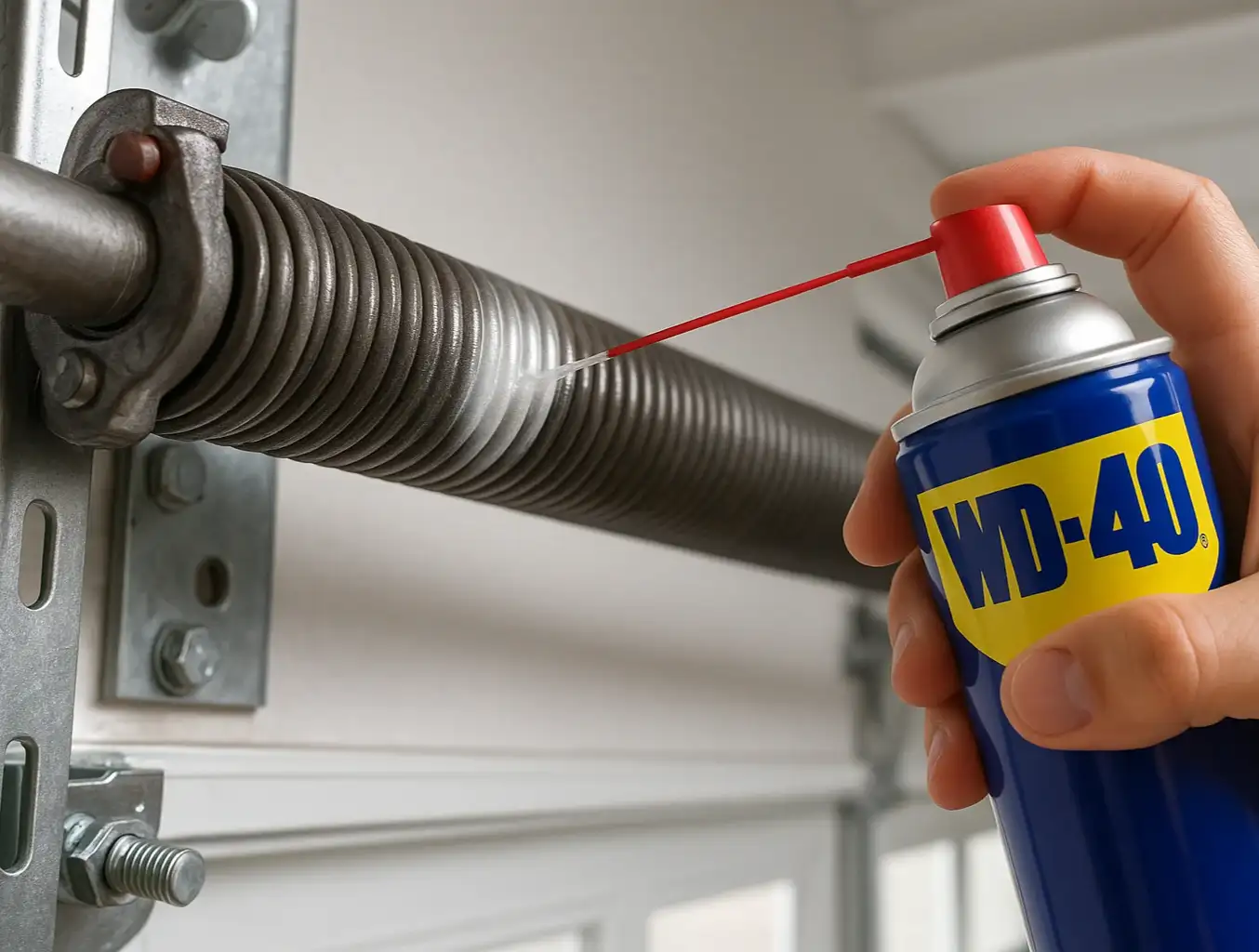
The most common mistake we see is homeowners using WD-40. Common Mistake: Using WD-40 as a lubricant. It's a fantastic solvent and water-displacer, but it's not a true, long-lasting lubricant. It can actually strip away the grease your door components need.
For proper lubrication for garage door springs and rollers, you need a dedicated garage door lubricant. Here’s a simple breakdown to help you choose the right one for your climate.

Lubricant guide by climate: silicone for cold, lithium for humidity, marine-grade for coastal corrosion.

Need more information?

Frequently Asked Questions (FAQ)


How often should I lubricate my garage door springs?

As a general rule, twice a year is a good starting point. However, as we've discussed, you should adjust based on your climate. Coastal homes should lubricate every 3-4 months, while those in dry, mild climates might only need it once a year.

What is the best lubricant for garage door springs?

For most situations, a silicone-based or white lithium grease spray specifically designed for garage doors is best. Avoid thick, pasty greases that can attract dirt, and never use WD-40 as your primary lubricant.

Can I use WD-40 on my garage door springs?

No. WD-40 is a solvent, not a lubricant. It can clean parts, but it will also strip away the essential grease needed for long-term protection and smooth operation.

Why does my garage door get stuck when it's cold?

This is usually due to a combination of factors: the metal parts contract, the lubricant thickens, and the weather stripping on the bottom of the door can freeze to the concrete or asphalt.

Taking the Next Step


Your garage door is the largest moving part of your home, and its springs are the heart of the operation. By understanding how your local climate impacts them, you can move from reactive repairs to proactive care, extending the life of your system and ensuring it works safely and reliably every day.
Take a few minutes this weekend to look at your springs. Do you see any rust? Do they look dry? When you run the door, does it sound strained? A simple inspection is your first line of defense.
If you spot significant rust, hear a loud bang, or notice a gap in your spring, do not attempt to operate the door. It's time to call a professional. At Up & Down Garage Doors, our expert technicians are available 24/7 to handle any emergency and provide the safe, reliable service your home deserves.

You may also like


blog photo

How to Spot Impending Garage Door Spring Failure

That strange groaning sound your garage door makes has become part of your home’s daily soundtrack. You might even ignore the way it shudders for a second before it starts moving. It's easy to dismiss these little quirks as the signs of an aging house. But what if they're not just quirks? What if your garage door is sending you a clear warning message? Most homeowners only think about their garage door springs when they hear a sudden, deafening BANG!—the sound of a spring snapping under tension. But well before that catastrophic failure, a weakening spring sends out subtle distress signals. Learning to recognize these auditory, visual, and operational cues is the key to moving from reactive panic to proactive maintenance, potentially saving you from an emergency call and a car trapped in your garage.

blog photo

Your Ultimate Guide to Garage Door Spring Lubrication

That ear-splitting screech your garage door makes isn’t just an annoying wake-up call. It's a cry for help from the hardest-working part of the entire system: the springs. Before you resign yourself to the noise or start worrying about a massive repair bill, we have some good news. The solution is often simpler and cheaper than you think, and it’s a task you can confidently tackle yourself. Properly lubricating your garage door springs is one of the most effective pieces of preventive maintenance you can perform. It silences that awful noise, protects against rust, and dramatically extends the life of both your springs and your garage door opener. This guide will walk you through everything you need to know, transforming you from a casual browser into an empowered homeowner.

blog photo

The Ultimate Garage Door Spring Maintenance Checklist for Homeowners

Your garage door springs are among the smallest yet most critical components of your garage door system. They support the weight every time your garage door opens or closes. While they are often overlooked, regular maintenance is important to ensure your garage door springs remain in top condition. We understand that balancing a busy life with many responsibilities can make it challenging to find time for upkeep. That’s why we’ve created a simple, step-by-step checklist to help you maintain your garage door springs with ease. These expert tips will save you both time and effort. If you'd prefer to leave the job to the professionals, Up & Down Garage Doors is ready to help you! Our experienced team offers a full range of garage door services to efficiently handle any issues you may encounter.