





Garage Door Spring Maintenance for High-Cycle Use
Published: Apr 15, 2026
The morning rush. One car leaves for work, then the other. The kids grab their bikes for school. A delivery driver drops off a package. Before you’ve even had your second cup of coffee, your garage door has already completed more cycles than your neighbor’s might all day. It’s the unsung hero of the busy household, constantly in motion.
But have you ever stopped to think about what that constant use is doing to its most critical components? Your garage door isn’t just a door; it’s a heavy-duty machine, and its springs are doing the heavy lifting every single time. For a high-traffic home, standard maintenance advice just doesn’t cut it. Your door is living life in the fast lane, and its care schedule needs to match.
The Unsung Hero of Your Garage: How Springs Really Work
Think about lifting a 150 to 350-pound garage door by hand. Seems impossible, right? That’s the job of your garage door springs. They act as a counterbalance system, storing enormous amounts of energy when the door is closed and releasing it to make the door feel almost weightless as it opens. This is what allows your automatic opener to lift the door without straining.
There are two main types of springs you’ll find:
- Torsion Springs: These are the large springs you see mounted on a metal shaft directly above the garage door. They wind and unwind to lift and lower the door.
- Extension Springs: These are found on either side of the door, running parallel to the horizontal tracks. They stretch and contract like a rubber band.
Understanding how a garage door spring works is the first step to appreciating their importance. Because they are under extreme tension, proper maintenance is not just about performance—it’s about ensuring garage door spring safety for you and your family.
The Most Important Number You Don't Know: Spring Cycle Life
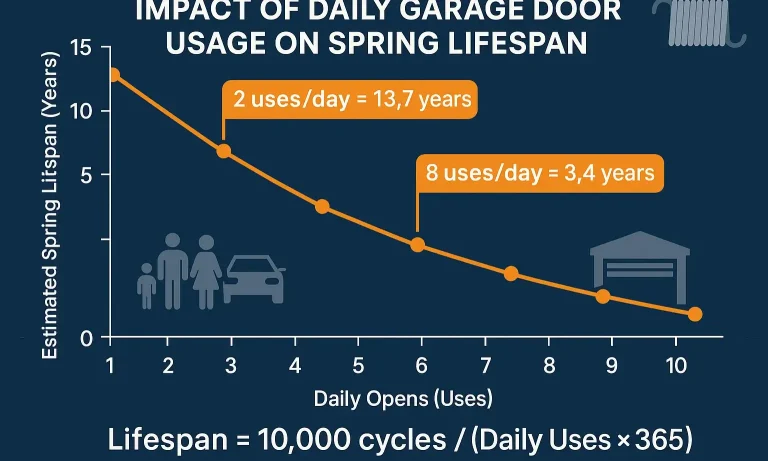
Here’s something most homeowners never learn: garage door springs have a finite lifespan, measured in “cycles.” One cycle is a complete open and close of the door. The industry standard for a new garage door spring is 10,000 cycles.
That sounds like a lot, but for a busy household, those cycles add up shockingly fast. It’s the key piece of information that connects your family’s lifestyle directly to the health of your garage door.
The "Aha!" Moment: Calculate Your Spring's Real Lifespan
Let’s do some simple math. You can estimate your spring’s lifespan with this formula:
(10,000 Cycles / (Your Daily Uses x 365 Days)) = Expected Lifespan in Years
Take a look at how dramatically daily usage impacts a standard 10,000-cycle spring:
- 2 Daily Uses: For a single person leaving for work and returning, the spring will last ~13.7 years.
- 4 Daily Uses: For a two-car household with both leaving and returning, the lifespan drops to ~6.8 years.
- 8 Daily Uses: For a busy family with kids, bikes, and after-school activities, expect the spring to last only ~3.4 years.
- 12 Daily Uses: For households with multiple drivers, deliveries, and constant in-and-out traffic, the spring will wear out in just ~2.3 years.
Seeing this, it becomes clear why that “once-a-year” maintenance advice might not be enough for your home. Your springs could be headed for failure in just a few years, not a decade. This is why understanding your actual garage door spring lifespan is so empowering.
The good news? You have options. When it’s time for a replacement, you can ask a professional about high-cycle springs, which are rated for 25,000, 50,000, or even 100,000 cycles. They are a smart investment for any high-traffic household.
The High-Cycle Maintenance & Inspection Plan
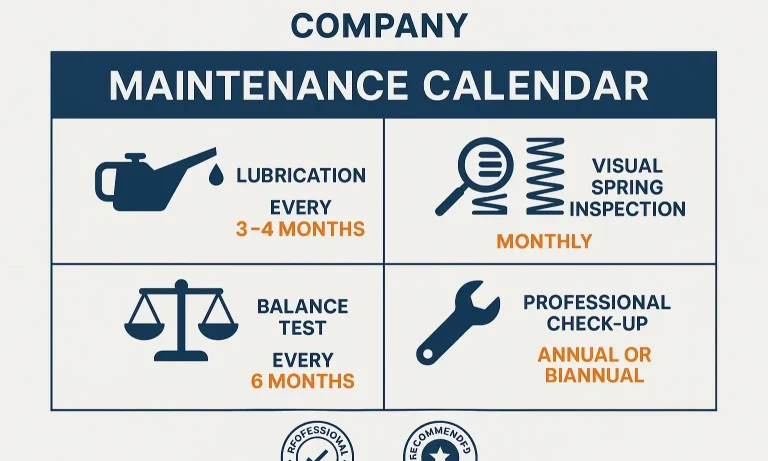
For a garage door that works as hard as yours, a proactive, more frequent maintenance plan is essential. Think of it like changing the oil in a car you drive for a living—you do it based on mileage, not just the calendar. Here’s a schedule tailored for busy homes.
Frequent Lubrication: Your Spring’s Best Friend (Every 3-4 Months)
Friction is the enemy of metal parts. Regular lubrication keeps the springs operating smoothly, reduces wear, and quiets down those annoying squeaks and groans. This is the single most important piece of proactive garage door spring maintenance you can do.
- What to use: A high-quality, lithium-based grease or a silicone spray specifically designed for garage doors.
- How to apply: Lightly coat the entire surface of the springs. You don’t need to soak them. For torsion springs, apply while the door is closed.
The Monthly Visual Check-Up
Once a month, take 60 seconds to look over the system. You’re not fixing anything, just looking for early warning signs. Knowing how to check garage door springs can help you catch a problem before it becomes a dangerous failure.
Look for:
- Rust: Any sign of corrosion is a red flag.
- Gaps: On a torsion spring, a 1-2 inch gap is a clear sign it has broken.
- Stretching: Extension springs that look elongated or have lost their tension need attention.
- Close the garage door.
- Pull the red emergency release cord to disconnect the opener.
- Manually lift the door to about halfway up.
- It should stay in place. If it slams down or shoots up, the springs are unbalanced and need professional adjustment.
The 6-Month Balance Test
An unbalanced door forces your opener to work harder, shortening its life and putting extra strain on the springs.
Don’t DIY: When to Call a Professional
While lubrication and inspection are safe for homeowners, any adjustment or garage door spring replacement is a job for a trained technician. The stored energy in springs can cause serious injury if released improperly. If you notice a broken spring or an unbalanced door, it’s time to call for professional service.
Common Mistakes That Shorten Spring Life
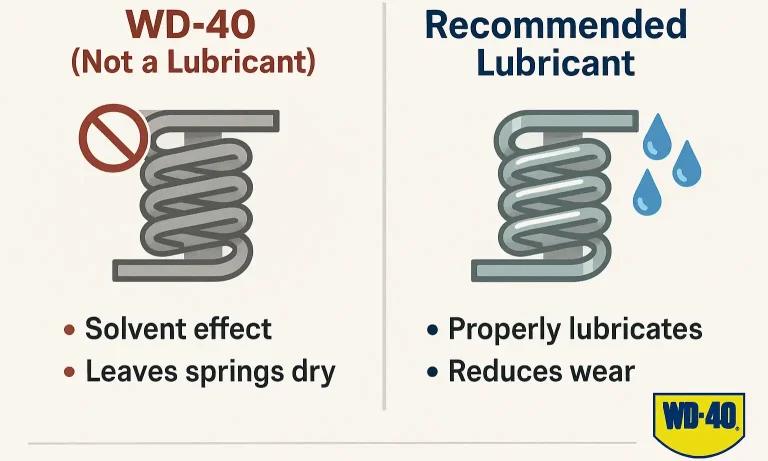
⚠️ Myth Buster: Why WD-40 is The Enemy of Your Springs
It’s tempting to grab that familiar blue and yellow can to fix a squeaky spring, but please don’t. WD-40 is a solvent and a degreaser, not a true long-term lubricant. It can actually strip away the grease that’s protecting your springs, leaving them vulnerable to friction and rust. Using the wrong product is a common cause of a noisy garage door fix that doesn’t last. Stick to products specifically made for this task.
Frequently Asked Questions (FAQ)
What’s that loud “bang” I heard in my garage?
That sudden, gunshot-like noise is almost always a torsion spring breaking. Because it’s under so much tension, it releases its energy instantly when it fails. If you hear this, do not try to open the door with the automatic opener.
Are more expensive springs better?
Not necessarily “better,” but different. When you ask “what are the best garage door springs?”, the answer depends on your usage. High-cycle springs cost more upfront but offer a much longer service life, making them a more cost-effective choice for busy homes.
Can I replace a garage door spring myself?
We strongly advise against it. This is one of the most dangerous DIY home repairs. The immense torque in a wound torsion spring or the tension in a stretched extension spring can be lethal if handled incorrectly. This is a job where you need the expertise and specialized tools of a professional.
How does weather affect my springs?
Extreme cold can make the steel in springs more brittle and susceptible to breaking, which is why many spring failures happen during the winter. Big temperature swings can also cause the metal to expand and contract, adding stress. Incorporating spring checks into your seasonal garage maintenance tips is always a good idea.
Protecting Your Investment for the Long Haul
Your garage door is more than just an entryway; it’s a critical piece of your home’s machinery, especially in a household that relies on it from dawn till dusk. By understanding that your high-cycle lifestyle requires a higher standard of care, you can move from a reactive to a proactive mindset.
Calculating your spring’s true lifespan, committing to a frequent maintenance schedule, and using the right products aren’t just chores—they are smart investments in the safety, reliability, and longevity of your home. You’ll not only prevent a sudden breakdown that can derail your busy schedule but also ensure your garage door is ready for every departure and arrival your family makes.
You May Also Like
The Ultimate Garage Door Spring Maintenance Checklist for Homeowners
Your garage door springs are among the smallest yet most critical components of your garage door system. They support the weight every time your garage door opens or closes. While they are often overlooked, regular…
Published Date: Feb 5, 2025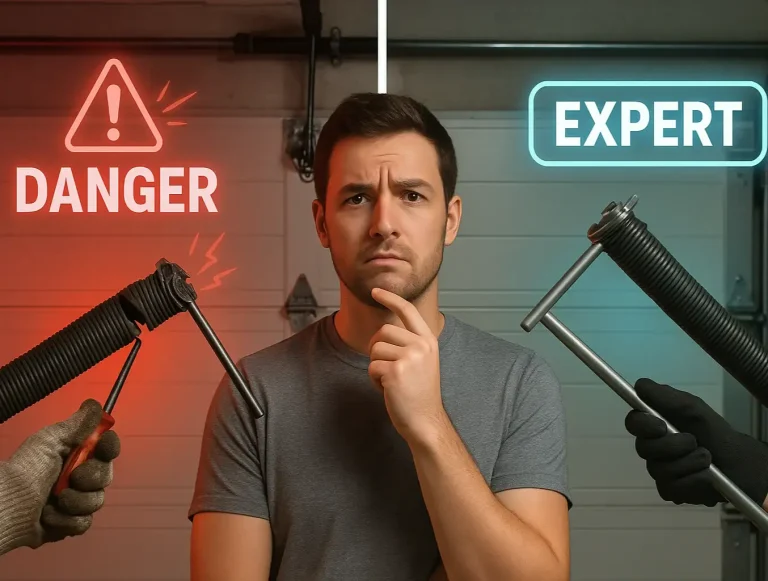
DIY vs. Professional Garage Door Spring Maintenance
It often starts with a sound you can’t ignore—a loud BANG from the garage, sharp enough to make you jump. You open the interior door and find nothing has fallen. But when you press the button for the garage door, it…
Published Date: Apr 10, 2026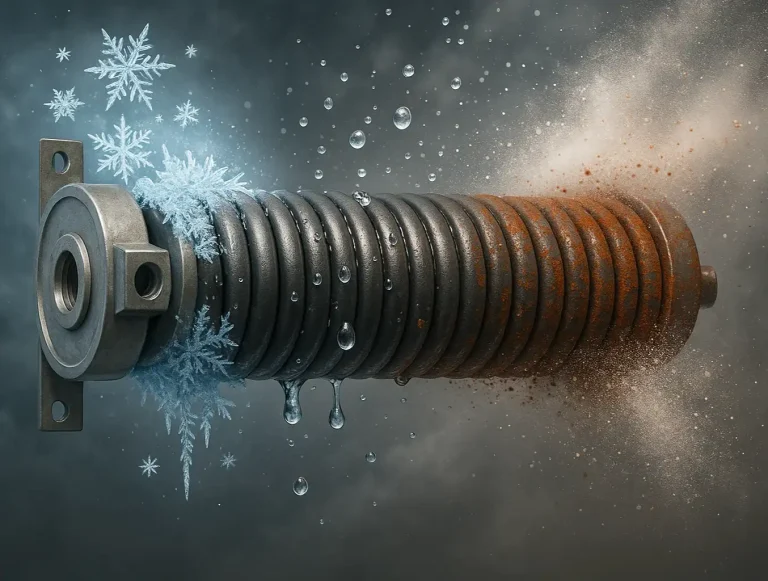
Garage Door Spring Maintenance in Extreme Weather
Think of your garage door springs as a ticking clock. With every cycle, they wind and unwind under immense tension, lifting hundreds of pounds of weight. But here’s something most homeowners don’t realize: the…
Published Date: Apr 9, 2026