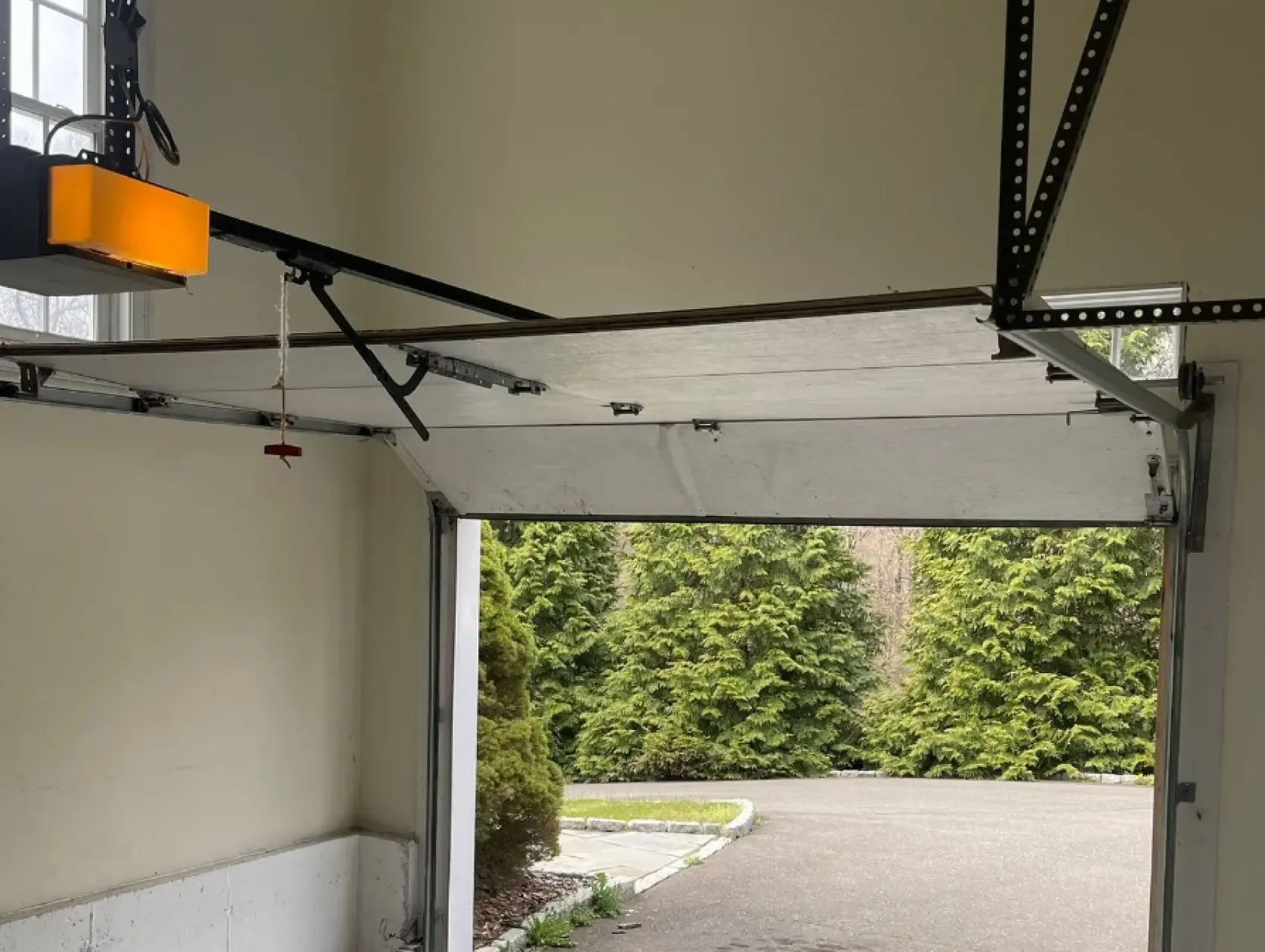
Garage Door Track Misalignment After Vehicle Impact
Published: Apr 6, 2026
It’s a sound every homeowner dreads: the jarring crunch of a car making unintended contact with the garage door. That "oh no" moment is often followed by a rush of questions. Is it a big deal? Can I still open the door? Is this going to be expensive?
So, you’ve just hit your garage door track with your car. It happens more often than you think. Before you try to operate the door or reach for a hammer, let's take a deep breath and walk through a quick, safe assessment. This guide will help you understand the severity of the damage, know when a repair is feasible, and recognize when replacement is the only safe option.
Foundation: Your Immediate Safety Triage
A garage door is a heavy, complex system operating under extreme tension. A damaged track compromises its stability, turning it into a significant safety hazard. Before you do anything else, follow these three non-negotiable safety steps.
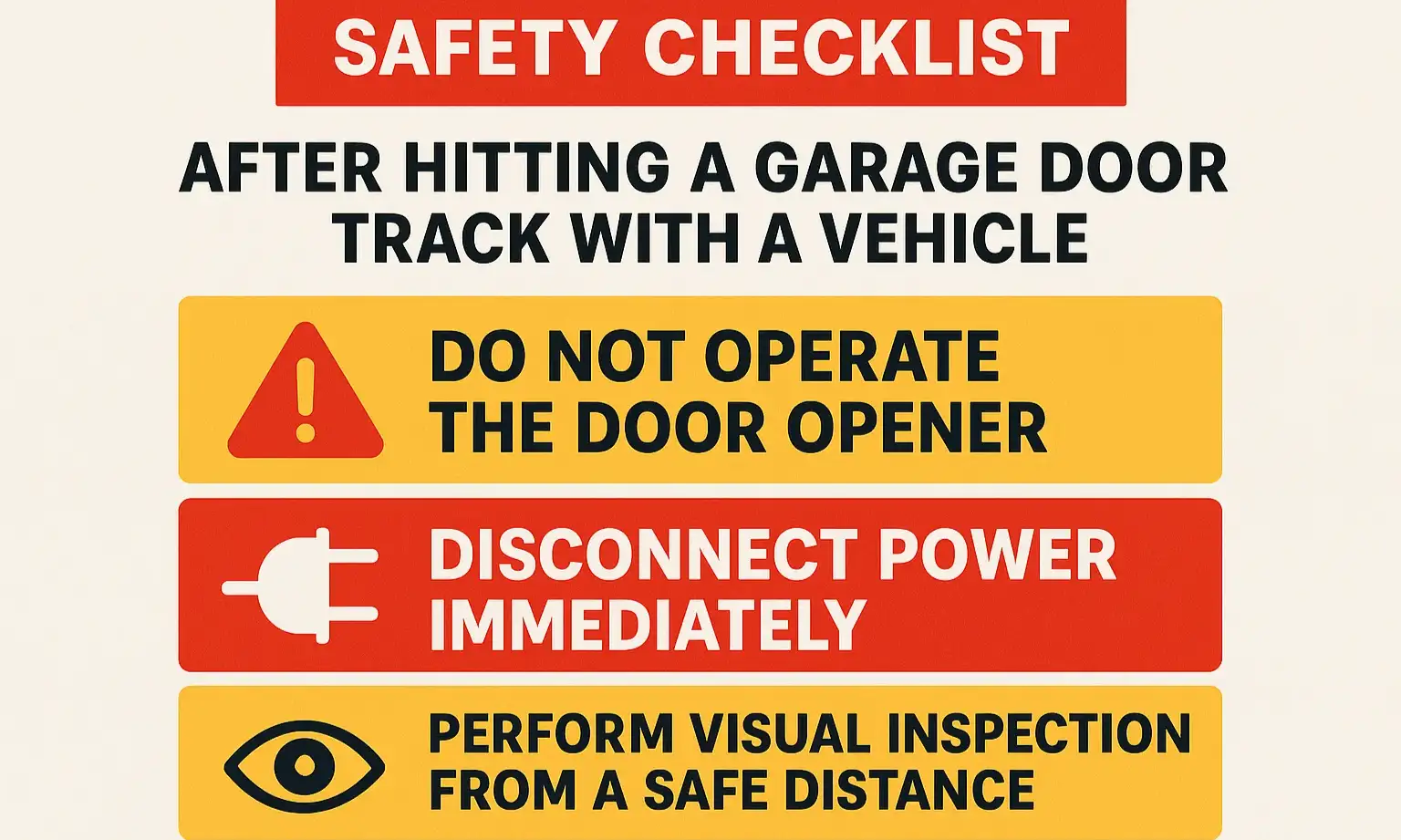
Your 3-Step Safety Checklist
- DON'T Operate the Door: Do not press the button on your remote or wall-mounted opener. Attempting to force a door with a damaged track can cause rollers to pop out, cables to snap, or the door to fall completely.
- Disconnect the Power: Unplug the garage door opener from the ceiling outlet. This prevents anyone from accidentally trying to operate the door while you assess the situation.
- Inspect from a Safe Distance: Look at the tracks from a few feet away. Do you see obvious bends, creases, or parts pulled away from the wall? Get a clear picture of the problem before getting too close.
The garage door tracks are the unsung heroes of the system, guiding the heavy door panels up and down smoothly. When a track is bent, even slightly, it disrupts this path. This creates immense strain not just on the track itself, but on the rollers, cables, and opener motor, a concept known as systemic impact. Ignoring this can lead to a cascade of expensive failures.
Building: A Visual Diagnosis of Track Damage
Now that the area is safe, it's time to become a detective. The type and severity of the damage are the biggest factors in the repair-versus-replace decision. What looks like a simple dent to the untrained eye could be a critical point of failure.
Use the guide above to identify what you’re seeing. Here’s a breakdown of the common types of damage:
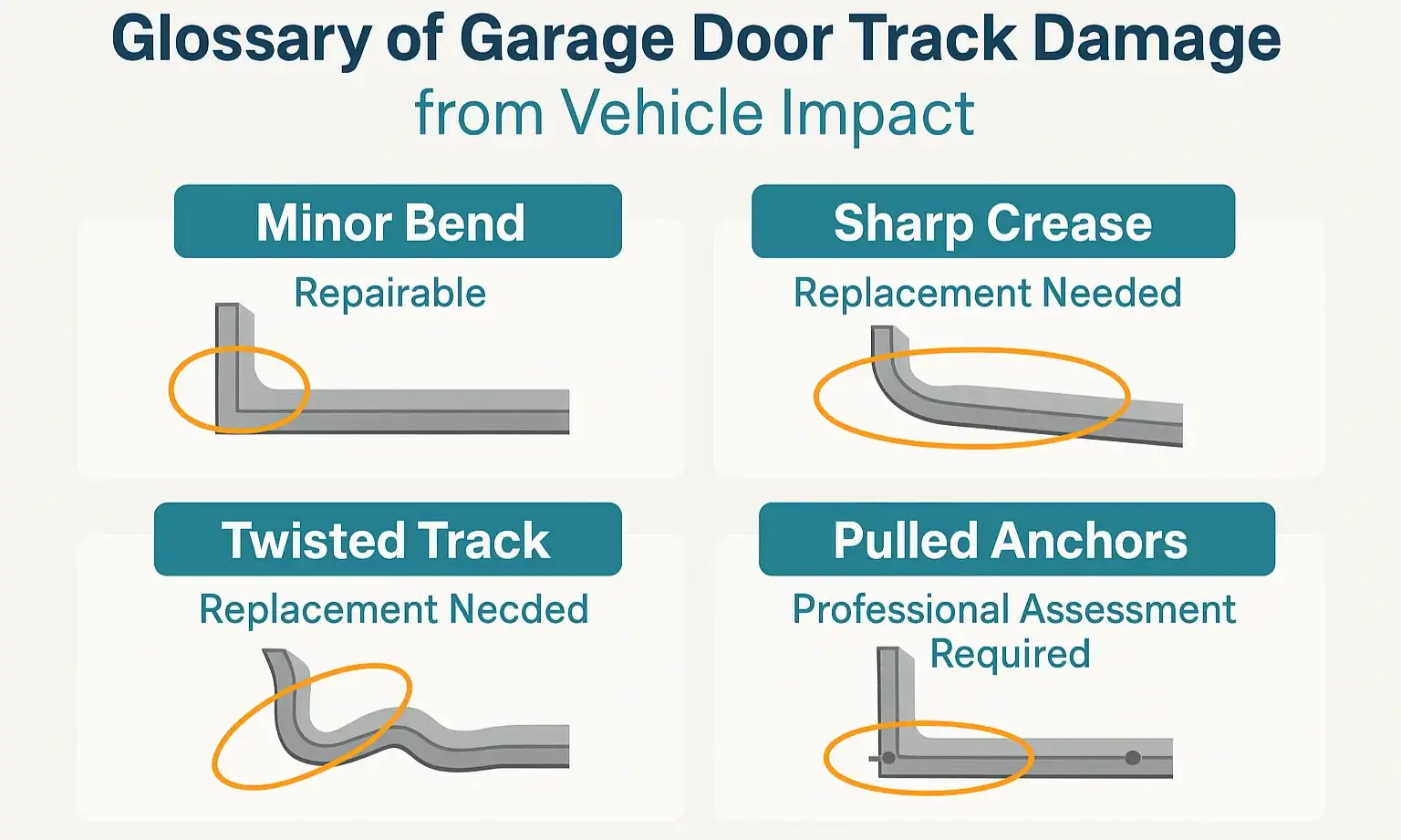
Minor Bend (Potentially Repairable)
A minor bend is a smooth, gentle curve in the track, usually over a small area. The metal is warped but not sharply creased or torn. If the rollers can still pass through (though you should not test this), a professional may be able to carefully reshape it. However, any bent garage door track compromises the metal's integrity.
Sharp Crease (Replacement Needed)
This is a dealbreaker. A sharp crease or fold in the metal indicates structural failure. Think of it like a deeply creased piece of paper—it will never be perfectly flat or strong again. Attempting to bend this back will only weaken it further, creating a dangerous point where rollers can snag and derail.
Twisted Track (Replacement Needed)
If the impact was severe enough to twist the track, its geometry is compromised. A twisted track will never allow the rollers to move freely, putting massive stress on the opener and increasing the risk of the door binding or falling. Proper garage door track alignment becomes impossible with twisted metal.
Pulled Anchors (Professional Assessment Required)
Sometimes the track itself is fine, but the impact has pulled the garage door track brackets away from the wall. This is a serious structural issue. The tracks must be perfectly plumb and securely fastened to support the door's weight. Re-securing them requires precise alignment and is not a simple DIY task.
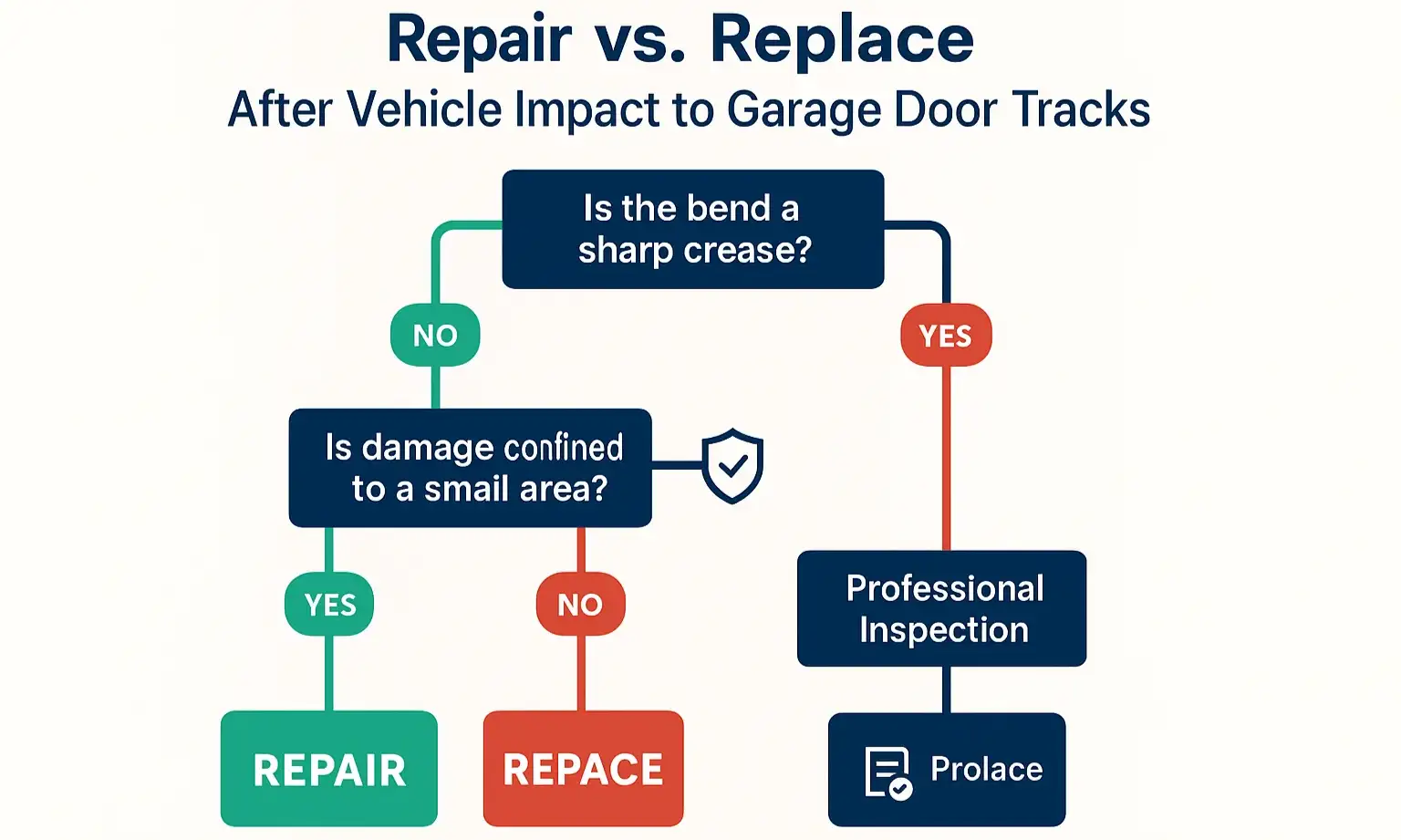
Mastery: The Decision Framework: Repair vs. Replace
You’ve assessed the damage. Now comes the big question. This decision tree simplifies the process, guiding you from the initial assessment to the safest, most logical conclusion.
Why a Quick Fix Is a Long-Term Problem
It can be tempting to grab a pair of pliers or a hammer and try to bend the track back into shape. This is almost always a mistake. Here's why:
- Metal Fatigue: Once bent, the steel is permanently weakened. Bending it back doesn't restore its original strength. It creates a weak spot that’s prone to failing under the door's immense weight and constant movement.
- Imperfect Alignment: Even a millimeter of misalignment can cause rollers to bind, creating friction that wears out your opener motor prematurely. You might save a little money on a track repair only to face a much more expensive opener replacement down the road.
- Safety Risks: The fundamental question is can a damaged garage door be repaired safely? When it comes to tracks, the answer is often no. A compromised track is the weakest link in a system holding hundreds of pounds over your head.
Action: Your Path to a Safe Resolution
Unless the damage is incredibly minor (a small, smooth dent), the safest and most reliable solution involves professional help. The forces at play are too great, and the risks of a DIY repair gone wrong are too severe.
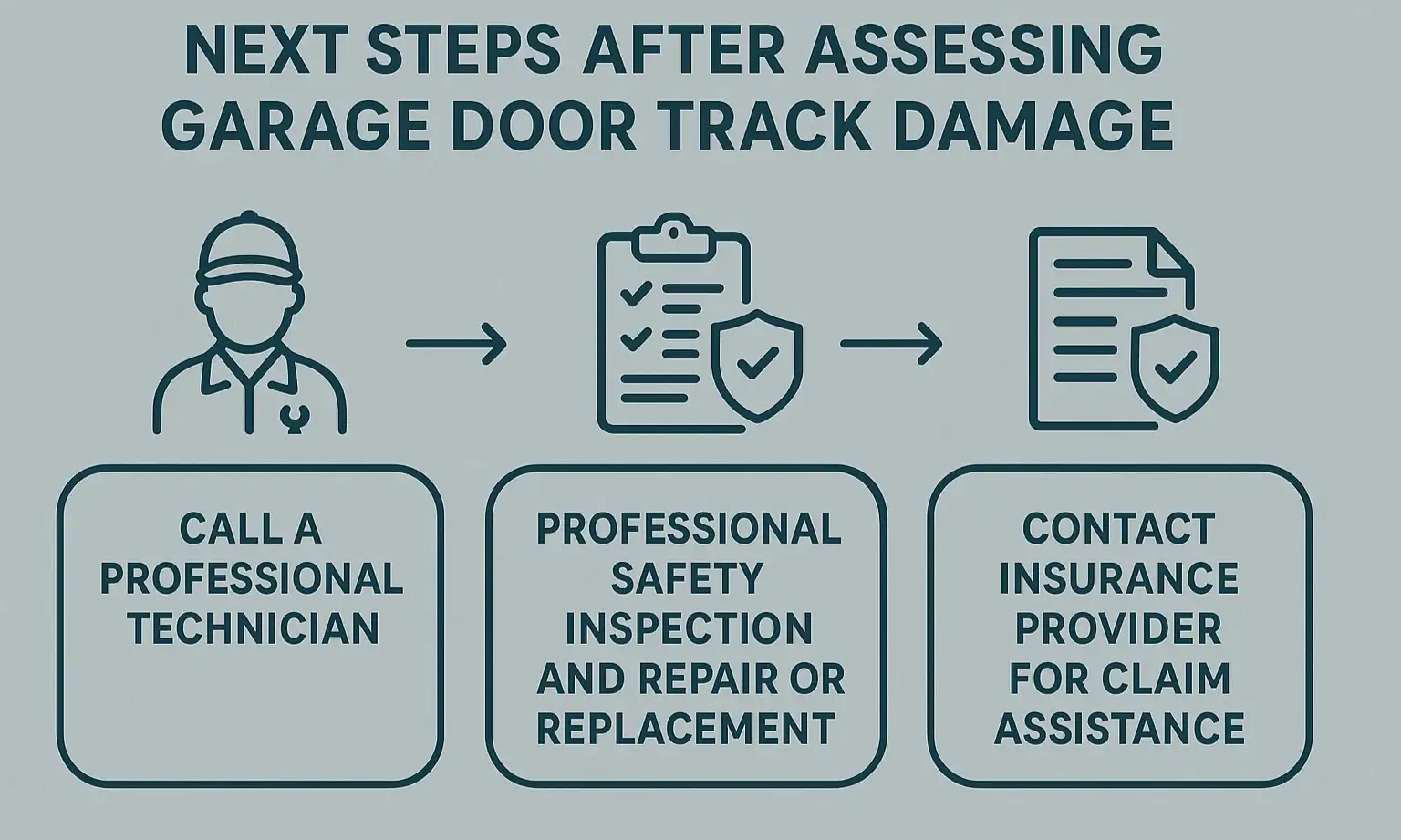
When to Call a Professional (Hint: Almost Always)
Deciding between DIY vs. professional emergency garage door repair: which is better? For track damage caused by a vehicle, a pro is the only safe choice. A trained technician can:
- Accurately Assess: They can spot hairline fractures or subtle twisting you might miss.
- Safely Secure the Door: They have the tools and training to secure the door before beginning work, preventing it from falling.
- Ensure Perfect Alignment: They will replace and align the new track to the manufacturer's specifications, ensuring smooth, safe operation for years to come.
- Inspect the System: They will check for collateral damage to rollers, cables, and the opener that you may not have noticed.
Navigating an Insurance Claim
Many homeowners and auto insurance policies cover this type of accident. Before you call, be prepared:
- Take Clear Photos: Document the damage to the track and your vehicle from multiple angles.
- Don't Attempt Repairs: Making changes to the scene can complicate your claim.
- Get a Professional Quote: Your insurance company will need a detailed estimate for the repair or replacement from a reputable company.
Need more information?
Get a free quote
Frequently Asked Questions
Can a bent garage door track be fixed?
Only if the bend is very minor, smooth, and in a non-critical area. Any sharp crease, twist, or significant misalignment means the track must be replaced for safety and proper function.
Is it safe to open a garage door with a bent track?
Absolutely not. Attempting to operate the door can cause it to come off the track, potentially leading to a sudden, uncontrolled fall. This poses a serious risk of injury and can cause far more extensive damage to the door panels and opener.
What are the long-term risks of a poorly repaired track?
A poorly repaired track will cause constant friction and binding. This leads to premature wear on rollers, frayed cables, and a strained opener motor that will eventually burn out. It's a "pay now or pay much more later" scenario, with added safety risks. If you're wondering how to put garage door back on track after a minor issue, it highlights the importance of precise alignment—something a damaged track can't provide.
Your Next Steps
An impact with your garage door track can be stressful, but it doesn't have to be a catastrophe. By prioritizing safety, carefully diagnosing the problem, and understanding the risks, you can make an informed decision. For nearly every scenario involving a vehicle collision, replacement by a qualified professional is the right call for your safety and peace of mind.
Regular upkeep can help you spot issues before they become major problems. Consider reviewing a garage door maintenance checklist to keep your entire system in top shape.
If you're facing a damaged track, don't wait. Contact a trusted professional for an assessment. Whether you need an emergency garage door repair or a scheduled evaluation, getting an expert opinion is the safest next step.
You may also like