The Homeowner's Ultimate Guide to Garage Door Troubleshooting in Worcester, MA
Published: Feb 20, 2026
It’s a sound every homeowner dreads: the screech, the shudder, the groan, or worse—the silence when your garage door should be moving. That moment of frustration is universal. Your car might be trapped inside, your home's security feels compromised, and your day has just hit a major roadblock.
You're not alone, and the good news is that understanding what's wrong is the first step toward a solution. Many homeowners in Worcester face the same issues, from the harsh winters putting stress on components to simple wear and tear.
This guide is your trusted first touchpoint. Think of it as having a knowledgeable friend walk you through the diagnostics. We'll help you identify common problems, understand which tasks are safe for a little DIY investigation, and know exactly when to call a professional to ensure your safety and peace of mind.
What's Your Garage Door Doing? A Quick Diagnostic
- Is your door making a racket? (Loud noises, grinding, squeaking)
- Is it stuck? (Won't open or close at all)
- Is it acting possessed? (Closes then immediately reverses)
- Does it look crooked or lopsided? (One side is higher than the other)
- Is the opener not responding? (The motor doesn't even try to run)
The Foundation: Understanding the Anatomy of Your Garage Door
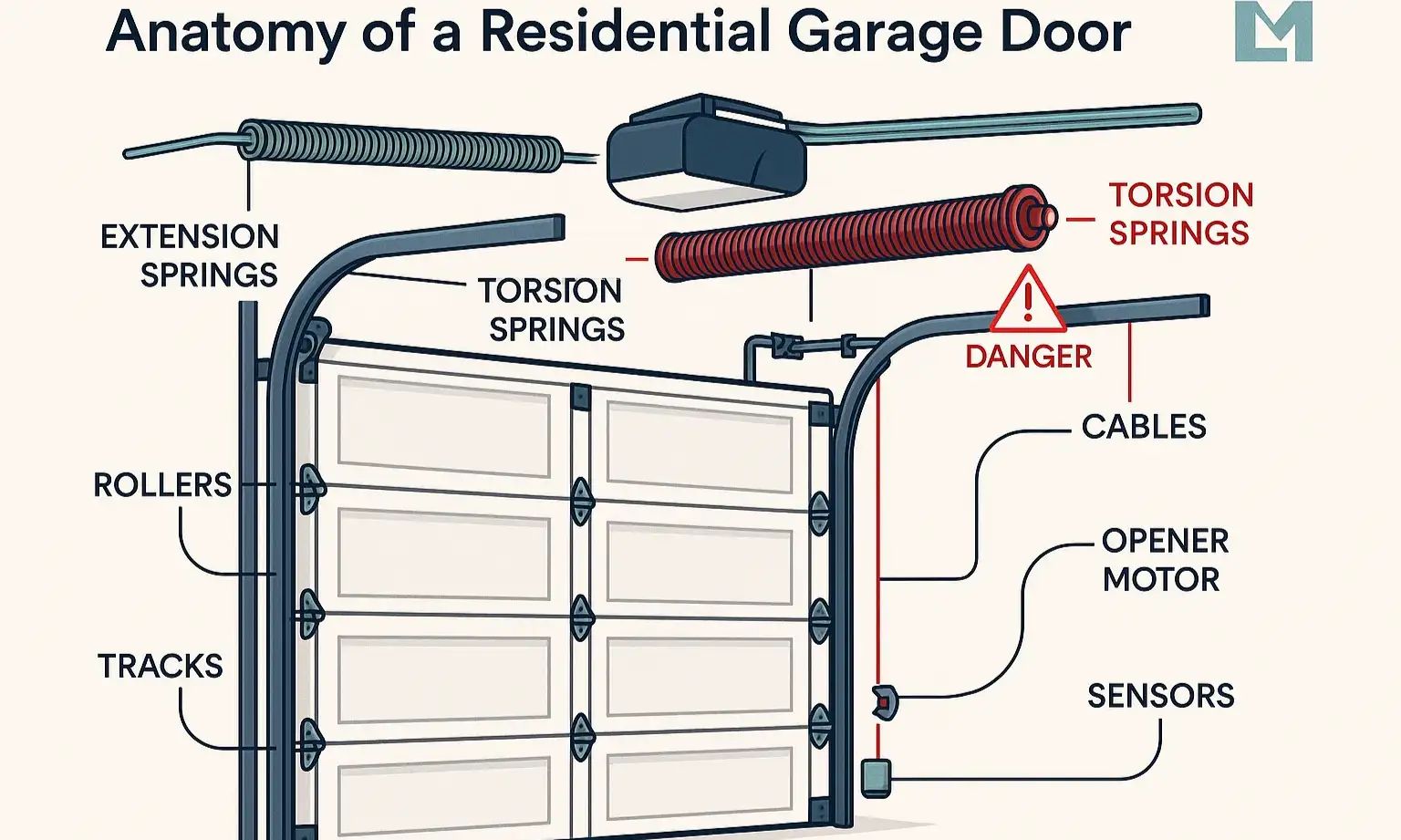
- Springs (Torsion or Extension): These are the muscles of the system. They do the heavy lifting so the opener doesn't have to. Torsion springs are mounted above the door, while extension springs run along the sides. They are under extreme tension and are the most dangerous part of the door.
- Cables: These steel cables are attached to the bottom of the door and work with the springs to lift and lower it safely and evenly.
- Rollers & Tracks: The rollers are the wheels that guide the door along the metal tracks on either side. Smooth operation depends on them being clean and aligned.
- Hinges: Hinges hold the panels of your door together and allow it to bend as it moves along the track.
- Opener & Motor: This is the brain and the brawn of the automatic system. It receives the signal from your remote and powers the movement of the door.
- Safety Sensors (Photo Eyes): These are two small sensors near the bottom of the track that project an invisible beam. If anything breaks this beam while the door is closing, it automatically reverses. This is a critical safety feature.
Common Problems & Step-by-Step Troubleshooting
Problem 1: The Garage Door is Unusually Noisy
- Inspect and Tighten: With the door closed, visually inspect all hinges and brackets. Use a socket wrench to gently tighten any loose nuts and bolts.
- Lubricate Moving Parts: Apply a garage-door-specific lubricant (a lithium or silicone-based spray) to the rollers, hinges, and springs. Never use WD-40, as it's a solvent that can strip away grease and attract dust.
Problem 2: The Door Closes, Then Reverses
- Check the Sensors: Look at the two sensors. Are the little LED lights on both of them lit and solid (not blinking)? If not, wipe the lenses with a soft cloth and make sure nothing is blocking their path. You can gently adjust them by hand until both lights are solid.
- Clear the Tracks: Visually inspect the tracks for any debris and clear it out.
- Check the Door's Path: Make sure no objects are physically in the way of the door.
Problem 3: The Door Looks Crooked or is Off-Track
- STOP! Do Not Operate the Door: Do not try to open or close the door, either manually or with the opener. This can cause catastrophic failure, making the situation much worse and more dangerous.
- Visually Inspect (From a Safe Distance): Look for a snapped cable near the bottom corners of the door or a visible gap in one of the springs above the door.
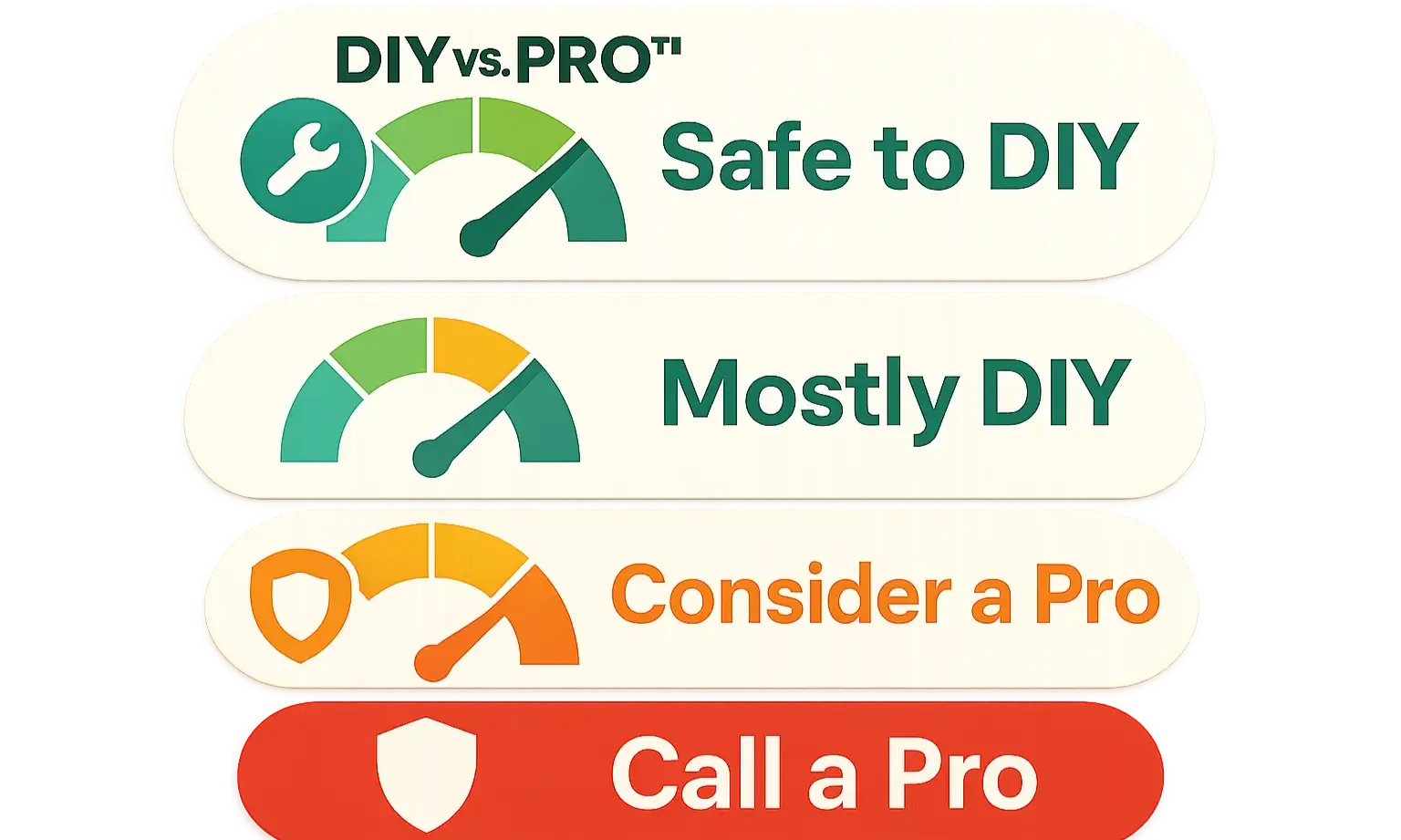
- Call a Professional Immediately: This is not a DIY situation. The tension in the remaining spring and cables is immense and unpredictable.
The Big Decision: Repair a Part or Replace the Whole Door?
- Age of the Door: If your garage door is over 15-20 years old, replacing it might be more cost-effective in the long run than continuing to fix aging parts.
- Extent of Damage: A single dented panel can often be replaced. However, if multiple panels are damaged or the door structure is compromised, a full garage door replacement is the safer option.
- Energy Efficiency: Modern doors offer significantly better insulation, which can lower your energy bills—a major plus during Worcester's cold winters.
- Curb Appeal and Technology: A new door can dramatically boost your home's appearance. It's also the perfect time to upgrade to a smart garage door opener that you can control from your phone.
When to Hire a Pro in Worcester, MA
- Spring Repair or Replacement: This is non-negotiable.
- Cable Repair or Replacement: Cables are also under high tension and connected to the spring system.
- Replacing the Entire Door or Panels: Proper garage door installation ensures the door is balanced, safe, and sealed correctly.
- Door Off-Track Issues: A technician has the right tools to safely realign the door without causing further damage.
Need more information?
Get a free quote
Frequently Asked Questions
What's the most common garage door repair?
Can I just replace one broken spring?
What's the difference between torsion and extension springs?
My garage door panel is dented. Do I need a whole new door?
Your Next Step to a Safe and Functional Garage Door
You may also like