Garage Door Weatherstripping: A Simple Upgrade with Big Benefits
Published: Dec 8, 2025
Sealing your garage may not seem urgent — until cold air, rainwater, or pests make their way inside. Garage door weatherstripping is a small investment that makes a big difference in insulation, comfort, and protection. In this guide, we’ll explain the types of weatherstripping for garage doors, key benefits, and when to replace worn seals. If you need support, Up & Down Garage Doors is here to help with expert advice and installation.
Top 3 Reasons: Why Garage Door Seals Matter
Small gaps around your garage door can lead to high energy bills, moisture damage, and even pest problems. Proper sealing ensures your garage stays cleaner and more comfortable all year.
1. Energy Efficiency
A sealed garage helps regulate indoor temperatures by preventing air leaks. This is especially important if your garage shares a wall with your home.
2. Protection from Moisture and Dirt
Garage door weatherstripping blocks water, dust, and debris — especially after heavy rains or snow melt.
3. Pest Prevention
Proper seals can stop insects, mice, or other rodents from sneaking through gaps. Adding a garage door rodent guard enhances this protection.
Want to dive deeper into the benefits? Read more about how garage door seals save energy.
Types of Garage Door Weatherstripping
Each part of your door needs a specific type of seal. Choosing the right combination ensures full coverage and performance.
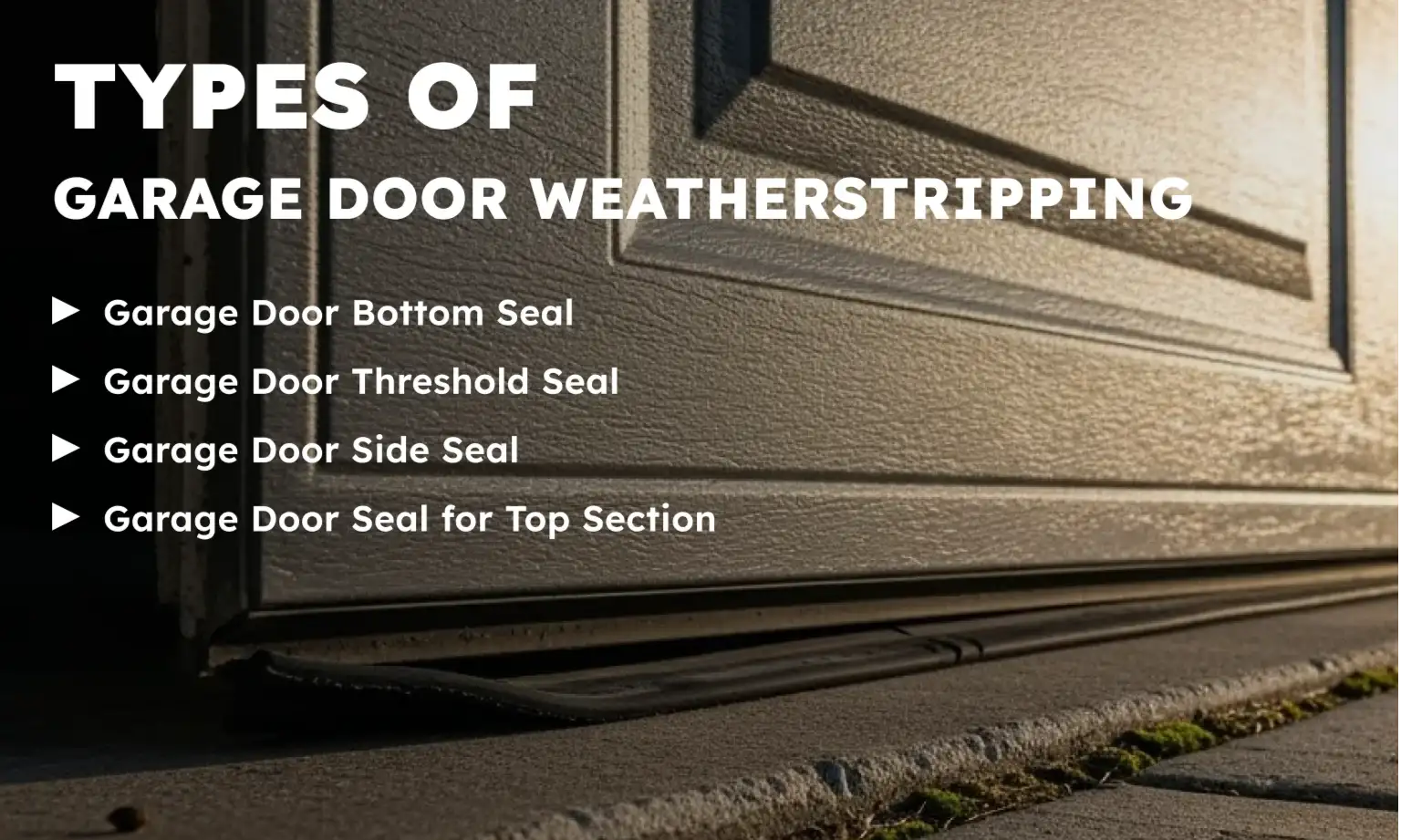
Garage Door Bottom Seal:
Bottom seals compress to block air and water when the door is closed. Popular styles include T-style, bulb, and beaded seals.Garage Door Threshold Seal:
Installed directly on the floor, the garage door threshold seal is ideal for uneven surfaces. It keeps out rain, debris, and insects.Garage Door Side Seal:
These flexible strips run along the vertical sides of the door, sealing out wind and dust. Kits like the garage door side seal kit make installation easier.Garage Door Seal for Top Section:
This completes the insulation by sealing the top edge — crucial for older doors or high-wind areas.
How to Choose the Best Garage Weather Stripping
Choosing the right garage door weatherstripping depends on a few key factors: your location, door condition, and the types of gaps you’re sealing. Here’s how to make the best choice for your setup:
Consider Your Climate:
If you live in a region with cold winters or high humidity, rubber weatherstripping offers better flexibility and longer life. In milder areas, vinyl is more affordable and gets the job done.Check the Door and Floor Type:
Flat garage floors pair well with standard bottom seals. Uneven surfaces benefit from a garage door threshold seal, which creates a tighter seal against the ground.Inspect for Gaps or Air Leaks:
Walk inside your garage during the day and look for light along the bottom and edges. If you spot any, it’s time to seal garage door gaps using a combination of bottom, side, and top seals.Combine Sealing Solutions:
For full insulation and pest control, use multiple products: a bottom seal, a garage door side seal, and a threshold. This layered protection is especially useful in garages with high traffic or mixed-use space.
Installation Tips: DIY or Professional Help?
Installing garage door weatherstripping can be a simple DIY task — as long as your door and floor are in decent shape. Otherwise, professional help may be the better choice.
Weatherproofing Tips for DIYers
If you’re comfortable with basic tools, sealing your garage can be a weekend project.
Measure Before You Cut:
Double-check the length needed. A proper fit ensures full coverage without over-compression.Clean the Surface First:
Use a clean, dry cloth to remove oil, dirt, or old adhesive. This helps the new seal stick properly.Inspect Every Year:
Weatherstripping wears out. Catching damage early prevents bigger problems like drafts or water leaks.
When to Hire a Pro
Uneven or Sloped Floors:
If your garage floor isn’t level, standard seals may leave gaps that let air, water, and rodents in.Misaligned or Damaged Doors:
A seal won’t work if the door doesn’t close evenly. Alignment issues must be fixed first.Custom Doors or Seal Types:
Some garage doors — especially older or oversized ones — need tailored seals or installation techniques.
Want the job done right the first time? Ask about our full-service garage door insulation services for reliable sealing and energy savings.
Need more information?
Get a free quote
When to Replace Garage Door Weatherstripping
Not sure if your current seal is still working? Watch for these signs — they often indicate it’s time for a replacement.
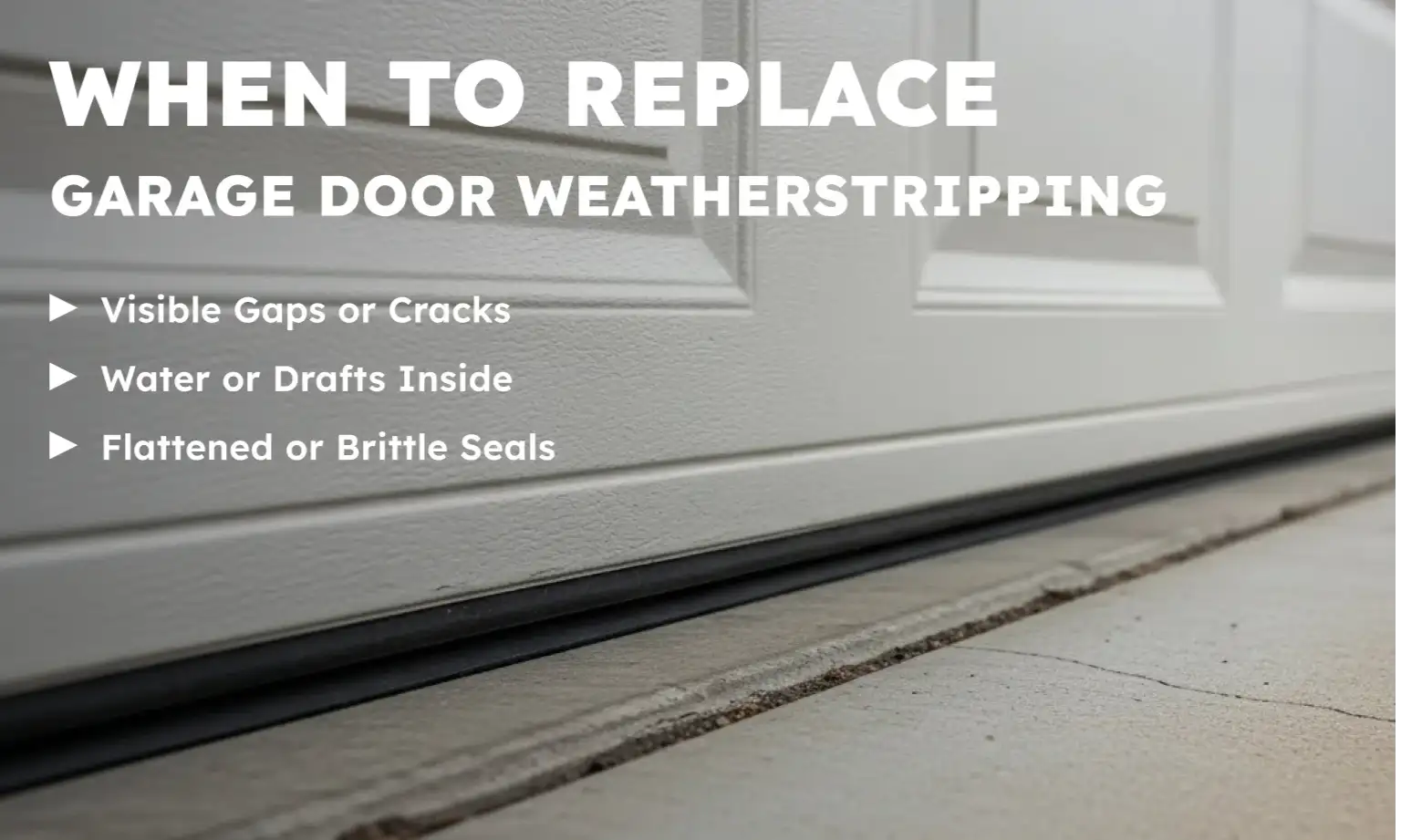
Visible Gaps or Cracks:
Seeing daylight under the door or at the sides? That means air, water, and pests can get through.Water or Drafts Inside:
If you spot water trails, dirt, or feel a draft, the seal has likely worn out and no longer blocks outdoor elements.Flattened or Brittle Seals:
Over time, seals dry out and lose flexibility. If they feel stiff or break when bent, it’s time for garage door weather stripping replacement.
Thinking of fixing it yourself? Start with our DIY guide on how to replace garage door weather stripping.
Trust Up & Down Garage Doors for Expert Weatherstripping Solutions
Whether you’re sealing a new install or upgrading an older door, the right weatherstripping for your garage door can improve comfort, lower energy bills, and extend your door’s life.
Not sure what type of seal you need? Want to skip the DIY hassle? If you’re unsure about compatibility or want long-lasting results without guesswork, we’re here to help. Up & Down Garage Doors offers honest advice, expert installation, and high-quality parts to keep your garage fully protected. Need support with sealing, insulation, or upgrades? Call us today or explore more through our trusted repair and service options.
FAQ: Garage Door Weatherstripping
What’s the best weatherstripping for garage doors?
Rubber is ideal for durability and extreme weather. Vinyl works well in dry, mild areas.
How do I know if I need new weatherstripping?
Check for light, drafts, or moisture. Any of those indicate it’s time for a replacement.
Can I replace weatherstripping myself?
Yes, many homeowners complete the task easily with the right tools. Start with a simple bottom seal or side seal kit.
How often should garage door weatherstripping be replaced?
Typically every 2–3 years, depending on use and climate conditions.
Does weatherstripping help with insulation?
Absolutely. Seals help maintain indoor temperature, which makes insulated garage doors even more effective.
You may also like