Our company logo

State

The Hartford Homeowner's Ultimate Garage Door Guide


Published: Feb 23, 2026

It’s a frosty Hartford morning. You’re already running five minutes late, coffee in hand, when you hit the button on your garage door opener. Nothing happens. Or worse, you hear a grinding noise, and the door moves a few inches before stopping crooked in its tracks.

Suddenly, your day is on hold.

For most of us, the garage door is the largest moving part of our home, yet we only think about it when it fails. But it’s so much more than a simple convenience. It's a key part of your home's security, its curb appeal, and even its energy efficiency. Think of it less as a door and more as a dynamic system that needs a little understanding to work flawlessly for years.

This guide is your starting point. Consider this your friendly conversation about everything a Hartford-area homeowner should know about their garage door, from basic anatomy to making smart choices that save you money and headaches down the road.

Garage Door 101: Understanding Your Home's Largest Moving Part


Before you can troubleshoot a problem or make a smart purchase, it helps to know the key players. A garage door system is a brilliant mix of simple physics and engineering.

  • The Panels: This is the "door" itself, typically made of three to eight horizontal sections that are hinged together.
  • The Tracks: These metal guides on either side of the door are what the rollers move along, ensuring the door travels up and down smoothly.
  • The Rollers: These are the wheels that sit inside the tracks. Worn-out rollers are a common cause of a noisy, shaky door.
  • The Springs (The Muscle): This is the most critical—and dangerous—part of the system. The springs, not the opener, do the heavy lifting. They are wound with immense tension to perfectly counterbalance the weight of the door. If you’ve ever heard a sudden, deafening BANG! from your garage, you’ve likely experienced a broken spring.
You'll typically see one of two types of springs. Extension springs run alongside the horizontal tracks, stretching and contracting like giant rubber bands. Torsion springs, a more modern and safer standard, are mounted on a bar above the door opening. While both do the job, torsion springs provide a more controlled, balanced lift.
Homeowner Mistake to Avoid: Never, ever attempt to adjust or replace garage door springs yourself. They are under extreme tension and can cause severe injury or worse if they snap. This is a job strictly for a trained garage door technician in Hartford. Dealing with a broken garage spring repair in Hartford CT is one of the most common service calls for a reason—it requires specialized tools and knowledge to be done safely.

How to Choose the Perfect New Garage Door for Your Hartford Home

A new garage door is one of the best home improvement projects for return on investment. It instantly boosts curb appeal and can significantly improve your home's energy efficiency. But where do you start?
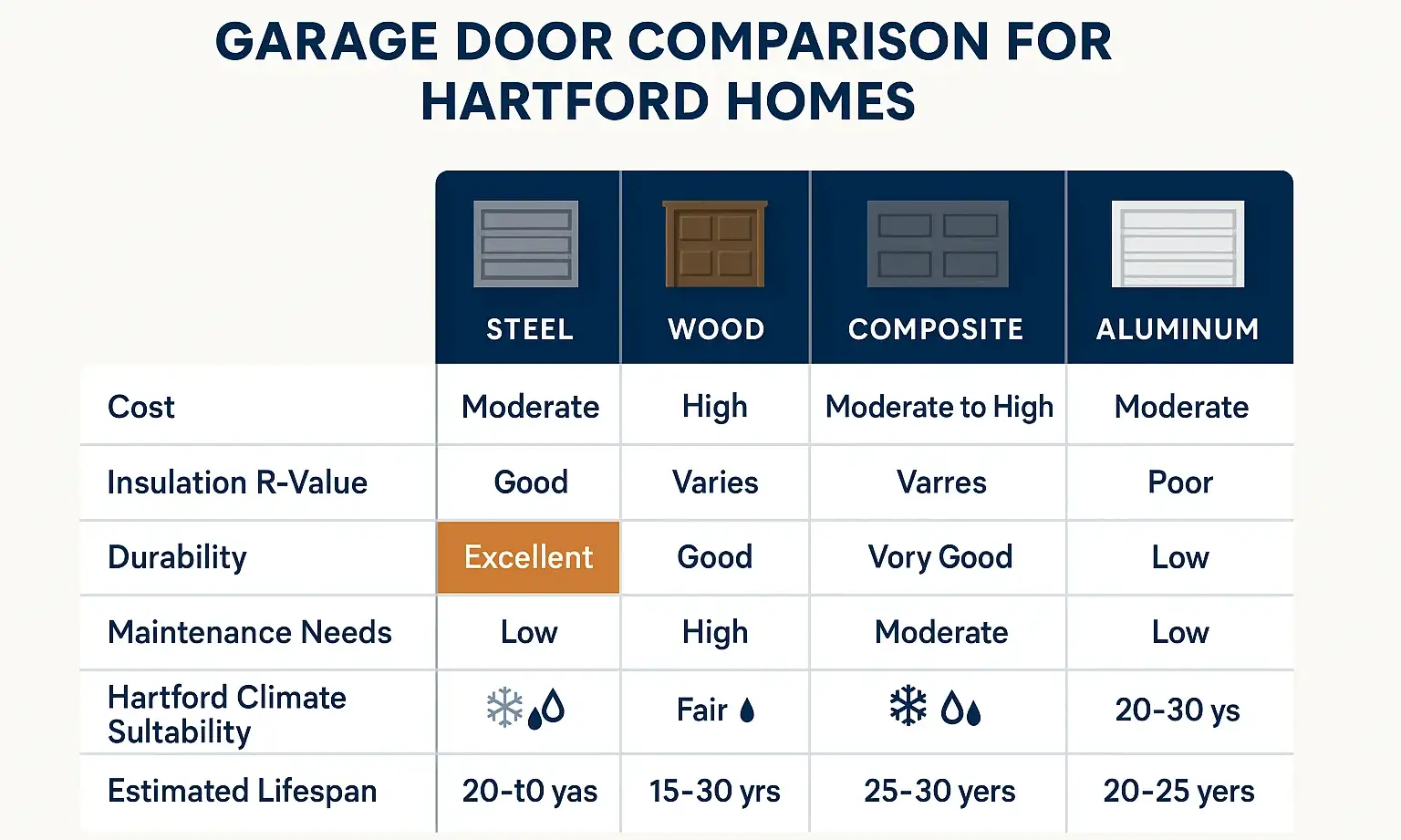
Garage door material comparison chart showing steel, wood, aluminum, and fiberglass pros, cons, and best uses for Hartford homes.

Materials Matter, Especially in New England

The material you choose impacts your door's appearance, durability, maintenance needs, and price.

  • Steel: The most popular choice for a reason. It's durable, relatively low-maintenance, and available in countless styles and colors. For Connecticut's climate, look for a multi-layer steel door with a high R-value for insulation.
  • Wood: Offers unmatched beauty and a classic look that complements many New England homes. However, it requires regular painting or staining to protect it from our humid summers and snowy winters.
  • Aluminum: Lightweight, rust-proof, and great for modern homes, but it's more prone to dents than steel.
  • Fiberglass: Can mimic the look of wood without the maintenance, but it can become brittle in extreme cold.

The Power of Insulation (R-Value)

Most garage door guides mention insulation, but few connect it directly to your wallet. R-value measures thermal resistance—the higher the number, the better the insulation. In a climate like ours, an insulated garage door is not a luxury; it's a smart investment. It keeps your garage warmer in the winter and cooler in the summer, which is especially important if you have living space above or adjacent to it. This can translate directly into lower energy bills and a more comfortable home.
Garage door material comparison chart showing steel, wood, aluminum, and fiberglass pros, cons, and best uses for Hartford homes.

The Ultimate DIY Garage Door Maintenance Checklist for Every Season in CT
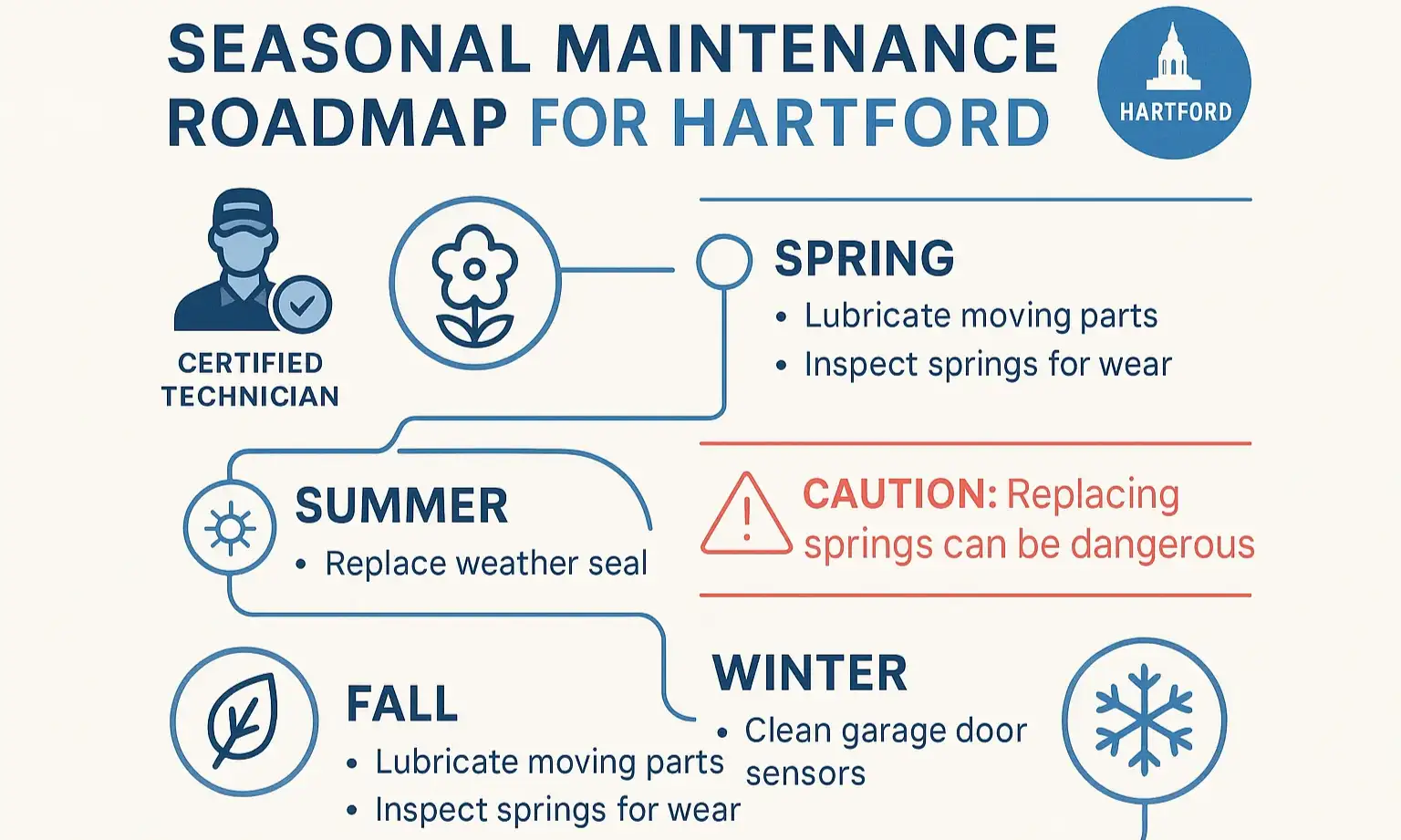

The best way to avoid a surprise emergency garage door repair is through simple, proactive maintenance. Most of the common repairs we see are the result of neglected preventative care. By spending just 15 minutes a couple of times a year, you can add years to the life of your door and opener.
Seasonal garage door maintenance infographic with spring, summer, fall, and winter tasks.
Your Seasonal Checklist:

  • Look and Listen (Monthly): As your door operates, watch its movement. Is it jerky? Is it making new scraping or grinding noises? Often, your ears will detect a problem before it becomes serious.
  • Tighten Hardware (Twice a Year): The constant vibration can loosen the bolts and brackets that hold your door together. Take a few minutes with a socket wrench to ensure everything is snug.
  • Test the Auto-Reverse (Twice a Year): This is a critical safety feature. Place a 2x4 board flat on the ground in the door's path. When the door touches the board, it should immediately reverse. If it doesn't, the opener needs adjustment.
  • Check the Photo Eyes (Monthly): The small sensors at the bottom of the track on each side project an invisible beam. If anything breaks this beam, the door won't close. Wipe the lenses with a soft cloth and make sure they are aligned (the small LED lights on them should be solid). This simple step can solve many "door won't close" mysteries.
  • Lubricate Moving Parts (Annually): Use a high-quality garage door lubricant spray (not WD-40!) on the rollers, hinges, and springs to keep them operating quietly and smoothly.
Seasonal garage door maintenance infographic with spring, summer, fall, and winter tasks.

Smart Garage Door Openers: A Complete Guide for CT Homeowners
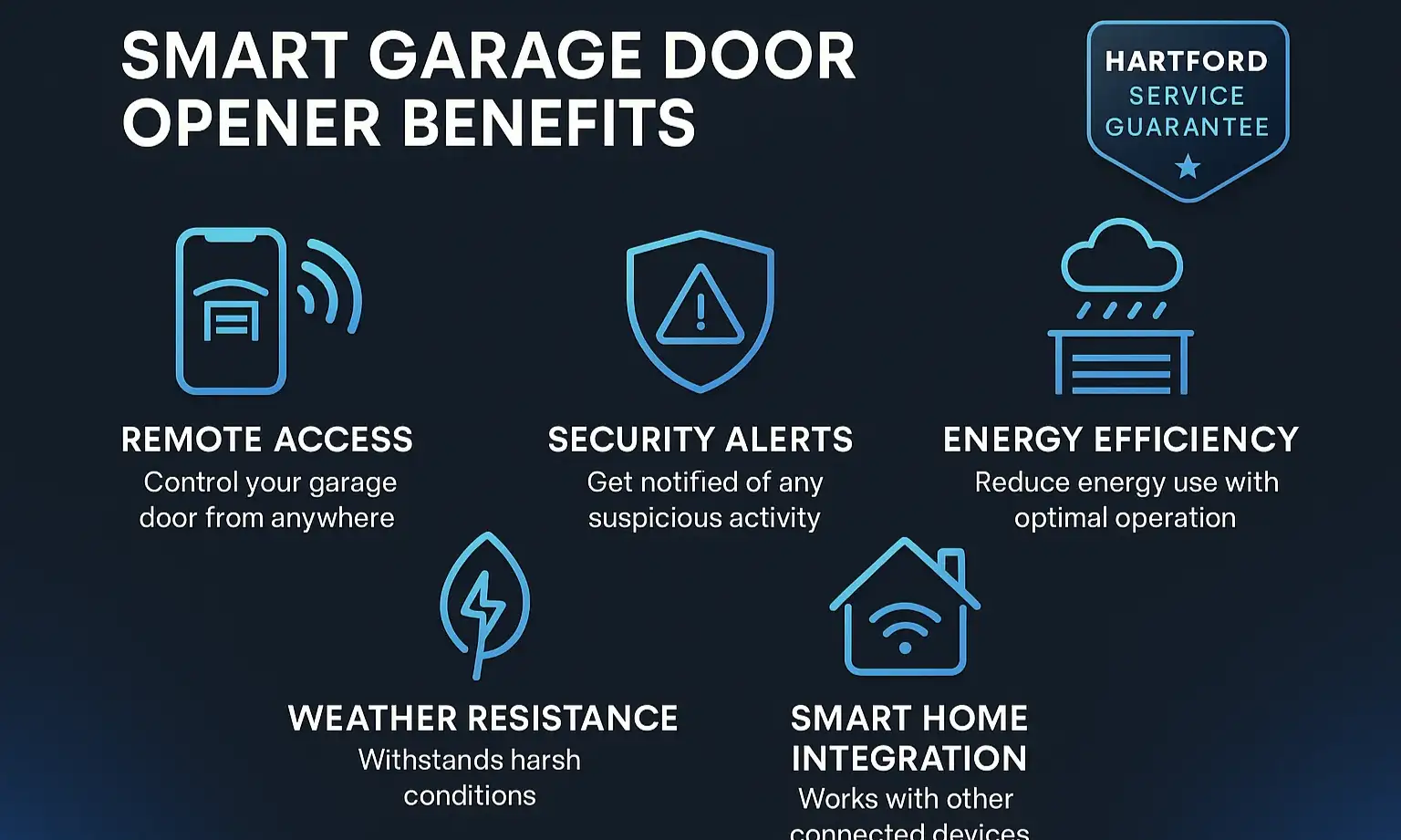

The garage door opener has evolved far beyond a simple remote in your car. Today's smart openers integrate your garage into your connected home, offering a new level of convenience and security. If your opener is more than 10 years old, it's worth exploring what a modern unit can do.
Graphic showing smart garage opener benefits: phone control, secure delivery access, and instant alerts for a Hartford home.
Key Benefits of a Smart Opener:

  • Remote Access: Open or close your garage door from anywhere in the world using your smartphone. Did you forget to close it on your way to work? Check the app and close it with a tap.
  • Activity Alerts: Get notifications on your phone whenever the door is opened or closed, giving you peace of mind when you're away.
  • In-Garage Delivery: Safely allow services like Amazon Key to deliver packages inside your garage, protecting them from weather and theft.
  • Voice Control: Integrate with systems like Alexa or Google Assistant to open your door with a simple voice command.
When considering a new opener, you'll also want to think about the drive type. Belt drives are prized for their ultra-quiet operation, making them the perfect choice for garages with living spaces above them. Our guide to choosing the best smart garage door opener can help you navigate all the options. Whether you need a brand-new unit or a simple garage door opener repair, modern technology has a solution.
Graphic showing smart garage opener benefits: phone control, secure delivery access, and instant alerts for a Hartford home.

Need more information?

Frequently Asked Questions for Hartford Homeowners


How do I know if my garage door spring is broken?

The most common sign is a loud bang, often described as sounding like a firecracker or gunshot. Afterward, the garage door opener will struggle or be completely unable to lift the door, which will feel incredibly heavy if you try to lift it manually.

Can I just replace one panel of my garage door?

Absolutely. If you have minor damage, like a dent from a car bumper or a stray baseball, a garage door panel replacement is often a much more cost-effective solution than replacing the entire door. A technician can match the color and style of your existing panels.

How often should I get my garage door professionally serviced?

We recommend a professional tune-up and safety inspection once a year. The harsh seasonal changes in Connecticut—from humid summers to icy winters—can take a toll on your door's components. An annual check-up can catch small issues before they become major, expensive problems.

I live in West Hartford. Do you provide service in my area?

Yes! As a local family-owned business, we are proud to serve the greater Hartford community, including dedicated services for garage door repair in West Hartford and the surrounding towns.

Your Next Step


Your garage door is a hardworking part of your home that deserves attention. By understanding its basic components, performing simple maintenance, and knowing when to call a professional, you can ensure it operates safely and reliably for years to come.
Whether you're just starting to research a new door, troubleshooting a noisy opener, or in need of immediate assistance, we believe an informed homeowner is a happy homeowner. If you have more questions or need the help of a trusted local expert, the team at Up & Down Garage Doors is here for you 24/7.

You may also like


blog photo

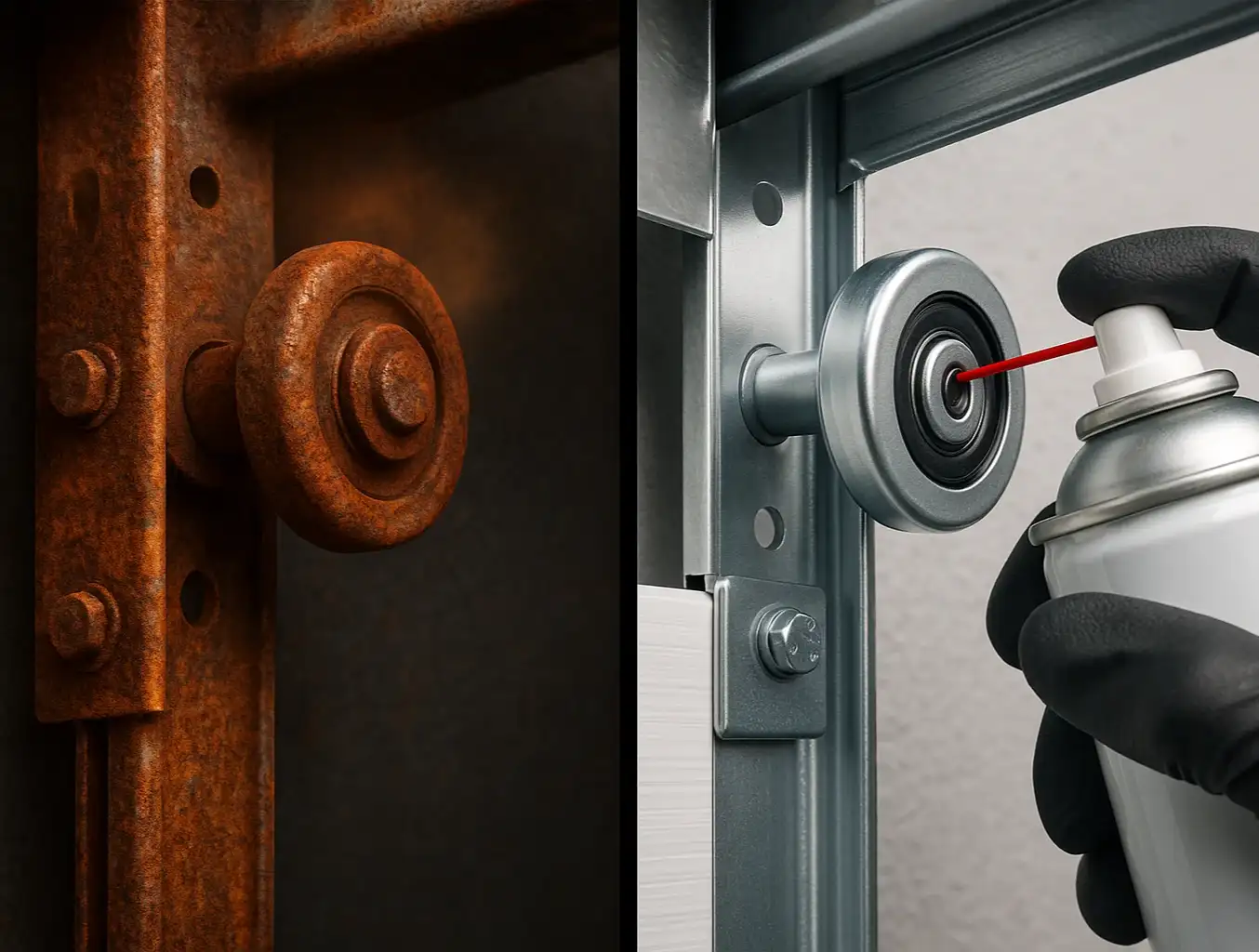
Fixing Rust on Garage Door Tracks and Rollers

Ever been jolted by a sudden grinding, squeaking, or shuddering noise as your garage door opens or closes? It’s a sound that makes you cringe, and for good reason. That noise isn't just an annoyance; it's a warning sign. Your garage door is trying to tell you something important about its health, and often, the culprit is a small, creeping problem you might not have noticed: rust. Many homeowners see a bit of rust on their garage door tracks or rollers and dismiss it as a cosmetic issue. But that reddish-brown coating is a performance killer. It creates friction, forcing your entire system to work harder and leading to bigger, more expensive problems down the line. The good news? You can often tackle this problem yourself. Understanding what's happening and why it matters is the first step toward a smoother, quieter, and longer-lasting garage door system. If you're looking for a more general guide to a noisy garage door fix, we have you covered, but here we’ll focus specifically on the damage caused by rust.