Our company logo

State

The Hartford Homeowner's Guide to Garage Door Problems


Published: Feb 6, 2026

Did you hear it? That sudden, jarring BANG from the garage that made you jump. Or maybe it’s a less dramatic but equally frustrating problem: the door groans and shudders on a cold Connecticut morning, refusing to open all the way. You’re not alone. These are the classic first signs that your garage door, the largest moving object in your home, needs attention.

When your garage door acts up, it’s easy to feel stuck. You know something’s wrong, but the system of springs, cables, and tracks seems incredibly complex. Where do you even begin?

You’re in the right place. This guide is designed for Hartford-area homeowners just like you. We're going to demystify your garage door system, help you diagnose common symptoms, and give you the knowledge to decide what to do next—safely.

Understanding the Anatomy of Your Garage Door


Think of your garage door as a team of components working in perfect harmony. When one part fails, the whole system is affected. Here’s a quick look at the key players:
The Springs (The Muscle): This is the most critical—and dangerous—part of the system. The springs, not the opener, do the heavy lifting. They are tightly wound under immense tension to counterbalance the door's weight. You’ll typically see one of two types:
  • Torsion Springs: A large spring (or pair of springs) mounted on a metal bar directly above the garage door opening.
  • Extension Springs: Two smaller springs that run along the sides of the upper tracks.
The Cables (The Connectors): These steel cables connect the spring system to the bottom of the door, transferring the lifting force. If one snaps, the door will likely become crooked and unmovable.
The Opener (The Brains): The motorized unit mounted on the ceiling is responsible for initiating the open and close cycles. While it seems like the powerhouse, it’s really just giving the door a nudge, with the springs doing the real work. Problems here often lead to issues like a garage door opener off tracks.
The Rollers & Tracks (The Path): The wheels on the side of your door (rollers) run within the metal tracks, guiding the door up and down smoothly. Worn-out rollers are a common source of grinding noises.
The Panels (The Face): These are the individual sections of your door. A dented or damaged panel can affect the door's movement and insulation. Deciding on a full or partial garage door panel replacement is a common homeowner dilemma.

What Is Your Garage Door Trying to Tell You? A Symptom-Based Guide


Instead of searching for technical terms you don’t know, let’s start with what you’re actually seeing and hearing.

Symptom 1: A Loud "BANG!" and the Door Won't Open

This is the number one call we get. That loud noise, often described as sounding like a firecracker, is almost always a broken torsion spring.
  • Likely Cause: A broken torsion or extension spring.
  • What to Look For: You'll see a visible gap in the middle of the large spring above your door.
  • Safety Risk: DANGER. The springs hold hundreds of pounds of energy. Never attempt to operate the door or repair the spring yourself. This is the most common cause of serious injury for DIYers. If you suspect a broken garage spring repair in Hartford CT is needed, call a professional immediately.

Symptom 2: The Door is Crooked or Sits Unevenly

You press the button, and one side of the door lifts while the other stays put, leaving it hanging at a scary angle.

  • Likely Cause: A snapped or frayed lift cable. Because the spring's lifting force is now only on one side, the door is pulled up unevenly.
  • What to Look For: A loose or broken cable dangling on one side of the door.
  • Safety Risk: HIGH. A door in this state is unstable and could fall. Do not try to move it. Professional garage door cable repair is essential to re-balance the door safely.

Symptom 3: The Door Reverses Immediately After Hitting the Floor

It goes down, touches the ground, and then shoots right back up.
  • Likely Cause: Your safety sensors are misaligned or blocked. These are the two small "electric eyes" near the bottom of your door tracks.
  • What to Look For: Check if the small LED lights on both sensors are lit and steady. If one is blinking, they are not aligned. Also, look for any objects (like a shovel or a spiderweb) breaking the beam.
  • Safety Risk: LOW. This is often a safe DIY fix. You can gently adjust the sensors until both lights are solid and clear any obstructions.

Symptom 4: Grinding, Squealing, or Jerky Movement

The door sounds like it’s in pain, moving in a shaky, non-uniform way.
Likely Cause: Worn-out metal rollers, debris in the tracks, or an issue within the opener itself.
What to Look For: Inspect the rollers. Are they cracked, wobbly, or worn down? Look for dents or dirt in the tracks that might be impeding movement.
Safety Risk: MEDIUM. While not as immediately dangerous as a broken spring, ignoring this can lead to the door coming off its tracks, which is a major safety hazard.

The Big Decision: DIY vs. Calling a Professional Hartford Technician


Knowing the problem is one thing; knowing how to fix it is another. Here’s a simple breakdown of what’s safe to tackle yourself and when you absolutely need to call a certified garage door technician.

Safe for a Weekend Project:

  • Clearing & Aligning Safety Sensors: As described above, this is a simple and safe adjustment.
  • Lubricating Moving Parts: Applying a silicone-based lubricant to rollers, hinges, and springs can quiet a noisy door.
  • Changing Remote Batteries: The easiest fix of all!
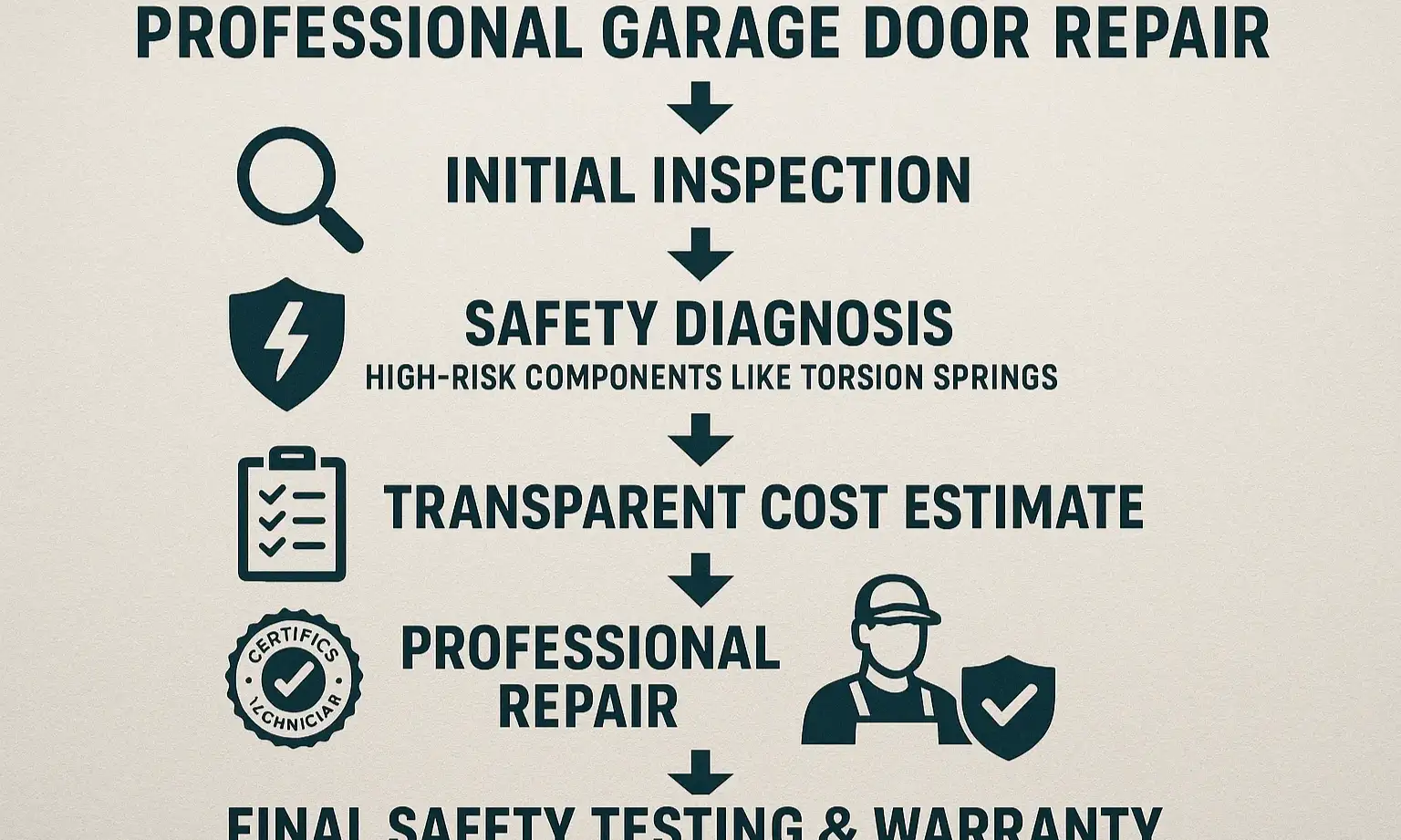
Our certified technicians follow a rigorous, safety-first repair process to protect your home and provide lasting peace of mind.

Leave It to the Professionals:


  • Anything Involving Springs or Cables: This cannot be overstated. These components are under extreme tension. A mistake can lead to severe injury or property damage.
  • Replacing Panels: This requires re-balancing the entire door system.
  • Putting a Door Back on Track: An off-track door is dangerously unstable and must be secured and reset by a trained professional.
Our certified technicians follow a rigorous, safety-first repair process to protect your home and provide lasting peace of mind.

Our Expertise & Safety Commitment


At Up & Down Garage Doors, we were founded by four brothers who believed that Hartford-area homeowners deserved better—an honest, professional, and reliable service they could trust. Our entire process is built around one core principle: safety first. We don't just fix the immediate problem; we inspect your entire system to ensure it operates safely for years to come.

Understanding Costs: Repair vs. Replacement in Connecticut


One of the most common questions we hear is, "Is it worth fixing, or should I just get a new door?" The answer depends on several factors: the age of your door, the extent of the damage, and your long-term goals.

  • When to Repair: A single malfunctioning component (like an opener or a broken spring) or damage to just one or two panels are excellent candidates for repair. A targeted fix is cost-effective and can add years to your door's lifespan.
  • When to Replace: If your door has widespread rust, multiple damaged panels, or is over 15-20 years old, replacement often provides better long-term value. A new garage door installation can dramatically boost your home's curb appeal, improve insulation, and come with modern safety and security features. If you're looking for garage door installation near me, a consultation can help you explore options.

Need more information?

Ready When You Need Us: Local Hartford Expertise


Our trusted Hartford garage door technicians deliver certified, emergency-ready, and locally recognized service to your home.
Garage door problems don't happen on a 9-to-5 schedule. That’s why having a local team ready to respond is so important. Whether you're in the city or need garage door repair in West Hartford, our technicians are part of your community. We understand the specific challenges New England weather poses and are equipped for any emergency garage door repair situation, 24/7.

Our trusted Hartford garage door technicians deliver certified, emergency-ready, and locally recognized service to your home.

Frequently Asked Questions


Is it worth repairing an old garage door?

If the door is structurally sound and the issue is with a single component like the opener or springs, a repair is almost always worth it. However, if the panels themselves are warped, rusted, or damaged, replacement becomes a more logical investment.

Should I replace just one panel or the whole door?

This depends on the age and model of your door. If a matching panel is available and the rest of the door is in good shape, replacing a single panel can be a great option. For older doors where a match is hard to find, or if there's damage to multiple sections, a full replacement is often the better choice.

What are the benefits of a smart garage door opener?

A smart opener is a fantastic upgrade for convenience and security. It allows you to open, close, and monitor your garage door from anywhere using your smartphone. You can also grant temporary access to visitors or delivery drivers and receive alerts if the door is left open. If you're curious, you can learn more about finding the best smart garage door opener for your home.
Your garage door is a gateway to your home. By understanding how it works and recognizing the signs of trouble, you can make informed, safe decisions. When you move past the DIY stage, we're here to help.

You may also like