The Houston Homeowner’s Guide to Garage Door Repair
Published: Mar 9, 2026
It’s a familiar sound in Houston: that loud, groaning screech of the garage door opening on a humid morning. You wince, hoping the neighbors don’t hear, and wonder, “Is that normal?”
Here’s the thing—it’s common, but it’s definitely not normal. That noise is your garage door telling you something is wrong. For many Houston homeowners, the garage door is the true front door, a complex machine that works tirelessly until, one day, it doesn't.
But where do you start? A quick search can feel overwhelming, pulling you between generic DIY blogs that don't account for our Gulf Coast climate and direct-to-business sites that just want to sell you a service.
This guide is different. We’re going to walk through this together, like a knowledgeable friend explaining it over coffee. We’ll help you diagnose the problem, understand the real impact of Houston's humidity and heat, and figure out what a fair price for a repair actually looks like in our city.
Hook (The Diagnostic Center): What Is Your Garage Door Trying to Tell You?
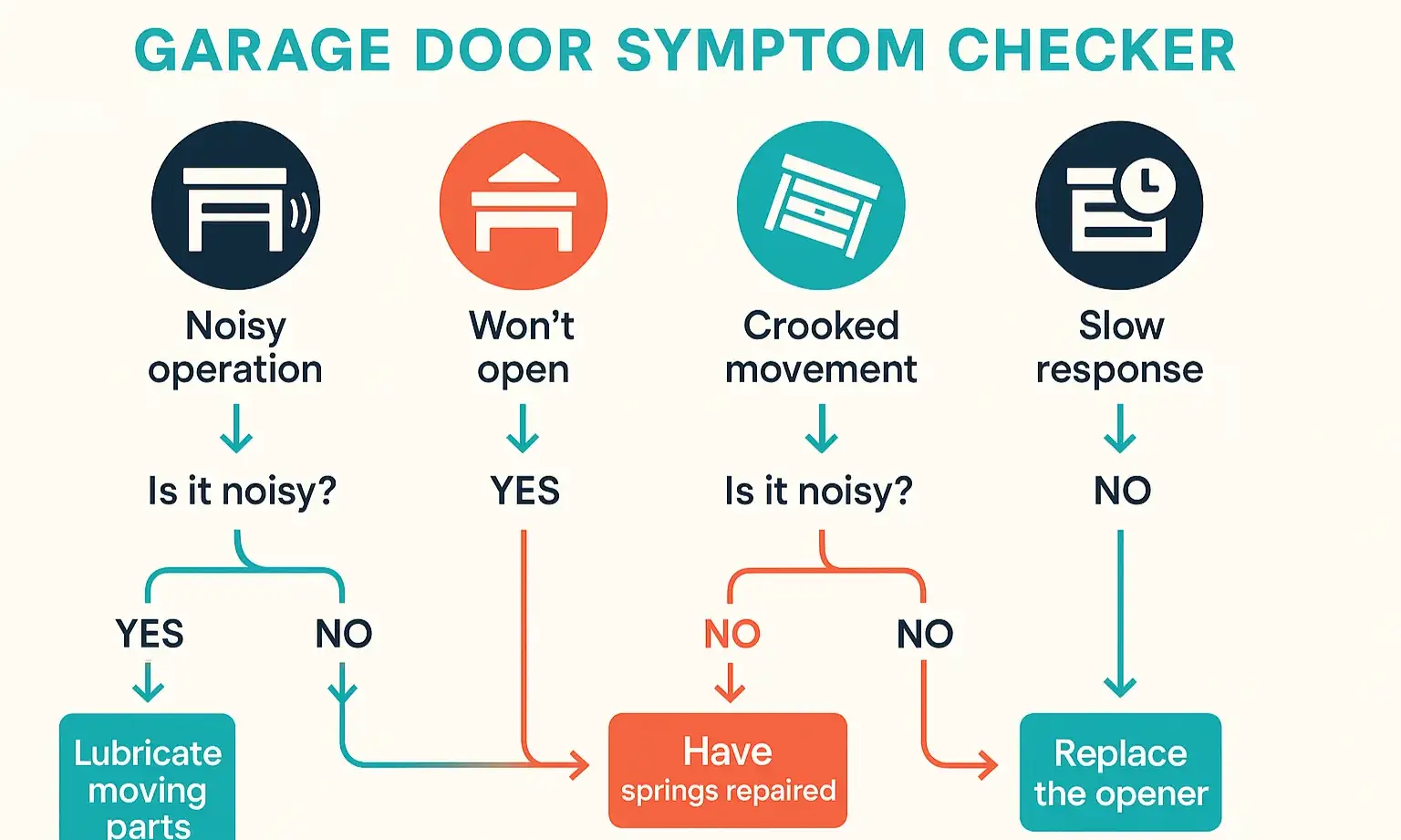
- Loud Grinding or Squeaking: This is often the first cry for help. It could be a simple lubrication issue, or it could be a sign of more serious problems like worn-out rollers or a spring that’s about to fail.
- The Door Opens Crooked or Gets Stuck: Stop using the door immediately. This usually points to a problem with the torsion springs or cables. One side is lifting, but the other isn’t, creating a dangerous imbalance.
- The Door Won’t Open or Close at All: If you hear the motor running but nothing is happening, you might have a broken spring. If the motor doesn’t even try, it could be an issue with the power source, photo-eye sensors, or the opener itself. A door that won't stay shut could indicate an issue with the opener's logic board or travel limits.
- The Door Reverses Before Hitting the Floor: This is almost always a safety sensor issue. The small "electric eyes" near the bottom of the door track are likely misaligned or obstructed. It’s an easy fix, but a critical one.
- The Door Feels Unusually Heavy in Manual Mode: If you disconnect the opener and can barely lift the door, your springs are no longer doing their job. They are meant to counterbalance the door's weight, and without them, you’re trying to lift hundreds of pounds on your own.
- The Door Is Stuck Shut: Sometimes, especially during power outages, you might be locked out. Learning how to open a stuck garage door from the outside can be a temporary lifesaver, but it doesn't fix the underlying issue.
Foundation (Garage Door 101): Understanding the Machine Above Your Car
- Torsion Springs: These are mounted on a bar above the garage door. They wind and unwind to lift the door’s weight. They are safer, more durable, and more common in modern homes.
- Extension Springs: These run alongside the horizontal tracks. They stretch and contract like a rubber band. They are typically found on older or smaller doors.
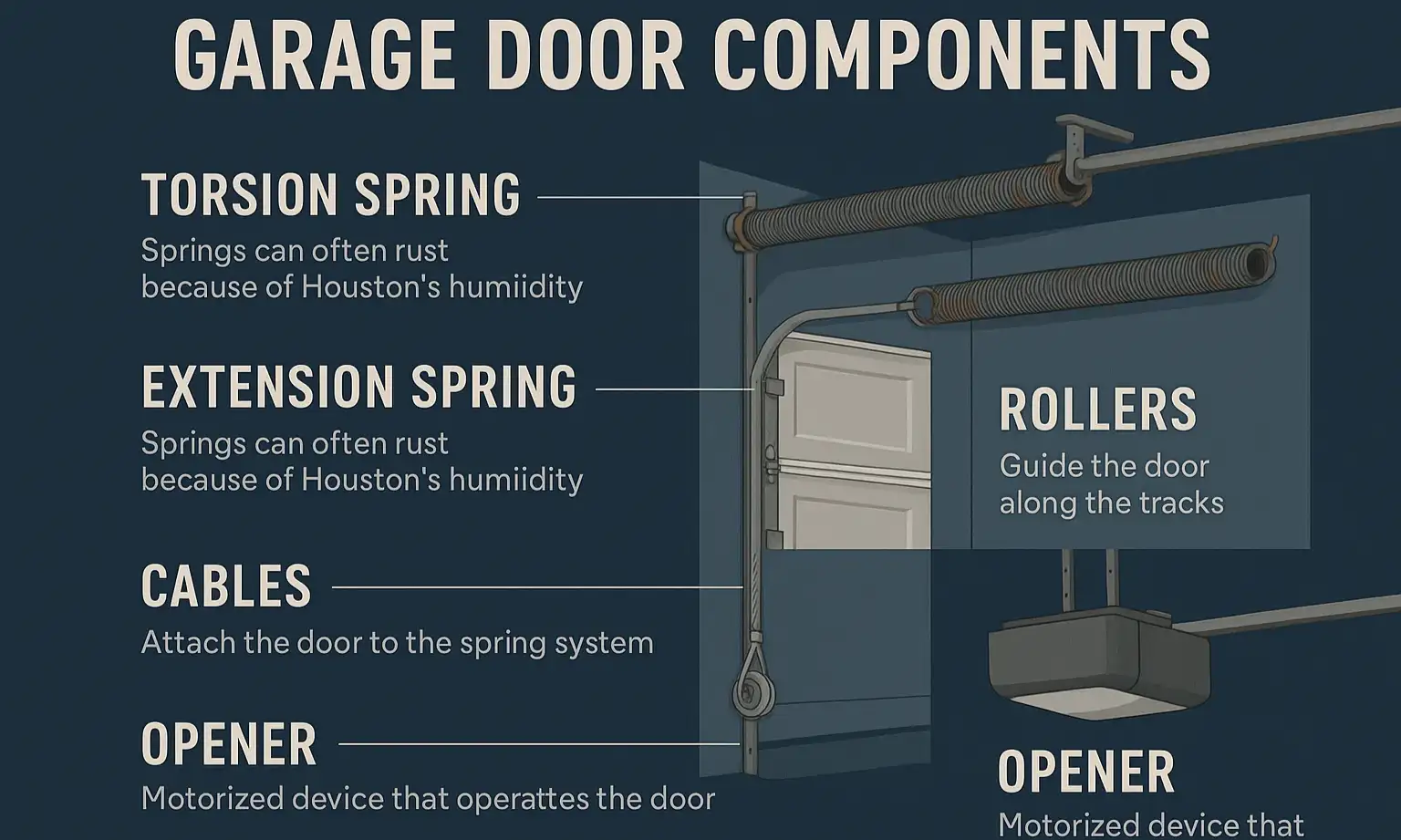
- The Opener (The Brains): The motor that directs the door. It doesn’t lift the weight; it simply guides the door along the track once the springs have counterbalanced the load.
- Cables & Rollers (The Supporting Cast): The cables connect the springs to the door, while the rollers sit in the tracks to guide the door up and down. Smooth, quiet operation depends on these parts being in good shape. It's the integrated function of these components that makes our Up & Down Garage Doors so consistently reliable.
Houston Homeowner Alert: How Our Climate Wages War on Your Garage Door
- Humidity & Rust: That thick, humid air is filled with moisture that settles on the metal parts of your door, especially the springs and tracks. This leads to rust, which causes friction, noise, and ultimately, premature failure. A broken garage spring repair is one of the most common jobs in our area, largely thanks to humidity.
- Heat & Electronics: The summer sun can bake your garage, turning it into an oven. This extreme heat can shorten the lifespan of the electronic components in your garage door opener, leading to unexpected failures.
Building (The DIY & Maintenance Hub): Small Fixes That Make a Big Difference
The "Aha Moment": WD-40 is Not a Lubricant
Your Houston-Specific Maintenance Checklist:
- Twice a Year (Spring & Fall): Lubricate all moving parts with the correct spray.
- Monthly: Test the safety sensors. Place a roll of paper towels in the door's path. When the door starts to close, it should immediately reverse upon detecting the object. If it doesn't, the sensors need adjusting.
- Before Hurricane Season: This is non-negotiable in Houston. Check that your door is properly braced and that all components are in good condition. A garage door is often the largest and weakest point of entry for hurricane-force winds.
- Visually Inspect: Once a month, just look at the cables, springs, and rollers. Do you see any rust, fraying, or broken parts? Catching these issues early is key.
SAFETY WARNING: What NOT to Do
Mastery (The Houston Homeowner's Repair Guide)
How to Choose a Reputable Houston Garage Door Company
- Check for Insurance: This is non-negotiable. Ensure they have liability insurance to protect your property.
- Look at Reviews: Don’t just look at the star rating. Read recent reviews on Google, Yelp, and Angi to see how they handle problems.
- Ask for a Clear Quote: A professional technician should be able to diagnose the issue and give you a firm price before any work begins.
- Local Presence: Choose a company with a real, physical address in the Houston area. This ensures they are part of the community and not a faceless national call center.
- Beware of "Too Good to be True" Deals: Extremely low service call fees are often used to get a foot in the door, followed by an aggressive upsell.
Need more information?
Get a free quote
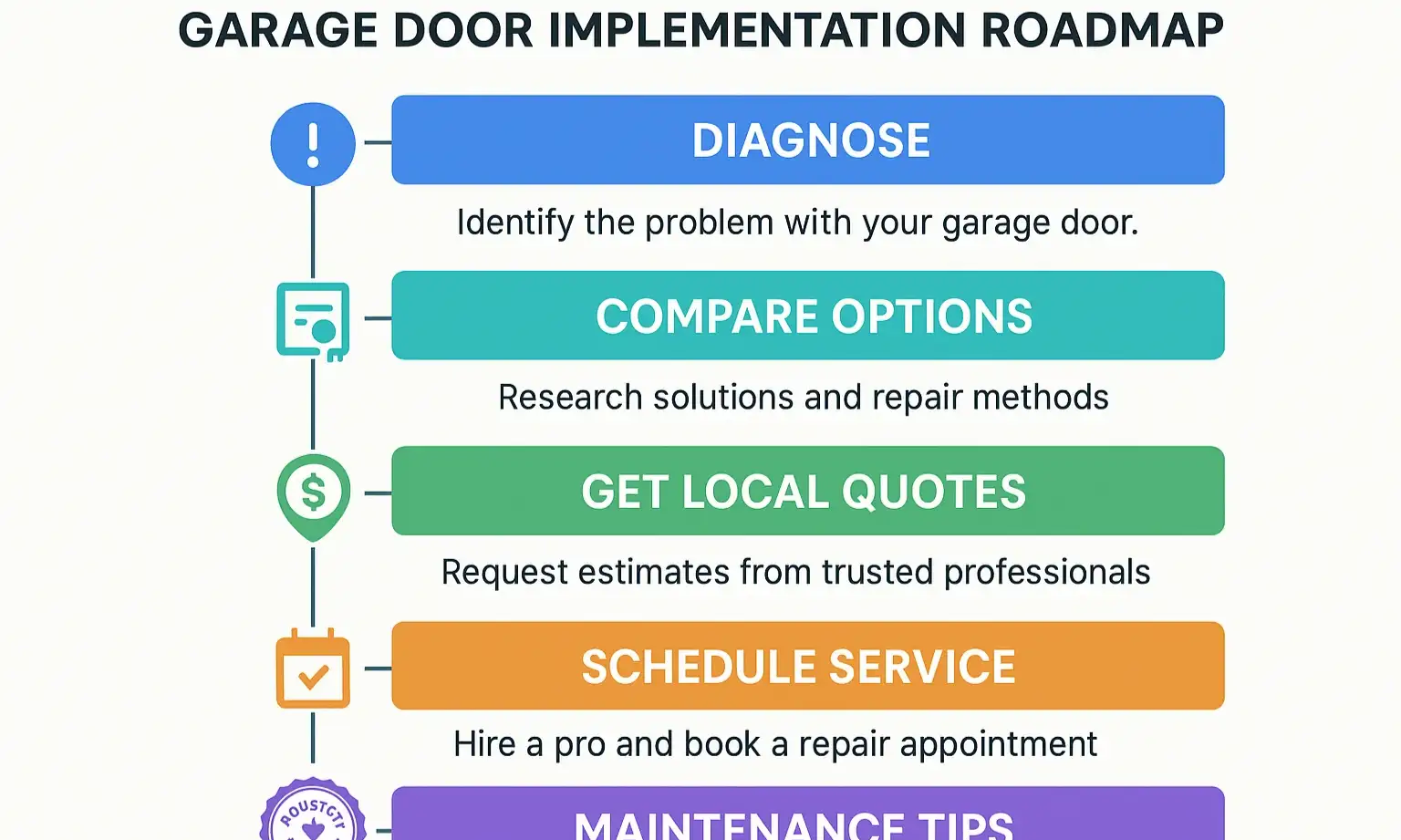
Action (Next Steps): Your Path to a Smooth, Safe Garage Door
Frequently Asked Questions for Houston Homeowners
How long do garage door springs last in our climate?
Is it worth repairing a 15-year-old garage door opener?
What are the advantages of a smart garage door opener?
You may also like