The Houston Homeowner’s Guide to Garage Door Maintenance
Published: Mar 9, 2026
That sound. You know the one. It’s the screech, groan, or shudder your garage door makes that has you holding your breath, wondering if this is the day it finally gives up. In a city like Houston, where our garage doors battle relentless humidity and blistering heat, these sounds are more than just an annoyance—they're a cry for help.
Most homeowners only think about their garage door when it stops working. But what if you could understand what your door is trying to tell you before you’re stuck with a car trapped inside?
This guide is your friendly, over-the-coffee explanation of everything you need to know. We'll translate the jargon, demystify the common problems Houston homeowners face, and help you understand when you can DIY and when it’s time to call in a pro. Let's turn that feeling of confusion into confidence.
What's Wrong With My Door? A Houstonian's Diagnostic Guide
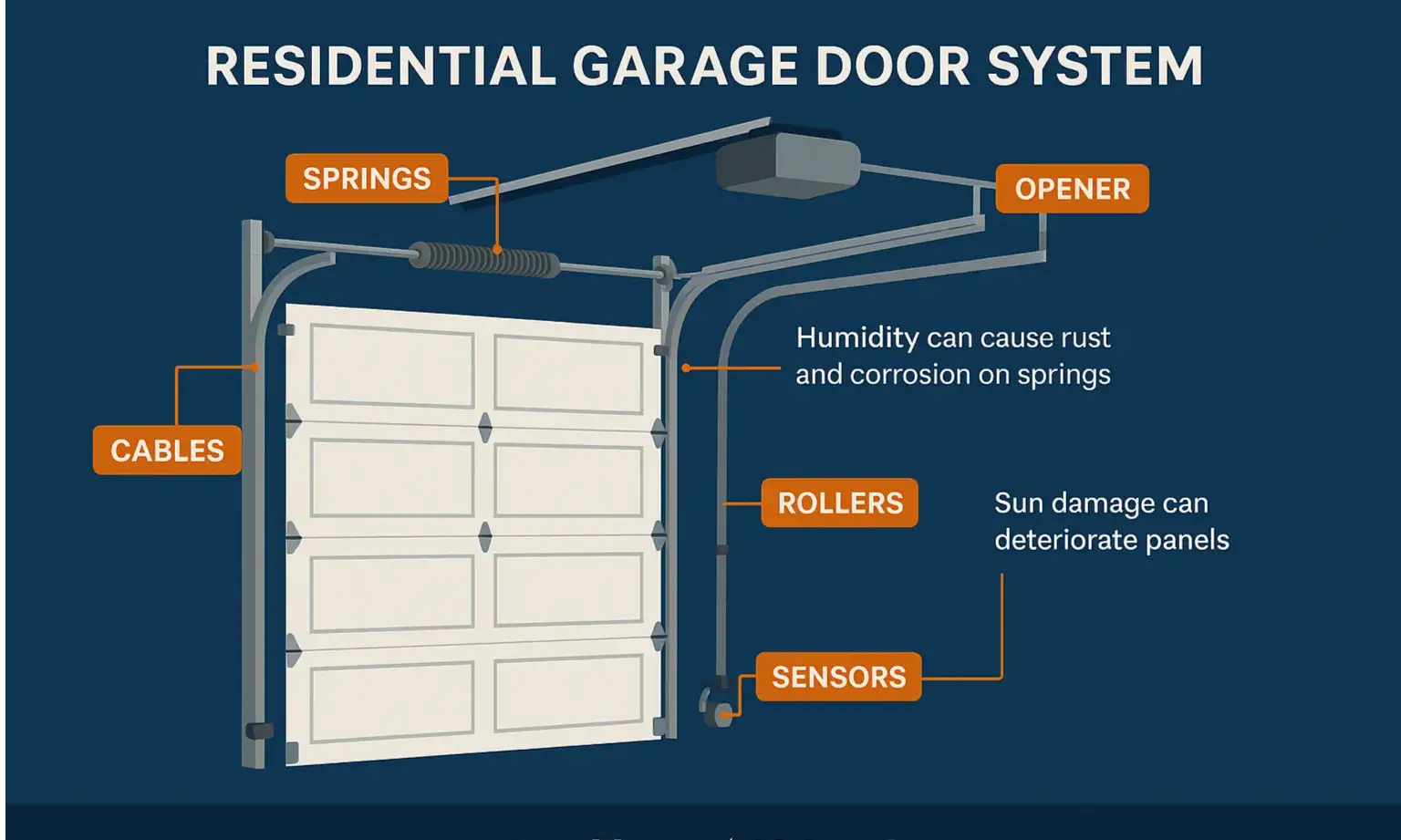
The Anatomy of Your Garage Door
- Springs (Torsion or Extension): These are the muscles. They do the heavy lifting so the opener doesn't have to. A broken spring is one of the most common—and dangerous—repairs.
- Cables: These work with the springs to lift and lower the door safely. If one snaps, the door can become crooked or slam shut.
- Rollers: These little wheels run inside the tracks. Worn-out or unlubricated rollers are a primary cause of noise.
- Tracks: The metal rails that guide the door. Dents or debris can cause the door to get stuck or go off-track.
- Opener: The motorized unit that automates the process. Issues can be mechanical (a worn gear) or electrical (a fried circuit board).
What Sound Is Your Garage Door Making?
- Squealing or Grinding: This is often a cry for lubrication. Your rollers or hinges are likely dry. In Houston, the lack of lubrication combined with humidity can lead to rust, making the noise worse.
- A Loud "POP" or "BANG!": This is almost always a broken torsion spring. It's the sound of immense tension being suddenly released. If you hear this, stop using the door immediately and call for professional garage door spring repair in Houston, TX.
- Rattling or Shaking: This could mean loose hardware (nuts and bolts), worn rollers, or an uneven door. It's a sign that a tune-up is overdue.
- Humming From the Opener, But No Movement: This often indicates the trolley is disconnected or the motor's internal gears are stripped. The good news is that this usually calls for a straightforward garage door opener repair rather than a full replacement.
Building Resiliency: Your 10-Minute Houston Maintenance Plan
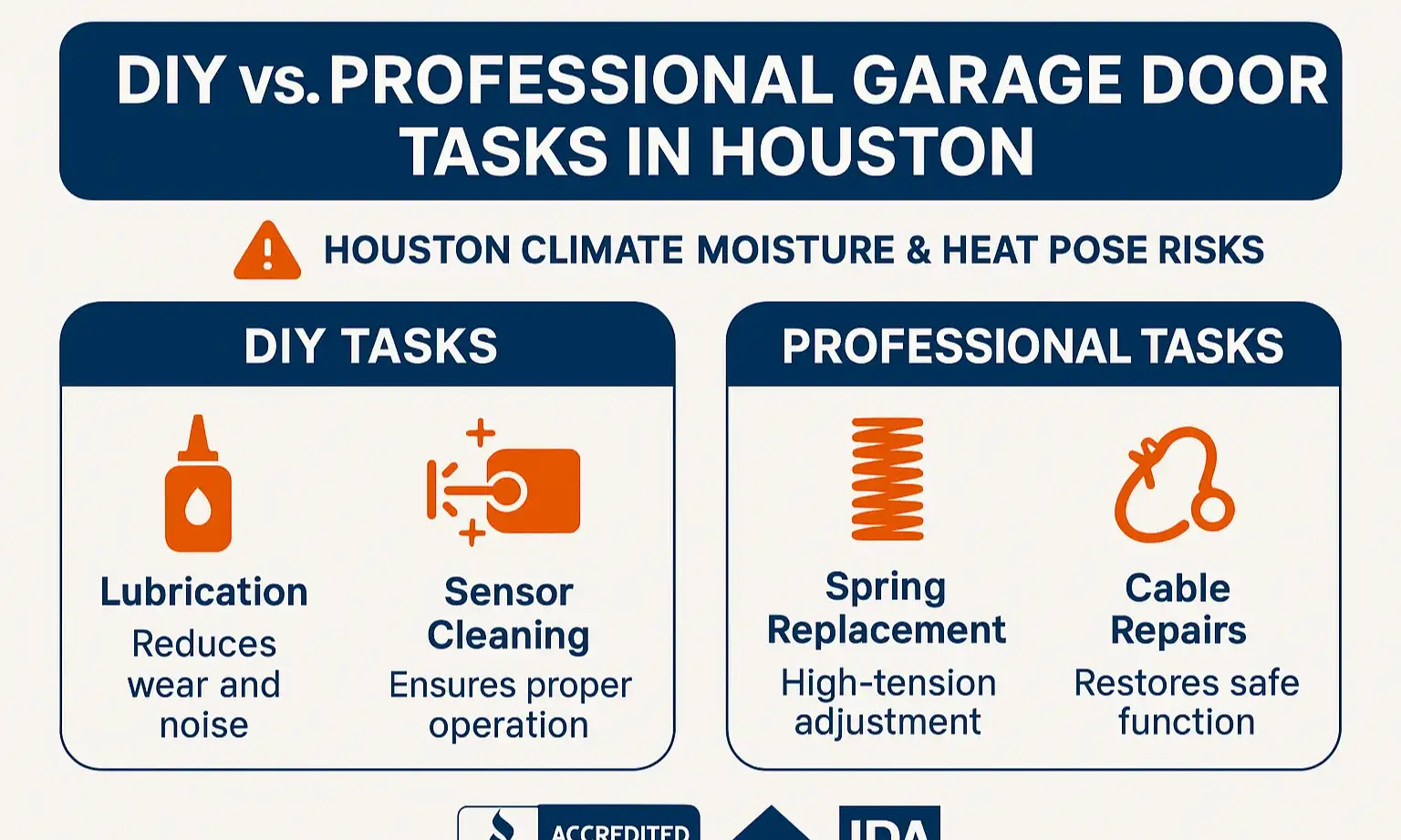
DIY-Safe Maintenance Checklist:
- Look & Listen: Once a month, operate the door and just watch it. Does it move smoothly? Is it making new noises? A visual inspection is your first line of defense.
- Clean the Tracks: Wipe down the inside of the tracks with a damp cloth to remove dirt and debris. Don't use grease, as it will attract more grime.
- Lubricate Moving Parts: Every 3-4 months, use a silicone-based or white lithium garage door lubricant on the rollers, hinges, and springs. This is crucial for fighting off the rust-inducing effects of Houston humidity.
- Test the Safety Sensors: Place a roll of paper towels on the ground in the door's path. When you close the door, it should immediately reverse upon sensing the obstruction. If it doesn't, the sensors need cleaning or alignment.
- Check Hardware: Vibrations can loosen nuts and bolts over time. Gently tighten any you find loose with a socket wrench.
A Critical Safety Warning: Know Your Limits
- NEVER attempt to adjust or replace garage door springs yourself.
- NEVER try to handle a frayed or broken garage door cable.
The Big Decision: Repair or Replace Your Houston Garage Door?
When to Repair:
- The issue is isolated: A single broken spring, a malfunctioning opener, or one damaged panel are all good candidates for repair.
- Your door is relatively new: If your door is less than 10-15 years old and otherwise in good shape, repairs make financial sense.
- The problem is cosmetic: A small dent that doesn't affect function might be something you can live with or get a simple garage door dent repair in Houston for.
When to Consider Replacement:
- You have multiple, frequent breakdowns: If you're calling for repairs every year, the cumulative cost will soon outweigh the price of a new door.
- There's widespread damage: Multiple warped, rusted, or damaged panels are a clear sign it's time for a new one. Garage door panel replacement can be costly, and if several are bad, it's more economical to replace the whole door.
- The door lacks modern safety features: Older doors may not have auto-reverse safety sensors, putting your family and property at risk.
- You want better energy efficiency: A new, insulated garage door can help keep your garage cooler in the summer, which is a significant benefit in the Houston heat. This can lower your energy bills, especially if you have a room above the garage.
How to Choose the Right Garage Door Technician in Houston
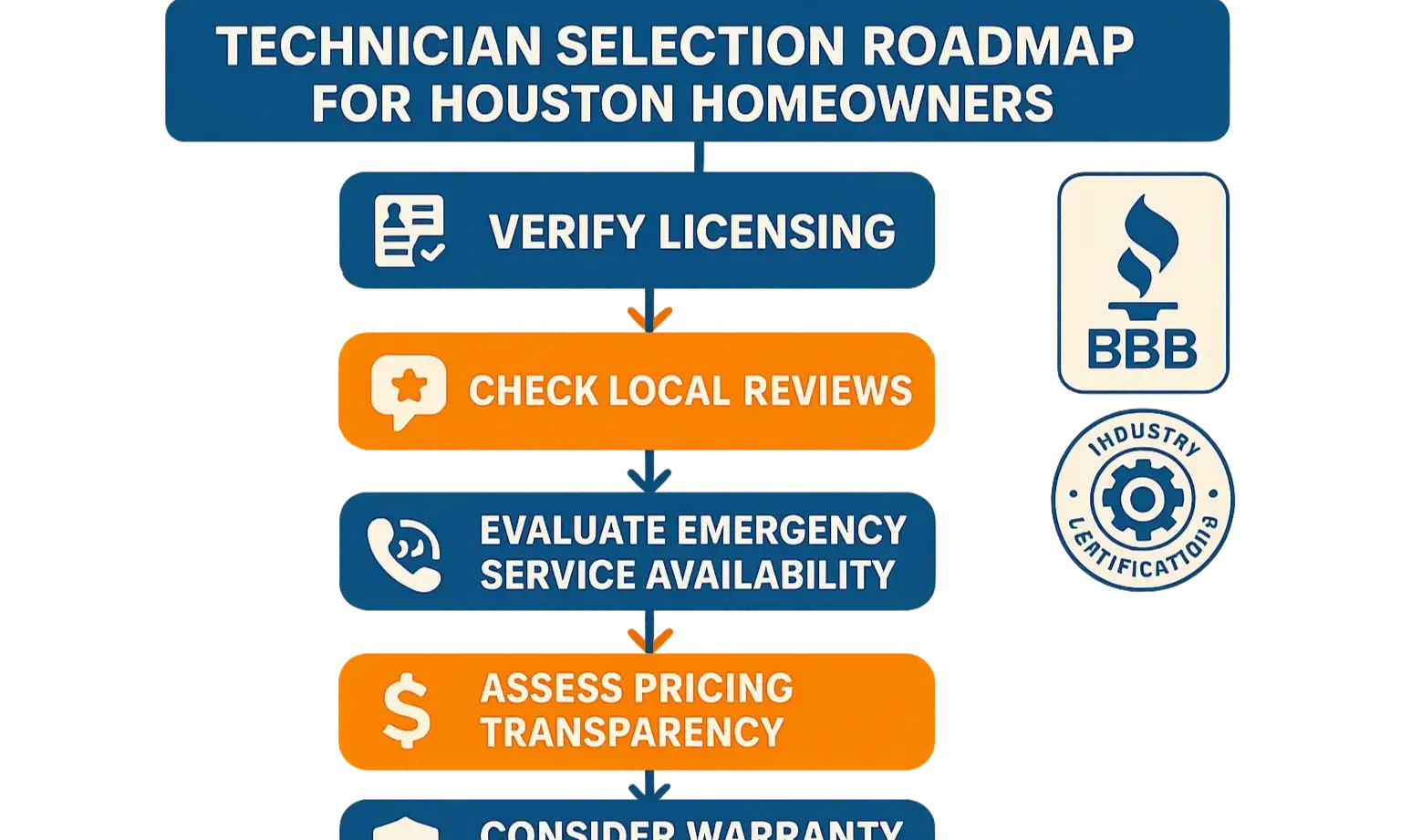
Your Vetting Checklist:
- Check for Licensing and Insurance: This is non-negotiable. It protects you in case of accidents or property damage.
- Look at Online Reviews: See what other Houston homeowners are saying. Look for consistent themes of professionalism, timeliness, and fair pricing.
- Ask About Their Experience: How long have they been in business? Do their technicians receive ongoing training on the latest technology, like the best smart garage door opener models?
- Get a Clear Estimate: A reputable company will provide a detailed, written estimate before any work begins. Be wary of vague quotes over the phone.
- Inquire About Warranties: Do they stand behind their work? Ask about warranties on both parts and labor.
- Confirm 24/7 Availability: A garage door can break at the worst possible time. Knowing you have access to emergency garage door repair provides immense peace of mind.
Need more information?
Get a free quote
Frequently Asked Questions
How often should I have my garage door serviced?
Is it safe to repair my garage door spring myself?
Your Next Step to a Quieter, Safer Garage Door
You may also like