How to Choose the Best Garage Door Rollers: Expert Tips
Published: Jan 9, 2026
If your garage door is getting noisy or doesn’t open as smoothly as it used to, it might be time to replace the rollers. Choosing the best garage door rollers can make a big difference in how quiet, durable, and reliable your door operates. In this guide, Up & Down Garage Doors breaks down the different types of garage door rollers, when to upgrade, and what matters most when making your decision.
The Most Popular Types of Garage Door Rollers
There are several common types of garage door rollers, and each one serves a different purpose depending on noise level, door weight, and daily use.
Nylon Garage Door Rollers
Nylon garage door rollers are the most popular choice for residential garage doors. They’re known for quiet operation, lightweight design, and resistance to rust. In most homes, nylon options are recognized as the quietest garage door rollers available today, especially when paired with sealed ball bearings that support smooth movement and lower maintenance.
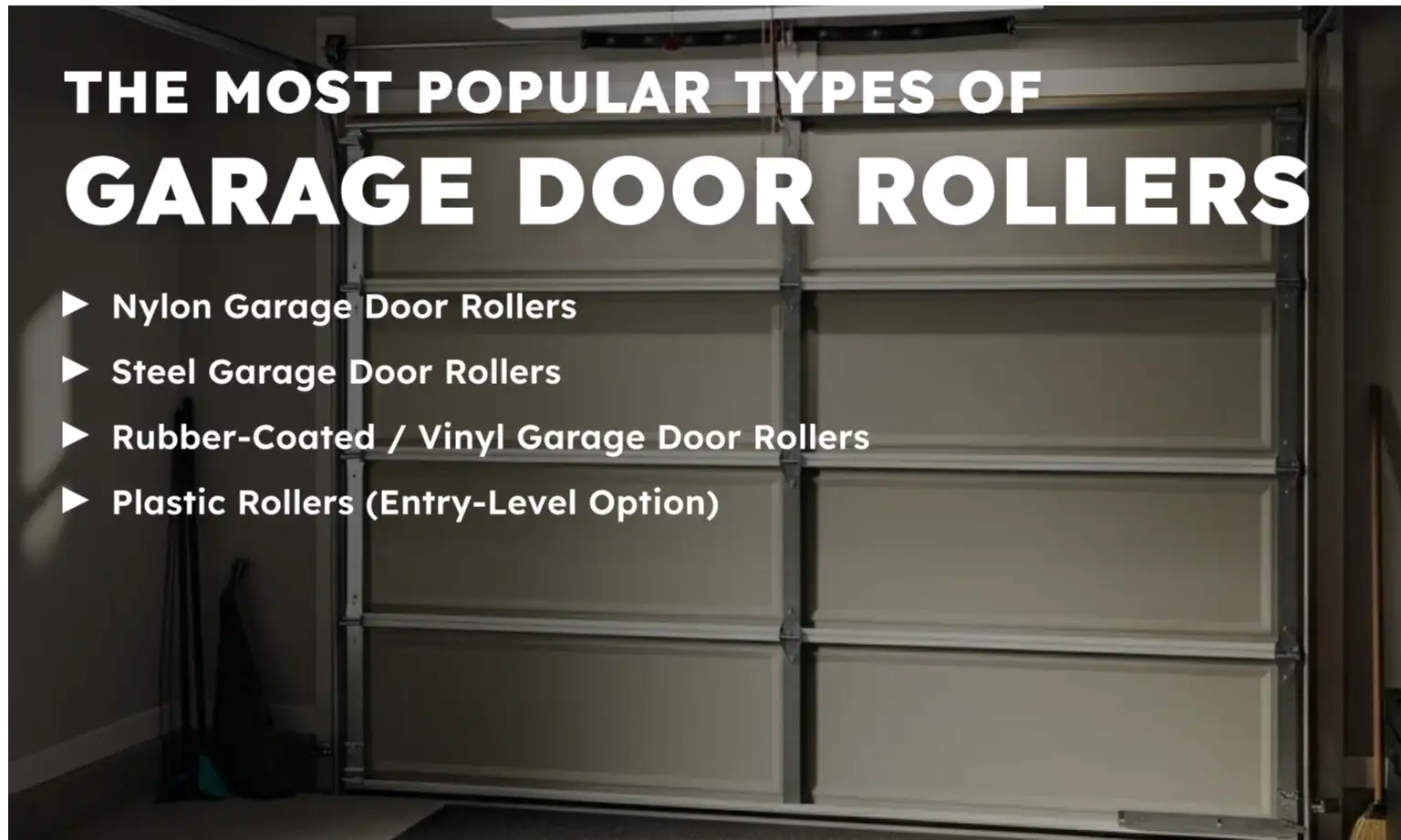
Steel Garage Door Rollers
Steel rollers are built for strength and are commonly used as heavy-duty garage door rollers on large or commercial doors. They handle heavier weights better than nylon, but they tend to be louder and need regular lubrication to prevent rust and wear over time.
Rubber-Coated / Vinyl Garage Door Rollers
Rubber-coated or vinyl garage door rollers are designed for extra noise control. These rollers soften contact between the door and the track, making them a solid option for garages located near bedrooms or living spaces. Their performance is similar to nylon, with a strong focus on quiet operation and smoother movement.
Plastic Rollers (Entry-Level Option)
Plastic rollers are the most affordable option and are often found on builder-grade garage doors. They usually don’t include ball bearings and wear out quickly. Plastic rollers work for short-term use, but they are not recommended if you want long-lasting performance or reduced noise.
How to Choose Between Two Top Options: Nylon vs. Steel Garage Door Rollers
If you’re stuck choosing between nylon and steel garage door rollers, it comes down to your door type and personal priorities:
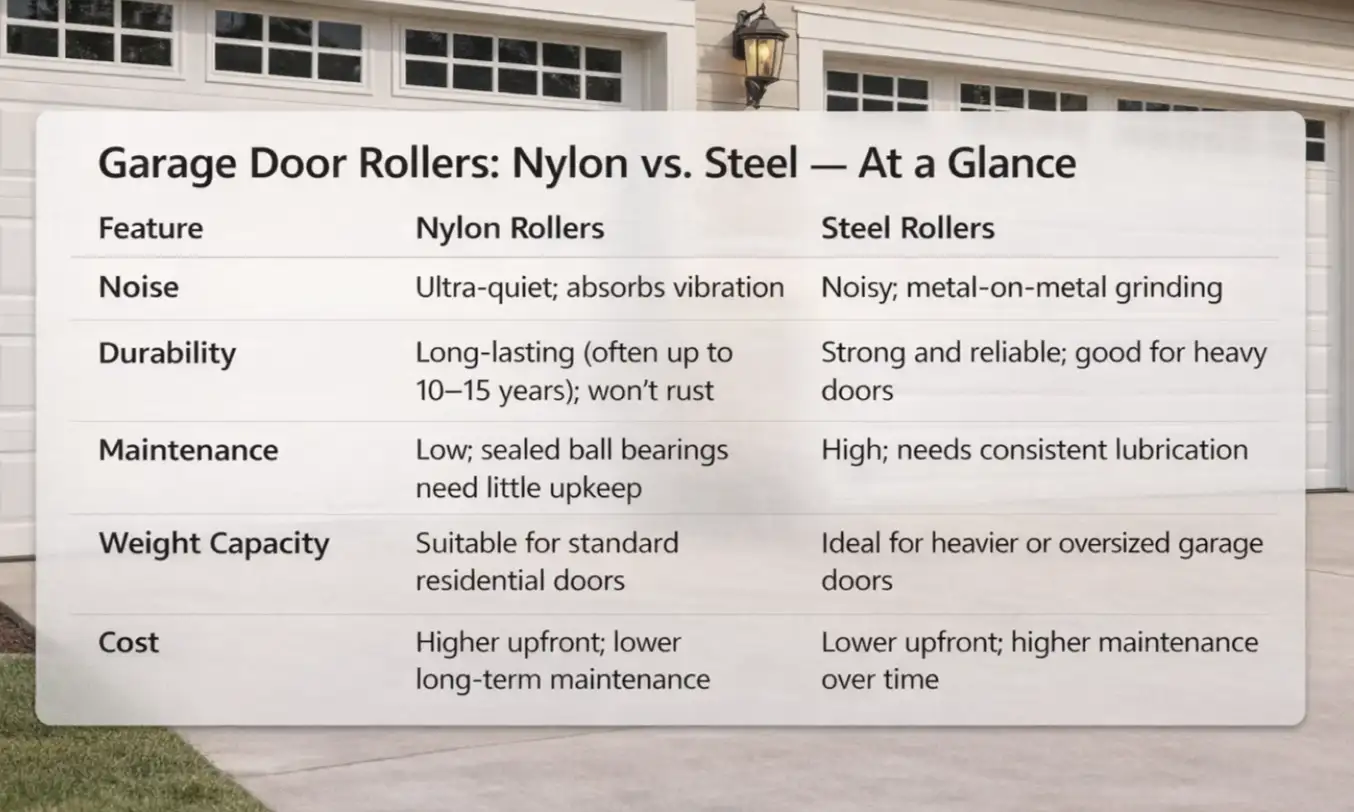
- Noise: Nylon rollers are much quieter due to their material and bearing design. Steel rollers can be loud, especially without regular lubrication.
- Durability: Steel rollers are strong and work well for heavier garage doors. Nylon rollers last long too — typically up to 10-15 years — and don’t rust.
- Maintenance: Nylon rollers with sealed ball bearings require less maintenance than steel rollers, which need consistent lubrication.
- Weight Capacity: Steel rollers are better suited for heavier garage doors, including oversized or commercial doors. Nylon rollers can handle most standard residential doors, but aren’t recommended for extremely heavy setups.
- Cost: Nylon rollers are generally more expensive upfront but pay off over time through lower maintenance and quieter performance.
For most homes, nylon garage door rollers offer the best mix of performance, quietness, and durability.
Key Features to Look for in the Best Garage Door Rollers
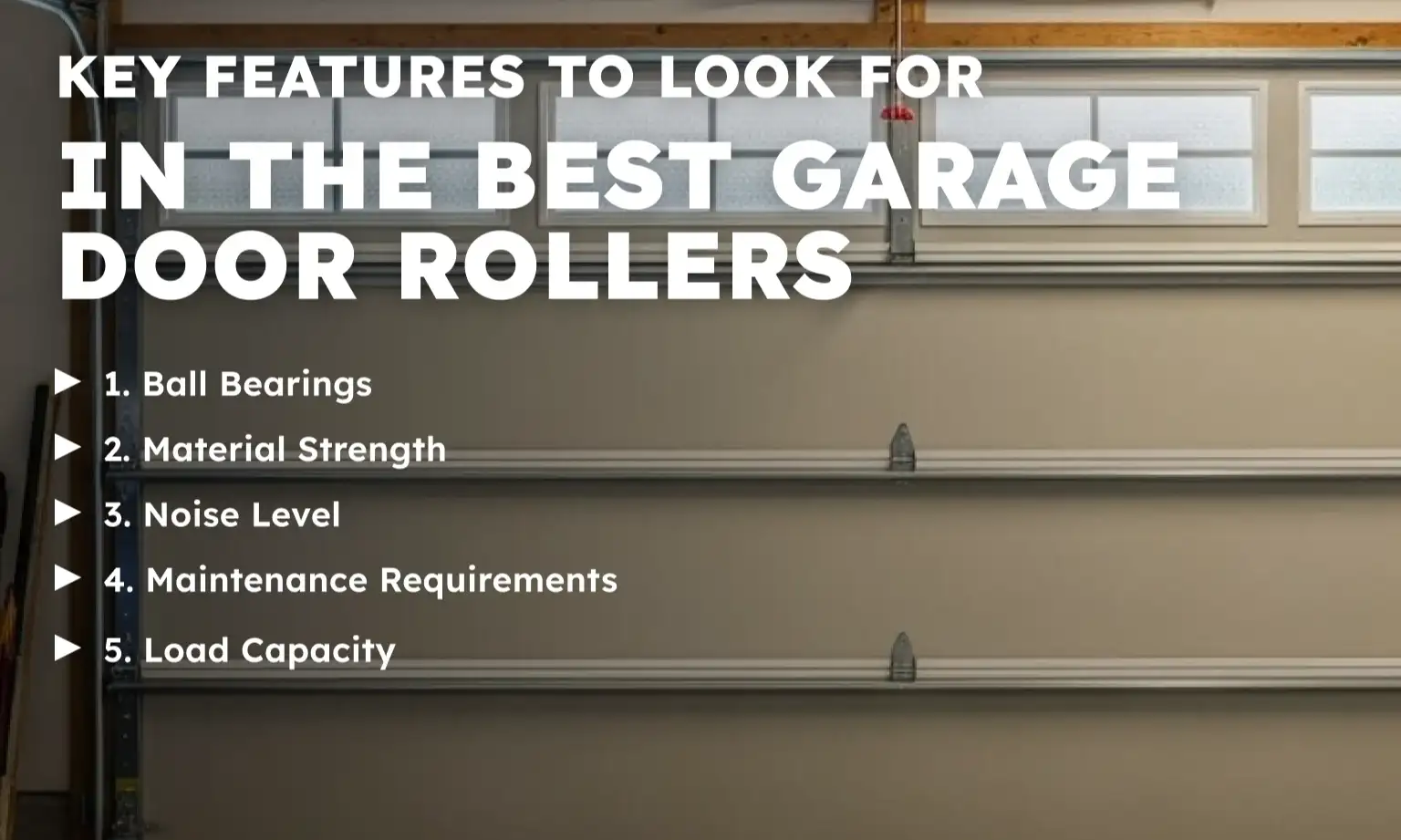
When wondering what garage door rollers to choose for your system, consider these factors:
1. Ball Bearings
Always choose rollers with sealed ball bearings. They allow for smoother movement, reduce wear, and increase the life of your garage door system.
2. Material Strength
Look for heavy-duty garage door rollers if your door is oversized or in frequent use. Steel is the strongest, but high-quality nylon rollers can handle a lot of weight, too.
3. Noise Level
If your garage is near a bedroom or living space, go with the quietest garage door rollers — nylon with sealed bearings.
4. Maintenance Requirements
Low-maintenance options like nylon garage door rollers with sealed bearings are perfect for busy homeowners or commercial properties.
5. Load Capacity
Make sure your rollers match the weight of your garage door. Underrated rollers will wear out faster and put strain on your system.
When to Replace Your Garage Door Rollers
Over time, even the best rollers wear out. Signs it’s time for garage door roller replacement include:
- Loud grinding or squeaking noises
- Visible cracking or wear on the roller surface
- The door shakes or jerks while opening
- The rollers come off the track frequently
If you notice any of these, don’t delay the replacement. For those who like tackling their own home maintenance, our full guide on garage door roller replacement covers the symptoms to watch for, safety advice, and step-by-step instructions.
Not into DIY? No problem. The team at Up & Down Garage Doors can quickly inspect and replace worn rollers to keep your door operating safely and quietly.
Top 3 Tips to Keep Your Garage Door Rollers in Top Shape
Even the best garage door rollers need occasional care. A little maintenance goes a long way in extending their life and keeping your garage door operating smoothly.
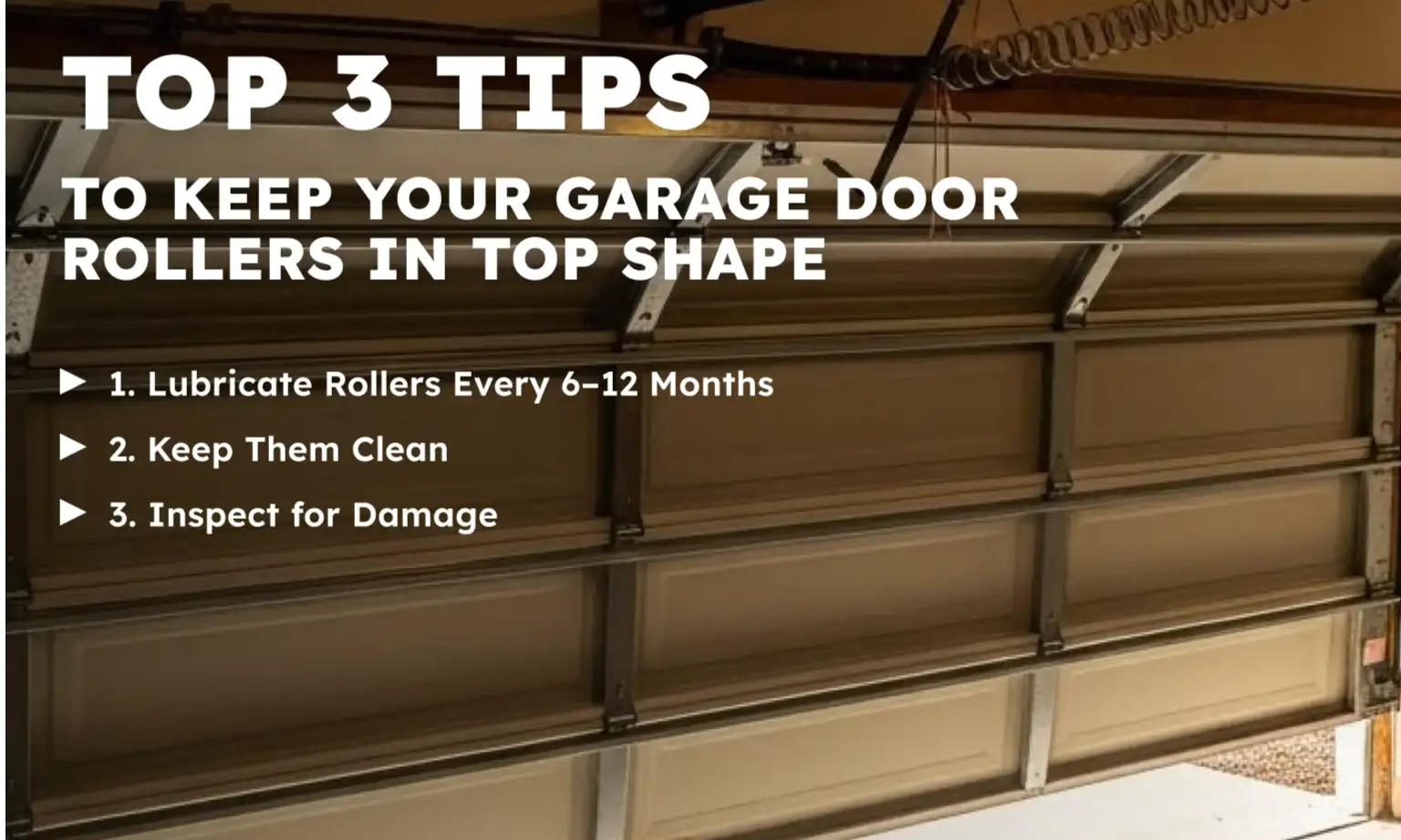
1. Lubricate Rollers Every 6–12 Months
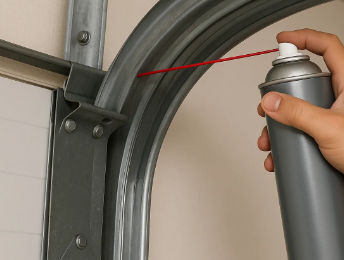
Keeping your rollers properly lubricated reduces friction, noise, and wear. Be sure to avoid petroleum-based products — instead, use a silicone or lithium-based spray designed for garage doors. For a full walkthrough, check out our 5-step guide on how to lubricate your garage door rollers.
2. Keep Them Clean
Dirt and debris can cause rollers to grind or stick. Wipe them down regularly with a clean cloth and inspect the tracks for buildup that might interfere with smooth operation.
3. Inspect for Damage
Watch for signs of wear like flat spots, cracks, or wobbling. Damaged rollers can strain your opener and lead to bigger repairs. Catching issues early helps avoid unexpected breakdowns.
Need more information?
Get a free quote
Conclusion: Get the Right Rollers with Up & Down Garage Doors
Choosing the best garage door rollers depends on your needs — whether it’s quiet operation, durability, or strength for heavier doors. For most residential applications, nylon garage door rollers with sealed ball bearings offer the ideal mix of performance and convenience. If you notice wear or noise, don’t wait too long to make a change.
At Up & Down Garage Doors, we’ve helped thousands of customers find the right fit for their homes and businesses. We pride ourselves on quality work, honest recommendations, and lasting solutions. If your rollers are worn or your door isn’t performing as it used to, schedule a quick inspection or garage door repair service today — we’ll take care of the rest.
Frequently Asked Questions
What are the best garage door rollers for quiet operation?
Nylon garage door rollers with sealed ball bearings are the quietest and ideal for attached garages or living spaces nearby.
What are the best nylon garage door rollers?
The best nylon garage door rollers are made with high-quality nylon and include sealed ball bearings for smooth, quiet operation. Look for rollers rated for at least 10,000 cycles — they last longer, require less maintenance, and are ideal for residential garage doors.
How often should I replace my garage door rollers?
Most rollers last 10–15 years, but you should inspect them every couple of years, especially if you hear unusual noises.
Can I replace garage door rollers myself?
Yes, if you’re experienced with basic tools and safety steps. Our full guide on how to install garage door rollers shows how to do it safely. For multi-panel or heavy doors, professional installation is recommended.
Do garage door rollers need lubrication?
Yes — unless you’re using sealed ball bearing rollers, which are typically maintenance-free. Steel rollers and open-bearing nylon rollers should be lubricated every 6–12 months using a silicone- or lithium-based lubricant. Avoid grease or petroleum-based products, as they attract dirt and can cause build-up.
You may also like