
Identifying and Preventing Garage Door Cable Fraying
Published: Jan 19, 2026
Listen closely the next time your garage door opens. Beneath the hum of the motor, do you hear a faint scraping, a subtle groan, or a slight vibration that wasn't there before? It’s easy to dismiss these small sounds, but they could be your garage door's early warning system.
Those two thin steel cables, one on each side of your door, do the heavy lifting day in and day out, hoisting hundreds of pounds against the pull of gravity. A single frayed strand is often the first, quiet sign of a potential failure that can be dangerous, disruptive, and costly. But here’s the good news: by learning to spot these early signs, you can prevent a major breakdown before it ever happens.
This guide will teach you how to read the warning signs, perform safe maintenance, and know exactly when it’s time to call a professional.
Foundation: Understanding Your Garage Door's Lifelines
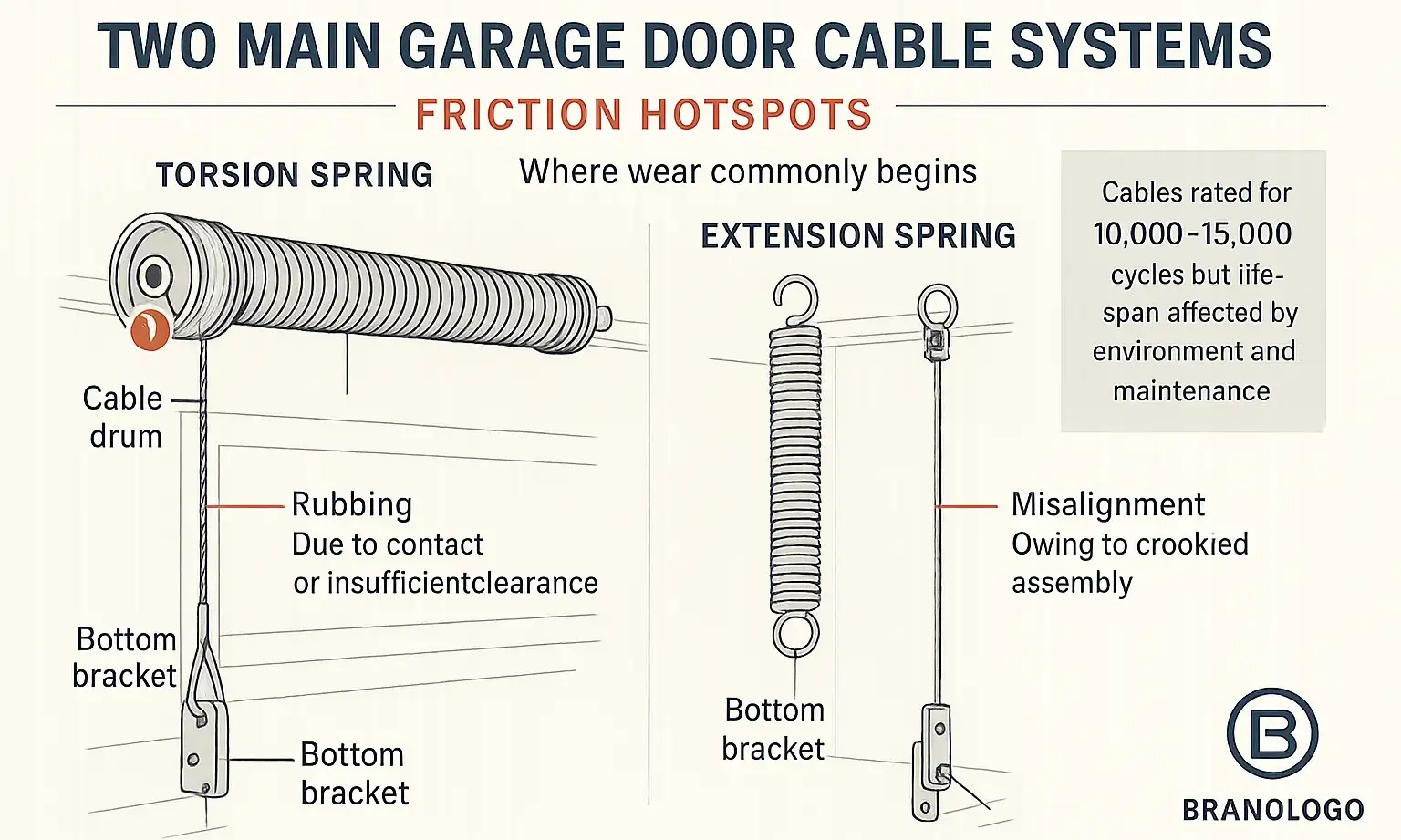
- Friction: Every time the door moves, the cables wind around metal drums and can rub against the tracks. This constant friction is the number one cause of fraying.
- Moisture: Humidity, rain, and snow can lead to rust and corrosion. A rusty cable is a weak cable. For homeowners in coastal areas, the salty air can cut a cable's lifespan in half.
- Age & Use: Garage door cables are typically rated for 10,000-15,000 cycles (one open and close). If you use your garage door four times a day, you'll hit 14,600 cycles in just 10 years.
How to Spot Trouble: A Visual Guide to Cable Wear
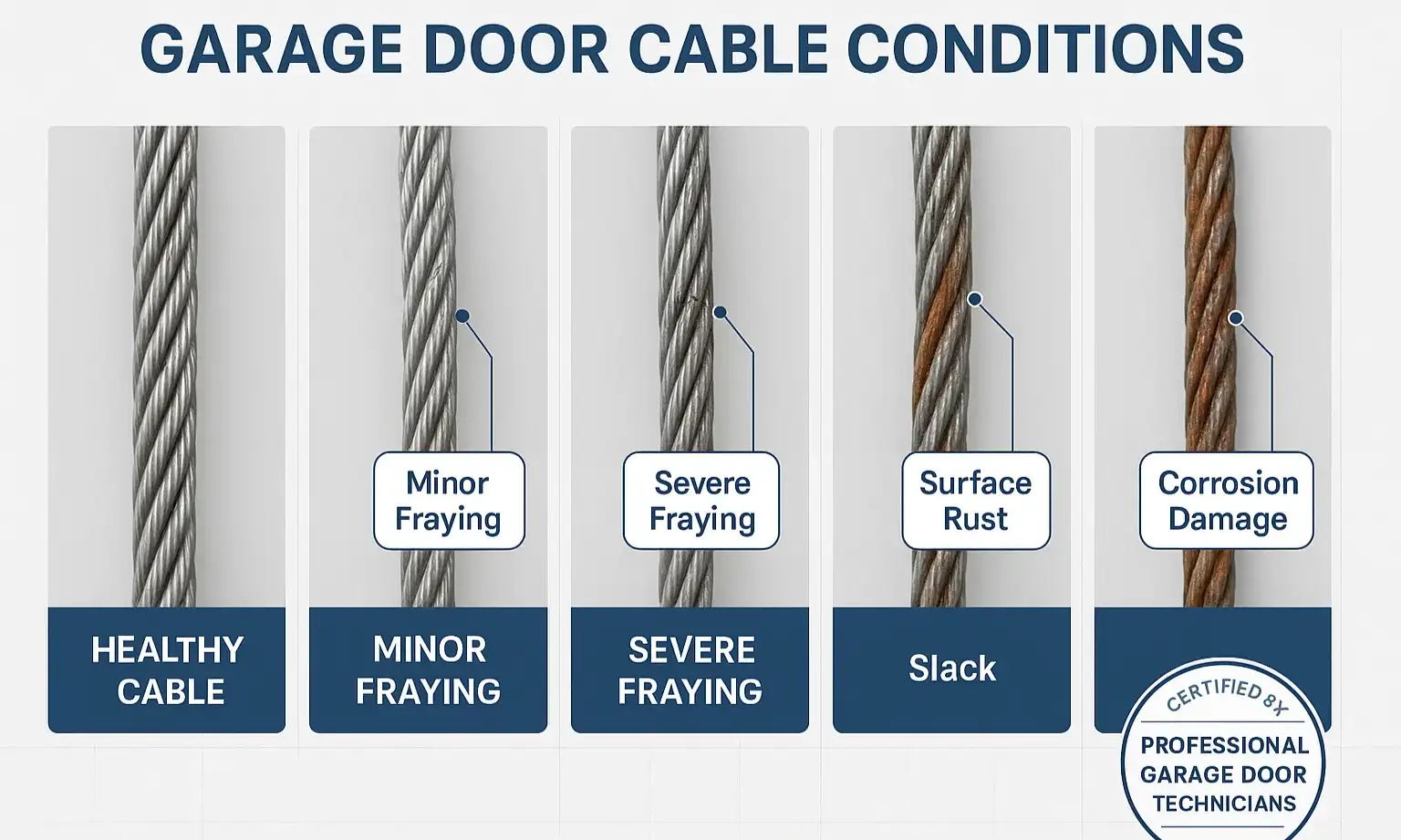
- Healthy Cable: The cable is smooth, with all strands tightly wound together. There is no visible rust or discoloration.
- Minor Fraying: You might see a few small, broken strands—sometimes called "whiskers"—poking out from the main cable. This is the very first sign of wear and an immediate signal to schedule a professional inspection.
- Severe Fraying: The cable looks shaggy or fuzzy, with multiple broken strands visible. The cable's integrity is seriously compromised, and the door should not be operated until it's repaired.
- Corrosion Damage: The cable shows signs of rust, which weakens the steel and makes it brittle. You might also notice rust stains on the garage floor below the cables.
- Slack or Tangling: If you see a loose or tangled cable, it often means the garage door cable came off the drum. This creates a dangerous, unbalanced situation that needs immediate attention.
A Safe Maintenance Routine to Prevent Trouble
What You Can Safely Do (The "Green Zone")
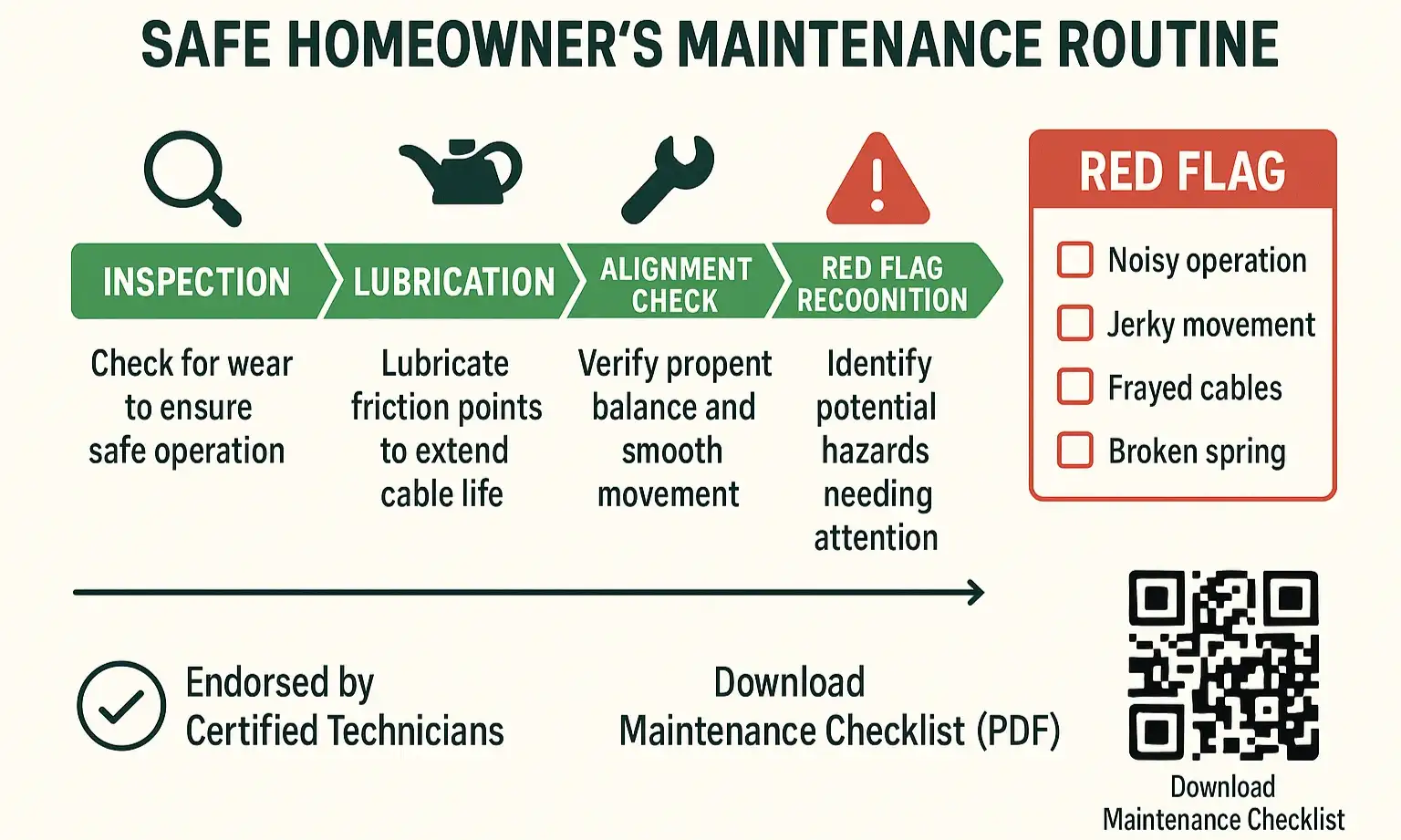
- Visual Inspection: Using the guide above, look closely at your cables, especially near the bottom brackets and the drums at the top. Use a flashlight to get a clear view.
- Listen Carefully: Operate the door once and listen for scraping, grinding, or squeaking sounds that could indicate a cable rubbing against the track.
- Light Cleaning: If you notice dirt or grime, you can gently wipe the cables with a dry cloth. Never use harsh chemicals or water, which can strip lubricants and encourage rust.
- Lubrication: Proper lubrication reduces friction. If you're unsure how to lubricate garage door components correctly, it's best to consult a guide or professional to ensure you're using the right product in the right places.
When to Immediately Call a Pro (The "Red Zone")
- Any Fraying or Broken Strands: This is non-negotiable. Even one broken strand compromises the cable's strength.
- A Snapped or Detached Cable: The door is now unstable. Do not attempt to move it.
- Slack or Looseness in the Cables: This indicates a tension problem. Learning how to adjust garage door cables is a complex task best left to professionals.
- The Door is Crooked or Uneven: If one cable fails, the door will often hang crookedly. Forcing it to move can cause it to fall off its tracks.
Your Proactive Maintenance Plan
Frequently Asked Questions About Garage Door Cables
Is a single frayed wire on my garage door cable dangerous?
How long should garage door cables last?
Can I replace the cables myself?
What should I do if a cable snaps?
Why is only one of my cables fraying?
This usually points to an alignment or tension issue. The door might not be perfectly balanced, or one of the drums might be worn, causing extra friction on one side. A technician can diagnose and correct the underlying problem to prevent premature wear in the future.You may also like