The New Haven Homeowner's Guide to a Safe and Silent Garage Door
Published: Mar 3, 2026
That sudden grinding sound. The jerky, hesitant movement. The unnerving realization that your garage door, the largest moving object in your home, isn't working right. You were right to look it up. That noise isn’t just an annoyance; it’s a message.
For homeowners in New Haven, from the historic homes of East Rock to the coastal properties along the Sound, a garage door is more than a convenience—it's a critical part of your home's security and daily function. But between the humid summers and salty air, our garage doors face unique challenges. This guide is designed to help you understand what your garage door is telling you, what you can safely do about it, and when it’s time to call in a professional.
Foundation: Anatomy of Your Garage Door
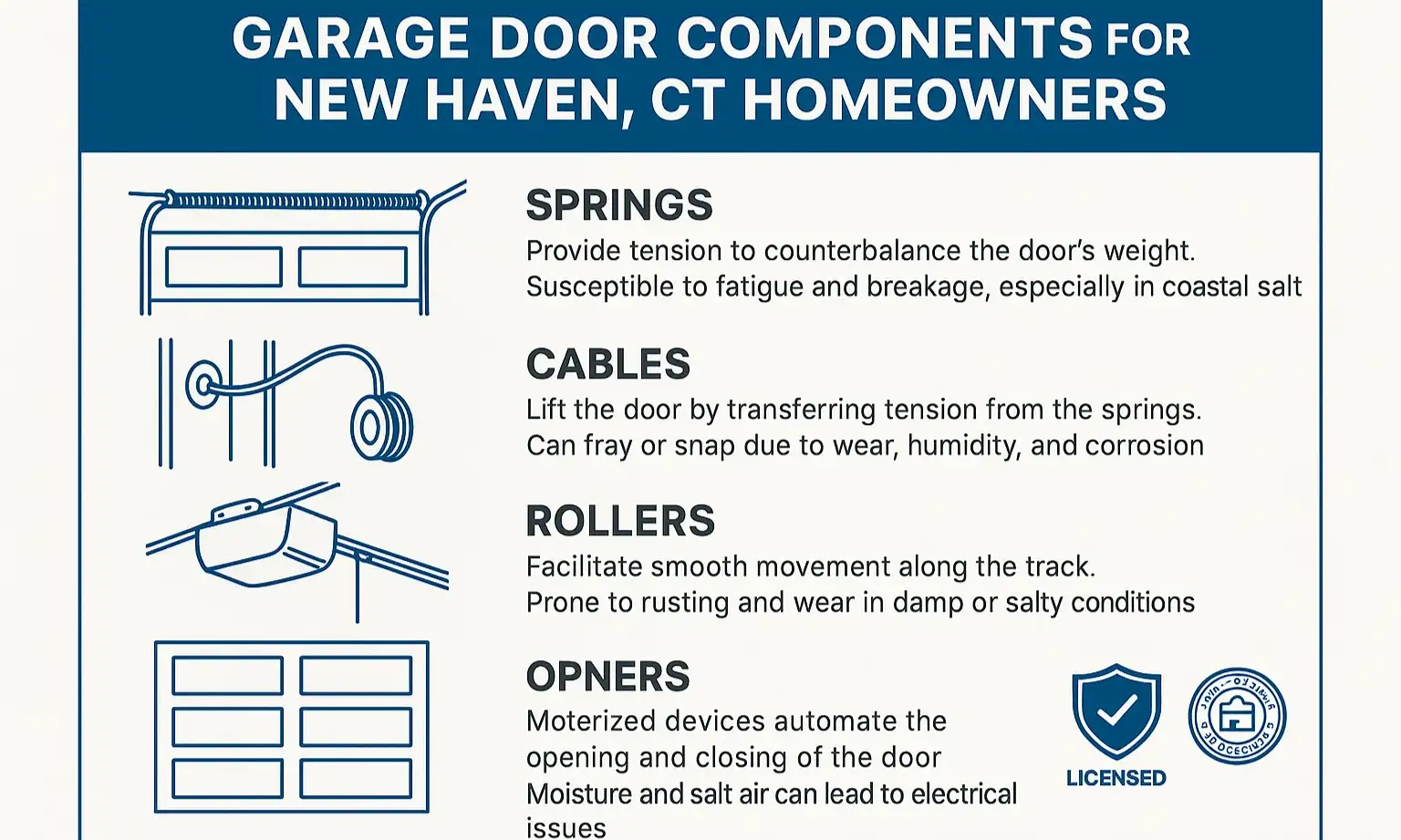
- The Springs (The Muscle): These are the true heavy lifters. Torsion or extension springs are under extreme tension to counterbalance the door's weight, allowing you to lift a 300-pound door with one hand (or with a small motor).
- The Cables (The Tendons): These steel cables connect the springs to the bottom of the door, transferring the lifting force.
- The Rollers & Tracks (The Skeleton): Rollers run along the metal tracks on each side of the door, guiding it up and down smoothly.
- The Panels (The Shield): These are the sections of the door itself, providing security and curb appeal.
- The Opener (The Brain): This is the motorized unit that controls the door's movement, complete with safety sensors.
Building: The Symptom Checker - What Is Your Garage Door Telling You?
Decoding the Noises
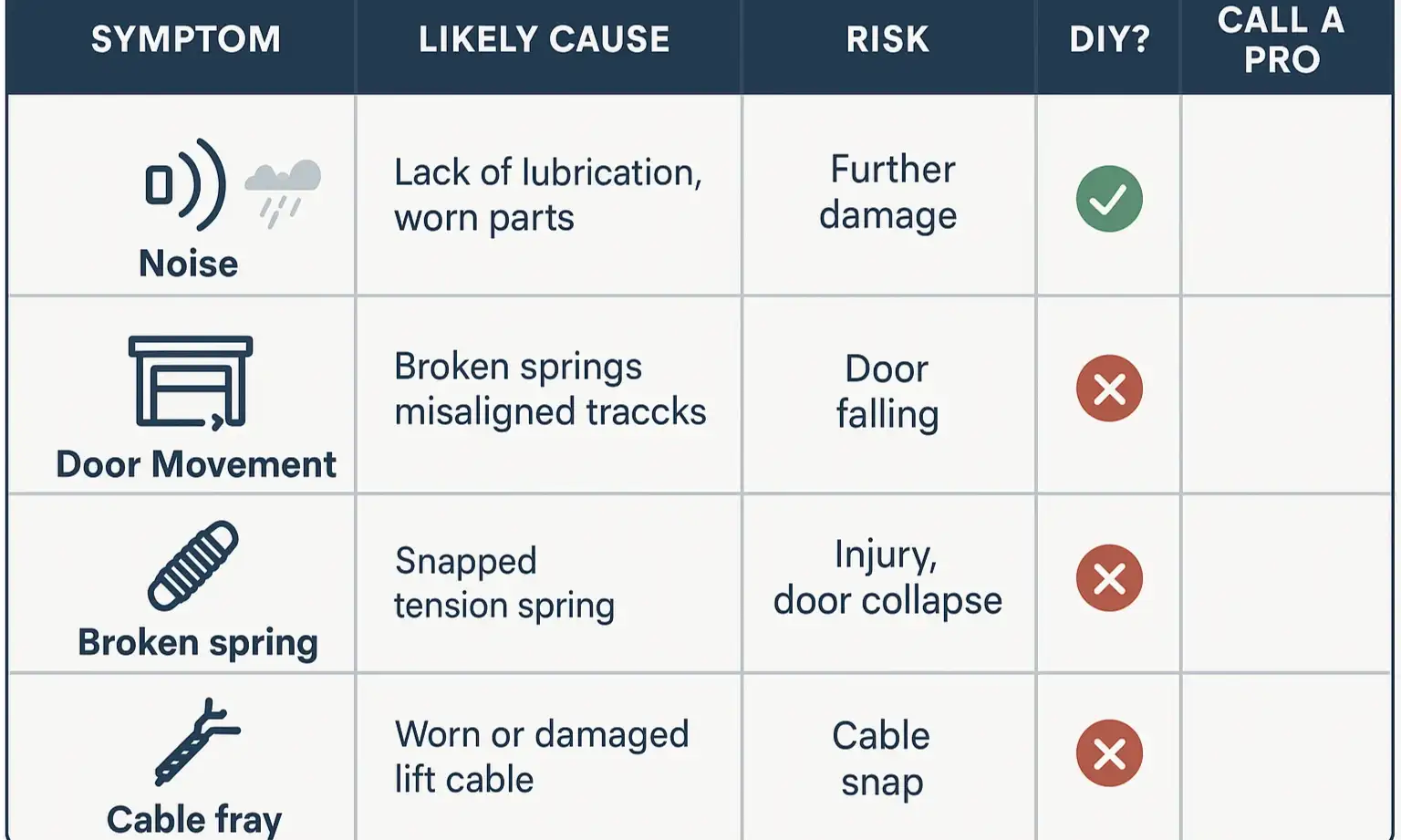
- Grinding or Squeaking: This is often a cry for lubrication. Rollers, hinges, and springs need it to operate smoothly. It could also mean rollers are worn out or the tracks are misaligned.
- Loud Popping or Banging: This is the one to take seriously. It often signals a broken garage door spring. The springs are under immense tension, and when one breaks, it releases its energy with a startling bang. This is a stop-everything-and-call-a-pro situation. Attempting a broken garage spring repair is one of the most dangerous home repairs.
- Rattling: This could be as simple as loose nuts and bolts on the tracks or door hardware. A quick check and tightening can sometimes solve this.
Interpreting the Movement
- Shaky or Jerky Motion: This usually points to a problem with balance or friction. The tracks might be dirty or bent, or the rollers could be worn and need replacing.
- Won't Open or Close All the Way: Check the safety sensors first! These are the two small "eyes" near the bottom of the door tracks. If they're misaligned or blocked, the door won't close. If the sensors are fine, the issue could be with your opener's travel limits or an obstruction in the tracks.
- Opens, Then Reverses Immediately: This is a classic symptom of the opener's safety mechanism kicking in. It could be misaligned sensors or, more seriously, the opener's force settings may be off, indicating a bigger problem like a failing spring that's making the door too heavy.
- Door is Off-Track: If you notice a roller has popped out of the track, do not operate the door. This can be caused by a broken cable or by something hitting the door. Trying to force it can cause severe damage. When a garage door opener off tracks near me is what you're facing, professional realignment is the safest bet.
Mastery: DIY Maintenance vs. Call a Pro - A Clear Guide
Safe DIY Tasks for Every Homeowner
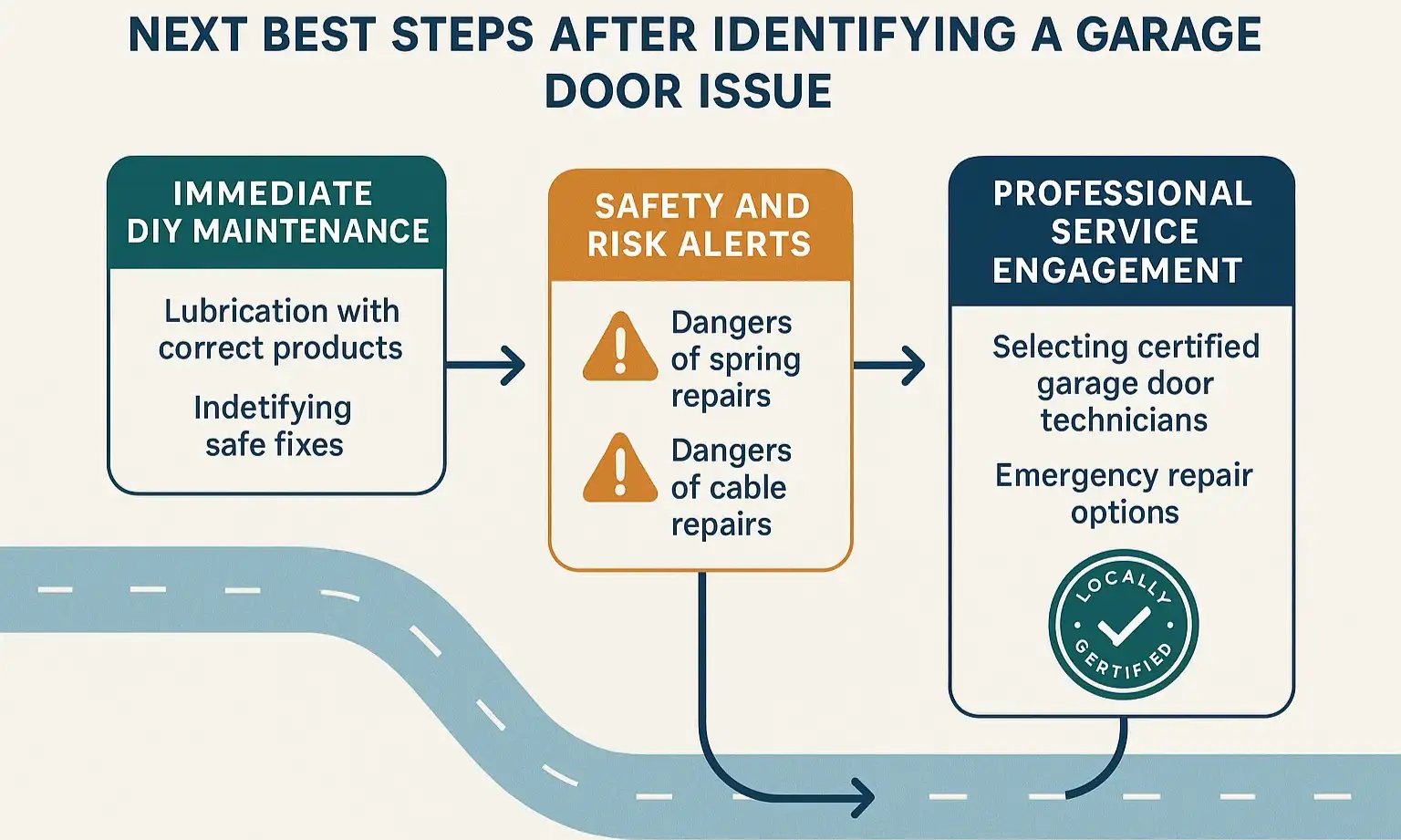
- Lubrication: Use a silicone-based or white lithium grease spray (NOT WD-40) on all moving parts: hinges, rollers, and springs.
- Visual Inspection: Once a month, look over the cables for fraying, check rollers for cracks, and ensure tracks are clear of debris.
- Tighten Hardware: Vibrations can loosen nuts and bolts over time. Gently tighten them with a socket wrench.
- Test Safety Features: Place a 2x4 board flat on the ground where the door closes. The door should reverse when it touches the board. Also, test the photo-eye sensors by waving an object in front of them as the door closes; it should immediately reverse.
The DIY Danger Zone: When to Call for Garage Door Repair
Making the Right Call: Repair or Replace?
- Age: Most garage doors have a lifespan of 15-30 years, while openers last about 10-15 years. If your system is approaching these ages, replacement might be more cost-effective than a series of repairs.
- The "40% Rule": If a single repair costs more than 40% of the garage door replacement cost, replacement is usually the better long-term investment.
- Safety & Security: Older doors may lack modern safety features like auto-reverse mechanisms or rolling code technology, making them less safe and secure.
- Energy Efficiency: A new, insulated garage door can significantly improve your home's thermal efficiency, saving you money on energy bills—a big plus during New Haven's cold winters and hot summers.
Need more information?
Get a free quote
Your New Haven Garage Door FAQ
What are the most common garage door problems?
How often should I service my garage door in a coastal climate?
Can I replace just one damaged panel of my door?
What's the difference between torsion and extension springs?
Is it worth getting a smart garage door opener?
Your Next Steps to a Healthier Garage Door
You may also like