The Pros and Cons of Polystyrene Garage Door Insulation
Published: Jan 12, 2026
Polystyrene garage door insulation is a popular option for homeowners and property managers looking to improve comfort without a major renovation. It’s affordable, lightweight, and widely used in DIY insulation kits. In this guide, we’ll explain how polystyrene insulation works, where it performs best, and how it compares to polyurethane garage door insulation. Whenever you need a professional assistant, Up & Down Garage Doors helps property owners across the U.S. choose insulation solutions that make sense for their garage and climate.
What Is Polystyrene Garage Door Insulation?
Polystyrene insulation is a rigid foam board designed to fit inside garage door panels. It’s commonly sold as styrofoam panels for garage doors or as a polystyrene garage door insulation kit with pre-cut boards and fasteners. These panels reduce heat transfer, limit drafts, and improve overall comfort.
Polystyrene is often chosen for retrofitting existing insulated garage doors because it’s easy to cut, lightweight, and doesn’t strain the door’s hardware. Learn more about why insulated garage door panels are worth it for energy savings and comfort in every season.
Benefits of Polystyrene Garage Door Insulation
1. Cost-Effective Way to Improve Comfort
Polystyrene is one of the most affordable insulation materials available. For homeowners upgrading an older door, it offers noticeable temperature control without the higher cost of premium insulation systems.
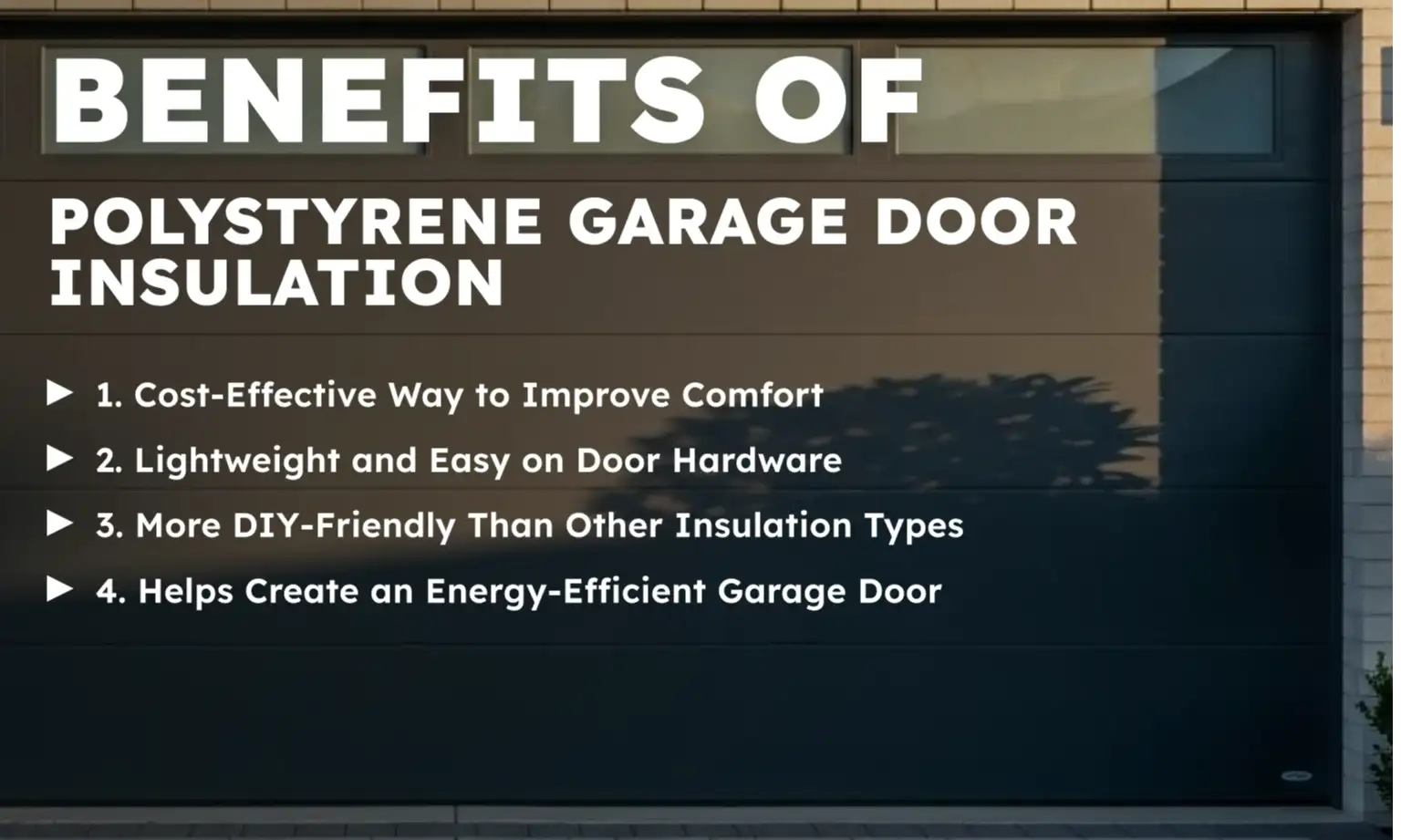
2. Lightweight and Easy on Door Hardware
Because polystyrene adds very little weight, it won’t overwork springs or openers. This makes it a practical option for older garage doors that aren’t designed to carry heavy insulation.
3. More DIY-Friendly Than Other Insulation Types
One of the biggest advantages of polystyrene garage door insulation is how easy it is to install. Many homeowners handle the project themselves using basic tools. If you’re considering a DIY upgrade, our step-by-step guide on how to insulate a garage door walks you through the process.
4. Helps Create an Energy-Efficient Garage Door
Polystyrene panels help reduce heat loss and temperature swings, making your garage more comfortable year-round. This is especially helpful when the garage shares walls with living spaces.
Drawbacks of Polystyrene Garage Door Insulation
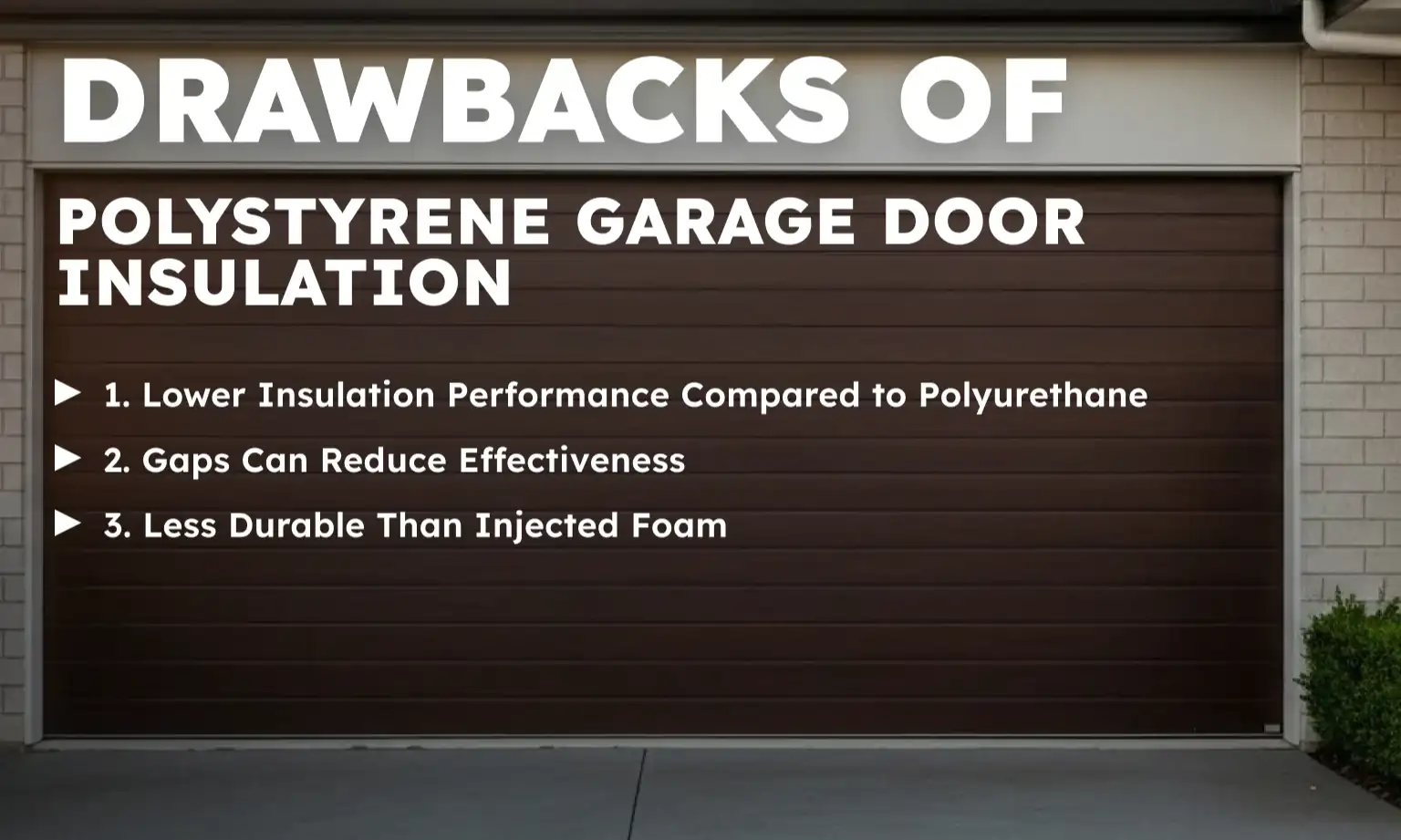
1. Lower Insulation Performance Compared to Polyurethane
Polystyrene has a lower R-value per inch than polyurethane. In very hot or cold climates, it may not provide the level of insulation some properties need.
2. Gaps Can Reduce Effectiveness
Since panels are cut and fitted manually, small gaps may remain if installation isn’t precise. These gaps can reduce insulation performance over time.
3. Less Durable Than Injected Foam
Polystyrene boards can crack or dent if impacted, and they don’t reinforce the door structure the way injected insulation does.
Polystyrene vs. Polyurethane Garage Door Insulation: How to Choose
When comparing polystyrene vs. polyurethane garage door insulation, the right choice depends on performance needs, budget, and how you use your garage. Both materials are common types of garage door insulation, but each has unique benefits.
Energy Efficiency and Insulation Performance
Polyurethane insulation has a higher R-value per inch, offering better temperature control in garages used year-round or in extreme climates. Polystyrene still boosts energy efficiency but is better suited for milder conditions where maximum insulation isn’t necessary.
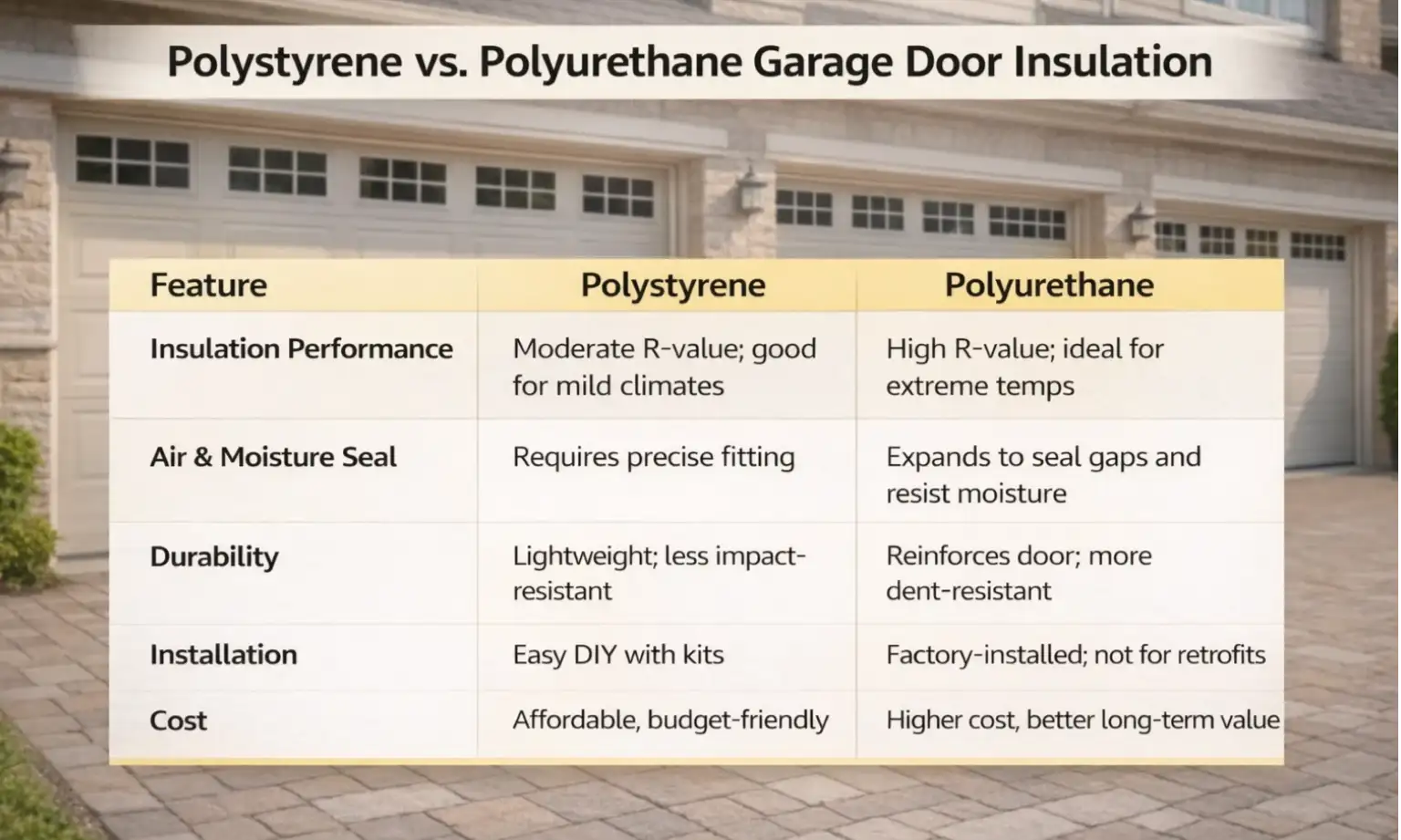
Polyurethane foam expands during manufacturing, helping it seal small gaps and resist moisture more effectively. Polystyrene panels don’t expand and require careful fitting to prevent air leaks and condensation.
Durability and Strength
Polyurethane adds structural strength to garage doors, making them more resistant to dents and everyday wear. Polystyrene is lighter and easier to work with but offers slightly less durability in high-traffic settings.
Installation Approach
Polystyrene is ideal for DIY projects, with kits and panels that are easy to cut and install. Polyurethane, in contrast, is injected at the factory and is only available with pre-insulated doors, making it a better fit for new installations.
Cost Comparison
Polystyrene garage door insulation is more affordable and works well for most homeowners. Polyurethane has a higher upfront cost but delivers stronger performance and better long-term energy savings.
Final Comparison Summary
Choose polystyrene garage door insulation if you want a cost-effective, DIY-ready option that performs well in mild to moderate climates.
Choose polyurethane garage door insulation if you need a higher R-value, stronger durability, and better overall performance for garages used year-round or as a living space.
To make a more informed decision, explore our full article on the benefits of polyurethane garage door insulation.
Best Use Cases for Polystyrene Garage Door Insulation
Polystyrene garage door insulation isn’t a one-size-fits-all solution — but it works well in many everyday situations. Here are a few examples where it makes sense:
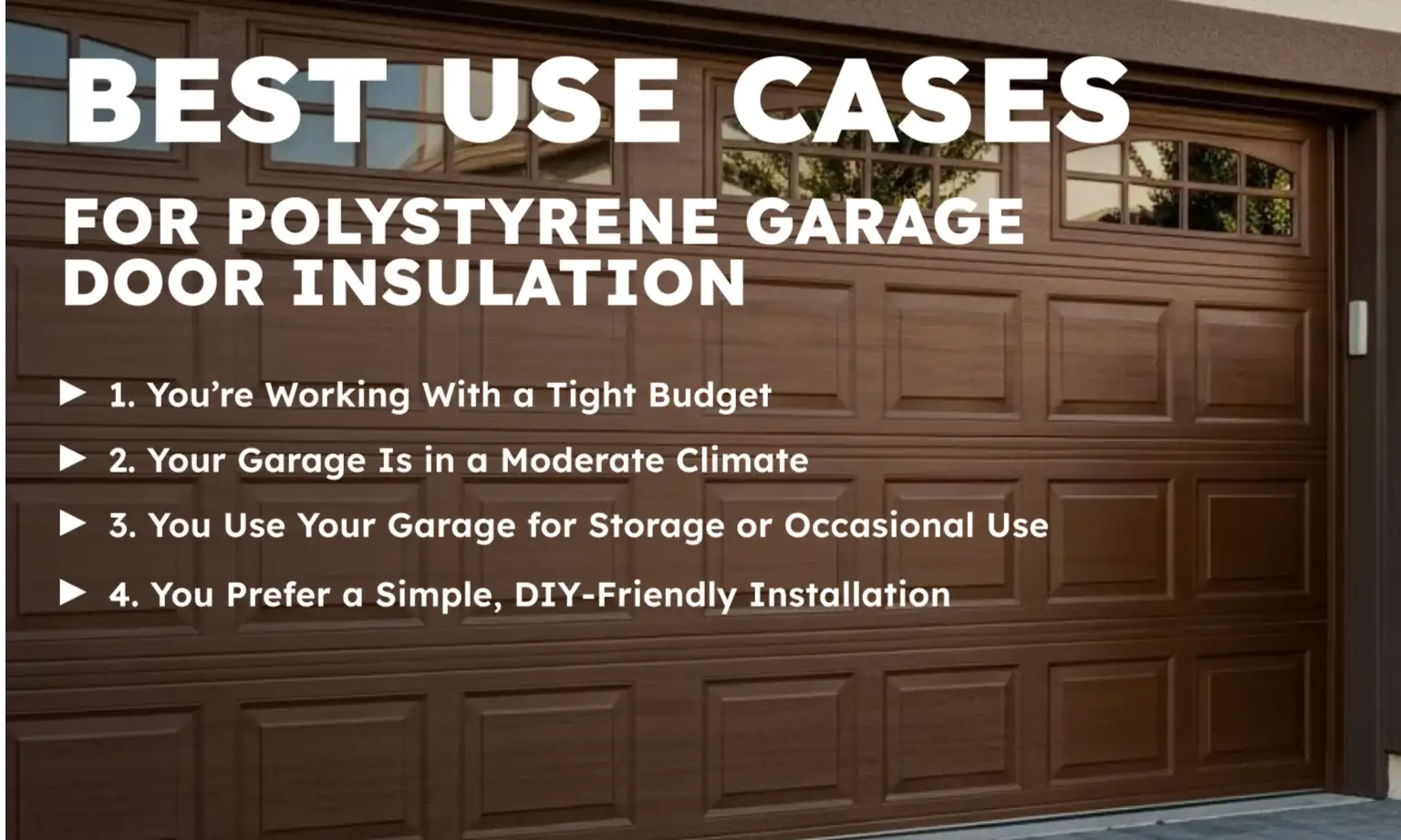
1. You’re Working With a Tight Budget
Polystyrene is one of the most affordable options for insulating a garage door, making it ideal for cost-conscious homeowners or large-scale property upgrades.
2. Your Garage Is in a Moderate Climate
For areas without extreme heat or cold, polystyrene offers enough insulation performance to regulate temperature and reduce energy use.
3. You Use Your Garage for Storage or Occasional Use
If your garage isn’t a main living space but still needs temperature control, polystyrene insulation offers a practical balance of comfort and cost.
4. You Prefer a Simple, DIY-Friendly Installation
With kits available, polystyrene is a favorite for those tackling their own garage upgrades. No spray tools or professional equipment needed.
Need more information?
Get a free quote
Why Choose Up & Down Garage Doors for Garage Door Insulation
While DIY kits work well in many cases, professional insulation ensures proper fit, sealing, and long-term performance. At Up & Down Garage Doors, we help customers compare insulation options, including polystyrene vs. polyurethane insulation, and recommend what works best for their garage. Our team also provides professional garage door insulation services for homeowners who want lasting results without the guesswork.
Ready to upgrade your garage with the right insulation type? Contact Up & Down Garage Doors today to explore your options and install insulation that meets your daily needs, budget, and energy-efficiency goals.
Frequently Asked Questions
Which is better insulation, polystyrene or polyurethane?
It depends on your needs. Polystyrene garage door insulation is more affordable and DIY-friendly, while polyurethane offers higher R-value and durability.
What are the disadvantages of polyurethane insulation?
Polyurethane is more expensive and can’t be installed as a retrofit—it’s only available in pre-insulated doors.
Can I install polystyrene garage door insulation myself?
Yes, many polystyrene garage door insulation kits are designed for DIY installation and include pre-cut panels or boards. However, if your door has an unusual layout, older hardware, or you want the best seal and performance, it’s smart to call a professional.
Are styrofoam panels effective for garage doors?
Yes, styrofoam panels for garage doors help reduce heat loss and drafts when properly fitted and sealed into the door’s frame.
Is polystyrene garage door insulation good for cold climates?
It helps, but for very cold climates, polyurethane insulation may be the better option due to its higher thermal performance.
You may also like